DbcultAccessing Vault...
5.9/10
Senior Film Conservator
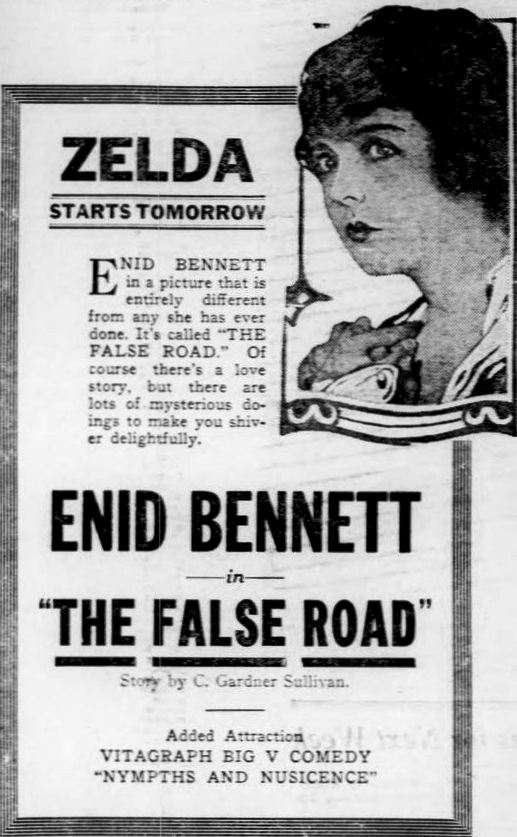
A definitive 5.9/10 rating for a film that redefined the boundaries of cult cinema. The False Road remains a cornerstone of transgressive art.
The cinematic landscape of 1920 was a crucible of moral exploration, and The False Road emerges as a seminal artifact of this era’s fascination with the 'reformed crook' archetype. Written by the prolific C. Gardner Sullivan, the narrative eschews the simplistic binary of good versus evil, opting instead for a nuanced interrogation of social mobility and the stickiness of criminal identity. Unlike the more whimsical or satirical tones found in Ruggles of Red Gap, this film operates with a somber gravity, acknowledging that the path to righteousness is often paved with the debris of one’s former life.
Lloyd Hughes portrays Roger Moran with a palpable, quiet desperation. His performance is a masterclass in the restraint required of silent film acting, where a furrowed brow or a hesitant gesture conveys a volume of internal conflict. Moran’s desire to 'go straight' is not merely a legalistic choice but an existential one—a yearning to belong to the sunlight world of Joshua Starbuck. This transition is reminiscent of the thematic struggles seen in Life's Whirlpool, where the momentum of past transgressions threatens to drown the protagonist's future aspirations.
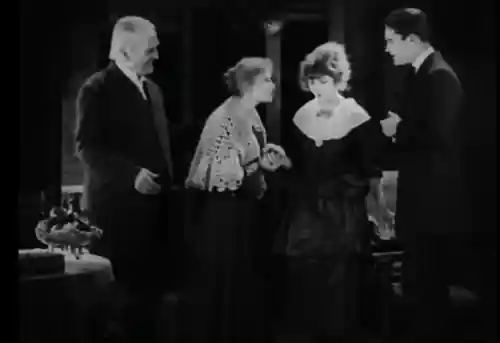
Sullivan’s screenplay is a marvel of narrative efficiency. He constructs a world where the 'false road' is not just a metaphor but a tangible environment of smoke-filled rooms and clandestine meetings. The contrast between the sterile, orderly environment of Starbuck’s bank and the chaotic, predatory atmosphere of Mike Wilson’s gang is rendered with stark visual clarity. This binary is a common trope, yet Sullivan elevates it by making the antagonist, Betty Palmer, a figure of tragic complexity. Enid Bennett’s Betty is not a caricature of a 'gun moll' but a woman whose cynicism is a survival mechanism. Her refusal to join Moran in his reform is a poignant reflection on the limited options available to women of her class, a theme explored with equal intensity in The Unwelcome Wife.
"The celluloid flicker of 1920 captures more than just movement; it captures the collective anxiety of a nation transitioning from the Victorian moral code to the burgeoning complexities of the modern urban experience."
When the bank is eventually robbed, the film shifts from a domestic drama into a high-stakes espionage thriller. Moran’s decision to infiltrate his old gang in New York is a narrative masterstroke that allows the audience to witness the character’s internal struggle between his old instincts and his new values. This undercover gambit provides a tension that is absent in more straightforward westerns like A Knight of Western Land. Here, the danger is not just physical but spiritual; Moran risks becoming the very thing he seeks to destroy.
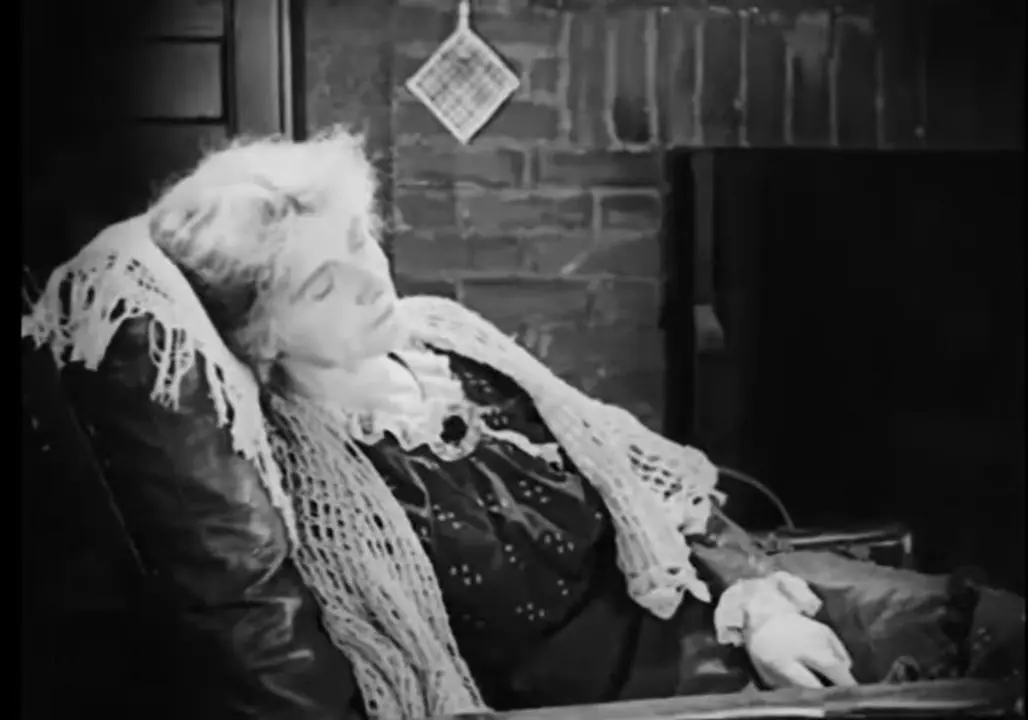
The chemistry between Lloyd Hughes and Enid Bennett is the emotional anchor of the film. Their interactions are freighted with the history of their shared crimes and the divergence of their current paths. Bennett, in particular, avoids the histrionics common to the era, providing a grounded performance that makes her eventual return to Moran’s life feel earned rather than convenient. Her character arc mirrors the unpredictability found in The Savage Woman, where the female lead defies traditional societal expectations.
Visually, the film utilizes lighting to underscore its moral themes. The New York sequences are characterized by deep shadows and high-contrast compositions, evoking a sense of claustrophobia and moral ambiguity that predates the noir aesthetic by two decades. This visual sophistication is comparable to the dark, atmospheric work seen in European productions of the time, such as Pest in Florenz or the mystery-laden Manden med de ni Fingre V. The director manages to make the bank safe feel like a holy relic, a symbol of the trust Moran is desperate to protect.
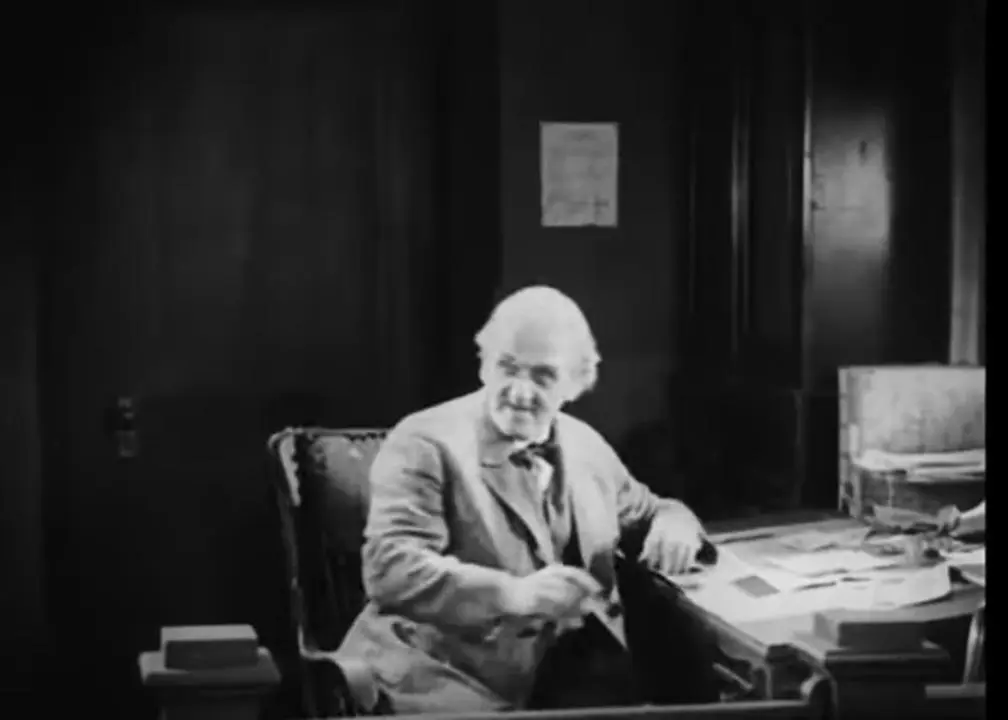
One cannot discuss The False Road without addressing its commentary on wealth and the banking system. Joshua Starbuck represents the idealized, paternalistic capitalist—a figure who offers redemption through labor. This portrayal stands in stark contrast to the cynical view of capital found in Men, Women, and Money. In Sullivan’s world, money is not the root of evil, but the lack of it—and the lack of legitimate means to acquire it—is what drives individuals toward the 'false road.' This economic determinism adds a layer of sophistication to what could have been a simple morality play.
The film also touches upon the fragility of the legal system. The fact that Moran must take the law into his own hands to retrieve the money suggests a skepticism toward official institutions, a sentiment echoed in In the Hands of the Law. Moran’s journey to New York is a descent into a lawless underworld where only his wits and his history as a thief can save him. It is a proto-typical 'one last job' scenario, but with the moral poles reversed.
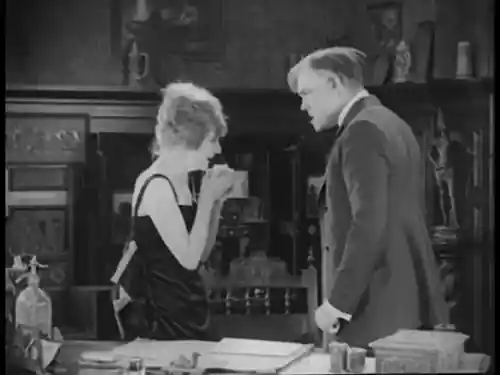
When viewed alongside its contemporaries, The False Road holds up as a remarkably modern piece of storytelling. While Gloriana or Armstrong's Wife might lean more heavily into melodrama, Sullivan’s work maintains a psychological realism that is quite striking. The character of Betty Palmer, in particular, feels like a precursor to the complex anti-heroines of the 1930s and 40s. Her struggle is not just against the law, but against her own disillusionment.
The film’s climax in New York, where Moran’s plan begins to unravel, is staged with a kinetic energy that belies the technical limitations of the time. The tension is palpable, and the stakes feel genuinely high. It lacks the gothic mystery of Das Geheimnis von Chateau Richmond or Borgkælderens mysterium, but it replaces that atmosphere with a gritty, urban realism. Even the more lighthearted elements, such as those found in Me and Captain Kidd, are absent here, replaced by a relentless focus on Moran’s internal and external battles.
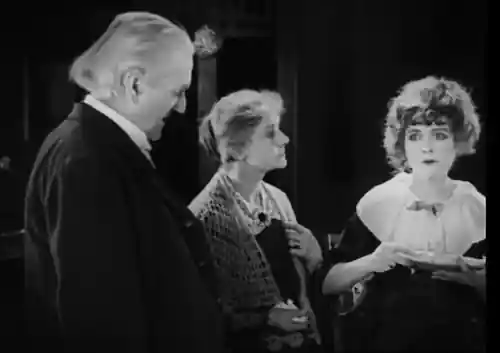
The False Road is a testament to the power of the silent screen to communicate profound human truths. It is a story about the difficulty of change, the weight of the past, and the redemptive power of trust. C. Gardner Sullivan’s script provides a robust framework for Lloyd Hughes and Enid Bennett to deliver some of the finest work of their careers. It is a film that deserves to be remembered not just as a piece of history, but as a compelling drama that speaks to the perennial human struggle to find the 'true road' in a world that often demands the opposite.
In the broader context of silent cinema, it stands as a bridge between the moralistic fables of the early 1910s, such as La comtesse de Somerive, and the sophisticated urban dramas of the late 1920s. It is a essential viewing for anyone interested in the evolution of the crime genre and the enduring appeal of the redemption narrative.
IMDb —
1933
Community
Log in to comment.