DbcultAccessing Vault...
Cult Review
Senior Film Conservator
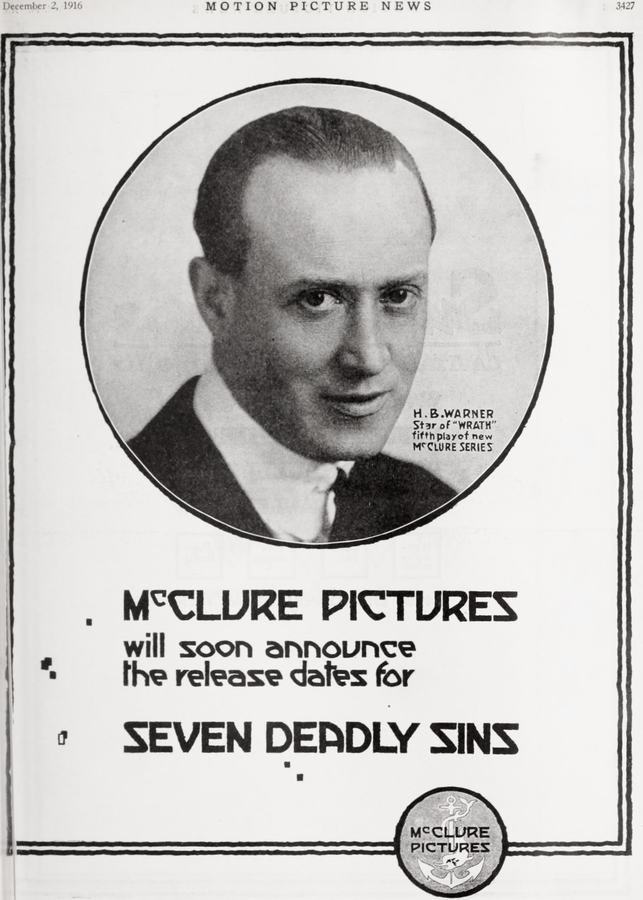
The cinematic landscape of 1917 was a volatile tapestry of propaganda and burgeoning artistry, a year where the flickering shadows of the silent screen began to grapple with the seismic shifts of a world at war. Among these relics, 'Wrath' emerges not merely as a melodrama, but as a complex interrogation of duty, heritage, and the moral cost of industrialization. It is a film that demands we look beyond its sepia-toned artifice to find a narrative of surprising contemporary resonance.
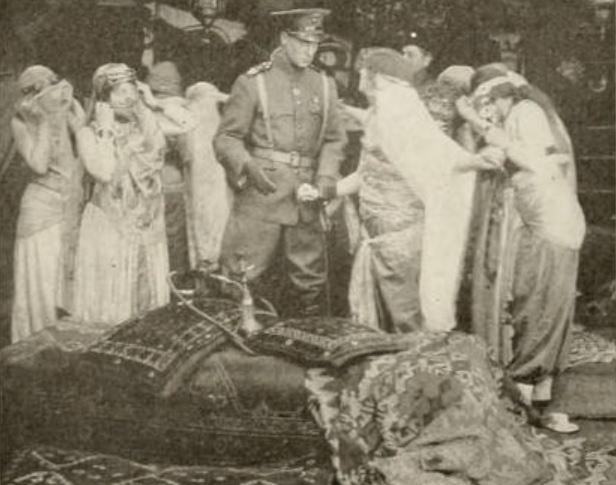
The film opens in the rugged, sun-bleached province of Transcaspia, a setting that serves as a fertile ground for the 'exotic' tropes favored by early 20th-century audiences. Here, the Grand Duke rules with an iron hand, a personification of the old-world autocracy that the Great War would eventually dismantle. The introduction of Feodor, portrayed with a brooding intensity by George LeGuere, sets the stage for a classic conflict between individual desire and dynastic expectation. When Feodor rescues Evelyn Burnham from the clutches of Abdallah, the film flirts with the adventure serial aesthetics found in contemporaries like Saved from the Harem, yet it quickly pivots toward something more somber.
The desert of Kara-Koom is filmed with a stark, unforgiving beauty. The cinematography captures the isolation of the outpost, making the eventual separation of Feodor and Evelyn feel less like a plot device and more like a geographic inevitability. Unlike the comedic escapism of The Essanay-Chaplin Revue of 1916, 'Wrath' leans into the gravity of its setting. The 'wrath' of the title is first manifested in the Grand Duke’s refusal to acknowledge a commoner, a rigidity that reflects the crumbling foundations of the Russian aristocracy on the eve of revolution.
Shirley Mason’s performance is the emotional anchor of this sprawling epic. In the first act, she embodies the vulnerability and resilience of Evelyn Burnham, the American girl lost in a sea of foreign intrigue. However, it is in the second act—set sixteen years later—where the film’s thematic ambitions truly crystallize. The transition to New York shifts the visual palette from the horizontal expanses of the desert to the vertical claustrophobia of the industrial metropolis. This leap in time reminds one of the narrative density found in The Woman in the Case, where past sins cast long shadows over the present.
As Eve Leslie, the daughter born of that ill-fated union, Mason portrays a woman of immense agency. The revelation that her fortune is built upon the 'manufacture of munitions' introduces a surprisingly sophisticated pacifist subtext. While many films of the era, such as The Battles of a Nation, were designed to stoke the fires of patriotism, 'Wrath' takes a more contemplative stance. Eve’s decision to shut down her plant is a radical act of defiance against the military-industrial complex, a move that places her in direct opposition to her father’s desperate mission to secure ammunition for the Russian front.
Melodrama thrives on the 'near miss'—the letter never delivered, the face seen in a crowd at the wrong moment. 'Wrath' utilizes these tropes with a heavy hand, yet they are executed with such earnestness that they rarely feel cheap. The sequence where Evelyn, believing Feodor has abandoned her for Olga, watches him from afar in New York is a masterclass in silent pathos. The audience is privy to the truth, creating a tension that fuels the film’s final act. This structural reliance on hidden identities and missed connections mirrors the intricate plotting of The Melting Pot, where personal history is inextricably linked to national identity.
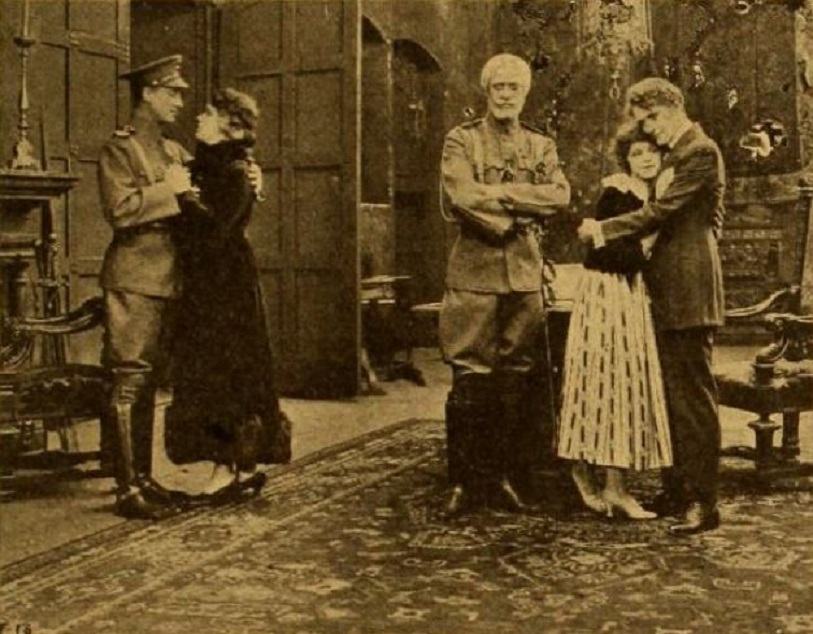
The character of Adam Moore serves as the necessary bridge between Eve’s idealism and the harsh realities of the conflict. His presence allows for a romantic subplot that doesn't overshadow the central father-daughter-mother triad. The film’s pacing accelerates once the action shifts back to Transcaspia. The return to the desert is not a regression, but a homecoming where the ghosts of the past must be confronted. The intercepted messages and the looming marriage of Feodor to Olga provide a ticking clock that heightens the stakes of the journey.
For a film produced in 1917, the technical execution of the climax is nothing short of breathtaking. The transition from the intimate domesticity of the New York sequences to the visceral chaos of the Turkish attack is handled with surprising fluidity. The use of an 'armored motor with machine guns' is a fascinating inclusion, showcasing the mechanization of warfare that was then a terrifying novelty. This isn't the CGI-heavy spectacle of Avatar; this is practical, dangerous filmmaking that captures the dust and the din of the battlefield.
The rescue sequence serves as the literal and figurative resolution of the film’s many conflicts. The 'wrath' of the Turks, the 'wrath' of the Grand Duke, and the 'wrath' of the spurned Olga are all swept away by the arrival of the modern machine—manned by the very people whose lives were nearly destroyed by those old-world animosities. It is a moment of catharsis that validates Eve’s journey and Feodor’s long-suffering endurance. The triumph of love over wrath is a traditional ending, but in the context of 1917, it feels like a desperate plea for a world that was currently tearing itself apart.
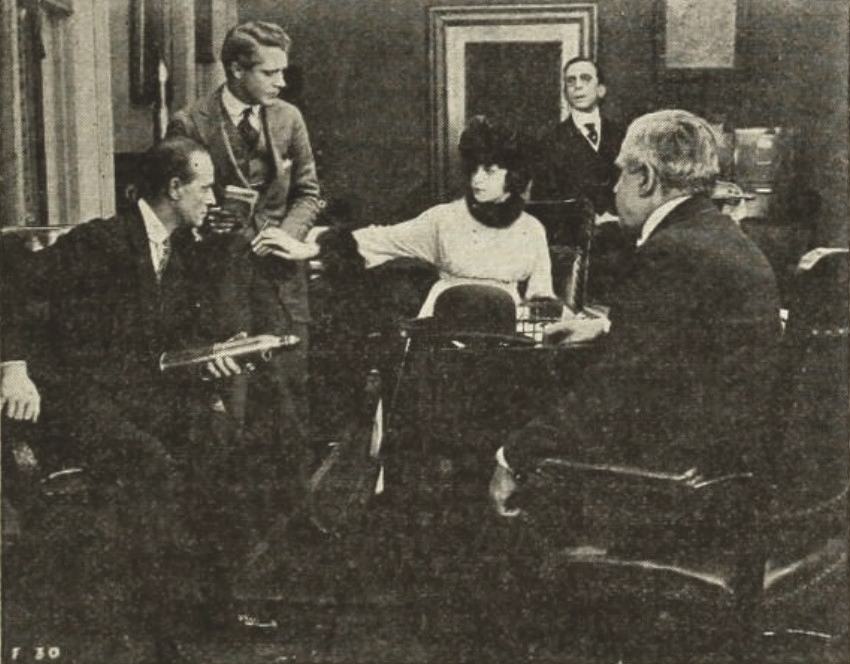
In the pantheon of early cinema, 'Wrath' deserves a place alongside more recognized works for its willingness to engage with the ethics of war. While films like The Dollar and the Law explored the financial underpinnings of society, 'Wrath' goes a step further by questioning the morality of profit derived from death. The performance by H.B. Warner as Feodor in his later years provides a tragic weight to the film, his eyes reflecting the sixteen years of prison and the hollow duty of a soldier who believes his heart is dead.
The film’s lexical diversity in visual storytelling—from the wide shots of the Kara-Koom to the tight, emotional close-ups of Shirley Mason—marks it as a sophisticated piece of direction. It avoids the repetitive sentence structures of lesser melodramas, instead building a rhythmic tension that culminates in the explosive finale. Even when compared to the gritty realism of something like Pay Me!, 'Wrath' maintains a poetic sensibility that elevates it above mere genre fare.
As the credits roll (or the final title card fades), the viewer is left with a profound sense of the cyclical nature of history. The daughter saves the father; the pacifist uses the tools of war to preserve life; the desert that once swallowed their happiness becomes the site of their reunion. 'Wrath' is a film of grand gestures and intimate truths. It captures a moment in time when the world was poised between the feudal past and an uncertain, mechanized future.
For the modern cinephile, 'Wrath' offers more than just historical curiosity. It is a reminder that the themes of corporate responsibility, the human cost of conflict, and the enduring power of the family unit are as relevant today as they were when Shirley Mason first graced the screen. It stands as a testament to the power of silent cinema to communicate complex moral dilemmas without saying a single word. In the end, the triumph of love is not just a happy ending; it is a necessary survival strategy in a world defined by 'Wrath.'
Related viewing: For those interested in the evolution of the female protagonist in 1916-1917, consider exploring The Shine Girl or the atmospheric Somewhere in France for a different perspective on the wartime experience.
IMDb —
1920
Community
Log in to comment.