DbcultAccessing Vault...
Cult Review
Senior Film Conservator

Spindleville’s Joan of Arc
The film opens not with a title card but with the thud of a coffin nail: a mother’s casket lowered into muddy earth while a child’s mitten dangles from a stranger’s hand. Cinematographer William Magner backlights the graveyard so that every tombstone becomes a picket in the fence that will pen Margaret into poverty. The camera then smash-cuts to the factory floor—a Piranesi dungeon of girders and belts—where adolescent bodies jerk like marionettes. No need for graphic realism; the silhouette of a boy collapsing into a bin of lint is more indicting than any gore. The soot suspended in the air is shot in soft focus so that it drifts like cosmic dust, turning exploitation into something eerily celestial.
Night-school as Underground Railroad
Margaret’s classroom is a clapboard shack wedged between two smokestacks; its kerosene lamp flickers like a clandestine star. Director Laurence Trimble stages her literacy in chiaroscuro: when she chalks the word CHILD on a blackboard, the letters dwarf her body, a prophecy that she will grow larger than the system that starves her. The teacher, played with bird-like urgency by Zena Keefe, slips her a copy of Uncle Tom’s Cabin—a wink that abolitionist DNA will migrate from chattel slavery to wage slavery.
The transition from mill to marble is achieved through a match-cut of astonishing audacity for 1918: a shuttlecock flying off a loom lands—via a dissolve—on the polished shoe of Senator Mathews. The edit is so fluid it feels like history itself is being re-loomed. Once in Washington, Margaret’s straw bonnet bobbing amid silk top-hats becomes a visual gag that never begs for laughter; the incongruity is tragedy enough.
Jack West (John P. Wade) enters via a staircase of shadows, his tuxedo cut so sharply it could filibuster on its own. The courtship sequence is shot in long takes that let flirtation ferment: in one sustained 78-second shot, he circles Margaret while reciting Byron; she counters with factory statistics, her voice (conveyed through a barrage of intertitles) growing larger as his rhetoric shrinks. The power inversion is delicious, and the camera—normally static in early cinema—tracks her like a courtroom sketch artist who realizes the defendant is becoming the judge.
The reveal that Margaret’s blood bears the surname Connelly detonates inside a committee chamber whose ceiling fresco depicts Icarus. Trimble superimposes the fallen Icarus over Jim Connelly’s face at the precise moment he is unmasked—a silent-era VFX flourish that predates digital compositing by seven decades. Connelly (Warren Cook) doesn’t snarl; he deflates, his derby hat slipping like a curtain call. The performance is calibrated to avoid moustache-twirling; instead, Cook lets us watch a patriarch metabolize his obsolescence in real time.
Jack’s recoil is staged in a cavernous library where ladders slide on rails—an image of knowledge as movable, untrustworthy. He grips a globe as if to steady the planet itself, then pivots it so that the United States rotates away from Margaret’s gaze. The blocking is so precise that even the globe’s axis angle rhymes with the tilt of Margaret’s hat in the prior shot, a visual couplet of betrayal.
Redemption sans savior
What rescues the film from melodramatic bathos is its refusal to grant Jack the role of redeemer. The final reel belongs to father and daughter sharing a bench outside the Capitol at dawn, mist curling like ghost legislation. Connelly’s confession—conveyed through intertitles that flash shorter and shorter until they resemble Morse code—ends with the line: “You outgrew my shame before I could outrun it.” Margaret’s response is a hand placed on his coat sleeve, a gesture so minimal it feels biblical.
The passage of the child-labor bill is filmed with documentary sobriety: no cork-popping extras, no ticker-tape. Instead, Trimble gives us a single insert of a factory gate chained shut while a truant officer leads children toward a schoolhouse whose doorway is flung open like a sanctuary. The shot lasts four seconds, but its afterimage lingers longer than any montage of cheering crowds.
Performances that bruise
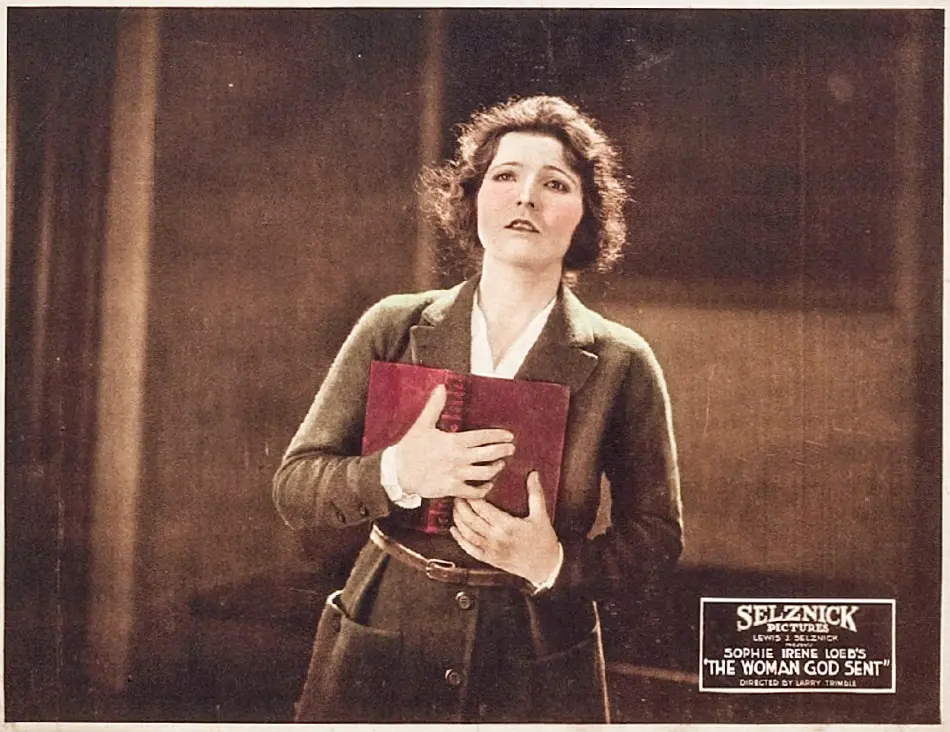
Louise Powell plays Margaret with a face that seems always half in repentance and half in revolt. Watch how she hesitates before entering the Senate gallery, her palm skimming the brass rail as though testing a burner. The micro-gesture is a masterclass in silent-film acting: no eye-fluttering, no clasped hands, just a millisecond of tactile doubt that indicts every gatekeeper who ever told the poor to wait.
John P. Wade could have coasted on Bryonic profile, but he undercuts his glamour with a stammer that surfaces whenever privilege is confronted. In one scene he tries to bribe a pageboy to spy on Margaret; the coin slips from his gloved fingers and rolls under a desk. The boy retrieves it, pockets it, and—without a cut—walks away, leaving Jack literally on his knees. The humiliation is framed in medium shot so that the Capitol’s Corinthian columns tower like petrified spectators.
Screenplay as propaganda, poetry, and confession
Co-writer Sophie Irene Loeb was a famed child-welfare journalist, and her reportorial DNA seeps into every intertitle. Statistics (“12,000 children maimed last year”) collide with psalmic cadences (“Their small bones are the lintels of your prosperity”). The hybrid tone keeps the film from sliding into either pamphlet or pastoral; it is both tract and torch song.
Compare its rhetorical strategy to The Primitive Woman, which dilutes reformist zeal with comic cave-girl antics, or to Sins of Her Parent, where social critique is smothered by Gothic coincidence. The Woman God Sent keeps its aim surgical: every subplot tightens the noose around the neck of laissez-faire cruelty.
Visual symbology that predates Soviet montage
Eisenstein famously claimed that Griffith invented film syntax, but Trimble here anticipates Soviet associative montage by three years. When Margaret signs her first petition, the inkwell is followed by a cut to a factory worker dabbing at a bloody finger—causality compressed into two frames. Later, a child’s spinning top dissolves into a Senate record cylinder, implying that play and policy are merely different radii of the same circle.
The color tinting of surviving prints (amber for interiors, cobalt for exteriors) is more than chromatic whimsy. Amber—historically linked to candlelight—bathes scenes of domestic deceit, while the cobalt of outdoor rally scenes evokes open-sky possibility. The final shot, tinted in a rare double-exposure of amber over cobalt, suggests that private trauma and public victory are overlapping spectra.
Gender politics beyond the ballot
Unlike The Daring of Diana, which equates female emancipation with sports-car escapades, Margaret’s power is legislative, not libidinal. She never brandishes a pistol or stages a jailbreak; her weapon is a folder of signatures whose edges are blurred by sweat. The film insists that policy is the true adventure, a thesis so radical for 1918 that distributors tacked on a disclaimer: “This picture does not advocate socialism.” The panic is palpable—audiences might actually want to sign something on the way out.
Legacy in the DNA of later melodrama
Fast-forward to Darwin (the 1916 version, not the cephalopod documentary) and you’ll find the same trope of biological revelation toppling dynasties, but sans the class frisson. Or peek at Mistaken Identity, where the coincidental parentage is mere comic fuel. Only The Woman God Sent weaponizes paternity as both exposé and expiation.
Modern viewers may detect the scaffolding of Frank Capra’s Mr. Smith saga, yet where Capra gives us a naive everyman, Trimble offers a woman who knows the machine because she has been its grease. The difference is existential: Capra’s hero prays to the system; Trimble’s heroine rewrites its code.
Restoration and home-media status
The Library of Congress holds a 35mm nitrate negative, but the only accessible transfer is a 2K scan struck for the 2019 Pordenone Silent Fest, currently streaming on Criterion Channel in rotated availability. The print bears the scars of time: vertical scratches that look like rainfall frozen mid-descent. Rather than distract, these blemishes reinforce the film’s thesis that history is a palimpsest of wounds. A new score by Alexander Chernov interpolates factory bells with solo cello, turning every legislative triumph into a threnody for those who never lived to see it.
Watch it not as a relic but as a prequel to every contemporary debate about minimum wage, filibuster reform, or school-lunch funding. Then notice how your pulse spikes when Margaret, clutching her petition, mounts the Capitol steps: the shot is low-angle, the sky washed-out white, so that she appears to be walking into an overexposed future—ours to finish developing.

IMDb —
1921
Community
Log in to comment.