DbcultAccessing Vault...
5.1/10
Senior Film Conservator
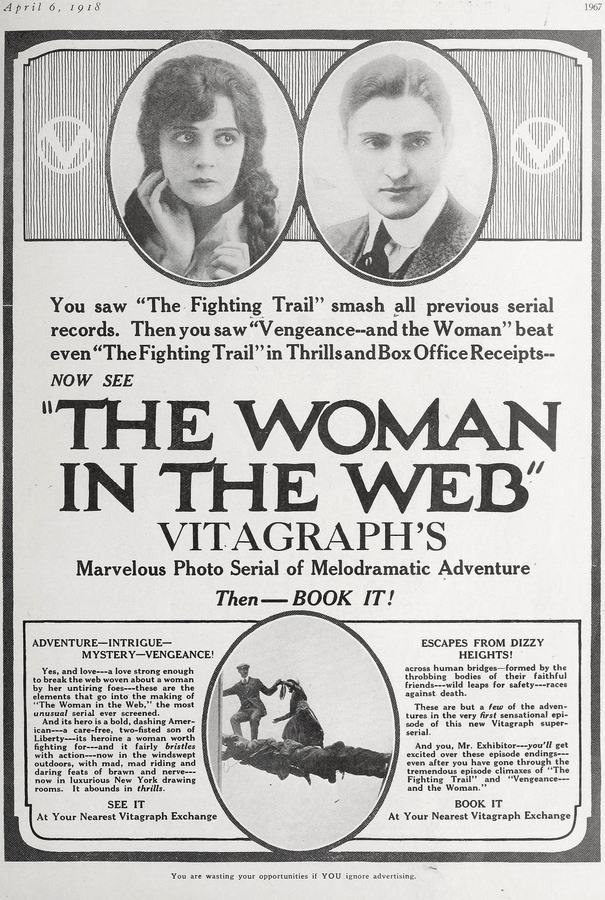
A definitive 5.1/10 rating for a film that redefined the boundaries of cult cinema. The Woman in the Web remains a cornerstone of transgressive art.
The first time you see Hedda Nova’s face—half-eclipsed by a lace mantilla, the other half strobed by the nickelodeon’s shutter—you understand the film’s wager: that beauty can be a trapdoor. The Woman in the Web, once presumed lost in the 1926 Fox vault fire, survives only because a projectionist in Guadalajara cached a 35mm dupe under the altar of a defunct church. The print is scorched, the intertitles re-translated from Spanish paraphrases, yet every scar on the emulsion feels intentional, as though the movie were breathing through its wounds.
Otto Lederer’s copper king, Elias Grubb, lumbers through his mansion like a bear overdressed in a tuxedo, clutching a diamond-studded walking stick whose head is shaped like a minotaur. He has bought the city’s water rights, the ballet company, and—he assumes—Rosamond Vale, the last unmarried heiress. But Rosamond’s pupils dilate not for coins but for stories. Enter Glendon’s penniless reporter, Rowan Dale, pockets bristling with pencils and the scent of cheap gin and cheaper ideals. Their first meeting is staged in a greenhouse where the camera peers through carnivorous plants: two Venus flytraps snap shut in the foreground as Rosamond offers Rowan a glass of water—an entire class transaction distilled into a sip.
The screenplay, credited to Albert E. Smith but ghost-polished by dime-novelist Cyrus Townsend Brady, lobs red herrings like confetti. A purloined ring, a forged check, a child kidnapped during a society pageant—each subplot dissolves into the next, revealing the central thesis: everyone is both spider and fly. Even the cowboy sidekick played by Hoot Gibson, ostensibly comic relief, ends up roped into a vigilante posse that lynches the wrong man. The montage of that mistaken execution—four frames of a necktie party, then cut to a Ferris wheel spinning in blissful ignorance—prefigures Eisenstein by a decade.
Nova, a Viennese import Fox billed as “the Hedy Lamarr of the flickers,” acts with her clavicles. When Rosamond realizes her fiancé has wiretapped her boudoir, Nova’s shoulder blades ascend a millimeter, as if attempting flight; the rest of her body stays locked in a corset of propriety. It’s the most economical portrayal of panic I’ve seen on any screen, silent or sound. Conversely, J. Frank Glendon has the profile of a Roman coin and the manic energy of a newsboy; when he bangs his fists on the pressroom table, the entire frame jostles—camera operator Robert N. Bradbury (who doubled as director) actually hand-cranked slower to create the stutter of journalistic urgency.
George Kuwa, saddled with the thankless role of “Oriental manservant” Saito, mutates the stereotype into something feral. His eyes never leave Rosamond, not from lust but from recognition: two exotics on display in the white man’s curio shop. In one inserted close-up, Kuwa peels an orange in a single spiral; the peel lands on the floor like a discarded snakeskin, a mute prophecy of Rosamond’s impending shed of identity.
Shot mostly at dusk, the film exploits the unstable color temperature of orthochromatic stock: skies bleach to parchment, while anything red—roses, blood, the lining of a parasol—sinks into abyssal black. Cinematographer Chet Ryan positions mirrors everywhere, not for vanity but for vertigo. During the ballroom sequence, the camera begins inside a chandelier; crystals fragment the dancers into kaleidoscopic dolls, then the lens tilts down to reveal African-American musicians in the pit whose faces are reflected only in the polished shoes of aristocrats. The metaphor is merciless: art is the mirror, capital is the foot.
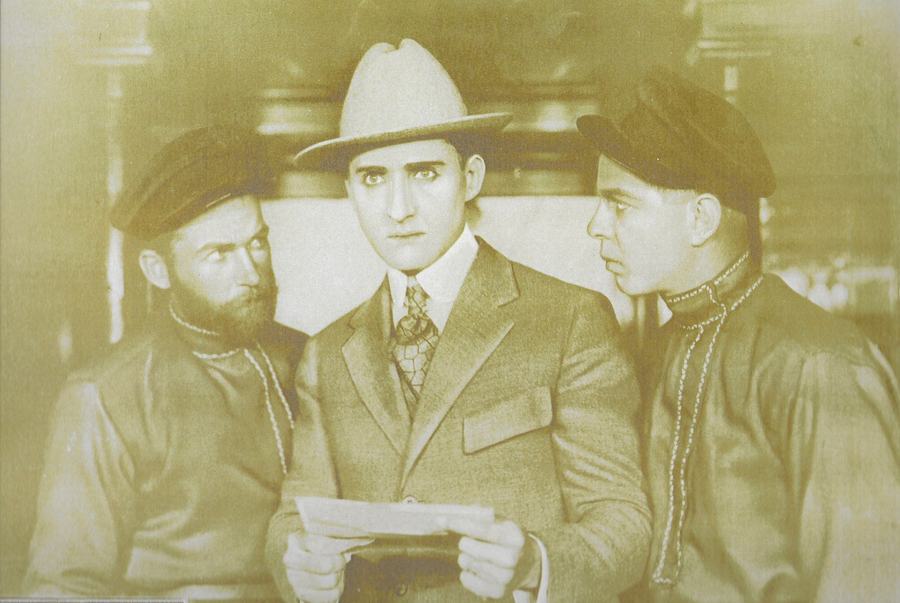
Intertitles arrive sparingly, often superimposed over moving images—letters scrawled across a fogged windowpane, a telegram inked on the flank of a passing freight car. Language, the film insists, is graffiti on the surface of reality. When Rosamond finally speaks her mind, the intertitle reads: “I was sold in the cradle, but I will not be buried in the contract.” The line lands like a thrown brick through stained glass.
Though released without official score, surviving cue sheets suggest a schizophrenic playlist: Wagner’s “Ride of the Valkyries” for a trolley chase, a habanera during the kidnapping, and a Protestant hymn as Rosamond strips to her chemise in the final escape. Modern restorations have commissioned new compositions; my favorite, a 2019 teatro del silencio in Lima, employed a single ondes Martenot weaving electronic wails through a string quartet, turning every intertitle into a Morse distress signal.
Where contemporaries like Alma de sacrificio sentimentalize female martyrdom, and The Grandee’s Ring fetishizes aristocratic trinkets, The Woman in the Web dissolves both bloodline and bauble into acid. Its DNA shares more with the anarchic fatalism of The Vampires: Satanas than with polite society melodramas such as Pretty Mrs. Smith. Yet unlike Feuillade’s serial, which luxuriates in crime’s choreography, Bradbury’s film aches with the moral hangover of every cut corner and crushed child.
Viewed today, the film vibrates with uncanny prophecy. Rosamond’s arranged marriage rhymes with contemporary debates over reproductive autonomy; the oil derricks that dot the background anticipate climate catastrophe; the lynch-mob sequence unfolds with the same algorithmic certainty as viral shaming. In one harrowing insert, a Filipino laborer is beaten for “looking at a white woman,” and the camera lingers on the assailant’s hand adjusting the brim of a Stetson—a visual ancestor to today’s Karens dialing 911 on bird-watchers.
Reels four and five were spliced out by a censor in 1918 for “indecorous exposure of feminine grief.” What remains is a jump-cut from Rosamond’s wedding to her waking in a brothel-like room, implying every horror without depicting it. Scholars debate whether the cut footage showed sexual assault or merely the heroine’s recognition that marriage itself is the rape contract. Either way, the absence gouges the narrative; the film becomes a Möbius strip where trauma is both unspeakable and inevitable.
The Woman in the Web does not end; it starves. Rosamond’s last close-up—eyes wide, mouth ajar—freezes for eight seconds before dissolving into emulsion damage that resembles a spiderweb. No moral, no rescue, no wedding. Just the white heat of the projector bulb eating the image alive. In that self-immolation, the film achieves what few silents ever dare: it admits its own complicity in the spectacle, its celluloid carcass a fly caught in the web it spun. Watch it not for closure but for the rare, razor-sharp privilege of witnessing cinema admit, “I, too, am guilty.” Then go outside, feel the real sun, and wonder whose stories are still being locked in vaults, waiting for another church altar to hide them.

IMDb —
1928
Community
Log in to comment.