DbcultAccessing Vault...
Cult Review
Senior Film Conservator
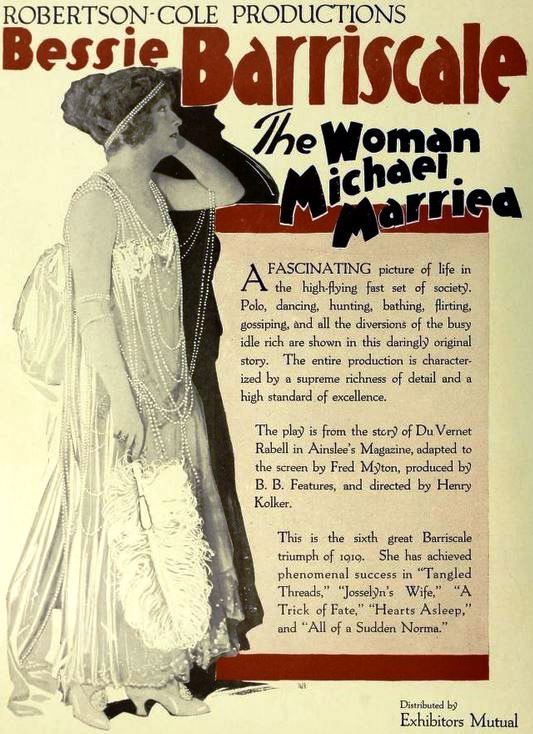
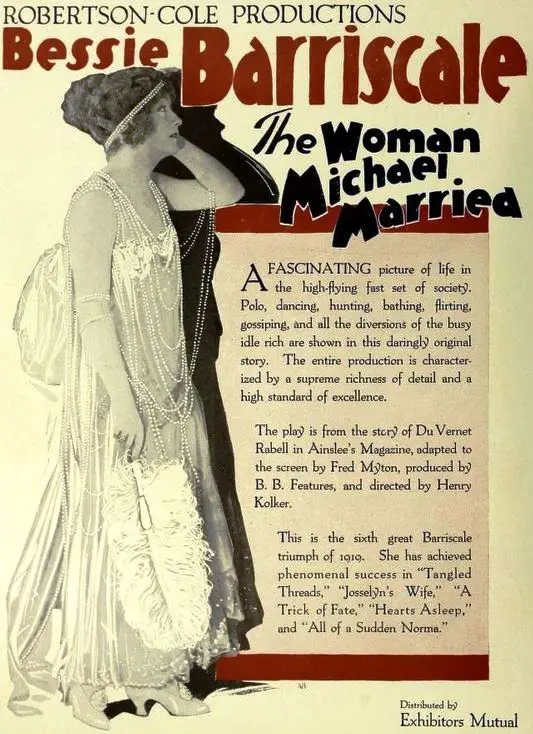
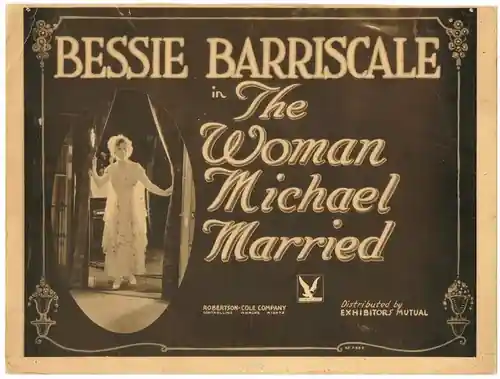
Step into the hushed grandeur of early 20th-century cinema, where narratives unfolded with an eloquent grace, often relying on the sheer power of performance and the evocative flicker of light and shadow. 'The Woman Michael Married,' a compelling drama penned by Du Vernet Rabell, stands as a testament to the era's capacity for intricate character studies and poignant explorations of human connection. Released during a period when the world was grappling with monumental shifts, both social and technological, the film captures a certain spirit of its time, reflecting nascent ideas about female agency and the complexities of romantic entanglements. This isn't merely a tale of a woman and a man; it's a profound journey through societal expectations, personal ambition, and the unpredictable currents of fate.
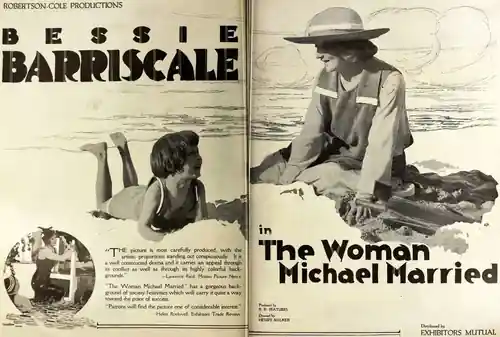
At the heart of this cinematic endeavor is Mira Sacky, portrayed with luminous intensity by the incomparable Bessie Barriscale. Mira is not your typical damsel in distress; she is a woman forged in the crucible of circumstance, possessing a formidable inner strength and a pragmatism that often defies the romantic conventions of her milieu. Her origin story is steeped in a legacy both beautiful and burdensome: the daughter of a music master, she inherits not wealth, but a potential for greatness – a voice poised to enchant the world. Yet, the immediate reality is stark. Poverty looms, and Mira, far from succumbing to passive waiting, actively seeks her fortune. Her initial foray, a daring dive at a swimming fete, garners a meager fifty dollars, a sum that, while modest, ignites a fierce resolve within her to pursue more substantial means of self-sufficiency. This early scene is crucial; it establishes Mira as a risk-taker, a young woman willing to push boundaries and challenge physical limits for financial gain, rather than relying on traditional avenues open to women of her time. It sets the stage for a character who will consistently defy expectations.
The pivotal catalyst for the film's central conflict arrives with a moment of pure heroism: Mira's swift and courageous rescue of a drowning boy. This act of selfless bravery brings her face-to-face with Michael Ordsway, played with a blend of aristocratic charm and burgeoning exasperation by Jack Holt. Michael, a friend to the boy's grateful mother, is understandably impressed and, in a gesture of affluent benevolence, offers Mira any reward she desires. Here, the narrative takes a delightfully subversive turn. Mira, recalling her father's sagacious admonition against accepting unearned money from any man to whom she lacks a 'just claim,' articulates a request that is audacious in its simplicity yet profoundly unsettling to Michael: she asks him to marry her. This is not a plea born of lovesickness or social climbing in the conventional sense. Instead, it’s a calculated, almost transactional, demand for a legitimate claim to financial security, cloaked in the sanctity of matrimony. It’s a move that speaks volumes about Mira’s pragmatic worldview and her understanding of the limited options available to women of her social standing.
Michael's discomfort is palpable. He is a man of means, accustomed to a world where transactions are clear, and relationships, particularly marriage, are governed by romantic ideals or social maneuvering, not by a debt for a heroic act. Mira, however, is relentless. When he hesitates, she employs a tactical verbal jab, branding him a 'welcher' – a term that implies he's reneging on a promise, a man of dishonor. This cuts deep into Michael's patrician pride, compelling his reluctant, almost exasperated, acquiescence. It's a fascinating power dynamic, with Mira, despite her lack of social standing, dictating terms to a man of considerable influence. This scene alone provides rich fodder for discussion on gender roles and the subtle ways individuals navigate power imbalances. One might draw a thematic parallel to films like The Honor System, where personal integrity and the upholding of one's word are paramount, though here it's twisted into a rather unconventional marital agreement.
The marriage, thus forged under duress and a peculiar sense of obligation, is predictably fraught. Mira, ever the opportunist with a twist of integrity, offers Michael an escape clause: ten thousand dollars, and she would simply vanish from his life. This offer, rather than appeasing him, further incenses Michael. He refuses, perhaps seeing it as another attempt to commodify their strange union, or perhaps because, despite himself, he is intrigued, even captivated, by this unconventional woman. The misunderstanding that follows, the precise details of which are left to the viewer's interpretation through the subtle cues of silent film acting, ultimately drives them apart. Their separation is not a clean break but a lingering wound, a testament to the peculiar bond they have formed. It’s a classic narrative device, allowing for character growth and the eventual, more profound reunion, reminiscent of the dramatic separations seen in enduring romances like Anna Karenina, albeit with vastly different tragic undertones.
The narrative then gracefully shifts, focusing on Mira's journey of self-discovery and artistic fulfillment. It is Michael's father, a character of quiet wisdom and foresight, who steps in. Recognizing the true potential of Mira's inherited gift, he encourages her to pursue voice training. Crucially, he provides her with the very ten thousand dollars Michael had scornfully rejected. This act is not charity; it is an investment in talent, a recognition of Mira's intrinsic worth beyond her connection to his son. This paternal intervention is a stroke of narrative genius, allowing Mira to achieve financial independence and artistic mastery on her own terms, without directly being indebted to Michael. It underscores a theme of empowerment, where a woman's talent can be her ultimate source of freedom and agency, a concept explored in various forms in other contemporary narratives, perhaps even echoing the struggles for self-reliance found in films like Mrs. Wiggs of the Cabbage Patch, albeit with a different socio-economic context.
Three years cascade by, years of dedicated study and relentless pursuit of excellence for Mira, and years of fruitless searching for Michael. His quest for his enigmatic wife is a testament to the hold she has unknowingly, or perhaps unwillingly, exerted on his heart. His journey is one of regret and yearning, a slow realization of the depth of his feelings for the woman he married under such unusual circumstances. The climax of his search takes him to Rome, the eternal city, a fitting backdrop for a revelation of such profound romantic significance. It is there, amidst the ancient echoes and vibrant artistic pulse, that he discovers Mira. She is no longer the pragmatic, struggling young woman he married; she has blossomed into a celebrated opera singer, her voice now a beacon of artistry, her name synonymous with fame and acclaim. This transformation is not merely external; it signifies her complete self-actualization. Barriscale's portrayal of this evolved Mira must have been captivating, conveying the poise and confidence of a woman who has conquered both her financial precarity and her artistic aspirations.
The reunion of Michael and Mira is the film's emotional crescendo. Stripped of the initial transactional dynamics and the misunderstandings that drove them apart, they are now free to confront their true feelings. The years of separation, of individual growth and silent longing, have ripened their affections into a mature, undeniable love. They confess their love, a moment of tender vulnerability and profound recognition, and with it, they resume their marriage. This is not merely a return to the status quo; it is a renewal, a recommitment based on genuine affection and mutual respect, earned through trials and tribulations. The ending is deeply satisfying, offering a sense of poetic justice and the triumph of genuine connection over initial pride and circumstance. The narrative arc, from a marriage of convenience and obligation to one of profound love, is masterfully handled, showcasing the evolution of both characters.
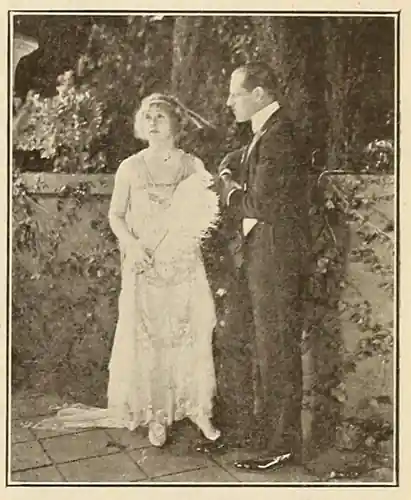
Bessie Barriscale's performance as Mira Sacky is nothing short of exceptional. In an era where nuanced expression was paramount, Barriscale conveys Mira's complex blend of determination, vulnerability, and burgeoning artistry with remarkable precision. Her eyes, her gestures, her very posture communicate volumes, allowing the audience to intimately connect with Mira's internal world. She portrays a woman who is both fiercely independent and deeply human, capable of both calculated decisions and profound emotional depth. This is a performance that resonates, placing Mira among the strong, memorable female protagonists of early cinema. One might even see echoes of the powerful female leads in films like Trilby, where a woman's voice and presence are central to the unfolding drama, though the thematic underpinnings are distinct.
Jack Holt, as Michael Ordsway, provides a compelling counterpart. His initial arrogance and discomfort slowly give way to a profound sense of longing and eventual understanding. Holt’s portrayal of Michael's transformation is subtle yet effective, allowing the audience to witness his journey from a man of privilege to one capable of genuine love and humility. The chemistry between Barriscale and Holt, even in the silent medium, is undeniable, their interactions crackling with an unspoken tension that eventually resolves into tender affection. The supporting cast, including Marcia Manon, Mary Jane Irving, Bonnie Hill, Charles West, Tom Guise, and Cameron C. Coffey, contribute effectively to the film's texture, each playing their part in the intricate tapestry of Mira and Michael's world. Tom Guise, in particular, as Michael's father, delivers a quietly powerful performance, embodying wisdom and subtle guidance.
Du Vernet Rabell's screenplay is a marvel of construction, weaving together elements of romance, drama, and social commentary with an engaging rhythm. The pacing, a crucial element in silent film, allows for character development to unfold organically, giving each emotional beat its due. The visual storytelling, characteristic of the era, relies heavily on strong compositions, expressive acting, and well-placed intertitles to convey dialogue and narrative exposition. The cinematography, though perhaps not as overtly experimental as later periods, serves the story with clarity and emotional impact, often using close-ups to highlight the actors' nuanced facial expressions, which were the very language of silent cinema.
What makes 'The Woman Michael Married' endure is its timeless exploration of themes that continue to resonate. The pursuit of independence, the complexities of love versus security, the power of artistic expression, and the long, winding road to self-discovery are universal human experiences. Mira Sacky's journey is one of empowerment, not just through her voice, but through her unwavering determination to carve out her own destiny. Her story challenges conventional notions of romance and female roles, presenting a protagonist who is both aspirational and deeply relatable. In an era often stereotyped for simplistic narratives, this film offers a refreshing depth and sophistication. It reminds us that early cinema was not merely a nascent art form but a powerful medium capable of telling profound and engaging stories, often with a subtle subversiveness that belied its innocent facade. For those interested in the evolution of cinematic narrative and the compelling performances of the silent era, 'The Woman Michael Married' is an essential viewing, a gleaming gem in the vast treasury of film history. It stands as a testament to the enduring power of a well-told story, brought to life by dedicated artists, even without the benefit of spoken words.
IMDb 6.3
1936
Community
Log in to comment.