DbcultAccessing Vault...
5.4/10
Senior Film Conservator
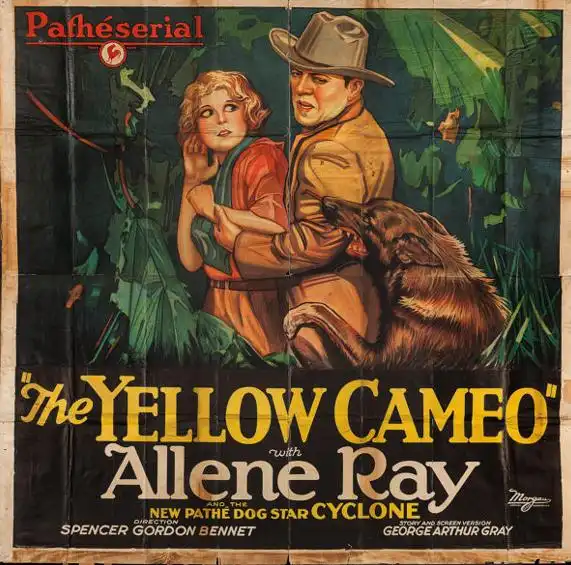
A definitive 5.4/10 rating for a film that redefined the boundaries of cult cinema. The Yellow Cameo remains a cornerstone of transgressive art.
"The Yellow Cameo," a silent adventure from an era obsessed with serial thrills, lands squarely in a niche category today. Is it worth watching? For dedicated silent film enthusiasts, historians, or those curious about the roots of action cinema, absolutely. It’s a fascinating, if sometimes clunky, artifact that showcases the ingenuity of early filmmakers working with limited resources.
However, if you're seeking modern pacing, sophisticated narrative depth, or high-fidelity restoration, you'll likely find its charms elusive and its anachronisms frustrating. It’s a film that demands patience but rewards with glimpses of pure, unadorned cinematic escapism, particularly for those who appreciate the physical demands of early acting and practical stunts.
Edward Hearn, as the hero Jim Strong, embodies the classic, square-jawed adventurer with a predictable earnestness. His physicality is key to his performance, particularly in the numerous chase sequences and daring escapes. He projects reliability and determination, even if his emotional range is often limited to broad strokes of concern or resolve. He’s the steadfast anchor, always ready to leap into action.
Allene Ray, as Mary Dale, brings a much-needed spark to the proceedings. She's far from a passive damsel in distress; Ray imbues Mary with a spirited independence, whether she's expertly driving a speeding car through dusty roads or holding her own against a band of villains. There’s a particular scene where she deftly disarms a thug with a well-placed kick, a moment that feels genuinely ahead of its time for female representation in adventure films, conveying capability rather than just vulnerability.
Tom London and Harry Semels, playing various henchmen, perform their roles with the kind of exaggerated villainy typical of the era. Their sneers and menacing gestures are almost cartoonish, but they serve the clear good-vs-evil dynamic effectively, providing unambiguous obstacles for our heroes. Noble Johnson, often typecast in "exotic" villain roles during this period, appears here in a capacity that, while still somewhat archetypal, allows him to project a quiet menace through his imposing presence alone. He doesn't need grand gestures; a subtle shift in his gaze is often enough to convey threat.
And then there’s Cyclone the Dog. Cyclone is arguably the film's secret weapon, often more expressive and certainly more agile than some of his human counterparts. He consistently hits his marks, whether carrying a crucial message or lunging at a villain's throat. There's a moment during a chaotic rooftop chase where Cyclone leaps across a chasm, landing perfectly, while the human actors visibly hesitate. It’s a testament to early animal training and a highlight of the film's practical stunts. The only slight giveaway is an occasional glance he casts just off-camera, presumably at his trainer, a tiny detail that grounds the spectacle in its historical reality.
"The Yellow Cameo" operates on a rhythm dictated by its serial origins: a constant cycle of peril, escape, and cliffhanger. This means the pacing is often frantic, almost breathless, especially in its first two-thirds. We jump from one action set-piece to the next with little time for reflection or character development. This relentless forward momentum is its primary engine, aiming to keep audiences on the edge of their seats between weekly installments.
However, this propulsive drive occasionally stumbles. There are stretches, particularly when the plot requires exposition through intertitles or static shots of characters pondering their next move, where the energy noticeably dips. A scene in the villain's elaborate lair, where the mastermind details his complex plan through a series of lengthy intertitles, feels particularly drawn out, halting the film's otherwise aggressive pace. These moments, while necessary for plot clarity, highlight the limitations of silent storytelling when it veers away from pure action.
The tone is largely straightforward adventure – clear heroes, clear villains, high stakes. There’s little room for ambiguity or deep character introspection. Any attempts at dramatic pathos are often undercut by the need to rush to the next chase or explosion. It’s a film that prioritizes spectacle and forward momentum over emotional nuance, delivering exactly what a serial audience expected: thrills.
Visually, "The Yellow Cameo" is a mixed bag, characteristic of its time. The location shooting, particularly during the car chases and outdoor skirmishes, brings a welcome sense of authenticity and scale. The dust kicked up by speeding vehicles and the genuine peril of actors scrambling over rocky terrain are palpable, grounding the action in a tangible world. These sequences often feature impressive practical stunts that still hold a raw appeal today.
However, the studio sets, while functional, often feel quite rudimentary. The villain’s elaborate underground headquarters, for instance, is clearly a painted backdrop and a few props, lacking the immersive quality one might expect from more lavish productions. The lighting is generally flat, prioritizing visibility over dramatic effect, though there are occasional attempts at chiaroscuro in the darker interiors that hint at a more ambitious visual language, even if inconsistently applied.
The editing is mostly functional, designed to convey action and advance the plot. It’s rarely innovative, relying on straightforward cuts and cross-cutting during chase scenes. There's a particular sequence where a character is tied up in a burning building, and the cuts between their struggle and the approaching rescuers feel almost too quick, sacrificing a bit of tension for speed. This rapid-fire editing style, while sometimes effective for action, can also make certain moments feel rushed, not allowing the audience to fully absorb the danger or the emotional stakes.
Ultimately, "The Yellow Cameo" is a product of its time – an earnest, often thrilling, but undeniably raw piece of silent cinema. It's not a masterwork that transcends its era, nor does it possess the timeless artistry of a Chaplin or Keaton. Instead, it offers a robust, if occasionally rough-around-the-edges, adventure that prioritizes spectacle and forward momentum.
For those willing to adjust their expectations to the filmmaking conventions of the 1920s, there’s genuine fun to be had in its relentless pursuit of a valuable trinket. It serves as a valuable reminder of how early filmmakers captivated audiences with ingenuity and sheer physical effort, laying the groundwork for action cinema to come. Watch it for the historical context, for the surprisingly agile Allene Ray, and especially for Cyclone the Dog's remarkable performance. Just be prepared for a few narrative pauses and some dated visual effects along the way.
IMDb —
1918
Community
Log in to comment.