DbcultAccessing Vault...
6.5/10
Senior Film Conservator
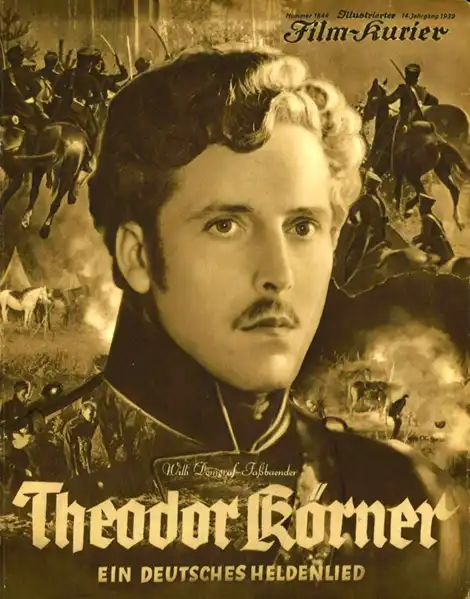
A definitive 6.5/10 rating for a film that redefined the boundaries of cult cinema. Theodor Körner remains a cornerstone of transgressive art.
You should probably watch this if you are into 1930s German history or if you really like Napoleonic era uniforms. If you are looking for a fast-paced action movie, you are going to be very bored very quickly. This is a movie that moves at the speed of a horse-drawn carriage on a muddy road.
The whole thing feels very heavy. Not heavy like a deep drama, but heavy like a wet wool coat. You can tell everyone involved thought they were making something very important.
Heinz Klingenberg plays Theodor and he spends a lot of time looking off into the distance. I think he is supposed to be looking at the future of Germany, but it mostly looks like he is trying to remember if he left the stove on. His eyes are very wide through most of the movie.
The first half is mostly him in rooms. He is writing. He is talking to people in fancy clothes. He is being a poet. The desks in this movie look incredibly heavy and the quill pens make a scratching sound that is actually kind of satisfying to hear.
There is this one scene where he is sitting at his desk and the lighting is just perfect. It is very dark, but one light hits his face while he thinks about his poems. It reminded me a bit of the atmosphere in Die Hexe, though that movie is way more spooky. This is just... serious.
The romance part of the story feels a bit like an afterthought. Martha Maria Newes is fine as Toni Adamberger, but they don't have much chemistry. They stand near each other and say very formal things. It is hard to believe they are actually in love.
One reaction shot of her lingers so long it becomes funny. She just keeps looking sad while the camera stays on her for what feels like a full minute. I started counting the buttons on her dress just to have something to do.
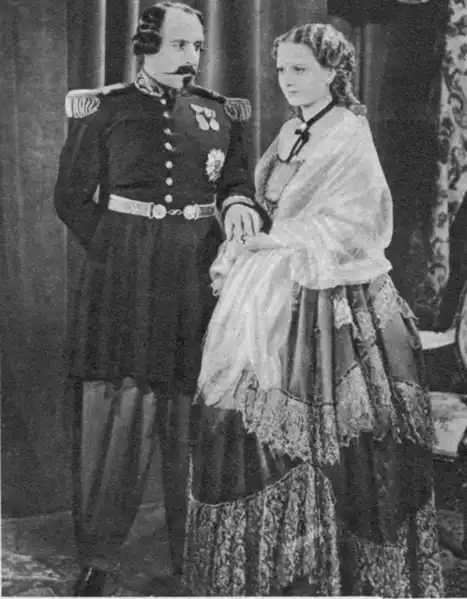
Then the war starts and the movie gets a bit more energy. But not much. The soldiers all wear these black uniforms with red trim which look very cool on camera. The way the film captures the textures of the fabric is actually one of the best things about it.
The crowd scenes have this oddly empty feeling. Like, there are supposed to be thousands of people fighting, but it looks like about twenty guys running around a small hill. You can almost feel the movie trying to convince you this moment matters more than it looks.
The battle scenes are very stiff. People fall down in a very theatrical way. They don't just drop; they sort of lean into the ground like they are taking a nap. It is very 1930s acting style.
I noticed that the horses look way more tired than the actors. In one shot, a horse in the background is just shaking its head like it wants to go home. I felt for that horse. 🐴
The music is very loud and it never stops. It is constantly telling you how to feel. If Theodor is sad, the violins scream. If he is being brave, the trumpets go crazy.
The movie get's noticeably better once he actually joins the army. The talking stops and the marching starts. Even if the marching is just in circles, it feels like progress.
There is a weird bit where a guy is cleaning a rifle and he just keeps cleaning the same spot for the entire scene. He must have really hated that one spot of dirt. It was very distracting to watch him in the corner of the frame.
I think the director, Adolf Trotz, really liked low-angle shots. He uses them to make Theodor look like a giant. It works, but it makes everyone else look like they are three feet tall.
The dialogue is very flowery. It is based on Körner's actual writings, so it makes sense, but it doesn't sound like how real people talk. Nobody says "Pass the salt" in this movie without making it sound like a sacred oath.
I found myself looking at the background extras more than the main stars. There is a woman in a market scene who looks genuinely confused by the camera. She just stares at it for a second before walking away. It’s the most human moment in the whole film.
The film is a bit of a slog if you don't know who Theodor Körner was. It assumes you already love him. If you don't, he just seems like a guy who is very dramatic about everything.
The patriotiism is very thick here. You have to remember this was made in 1932. Germany was in a very weird place and this movie was trying to make people feel proud. It feels less like a movie and more like a monument.
One thing that was actually cool was the use of real locations. The castles and the woods look great. They have a craggy, old-world feel that you can't really fake on a soundstage.
The scene where he writes "Lützow's Wild Hunt" is probably the peak of the movie. The lighting gets all dramatic and you can feel the rhythm of the poem. It is the one time the movie actually feels alive.
Overall, it’s an OK movie if you like looking at old film stock. It’s not a masterpiece, and it’s definitely not a fun time. But it’s a solid piece of craft for its time. Just don't expect to be on the edge of your seat.
If you have seen other stuff from this era, like The Goddess, you will see how different the styles were between countries. This German style is so much more rigid. Everything is in its right place, even the dirt.
I'm glad I watched it, but I don't think I'll ever watch it again. Once is enough for one lifetime. My brain feels like it’s covered in historical dust now. 📜
The ending is very abrupt. He dies, and then the movie basically just ends. No real wrap-up, just a feeling of "Well, that happened." It's oddly effective in its own way.
IMDb 5.2
1928
Community
Log in to comment.