DbcultAccessing Vault...
Cult Review
Senior Film Conservator
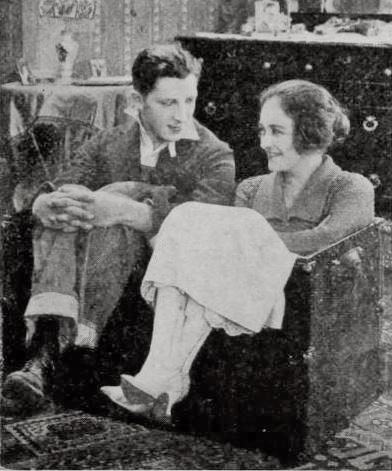
Stepping back into the annals of cinematic history, we encounter Thieves, a 1919 silent film that, despite its era’s technological constraints, weaves a surprisingly intricate tapestry of moral ambiguity, illicit desires, and the perennial human yearning for a fresh start. Directed by Frank Beal and penned by Douglas Bronston and William C. Beal, this cinematic offering is far more than a mere crime drama; it's a profound character study, particularly through the lens of its captivating protagonist, Mazie Starrett, brought to life with compelling nuance by Gladys Brockwell. The film's narrative, while appearing straightforward on the surface, quickly unravels into a complex web of interconnected lives, where every act of kindness or betrayal serves a deeper, often concealed, purpose.
At its core, Thieves grapples with the timeless theme of redemption, exploring the arduous journey of individuals attempting to extricate themselves from the gravitational pull of their past misdeeds. Mazie Starrett is introduced as an integral cog in Henry Hartland's criminal machine, a woman whose life is defined by the clandestine operations of a band of thieves. However, the film swiftly introduces a powerful counter-narrative through Jimmy Britton, Mazie's steadfast boyfriend, whose unwavering resolve to embrace an honest existence plants the seeds of doubt and desire for change within Mazie. This pivotal tension between the allure of a lucrative, albeit illicit, past and the promise of a virtuous, albeit uncertain, future forms the bedrock of the film’s emotional landscape. It’s a struggle many films of the era explored, often with varying degrees of success in portraying the internal turmoil. One might draw parallels to the moral quandaries presented in a film like The Tempting of Justice, where characters are frequently faced with stark ethical choices that define their destiny. The silent era, with its reliance on visual storytelling and exaggerated expressions, was particularly adept at conveying such internal conflicts without the need for extensive dialogue.
Gladys Brockwell’s portrayal of Mazie is nothing short of masterful. She embodies the character’s internal conflict with a palpable intensity, her eyes conveying volumes where words are absent. We witness her initial skepticism towards Jimmy's idealistic vision, slowly giving way to a desperate hope for a legitimate future. This transformation isn’t instantaneous or facile; it’s a gradual unfolding, punctuated by moments of doubt and temptation. The script, co-written by Douglas Bronston and William C. Beal, meticulously charts this evolution, ensuring that Mazie's journey feels earned rather than simply given. Her agreement to marry Jimmy, contingent on his ability to earn an honest living comparable to their illicit gains, sets a high bar, reflecting the deep-seated pragmatism born of a life lived on the fringes of society. This isn't a naive leap of faith, but a calculated gamble, showcasing Mazie's intelligence and her understanding of the harsh realities that govern their world.
Just as Mazie begins to tentatively embrace a life of honesty, with Jimmy diligently working as a truck driver, the past rears its head. An unfortunate shoplifting arrest, a vestige of her former life, threatens to derail everything. However, it is precisely this misstep that introduces the film's most intriguing and manipulative character: Allison Cabot. Allison, a customer in the store, secures Mazie's release and extends an unexpected hand of friendship. This act of altruism, however, is merely the first thread in a carefully spun web of deceit. Allison, portrayed with a subtle yet chilling cunning, is not the benevolent savior she appears to be. Her motives are deeply personal and entirely self-serving, revolving around the exoneration of her lover, who is imprisoned for the disappearance of crucial documents. Allison’s suspicion that these very documents are in Henry Hartland’s possession propels her into a calculated romance with the unsuspecting Henry, transforming her into a femme fatale of the highest order. This intricate plotting elevates Thieves beyond a simple crime narrative, imbuing it with layers of espionage and personal vendetta.
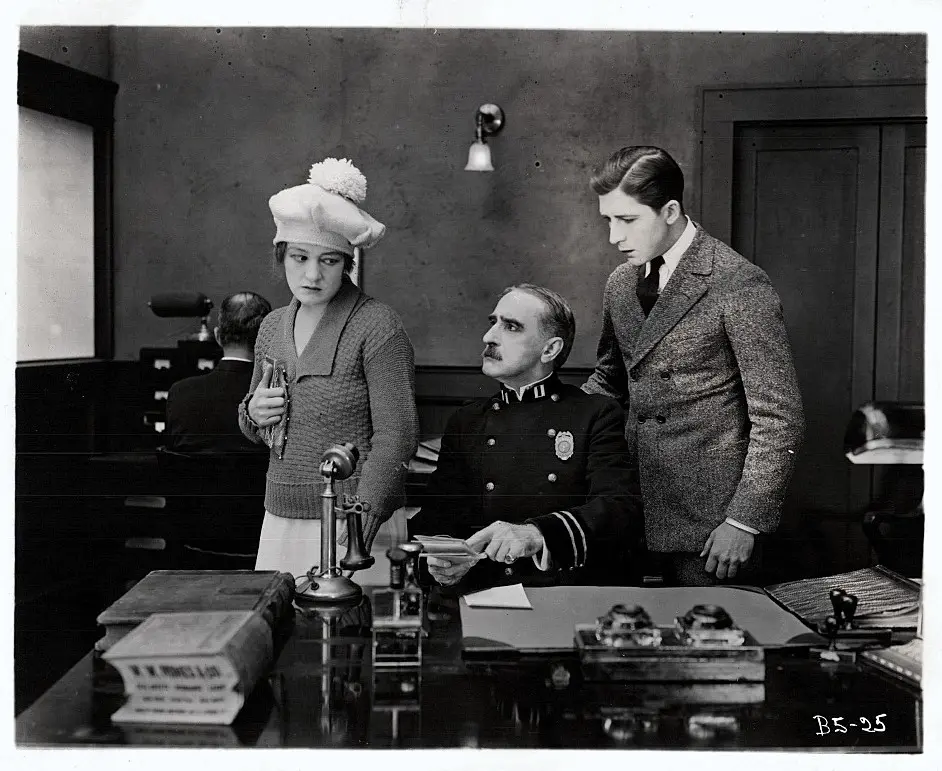
The interplay between Mazie and Allison is particularly fascinating. Initially, Mazie sees a kindred spirit, perhaps even a potential ally, in Allison. The audience, however, is privy to Allison’s machinations, creating a dramatic irony that heightens the suspense. This kind of manipulative character, driven by a singular, powerful motive, was a common trope in silent cinema, often used to propel complex plots. Films like The Ruling Passion often explored characters consumed by overwhelming desires, leading them down paths of moral compromise. Allison's calculated seduction of Henry is a masterclass in manipulation, highlighting the film's exploration of how personal relationships can be weaponized for ulterior motives. The writers demonstrate a keen understanding of human psychology, crafting characters who are both vulnerable and dangerous, capable of profound loyalty and ruthless betrayal.
The narrative builds towards a thrilling climax as Mazie, now fully aware of Allison’s true intentions and the stakes involved, decides to take matters into her own hands. Utilizing her past skills and a newfound resolve, she seduces Henry Hartland, not out of passion, but as a strategic maneuver to gain access to the coveted documents. This scene is handled with remarkable subtlety for the era, relying heavily on Brockwell’s expressive performance to convey Mazie’s internal conflict and determination. Her actions are not without moral cost, but they are driven by a desire to secure her and Jimmy’s future, a future that Allison’s machinations threaten to destroy. With Jimmy’s help, now applying his legitimate skills in a clandestine operation, Mazie successfully recovers the papers. The synergy between Mazie’s cunning and Jimmy’s resourcefulness underscores their partnership, demonstrating that their bond is not merely romantic but also a formidable force when united against adversity.
The film culminates in a surprising and deeply satisfying resolution. Instead of the typical harsh justice often meted out in crime dramas of the period, a sympathetic police inspector, recognizing the extraordinary circumstances and perhaps sensing Mazie and Jimmy’s genuine desire for reform, allows them to escape the clutches of the law. This act of leniency is a powerful statement on the possibility of rehabilitation and the understanding that not all crimes warrant the harshest punishment, particularly when driven by desperation or a desire for a better life. It’s a nuanced approach to justice that distinguishes Thieves from many of its contemporaries, which often favored clear-cut moral victories. One might compare this unexpected compassion to the themes found in A Question of Right, where the boundaries of legality and morality are often blurred, and true justice sometimes lies outside strict adherence to the law.
The silent film era demanded a unique kind of acting, one that relied heavily on pantomime, facial expressions, and body language to convey emotion and narrative. Gladys Brockwell, as Mazie Starrett, rises to this challenge magnificently. Her performance is a masterclass in silent film acting, imbued with a raw intensity that makes Mazie’s struggles and triumphs utterly believable. She navigates Mazie’s journey from hardened criminal to hopeful fiancée, then to a woman driven by necessity, with remarkable grace and power. Her expressive eyes and subtle gestures communicate a wealth of unspoken thoughts and feelings, drawing the audience deep into Mazie's psyche. It's a performance that holds up even today, demonstrating the timeless quality of genuine artistry.
William Scott, as Jimmy Britton, provides a grounding presence, his earnestness a stark contrast to the shadowy world Mazie inhabits. His unwavering belief in honesty and his steadfast love for Mazie serve as the moral compass of the film. John Cossar, as Henry Hartland, embodies the charismatic but ultimately unwitting criminal leader, a man whose confidence blinds him to the machinations unfolding around him. And, of course, the actor portraying Allison Cabot, while perhaps less overtly dramatic, delivers a performance of chilling calculation, making her character a truly memorable antagonist. The ensemble cast, including Yukio Aoyama, Hayward Mack, Bobby Starr, Jean Calhoun, W.C. Robinson, and Marie James, contribute to the rich tapestry of the film, creating a believable and dynamic world.
Frank Beal’s direction is marked by a clear understanding of silent film aesthetics. The cinematography, while perhaps lacking the elaborate tracking shots of later eras, effectively uses composition and lighting to enhance the narrative. Close-ups are employed judiciously to emphasize emotional beats, particularly in Brockwell’s scenes, allowing her expressive face to communicate critical plot points and internal states. The pacing is deliberate, allowing the audience to absorb the unfolding drama and the nuances of the character interactions. There’s a noticeable effort to use visual metaphors and symbolism, common in silent films, to underscore thematic elements. For instance, the contrast between the dimly lit, opulent interiors where Henry Hartland operates and the simpler, more open spaces where Jimmy tries to build an honest life, subtly reinforces the film’s central conflict between vice and virtue. The visual texture of the film, even in its surviving prints, speaks to a craft that prioritized clarity and emotional impact.
The film’s setting, likely a bustling urban environment, is evoked through carefully chosen sets and props, immersing the viewer in the period. While specific details about the production budget are scarce, the film manages to create a convincing world for its characters to inhabit. The action sequences, though not as explosive as modern thrillers, are effective in building tension and excitement, culminating in the high-stakes retrieval of the documents. The editing, crucial in silent cinema, maintains a brisk pace where necessary, yet allows for moments of quiet reflection, ensuring the emotional weight of the narrative is fully felt.
While Thieves is undeniably a product of its time, its core themes of redemption, manipulation, and the quest for a new beginning resonate strongly even today. The film’s exploration of moral ambiguities, particularly through Mazie’s journey, prevents it from being a simplistic morality tale. It acknowledges the complexities of human motivation and the difficult choices individuals often face when trying to escape a predetermined path. The unexpected leniency of the police inspector at the end is a particularly poignant note, suggesting a belief in the inherent goodness of people and the power of second chances. This optimistic, yet earned, conclusion offers a refreshing counterpoint to the more cynical crime dramas that would emerge in later decades.
Comparing Thieves to other films of the period, such as The Bandit of Port Avon, which might also deal with outlaw figures, one finds a shared fascination with the criminal underworld, but Thieves distinguishes itself through its focus on the internal transformation of its protagonist. It’s less about the thrill of the heist and more about the psychological toll and the yearning for a different life. The film's lasting impact lies not just in its engaging plot, but in its thoughtful character development and its ultimately hopeful message. It reminds us that even in the darkest corners of society, the light of redemption can still find a way to shine, offering a chance for a truly new beginning.
In conclusion, Thieves stands as a compelling example of silent cinema’s power to tell complex, emotionally resonant stories. With its stellar cast, particularly Gladys Brockwell’s unforgettable performance, and a narrative that expertly balances suspense with profound character exploration, it remains a film well worth rediscovering for anyone interested in the rich history of early American cinema. It’s a testament to the enduring appeal of tales that delve into the human heart’s capacity for change, even when confronted by the most formidable obstacles.
IMDb —
1926
Community
Log in to comment.