DbcultAccessing Vault...
Cult Review
Senior Film Conservator
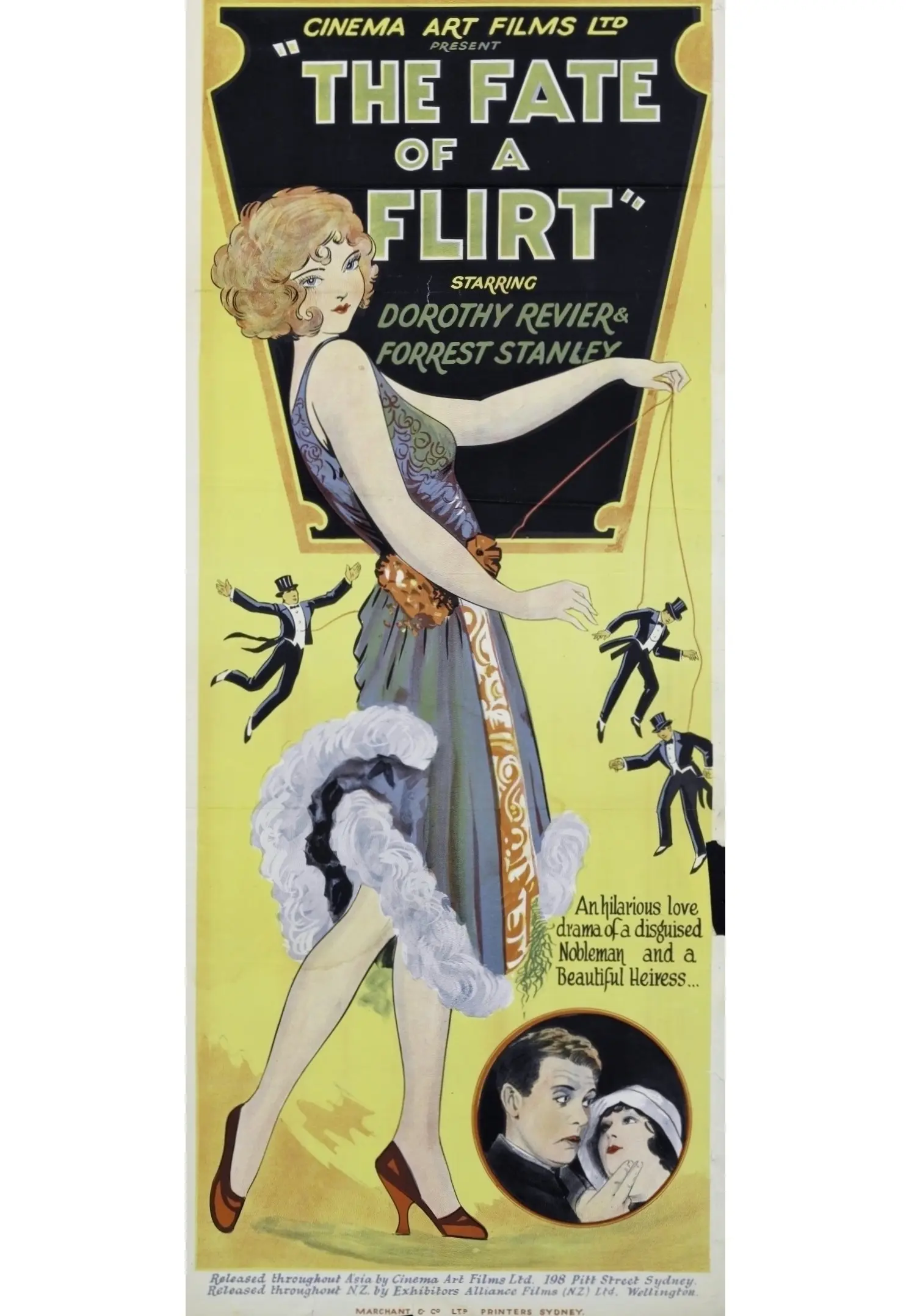
Short answer: Yes, this film is worth watching today, but primarily as a sharp-witted artifact of 1920s class obsession. It is for those who enjoy the 'comedy of manners' genre and silent era enthusiasts who appreciate a plot that relies more on clever social maneuvering than slapstick; it is definitely not for viewers who demand fast-paced action or modern moral sensibilities.
This film works because it treats its 'fake' blackmail scheme with the same urgency as a real thriller, creating a unique tension between farce and drama. This film fails because it relies too heavily on the 'secret royalty' trope which, even by 1925, was beginning to lose its narrative luster. You should watch it if you enjoy early Hollywood's obsession with the British aristocracy and the way it mirrored American social anxieties of the era.
The Fate of a Flirt is not just a romantic comedy; it is a fascinating look at the American 'Nouveau Riche' and their desperate craving for European legitimacy. Forrest Stanley plays James with a certain aloofness that perfectly captures the 'nobleman in exile' vibe. Unlike the more rough-and-tumble heroes of films like Adventures of Tarzan, Stanley’s James wins through wit and manipulation rather than physical prowess.
The setup is classic: the 'downstairs' perspective of the 'upstairs' world. By placing a Lord in the driver’s seat of a Burgess family car, the film allows the audience to laugh at the family's pretension from a position of secret superiority. One particularly effective scene involves James maintaining a stoic, professional face while the Burgess family discusses him as if he were a piece of furniture, unaware that he likely has a longer lineage than all of them combined.
One of the most debatable aspects of the film is James’s decision to use blackmail to secure his marriage. In a modern context, setting up an elderly aunt to be 'caught' in a romantic intrigue seems predatory. However, within the logic of 1925 cinema, it is framed as a brilliant tactical move. It highlights a recurring theme in films like The Better Wife, where social survival often requires a bit of moral flexibility.
The aunt, played with wonderful stiffness by Clarissa Selwynne, is the film's secret weapon. Her transition from a moralizing gatekeeper to a woman terrified of public scandal provides the film's strongest comedic engine. When James’s friend begins his 'courtship,' the film touches on a genuine vulnerability—the fear of social obsolescence—that gives the comedy a slightly darker, more human edge than your standard silent farce.
The film takes an unexpected turn with the arrival of a 'real' blackmailer. This is where the screenplay by Janet Crothers and Albert Lewin (who would later go on to direct sophisticated works like The Picture of Dorian Gray) shows its teeth. The contrast between James’s 'harmless' intrigue and the professional criminal’s threats serves to redeem our hero. It suggests that while the upper class plays games with reputation, there are real predators who play for keeps.
This shift in tone is somewhat jarring. The film moves from the light, airy feel of Pettigrew's Girl into something approaching a crime melodrama. However, the pacing remains tight. The sequence where Jimmy puts the real blackmailer 'on the run' is staged with surprising kinetic energy, utilizing the Burgess estate's geography to create a sense of mounting stakes.
If you are looking for a deep emotional resonance, you might find The Fate of a Flirt a bit thin. However, as a masterclass in 1920s screenwriting structure, it is invaluable. The film manages to juggle multiple subplots—the romance, the fake blackmail, the real blackmail, and the hidden identity—without ever feeling cluttered. It shares a certain DNA with Fate's Frame-Up in how it uses a single lie to catalyze a series of increasingly complex social situations.
For those interested in the evolution of the rom-com, this is a vital link. It shows how early Hollywood was already deconstructing the idea of the 'perfect' hero. James is a liar and a manipulator, yet he is the most likable person in the room because his motives are rooted in a genuine, albeit obsessive, love for Mary Burgess.
The direction is functional rather than experimental. Unlike the avant-garde flourishes found in European cinema of the same year, or the stylized drama of Edelsteine, The Fate of a Flirt relies on clear, medium shots and efficient editing. The cinematography by George Meehan is clean, making good use of the opulent set designs to emphasize the Burgess family's wealth. The lighting in the night scenes, particularly during the blackmail confrontation, shows a burgeoning understanding of how to use shadows to create mood.
"The Fate of a Flirt reminds us that in the 1920s, a title was the ultimate currency, and a chauffeur's uniform was the ultimate disguise for a man who already owned the world."
One unexpected observation is how the film handles the concept of 'loyalty.' James is loyal to Mary, but he is also loyal to his own class. He never truly 'becomes' a chauffeur; he is always a Lord playing a part. This distinguishes the film from something like Freckles, where the protagonist's identity is a journey of discovery. Here, identity is a weapon to be deployed at the opportune moment.
The Fate of a Flirt is a charming, if slightly cynical, look at the lengths one will go to for love—and social standing. It doesn't have the grit of In the Bishop's Carriage or the thematic weight of Pampered Youth, but it possesses a wit that is often missing from modern romantic comedies. It is a film that understands that the heart and the pocketbook are often located in the same place. While the ending is predictable, the journey there is filled with enough clever turns to keep a modern audience engaged. It receives a solid recommendation for anyone looking to understand the 'polite' side of 1920s cinema.
IMDb —
1923
Community
Log in to comment.