DbcultAccessing Vault...
Cult Review
Senior Film Conservator
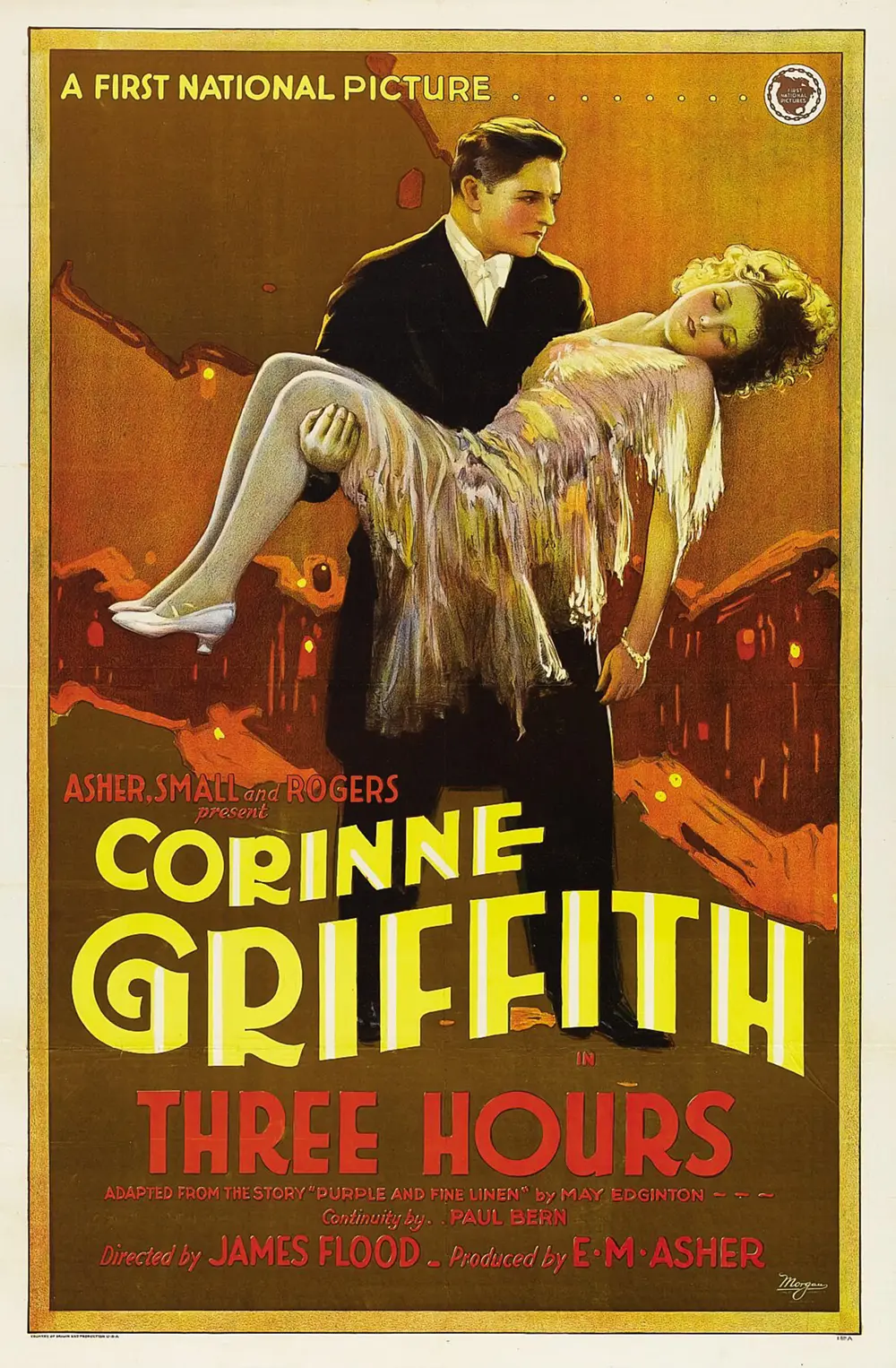
Is Three Hours worth watching today? Short answer: yes, but with significant caveats that speak directly to its era and inherent limitations. This film is a compelling artifact for silent cinema enthusiasts and those interested in early feminist narratives, offering a fascinating glimpse into societal expectations and female agency in the 1920s, but it will likely test the patience of viewers accustomed to modern pacing and narrative complexity.
It’s a film best appreciated by those with a specific interest in cinematic history or a fondness for the unique expressiveness of silent acting. If you’re looking for a brisk, action-packed narrative, this isn’t it. However, if you're prepared for a slow burn that prioritizes character study and social commentary over plot fireworks, there's genuine value to be found.
This film works because of its surprisingly sharp social commentary and Corinne Griffith's captivating screen presence, which elevates even the most melodramatic moments into something genuinely watchable. There's a raw honesty in the portrayal of Madeline's desperation that cuts through the period's typical sentimentality.
This film fails because its narrative contrivances often strain credulity, and the pacing, even by silent film standards, can feel uneven and drawn out. Certain plot points feel less like organic developments and more like convenient mechanisms to move Madeline from one predicament to the next, betraying a script that occasionally prioritizes spectacle over substance.
You should watch it if you appreciate the artistry of silent-era acting and directing, and are willing to engage with a story that, while dated in execution, still touches on universal themes of class, survival, and female agency. It's a valuable piece for understanding the evolution of storytelling in cinema.
At its heart, Three Hours is a stark, almost brutal, examination of how quickly societal standing can unravel. Madeline, portrayed by the luminous Corinne Griffith, isn't merely inconvenienced by her ex-husband's vindictiveness; she is utterly annihilated. Her financial ruin isn't just about losing money; it's about losing her identity, her very place in the world. The film subtly, yet powerfully, argues that for a woman of her era and class, her wardrobe was not merely clothing, but a shield, a uniform, a declaration of self.
When that uniform is threatened, Madeline faces a choice: succumb to destitution and invisibility, or adapt. Her reluctant turn to pickpocketing is not a sudden embrace of criminality but a desperate act of preservation. It's a poignant, if morally ambiguous, attempt to stitch back together the fragments of her former life, one stolen wallet at a time. The film frames this transformation not as a descent into villainy, but as a tragic, ironic necessity, forcing us to question the societal structures that push individuals to such extremes.
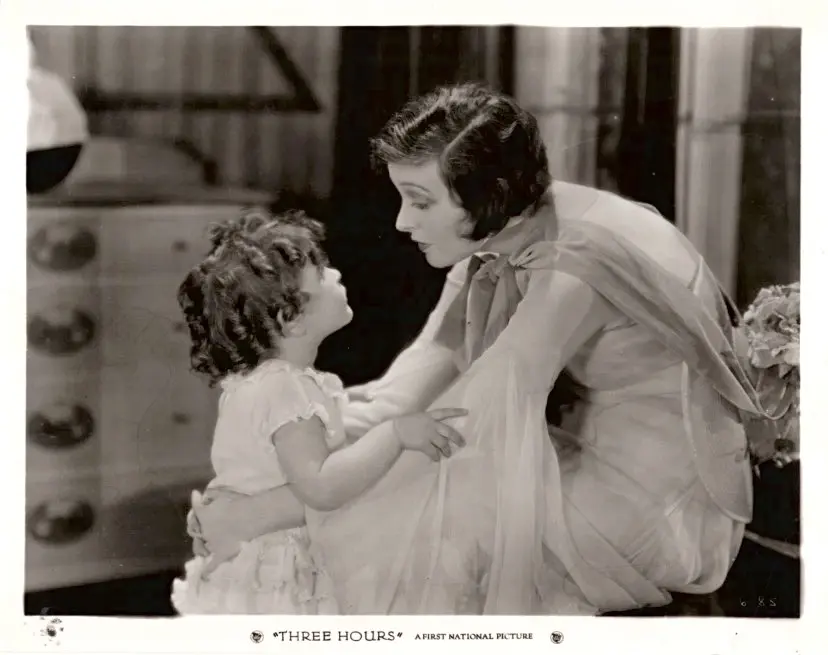
The narrative, while simple on the surface, hints at a deeper critique of patriarchal power and the precariousness of female independence. Madeline's ex-husband isn't just cruel; he wields his financial power as a weapon, reducing her to a state of vulnerability. Her subsequent actions, however desperate, are a defiant, if misguided, assertion of autonomy in a world designed to deny it to her.
Corinne Griffith, often dubbed 'The Orchid Lady' for her delicate beauty, truly shines in Three Hours. Her performance as Madeline is the film's undeniable anchor. Griffith masterfully conveys Madeline's internal turmoil, shifting from aristocratic disdain to raw, desperate vulnerability with an almost balletic grace. There's a particularly powerful sequence where, after her first failed attempt at pickpocketing, her face, in close-up, registers a complex cocktail of humiliation, fear, and a burning resolve. It’s a moment of pure, unadulterated silent screen acting that transcends the limitations of the medium.
She doesn’t just emote; she embodies. Her posture, her subtle hand gestures, the way her eyes dart nervously in a crowd – all contribute to a nuanced portrayal that makes Madeline a sympathetic, if flawed, protagonist. Unlike some of her contemporaries, Griffith avoids overly theatrical gestures, opting instead for a more restrained, yet deeply expressive, style that feels remarkably modern in its sincerity. It’s a performance that holds its own even when compared to the more celebrated works of figures like Mary Pickford in films like How Could You, Jean?, offering a different facet of female strength.
The supporting cast, while less prominent, provides solid foundations for Griffith's performance. Paul Ellis, as the inevitable romantic interest (or perhaps the foil), manages to convey a quiet earnestness, even if his character is somewhat thinly drawn. Hobart Bosworth, playing the vengeful ex-husband, exudes a chilling, understated malice that makes his character genuinely detestable without resorting to caricature. His cold, calculating gaze, even in brief appearances, effectively communicates the depth of his spite.
Mary Louise Miller and Anne Schaefer, in their smaller roles, add texture to Madeline's fractured world. Miller's portrayal of a less fortunate, perhaps more experienced, pickpocket offers a stark contrast to Madeline's amateurish attempts, highlighting the chasm between their worlds and Madeline's rapid descent. Schaefer, often playing a maid or confidante, brings a grounding presence, a silent witness to Madeline's struggles. These performances, though secondary, reinforce the film's social fabric and Madeline's isolation within it.
Paul Bern, known more perhaps for his tragic personal life than his directorial output, demonstrates a surprisingly keen eye for visual storytelling in Three Hours. While not a groundbreaking work of cinematic art, Bern utilizes the camera effectively to convey Madeline's psychological state. There are moments of genuine directorial flair, particularly in the bustling street scenes where Madeline attempts her illicit trade.
The cinematography, though standard for the era, manages to capture the opulent interiors of Madeline's past life with a certain grandeur, contrasting sharply with the grittier, more chaotic streetscapes she later inhabits. The use of deep focus in certain shots allows for a sense of crowded anonymity, perfectly illustrating Madeline's newfound vulnerability in public spaces. One particular scene, where Madeline is overwhelmed by the sheer number of potential 'marks' in a crowded department store, effectively uses quick cuts and overlapping action to convey her anxiety and the daunting nature of her task.
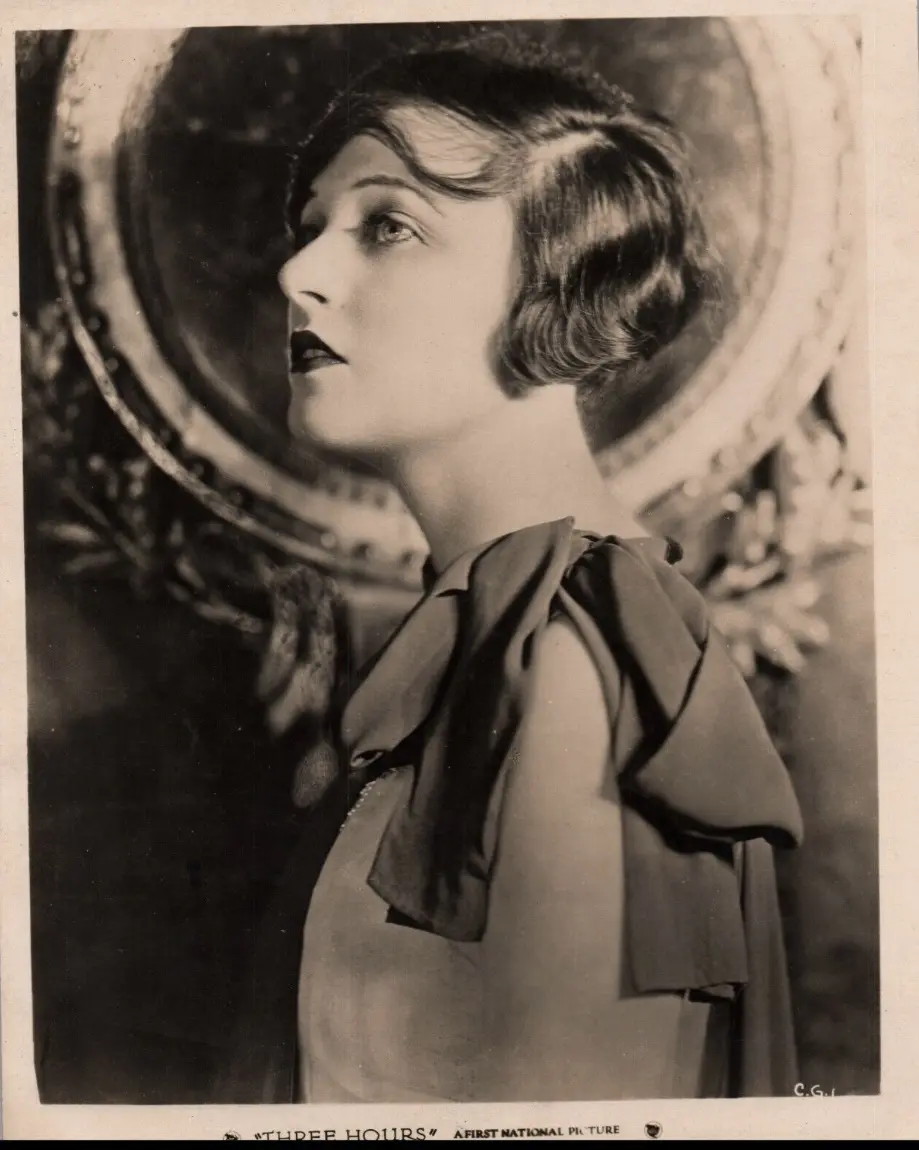
Bern's direction is strongest when it focuses on the internal rather than the external. He allows Griffith the space to perform, often holding on her face to capture the emotional nuances. This is a directorial choice that pays dividends, transforming what could have been a simple melodrama into a more resonant character study. However, the film occasionally suffers from a somewhat static camera, a common affliction of early cinema, which can make some scenes feel less dynamic than they could be. It works. But it’s flawed.
Compared to other films of 1924, such as Sweet Daddy, Three Hours possesses a more grounded, albeit still romanticized, realism. Bern isn't attempting to reinvent the wheel, but he's certainly steering it with a steady hand, extracting solid performances and constructing a coherent visual narrative within the conventions of the time. The film’s tone manages to balance the inherent drama of Madeline’s situation with a subtle undercurrent of social critique, never quite tipping into pure saccharine sentimentality.
Three Hours, despite its age, grapples with themes that remain remarkably relevant. The most striking is the precariousness of class identity, especially for women. Madeline's entire existence is predicated on her social standing and the outward symbols that confirm it. When her wealth is stripped away, her identity crumbles. The film powerfully suggests that for many, particularly women in that era, identity was not an intrinsic quality but a carefully constructed façade, easily shattered by external forces.
Her turn to pickpocketing is a desperate attempt to maintain the illusion of her former self. It's a fascinating commentary on the societal pressure to 'keep up appearances,' even when one's world has fallen apart. The irony is palpable: she must break the law to afford the very clothes that signify her adherence to societal norms. This is a strong, debatable opinion: the film posits that the illusion of status is often more critical than moral rectitude in a superficial society.
The film also touches upon the theme of female agency, or the lack thereof. Madeline is largely a victim of male power – first her ex-husband's vindictiveness, then the societal structures that limit her options for honest work once her fortune is gone. Her choice to become a pickpocket, while criminal, can also be viewed as a desperate act of rebellion, a refusal to simply fade into obscurity. It’s an unconventional observation for a film of its time to suggest such a path for a protagonist, even if ultimately for 'good' reasons.
The film asks us to consider the fine line between survival and morality, and how quickly circumstances can erode one's principles. It's a surprisingly nuanced exploration of these ideas, especially considering the often black-and-white moralizing prevalent in early cinema. The ambiguity of Madeline's choices gives the film a depth that elevates it beyond simple melodrama.
The pacing of Three Hours is, admittedly, its biggest hurdle for contemporary viewers. As with many silent films, the narrative unfolds at a deliberate, sometimes languid, pace. There are extended sequences dedicated to establishing atmosphere or lingering on character reactions that, while offering insight into Madeline's state of mind, can feel drawn out to an audience accustomed to rapid-fire editing and plot progression.
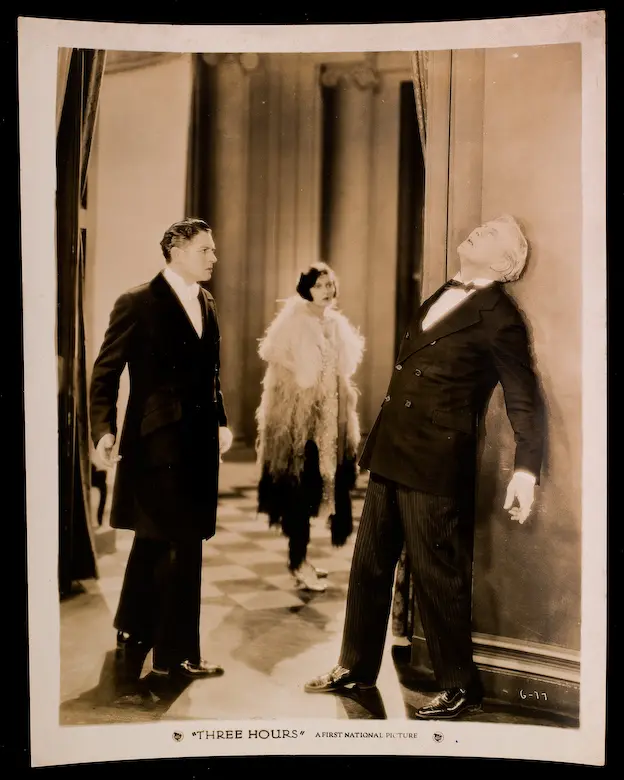
For example, the initial scenes depicting Madeline's life of luxury, while visually appealing, dwell perhaps too long on her opulent surroundings and the mundane aspects of her social engagements. While this contrast is essential for establishing her fall from grace, a slightly tighter edit could have achieved the same effect more efficiently. The film's title, Three Hours, perhaps refers to a compressed period of intense action, but the film itself feels longer than its actual runtime, which is a significant observation.
The tone is largely dramatic, verging on melodramatic at times, but it is tempered by moments of genuine pathos and a surprising undercurrent of social realism. It avoids becoming overly theatrical, thanks in large part to Griffith's grounded performance. The film doesn't shy away from the harsh realities of Madeline's situation, even if it ultimately aims for a resolution that aligns with the era's conventions.
There are no jarring shifts in tone; it maintains a consistent, serious demeanor throughout, which helps in immersing the viewer in Madeline's plight. However, a touch more variation, perhaps a brief moment of levity or a more intense dramatic peak, could have helped alleviate some of the pacing issues and kept the audience more consistently engaged. It’s a steady film, sometimes to its detriment.
Absolutely, but with specific expectations. If you are a cinephile with an appreciation for silent film as an art form, then Three Hours offers a rewarding experience. It provides valuable insight into the acting styles, narrative conventions, and social commentaries prevalent in the 1920s.
For those interested in the evolution of female characters in cinema, Madeline's story is particularly compelling. Her journey, however melodramatic, touches on themes of resilience and the desperate measures individuals take when pushed to the brink. Corinne Griffith's performance alone makes it worth seeking out for anyone studying silent era stars.
However, if your primary interest lies in fast-paced storytelling, modern special effects, or complex character arcs that deviate from traditional morality plays, then Three Hours might not be for you. It demands patience and a willingness to engage with a different mode of cinematic expression. It's not a casual watch. It requires effort.
Why should you watch Three Hours?
You should watch it for a masterclass in silent film acting by Corinne Griffith. It offers a fascinating, if sometimes slow, look at social commentary from the 1920s. The film explores themes of class, desperation, and female agency in a surprisingly thoughtful way for its time. It’s a significant historical document of early cinema.
Three Hours is a fascinating, if imperfect, relic of the silent era. It’s not a film for everyone, nor is it a forgotten masterpiece that will convert skeptics of silent cinema. What it is, however, is a compelling character study anchored by a truly remarkable performance from Corinne Griffith. Her portrayal of Madeline’s descent into desperation and her fight to reclaim a semblance of dignity is both poignant and powerful, offering a window into the complexities of female experience in the 1920s.
While its pacing can be a test of patience and some narrative choices feel a little too convenient, the film’s underlying social commentary and Griffith’s luminous presence elevate it beyond mere historical curiosity. It prompts reflection on the enduring themes of class, identity, and the lengths to which individuals will go to survive and maintain their place in a unforgiving world. For those willing to meet it on its own terms, Three Hours offers a surprisingly rich and thought-provoking experience.
It's a valuable watch for enthusiasts of early cinema and anyone interested in the social history embedded within the art form. It reminds us that even in the silent era, films could speak volumes about the human condition. Don't expect a thrilling ride, but do expect a reflective, sometimes challenging, journey into a bygone era of storytelling. It's worth your time, but choose that time wisely.
IMDb —
1912
Community
Log in to comment.