DbcultAccessing Vault...
6.1/10
Senior Film Conservator
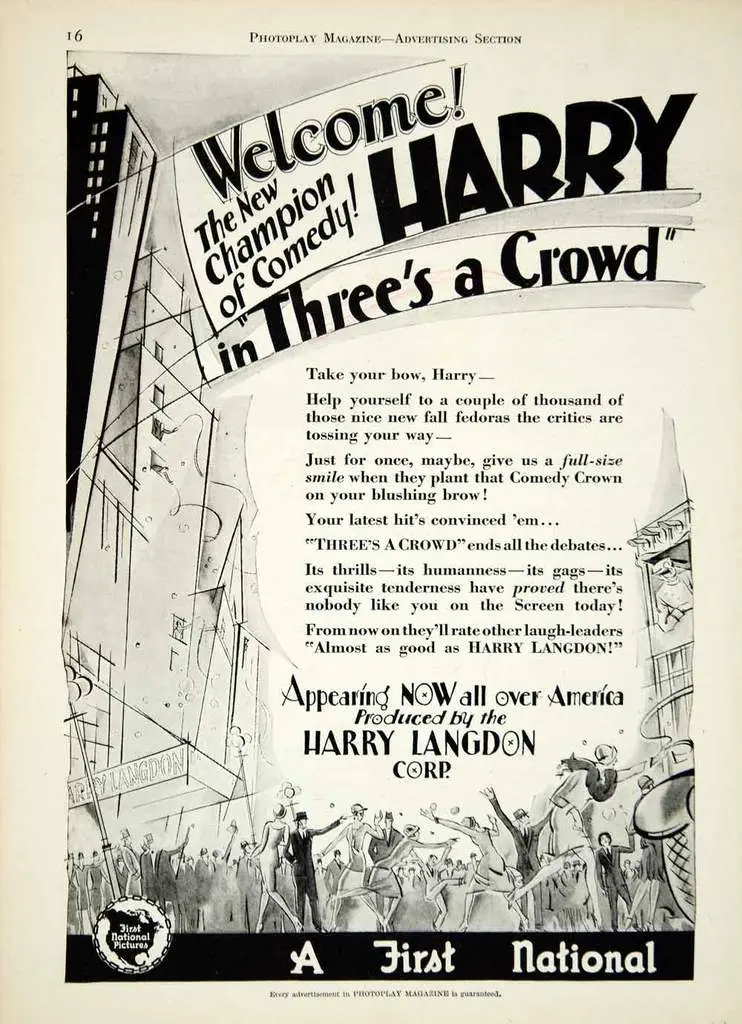
A definitive 6.1/10 rating for a film that redefined the boundaries of cult cinema. Three's a Crowd remains a cornerstone of transgressive art.
Is Three's a Crowd worth watching today? Short answer: absolutely, but with a few crucial caveats. This silent film, a curious blend of profound pathos and understated humor, will deeply resonate with cinephiles, historians of comedy, and those who appreciate the nuanced, often melancholic performances of the silent era. However, it might prove a challenging watch for audiences accustomed to rapid-fire dialogue, explicit narratives, and modern comedic sensibilities.
For those willing to surrender to its unique rhythm, Three's a Crowd offers a singular experience, a quiet character study wrapped in the guise of a slapstick comedy. It’s a film that asks for patience and rewards it with genuine emotional depth.
At its core, Three's a Crowd is a poignant exploration of loneliness and the universal human yearning for connection, filtered through the inimitable persona of Harry Langdon. Langdon, often dubbed the 'fourth genius' of silent comedy alongside Chaplin, Keaton, and Lloyd, crafts a character of profound innocence and childlike vulnerability. His Harry is a tenement worker, a figure seemingly adrift in the bustling machinery of urban life, whose humble shack beside a warehouse serves as both his sanctuary and his prison.
The film opens by establishing this stark isolation. We see Harry observing families, couples, children – the very fabric of domesticity that eludes him. This isn't just a plot device; it's the emotional bedrock of the entire narrative. Langdon’s genius lies in conveying this deep-seated longing not through grand gestures, but through the minutiae of his performance: a wistful gaze, a hesitant smile, the subtle slump of his shoulders. He embodies the quiet desperation of a man on the outside looking in, a feeling that transcends the silent film era and remains acutely relatable.
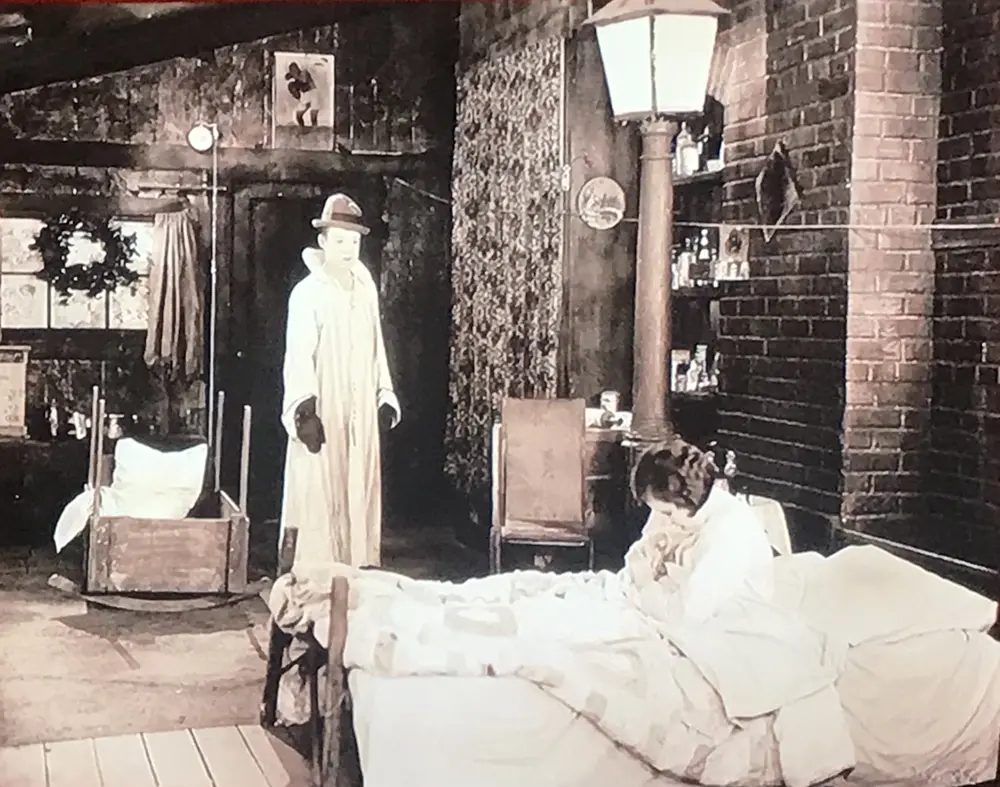
This film works because of Harry Langdon's utterly unique performance, which blends a childlike innocence with a melancholic yearning for connection. His ability to convey profound emotion with minimal expression is nothing short of captivating.
This film fails because its deliberate, often slow pacing and reliance on observational humor may test the patience of contemporary viewers unfamiliar with the conventions of silent cinema.
You should watch it if you appreciate character-driven stories, enjoy the subtle artistry of silent film, or are curious to witness a comedic genius who operated on a distinct wavelength from his more boisterous contemporaries.
Harry Langdon's screen persona is a fascinating anomaly in the history of comedy. While Chaplin had his Tramp's resilience and Keaton his stone-faced ingenuity, Langdon's Harry is a perpetual child, wide-eyed and bewildered by the complexities of the adult world. In Three's a Crowd, this persona is central to the film's success and its enduring appeal.
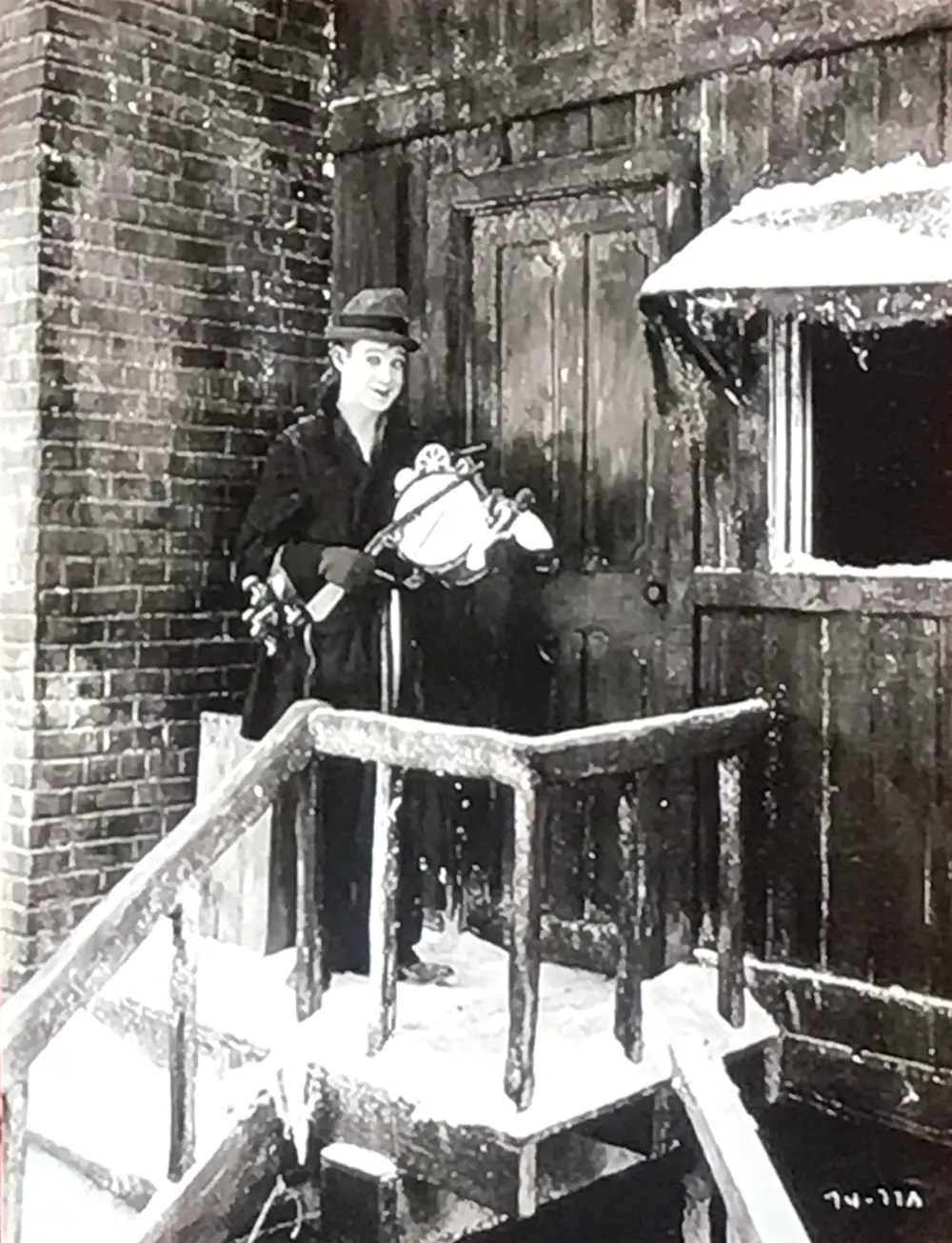
Langdon's physical comedy is less about acrobatic stunts and more about reaction. A simple gesture, like his careful handling of a baby or his bewildered attempts to understand adult relationships, becomes a source of both humor and pathos. He doesn't just perform gags; he embodies a state of being. His character exists in a perpetual state of innocent confusion, making every interaction a potential comedic or dramatic moment.
Consider the scene where Harry attempts to care for a baby. It's a masterclass in understated comedy. His movements are hesitant, his eyes darting with a mix of fear and paternal instinct. He fumbles, not with exaggerated clumsiness, but with the genuine awkwardness of someone utterly out of their depth yet driven by a pure desire to help. This isn't laugh-out-loud slapstick; it's a gentle, knowing chuckle, born from empathy.
The supporting cast, including Julia Brown and Gladys McConnell, serve primarily to highlight Harry's innocence and his longing. They are the figures of the domestic bliss he craves, or the obstacles to it. Their performances, while not as central as Langdon's, provide the necessary human context for his character's journey.
Directed by Langdon himself, alongside Arthur Ripley, Three's a Crowd benefits from a clear, empathetic vision. The directorial choices consistently serve to amplify Harry's inner world. The framing often emphasizes his smallness against larger backdrops – the towering warehouse, the bustling street – visually reinforcing his isolation.
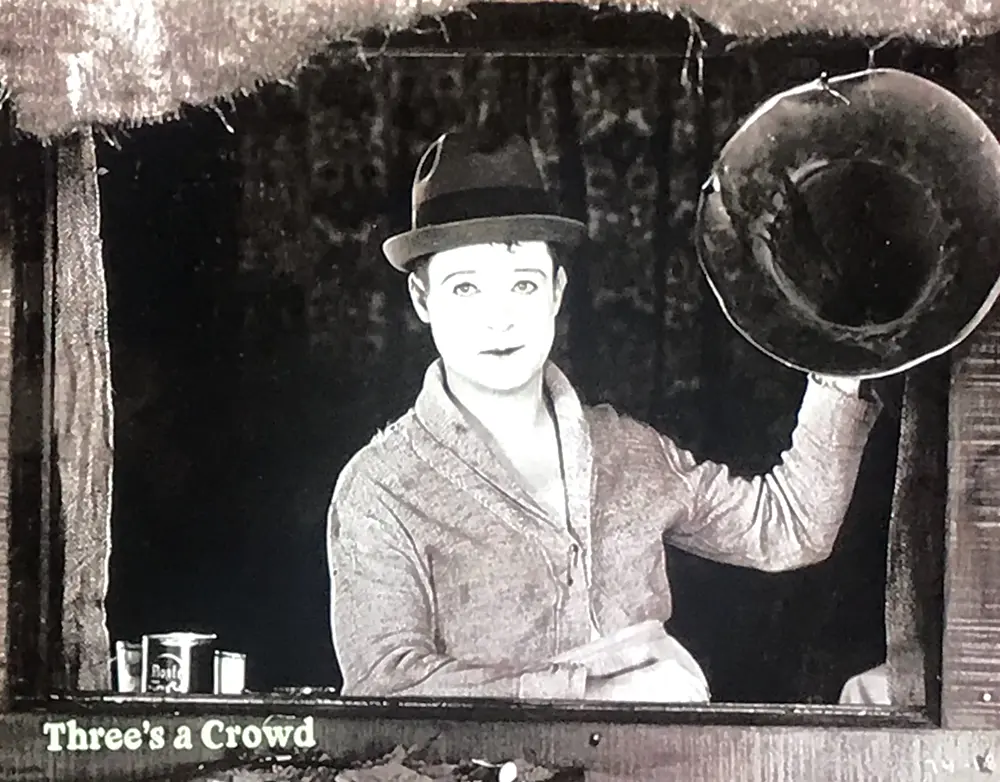
The cinematography, while not overtly flashy, is effective in establishing mood and character. Close-ups on Langdon's face are particularly impactful, allowing the audience to read the subtle shifts in his expression, from hope to despair, from confusion to a glimmer of understanding. The use of light and shadow, typical of the era, also plays a role in defining the often-gritty reality of his tenement existence.
Pacing is perhaps the most divisive aspect of the film. It is undeniably slow, especially by modern standards. However, this deliberate pace is not a flaw; it's a feature. It allows the audience to fully immerse themselves in Harry's contemplative world, to absorb the quiet moments of observation and reflection that define his character. This isn't a film that rushes its jokes or its emotional beats; it lets them unfold organically.
The tone is a delicate tightrope walk between comedy and sadness. Langdon's humor is rarely boisterous; it's more often born from awkward situations or his character's endearing naivety. Yet, underlying every scene is a current of melancholy, a reminder of Harry's unfulfilled desires. This tonal complexity is what elevates Three's a Crowd beyond mere slapstick.
My most surprising observation about Three's a Crowd is how effectively it uses silence to convey the profound weight of Harry's loneliness. In an era of non-diegetic music and title cards, the quiet moments feel deafening, amplifying his isolation more than any dialogue ever could. It’s a powerful, almost meditative quality that few films, silent or otherwise, truly achieve.
Beyond the comedic moments, Three's a Crowd delves into deeper themes. Harry's longing for a family is not just a superficial desire; it's a search for identity and belonging. He sees himself reflected, or rather, unreflected, in the conventional family units around him. His struggle is to find his place in a world that seems to have no ready slot for a man of his innocent, childlike disposition.
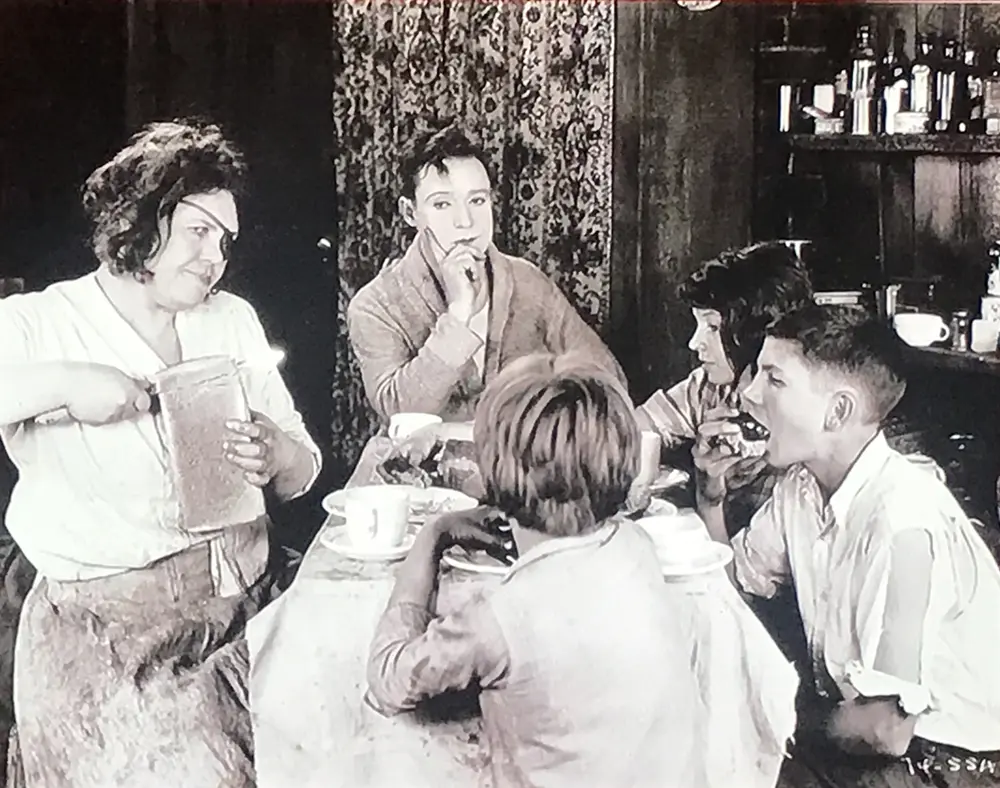
The film subtly critiques societal expectations of manhood and domesticity. Harry isn't the archetypal strong, providers figure; he's gentle, vulnerable, and somewhat inept by traditional standards. Yet, his pure heart and genuine desire for connection make him profoundly sympathetic. It’s a quiet rebellion against the stoic male ideal.
The narrative, though simple, is rich with potential for interpretation. Is Harry's 'oddness' a source of his charm or his perpetual barrier? The film invites viewers to ponder these questions without offering easy answers, a hallmark of more sophisticated storytelling, even in the silent era.
One could argue that the film's episodic structure, while allowing for individual comedic moments, sometimes hinders a stronger narrative drive. Unlike, say, The Wolf Man, which builds tension relentlessly, Three's a Crowd meanders, much like Harry himself, through his small world. This isn't necessarily a fault, but it's a stylistic choice that requires a particular kind of engagement from the viewer.
Yes, Three's a Crowd is absolutely worth watching today, but with the right mindset. It’s not a film to be approached casually, expecting instant gratification or uproarious laughter. Instead, it demands a willingness to engage with a different pace, a different comedic language, and a different mode of storytelling.
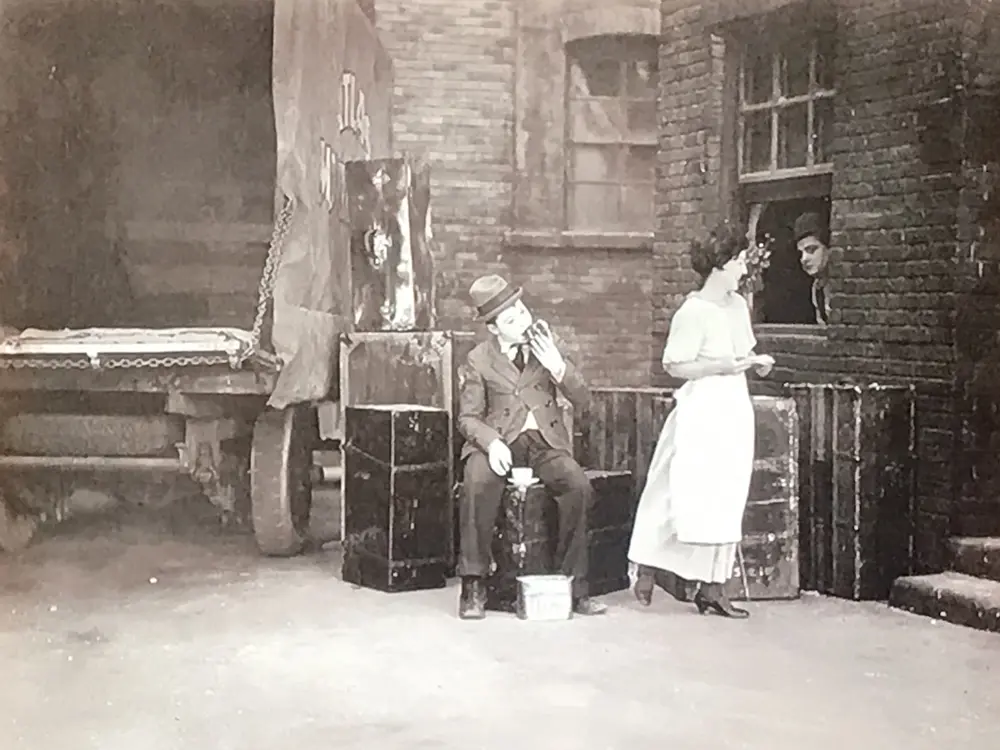
It’s a historical document, offering insight into the unique comedic genius of Harry Langdon, whose career trajectory was tragically cut short by the advent of sound. It also stands as a testament to the emotional depth and artistic sophistication silent cinema was capable of achieving.
For those who appreciate the subtle art of performance and character study, Three's a Crowd is a quiet revelation. It works. But it’s flawed. Its slow burn might not appeal to everyone, but its emotional core is undeniably potent.
If you're a fan of Charlie Chaplin's pathos-filled humor, Buster Keaton's deadpan brilliance, or even more modern directors who prioritize character and mood over plot, you'll find much to admire here. It sits comfortably alongside other thoughtful silent comedies, offering a distinct flavor.
Three's a Crowd is a film that demands patience but richly rewards those who offer it. It’s not a laugh-a-minute riot, nor is it a grand cinematic spectacle. Instead, it’s a deeply human story, told with quiet grace and the singular genius of Harry Langdon. It’s a film that lingers, its melancholic charm and understated humor leaving a lasting impression. While it won't appeal to everyone, for the discerning viewer, it’s an essential piece of silent cinema, showcasing a comedic talent tragically underappreciated in his time. Give it a chance; you might just find yourself captivated by the Odd Fellow's quiet world.
IMDb —
1921
Community
Log in to comment.