DbcultAccessing Vault...
Cult Review
Senior Film Conservator
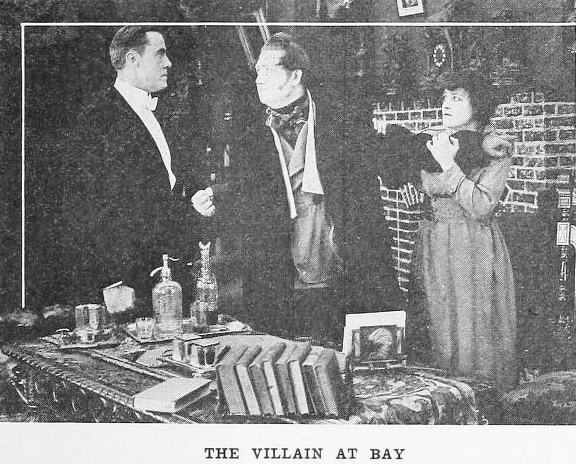
In the annals of early cinema, few narratives plumb the depths of human folly and the corrosive nature of vengeance with the stark, unflinching intensity of 'The Fool's Revenge' (1916). This isn't merely a story of betrayal and retribution; it's a meticulously constructed tragedy, a grand opera of human error played out in the silent era's nascent visual language. As we unpack this cinematic artifact, we're not just observing a plot unfold; we're witnessing the intricate mechanics of a soul's unraveling, a testament to how the past, unaddressed, can consume the present and devour the future.
The film introduces us to Anson, a character initially defined by the vibrant, uninhibited joy of his profession as a clown. His life, seemingly painted in broad strokes of happiness, revolves around the tender affections of his wife and their small daughter. This idyllic domestic tableau, however, is but a fleeting moment of calm before an inevitable storm. The intrusion of Randall, a figure of dissolute wealth and moral depravity, acts as the serpent in this Eden. Randall's insidious charm and relentless pursuit slowly, agonizingly, alienate Mrs. Anson's love, culminating in her heartbreaking abandonment of her family. This initial act of betrayal sets in motion a chain of events that will resonate with devastating consequences, echoing the inescapable fate seen in narratives like What the Gods Decree, where human choices, however small, ripple outwards to define destiny.
Anson's immediate reaction is one of visceral, animalistic rage. Tracking his errant wife to Randall's lair, he executes a brutal, desperate act of violence. The murder of his wife and the strangulation of Randall, leaving him for dead, are not acts of cold calculation but of raw, unbridled agony. This sequence, undoubtedly shocking for its time, marks Anson's irreversible descent into a darker self. It's a primal scream against the injustice inflicted upon him, a moment where the jovial clown is irrevocably shattered, replaced by a specter of grief and nascent vengeance. The disposal of his wife's body over a cliff is a grim, almost ritualistic act, severing his ties to the past not just emotionally but physically, a desperate attempt to erase the evidence of his shattered world.
Following this traumatic rupture, Anson undergoes a profound metamorphosis. He channels his once-lavished affection onto his daughter, Ethel, transforming this paternal bond into the sole anchor of his existence. Simultaneously, he abandons the stage, diving headfirst into the burgeoning oil industry, where he accumulates immense wealth. This period of opulence, however, is a gilded cage. Despite his material success and the profound love he holds for Ethel, the memory of Randall and the ruin he wrought remains a festering wound, a relentless obsession that wealth cannot assuage. This relentless pursuit of a past grievance, even amidst new prosperity, is a powerful thematic element, reminiscent of the enduring psychological scars explored in films like Aftermath, where characters grapple with trauma that transcends time and circumstance.
The true genius, and indeed the true horror, of 'The Fool's Revenge' lies in the elaborate, almost theatrical revenge plot Anson devises. Learning of Randall's marriage and his impending visit to the Mendell household—a man Anson has become a business partner with, though they've never met—Anson sees his opportunity. He orchestrates his own 'absence' abroad, suggesting his 'confidential man' take up residence in Mendell's home. This 'confidential man' is, of course, Anson himself, meticulously disguised as a butler. This choice of disguise is deeply symbolic, a return to a performative role, albeit one of subservience, allowing him to observe and manipulate from the shadows. The irony is palpable: the once flamboyant clown now dons the garb of invisibility, a silent puppet master pulling the strings of his elaborate, living trap.
As the disguised butler, Anson becomes a meticulous observer of Mendell's character, noting his flirtatious attentions towards the new Mrs. Randall. With chilling precision, Anson subtly, malevolently encourages this burgeoning liaison, seeing it as the perfect means to inflict upon Randall the same pain of betrayal he once endured. The audience is privy to Anson's sinister glee, the quiet satisfaction of a man consumed by his singular purpose. Yet, this intricate web of manipulation begins to fray under the relentless, unpredictable currents of human desire. Mendell, ever the philanderer, encounters Anson's daughter, Ethel, during a ride and is instantly smitten. Unaware of her parentage, his predatory gaze shifts, a cruel twist of fate that Anson, blinded by his vengeful focus, cannot foresee.
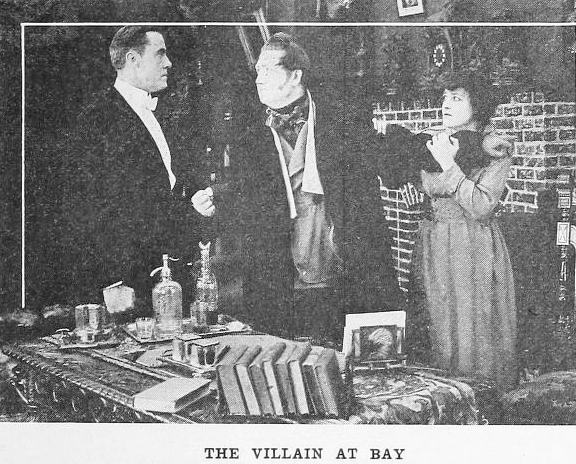
The narrative accelerates into a whirlwind of tragic misunderstandings. Mendell, driven by his infatuation, breaks into Anson's home, abducts Ethel, and speeds away in an automobile. The ensuing wreck leaves Ethel unconscious, leading to her being taken into the Mendell home and placed in the very room recently vacated by Mrs. Randall, who, tired of Mendell's attentions, has departed. The layers of dramatic irony here are almost unbearable. Anson, recovering from slight injuries sustained in the accident, returns home, his mind still fixated on his grand scheme. He goes to the room where Ethel is sleeping, still believing it to be Mrs. Randall. In a moment of sickening misguidance, Anson, the architect of his own undoing, suggests Mendell take the woman he admires to his private apartment. This scene is a masterclass in dramatic tension, the audience agonizingly aware of the impending catastrophe while Anson remains tragically oblivious.
The climax is a devastating crescendo of horror. Anson, still mistaking his own daughter for Mrs. Randall, slips into the room, chloroforms her, and then carries her to Mendell's den. He leaves her, vulnerable and unconscious, in Mendell's power, believing he has orchestrated the perfect revenge. With the final piece of his intricate puzzle seemingly in place, he telephones Randall, informing him that his wife is in an apartment with Mendell. Randall, consumed by a familiar fury, rushes to the apartment, kills Mendell, only to discover, with a horrifying jolt, that the woman in the room is not his own wife. The sequence is a brutal mirroring of Anson's past, a cyclical act of violence and betrayal. This moment, however, is merely a prelude to the ultimate, soul-shattering revelation.
The true 'big moment' of the action, as the original synopsis aptly describes, is Anson's discovery that the woman he has delivered to Mendell's clutches, the woman whose ruin he meticulously orchestrated, is his own beloved daughter. This twist is not merely a plot device; it's a gut-wrenching exploration of the self-destructive nature of vengeance. Anson's obsession has not only consumed him but has, through a cruel twist of fate he himself engineered, led him to inflict the ultimate harm upon the one person he truly loved. The irony is profound and unforgiving. His meticulous plan, designed to punish Randall, ultimately punishes Anson himself in the most excruciating way imaginable. This kind of devastating, self-inflicted tragedy echoes the deep moral quandaries found in films exploring the pitfalls of ambition and revenge, perhaps even more acutely than the intricate schemes in The Vampires: The Poisoner, where the consequences, while severe, rarely strike with such personal, familial horror.
William H. Tooker's portrayal of Anson must have been a tour de force, navigating the character's vast emotional spectrum without the aid of spoken dialogue. From the carefree clown to the grief-stricken avenger, the calculating manipulator, and finally, the utterly broken father, Tooker's performance would have relied heavily on physical expressiveness, subtle gestures, and the profound power of his gaze. The challenge of conveying such complex psychological states through the silent medium demands an actor of immense presence and skill, much like the compelling central performances in The Royal Slave or Evangeline, where emotional depth was paramount. Warner Oland, as Randall, embodies the archetypal libertine villain, his presence a catalyst for destruction. Ruth Findlay, as Ethel, represents the innocent caught in the crossfire of adult vendettas, her purity tragically defiled by her father's misguided quest for justice.
Thematically, 'The Fool's Revenge' is a stark meditation on the futility and self-destructive nature of vengeance. It argues that obsession, when allowed to fester, blinds an individual to all reason, leading them down a path of inevitable ruin. Anson’s transformation from a loving father to a vengeful schemer, and then to a unwitting orchestrator of his daughter’s suffering, serves as a powerful cautionary tale. The film also touches upon the precariousness of social standing and the corrupting influence of wealth, as seen in Randall's initial transgression. The rigid social structures and moral codes of the era are implicitly critiqued, much like the societal observations in Snobs, though 'The Fool's Revenge' delves into a far darker psychological landscape.
The narrative's intricate plotting, with its numerous twists and turns, showcases a sophisticated understanding of dramatic tension for its time. Will S. Davis and Tom Taylor, the writers, crafted a story that relies heavily on dramatic irony and the audience's increasing dread. The layering of mistaken identities and unforeseen consequences builds an almost unbearable suspense, culminating in a reveal that is both shocking and profoundly tragic. This complexity in storytelling distinguishes it, perhaps even elevating it above simpler melodramas of the period, demonstrating an ambition to explore deeper, more unsettling facets of the human condition. The film, in its relentless pursuit of tragedy, forces viewers to confront the uncomfortable truth that sometimes, the greatest villains are not external forces, but the destructive impulses within ourselves.
In conclusion, 'The Fool's Revenge' stands as a chilling testament to the self-immolating power of vengeance. It is a narrative that transcends its silent film origins, speaking to universal themes of love, loss, betrayal, and the devastating consequences of unchecked obsession. The film's lasting impact lies not just in its shocking plot twists but in its profound exploration of a father's love twisted into an instrument of his own undoing. It reminds us that while the quest for justice can be noble, when it descends into a relentless pursuit of retribution, it risks consuming not only the object of its ire but also the very soul of the avenger, leaving behind only the ashes of what once was. A powerful, if harrowing, experience, it solidifies its place as a significant, albeit dark, jewel in the crown of early cinematic storytelling.
IMDb —
1928
Community
Log in to comment.