DbcultAccessing Vault...
6.6/10
Senior Film Conservator
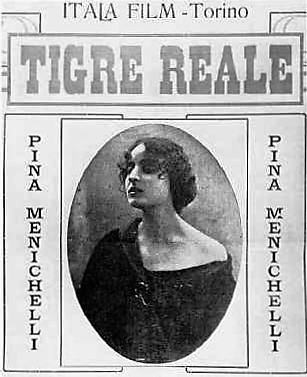
A definitive 6.6/10 rating for a film that redefined the boundaries of cult cinema. Tigre reale remains a cornerstone of transgressive art.
In the annals of early cinematic artistry, Giovanni Verga's "Tigre reale" emerges not merely as a film adaptation but as a visceral exploration of human fragility and the indelible scars left by a tumultuous past. This silent Italian masterpiece, brought to life with an almost hypnotic intensity by the incomparable Pina Menichelli, plunges its audience into the labyrinthine psyche of Frau Natka, a Russian countess whose aristocratic bearing belies a soul ravaged by revolutionary upheaval and a love affair tragically truncated. Menichelli, a towering figure of the Italian diva era, imbues Natka with a captivating blend of vulnerability and fierce resilience, rendering her a character as enigmatic as she is compelling. The narrative, a tapestry woven with threads of passion, loss, and an unyielding sense of destiny, unfolds against a backdrop that hints at the seismic political shifts of early 20th-century Europe, even as it focuses acutely on the internal landscape of its protagonist.
Natka's existence is a precarious ballet, each graceful movement a deliberate concealment of the profound wounds she carries. We are introduced to a woman of refined elegance, yet beneath this polished exterior lies the tormented memory of a marriage to a revolutionary, a union that, we are told, ended in an unspecified yet devastating tragedy. This past, rather than remaining a static historical fact, actively permeates her present, casting a long, unyielding shadow over every encounter, every fleeting moment of potential solace. It's a testament to Menichelli's nuanced performance that she conveys this internal struggle with such potent conviction, often through subtle gestures, the flicker of an eye, or the poignant curve of her lips. Her portrayal transcends mere acting; it is an embodiment, a channeling of Natka’s profound sorrow and her desperate, often futile, attempts to outrun the echoes of her former life.
The literary pedigree of "Tigre reale," stemming from Giovanni Verga, immediately elevates its thematic depth. Verga, a master of Verismo – the Italian literary movement akin to naturalism – was renowned for his stark, unvarnished portrayals of human suffering, social injustice, and the relentless grip of fate on ordinary lives. While "Tigre reale" might lean into the melodramatic conventions prevalent in silent cinema, Verga’s influence ensures a grounding in psychological realism, infusing the grand gestures and heightened emotions with an underlying current of genuine human anguish. This isn't merely a story of a countess; it’s a study in how personal trauma intertwines with broader historical currents, how individual destinies are shaped and often shattered by forces far greater than themselves. The film, therefore, becomes a fascinating bridge between literary realism and cinematic spectacle, a characteristic that perhaps finds a distant echo in the social observations woven into narratives like "The Dawn of a Tomorrow", though "Tigre reale" delves into a far more profound and tragic romantic entanglement.
The visual language of "Tigre reale" is quintessentially that of the silent era, relying heavily on striking compositions, expressive acting, and evocative intertitles to convey the narrative's emotional weight. Director Febo Mari, who also stars in the film, demonstrates a keen understanding of how to harness the medium's strengths to amplify the dramatic impact. Close-ups of Menichelli's face become windows into Natka's soul, each expression a carefully calibrated revelation of her inner turmoil. The cinematography, though perhaps constrained by the technical limitations of its time, manages to create an atmosphere of both opulent grandeur and suffocating despair, mirroring Natka's internal conflict. The use of light and shadow, a hallmark of early cinema, is particularly effective in highlighting the character's dual nature: the luminous countess and the tormented woman within. This visual storytelling, relying on pantomime and stark imagery, shares a lineage with other visually driven narratives of the period, such as "The Life and Death of King Richard III", where historical gravitas is conveyed through powerful, often theatrical, visual cues.
Pina Menichelli's performance as Frau Natka is, undeniably, the gravitational center of "Tigre reale." Her acting style, characteristic of the Italian divas, is one of heightened emotion and grand gestures, yet she possesses an uncanny ability to infuse these theatrical flourishes with genuine pathos. She doesn't just portray sorrow; she embodies it. Her eyes, often wide and luminous, convey a world of unspoken grief and longing. Her movements are fluid, almost serpentine, suggesting a creature of beauty trapped within a cage of her own making – or perhaps, a cage forged by the cruel hand of fate. This magnetic presence was what captivated audiences of the era, elevating actresses like Menichelli to superstardom. Her ability to command the screen, even without dialogue, is a masterclass in silent film acting, a skill that few could rival. One might draw a parallel to the compelling, often tragic female leads found in contemporary dramas, where an actress's charisma carries the emotional weight, though perhaps without the same overt theatricality inherent to the silent era.
The supporting cast, including Febo Mari himself, Enrico Gemelli, Valentina Frascaroli, Alberto Nepoti, Bonaventura Ibáñez, Gabriel Moreau, and Ernesto Vaser, provides a robust framework for Menichelli's central performance. While their roles may not possess the same depth as Natka's, each actor contributes to the film's immersive world. Febo Mari, as director and co-star, creates a compelling dynamic with Menichelli, their on-screen chemistry adding another layer of complexity to the already intricate emotional landscape. The interactions between characters, though often driven by melodramatic conventions, feel authentic within the film's established reality, propelling Natka's story forward with a relentless, almost fated momentum. The ensemble works in concert to build a believable, if heightened, world where passion and tragedy are inextricably linked, much like the intricate social dynamics explored in films such as "Graustark", albeit with a darker, more fatalistic undertone.
"Tigre reale" is more than just a tragic romance; it's a commentary on the enduring power of the past and the futility of escaping one's true nature. Natka's "troublesome past" is not merely a narrative device; it is a living entity that dictates her choices and shadows her future. The film subtly explores themes of societal expectation versus individual desire, the constraints placed upon women in aristocratic circles, and the devastating consequences of suppressed emotions. The "uncertain future" alluded to in her character description is a direct consequence of her inability to fully reconcile with her history, creating a palpable sense of impending doom that permeates the entire film. This exploration of a protagonist haunted by past actions and relationships finds a thematic resonance in films like "The Crime and the Criminal" or "The Man Who Disappeared", where the consequences of past events inevitably catch up with the characters, though "Tigre reale" frames it through a lens of romantic tragedy rather than explicit criminality.
The film stands as a significant artifact of Italian silent cinema, a period often characterized by its opulent productions, passionate narratives, and the rise of the diva. These films, while sometimes dismissed as mere melodramas, were crucial in establishing cinematic language and developing the art of screen acting. "Tigre reale," with its grand emotional scope and powerhouse performance from Menichelli, exemplifies the best qualities of this era. It showcases how silent films, far from being primitive, were capable of conveying profound emotional complexity and engaging audiences on a deeply visceral level. The artistic ambition and technical prowess evident in "Tigre reale" helped pave the way for future generations of Italian filmmakers, demonstrating the medium's potential for both entertainment and serious artistic expression.
The legacy of "Tigre reale" is not just in its individual artistic merits but also in its contribution to the broader understanding of cinematic history. It reminds us of a time when storytelling relied solely on visual cues, music, and the raw power of performance to captivate and move audiences. The film's depiction of a woman grappling with the consequences of her choices and the weight of her past resonates even today, proving that fundamental human dilemmas transcend the limitations of any specific cinematic era or technological advancement. It's a poignant reminder that the most compelling stories are often those that delve into the depths of the human heart, exploring its capacity for both immense love and profound sorrow.
In an era where film production was still in its nascent stages, "Tigre reale" demonstrates a sophisticated understanding of dramatic pacing and character development. The unfolding of Natka's story, from her initial enigmatic presence to the full revelation of her tragic past, is handled with a delicate balance, building suspense and empathy without resorting to overt exposition. The power lies in what is left unsaid, in the inferences the audience is invited to draw from Menichelli's compelling facial expressions and body language. This subtlety, combined with the inherent theatricality of silent film, creates a unique viewing experience that demands active engagement from the spectator, a quality that perhaps differentiates it from more straightforward narratives of action or adventure.
The film’s title itself, "Tigre reale" (Royal Tiger), is deeply symbolic, hinting at Natka’s untamed spirit, her inherent danger, and the regal yet perilous nature of her existence. Like a tiger, she is beautiful, powerful, and capable of great passion, but also marked by an instinct for survival forged in hardship and a capacity for ferocity. This animalistic metaphor underscores the raw, almost primal emotions at play within the narrative, distinguishing it from more genteel melodramas. It suggests a woman who, despite her aristocratic facade, is driven by fundamental desires and fears, echoing the intense, often violent, passions explored in Verga’s literary works. This fierce characterization sets Menichelli's Natka apart, making her a truly memorable figure in silent cinema.
Furthermore, the film serves as a historical document, offering a glimpse into the social mores and anxieties of its time. The portrayal of a Russian countess entangled with a revolutionary speaks to the broader European political landscape of the early 20th century, a period rife with social unrest and radical ideologies. While not overtly political, the personal tragedy of Natka is inextricably linked to these larger societal forces, suggesting that even the most intimate aspects of life are shaped by the tides of history. This subtle interweaving of the personal and the political adds a layer of intellectual richness to the film, inviting viewers to consider the broader implications of Natka's plight.
The enduring appeal of "Tigre reale" lies in its ability to transcend its historical context and speak to universal themes of love, loss, and the relentless pursuit of happiness in the face of insurmountable odds. Pina Menichelli's performance remains a tour de force, a masterclass in conveying complex emotions without the aid of spoken dialogue. It's a film that reminds us of the power of visual storytelling and the profound impact a single, charismatic performer can have on an audience. For those interested in the origins of cinematic melodrama, the Italian diva phenomenon, or simply a compelling human story, "Tigre reale" offers a richly rewarding experience. Its artistic integrity and emotional resonance ensure its place as a significant, albeit often overlooked, gem of early cinema. The film's exploration of a woman's struggle against her past, her attempts to forge a new identity, and the societal pressures she faces, makes it a timeless narrative, resonating with the universal human experience of seeking redemption and peace.
In comparing "Tigre reale" to other films of its era, one might consider its dramatic intensity alongside the emotional core of "Lights of London", though "Tigre reale" arguably delves deeper into psychological torment. The intricate web of personal relationships and societal expectations could also draw a comparison to the narrative structures found in "The Little Gray Lady", where female protagonists navigate challenging circumstances. However, "Tigre reale" distinguishes itself through its operatic scale of emotion and the distinct Verismo influence from Giovanni Verga, which grounds its melodrama in a more stark, fatalistic reality. This blend of high drama and underlying realism is a unique characteristic that sets it apart from many of its contemporaries, making it a compelling study for film historians and enthusiasts alike.
The film’s exploration of an "uncertain future" for Frau Natka is not merely a plot device but a profound comment on the human condition. Her journey is one of perpetual struggle, a desperate attempt to outrun the specters of her past revolutionary marriage and its tragic conclusion. This constant tension between what was and what might be creates a narrative drive that keeps the audience captivated, eager to witness whether Natka will ultimately find peace or be consumed by her history. This thematic thread, of a character grappling with an inescapable past, is a powerful and universal one, giving "Tigre reale" a timeless quality that transcends its silent film origins and continues to resonate with contemporary audiences who appreciate depth and emotional complexity in storytelling.

IMDb —
1930
Community
Log in to comment.