DbcultAccessing Vault...
Cult Review
Senior Film Conservator
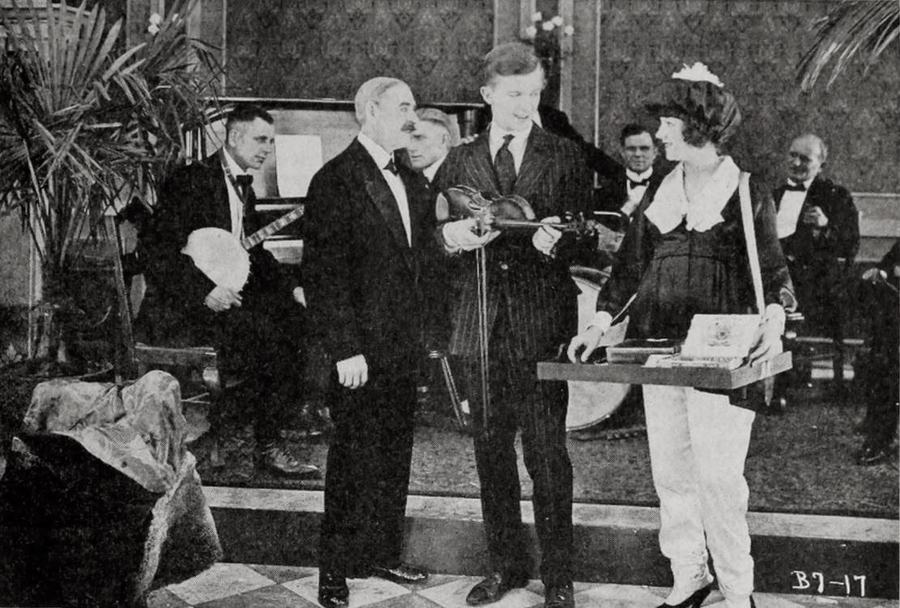
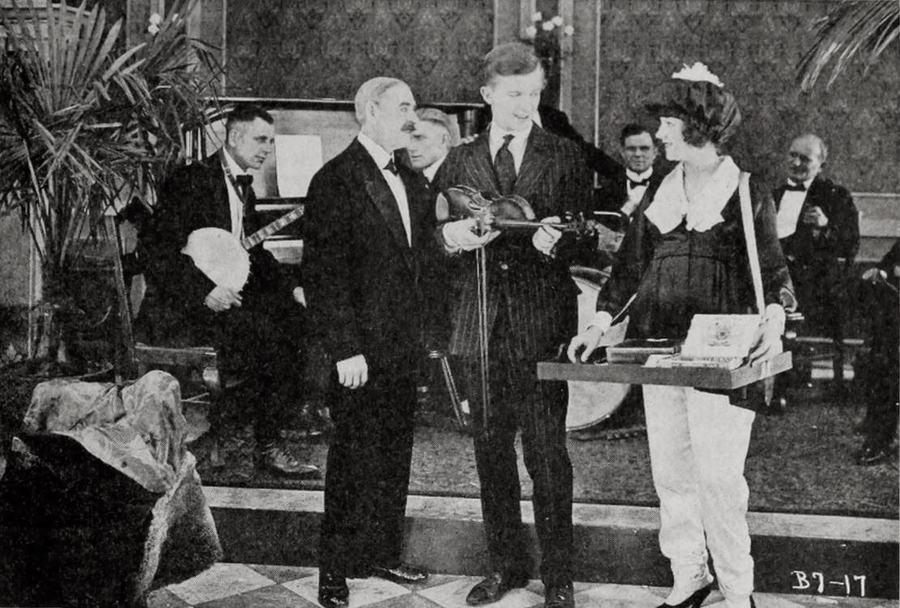
The opening movements of Tin Pan Alley present a stark, almost Dickensian critique of the American industrial machine. Tommy Breen, portrayed with a delicate intensity by the cast, is introduced as a figure of inherent contradiction: a virtuoso trapped within the cacophony of a factory. The film masterfully utilizes the violin as a symbol of the pre-industrial soul, an organic extension of human emotion that stands in direct opposition to the rhythmic, soul-crushing ticking of the factory clock. When the workers extend their lunch hour to listen to Breen, it is not merely a break from labor; it is a collective reclamation of their humanity. This sequence echoes the thematic concerns found in The Shop Girl, where the individual is constantly at risk of being subsumed by the gears of commerce. Breen’s subsequent firing is the inevitable reaction of a system that views beauty as a logistical inefficiency.
June Norton represents the quintessential 'pure' archetype of early 20th-century melodrama, yet there is a gritty realism to her portrayal as a cigarette girl. Living in the same boardinghouse as Tommy, she functions as his moral anchor and aesthetic North Star. Her inspiration for 'When You Smile with Your Eyes in Mine' is not presented as a lightning bolt of genius, but as a slow, nurturing process of mutual recognition. Unlike the transactional relationships that dominate the later acts, June’s devotion is an exercise in True Nobility, highlighting a class of urban dwellers who retain their integrity despite the crushing weight of poverty. The boardinghouse itself acts as a liminal space where dreams are whispered before they are shouted across the footlights of Broadway.
As Tommy Breen transitions from the soot of the factory to the neon glow of the theater district, the film’s visual and moral palette shifts. The introduction of Simon Berg, the song publisher, brings a cynical, albeit necessary, pragmatism to the narrative. Berg is the gatekeeper of the American Dream, a man who understands that music is not just art, but a commodity to be packaged and sold. Tommy’s rapid ascent is accompanied by a tragic shedding of his former self. He surrounds himself with 'Broadway lowlife'—a colorful but parasitic ensemble that mirrors the moral decay found in The Dark Road. The shift from the sincere violin to the extravagant lifestyle of a successful songwriter serves as a cautionary tale about the corrosive nature of sudden fame.
Mona Merwin, the musical comedy performer, serves as the perfect foil to June Norton. Where June is light and sincerity, Mona is shadow and artifice. Her infatuation with Tommy is framed not as love, but as a strategic alignment of two rising stars. This dynamic explores the same themes of corrupted innocence that permeate The Innocence of Ruth. Tommy’s failure to recognize the hollow nature of his new social circle is the central tragedy of the second act. He has traded his 'eyes'—the soulful connection inspired by June—for the 'smile' of the stage, a superficial mask that hides the void within.
The narrative’s most profound psychological insight occurs when Berg demands a song about 'home.' Tommy Breen, now a creature of the city's artifice, finds himself utterly incapable of the task. This creative block is a symptom of a deeper spiritual malaise. Having never truly had a home, and having abandoned the one he was building with June, Tommy is a man without a foundation. This struggle for authenticity is reminiscent of the emotional turmoil in Kreutzer Sonata, where the power of music is inextricably linked to the purity—or corruption—of the player's heart. Tommy's inability to compose is his penance for his profligacy.
"In the pursuit of the ephemeral applause of the masses, the artist often neglects the quiet resonance of the hearth, only to find that the loudest cheers cannot fill a silent room."
The intervention staged by June and Berg is a fascinating, if somewhat paternalistic, narrative turn. By systematically reducing Tommy’s royalty checks, they force a confrontation with the reality of his 'friends.' The desertion of the Broadway sycophants when the money dries up is a masterclass in social commentary. It exposes the mercenary nature of the entertainment industry, a theme also touched upon in It May Be Your Daughter, albeit in a different social context. Tommy’s descent into destitution is necessary; it is a ritualistic stripping away of the ego, a return to the 'factory' state of existence where survival, not vanity, is the primary motivator.
The final act’s transition to a country cottage in Flatbush—which, at the time of the film’s setting, represented a pastoral escape from the claustrophobia of Manhattan—serves as the ultimate resolution. Flatbush is not just a location; it is a state of mind. It represents the 'home' that Tommy could not conceptualize in the vacuum of Broadway. Finding June waiting for him is the completion of his journey. The reconciliation is handled with a restraint that avoids the saccharine, focusing instead on the quiet dignity of a second chance. This theme of finding peace in the rural or the domestic is a recurring motif in works like Judith of the Cumberlands, where the landscape itself acts as a character in the protagonist's moral development.
Now truly inspired, Tommy finally writes his hit song about home. It is no longer an intellectual exercise or a commercial mandate; it is a lived truth. The film concludes on a note of artistic and personal synthesis. The violin, once a cause of his unemployment, is now the instrument of his salvation. The journey from the factory to the cottage is a full circle that validates the necessity of struggle in the creation of meaningful art. Tommy Breen’s story is a timeless exploration of the artist's struggle to maintain a soul in a world that only wants to buy the song.
The direction and writing by William Charles Lengel and Joseph Anthony Roach provide a narrative density that was ahead of its time. The pacing reflects the frantic energy of New York, contrasting sharply with the slow, deliberate scenes in the cottage. While the film shares some DNA with the adventure-laden plots of The Adventures of Lieutenant Petrosino or the period drama of The Littlest Rebel, it carves out its own niche as a character-driven study of the American music industry's infancy. The performances, particularly from George Hernandez and Elinor Fair, ground the melodrama in a sense of lived experience. Tin Pan Alley remains a significant piece of cinematic history, offering a window into the anxieties of a society grappling with the transition from the artisanal to the industrial, and the eternal quest for a place to call home.
Ultimately, the film stands as a testament to the enduring power of the muse. Whether it is the cigarette girl in a boardinghouse or the publisher who knows when to cut a check, the forces that shape the artist are as complex as the melodies they produce. For anyone interested in the intersection of music, morality, and the American experience, this film is an essential viewing. It reminds us that while fame is a fickle companion, the truth found in a simple song about home is the only thing that truly lasts.
IMDb 8.3
1935
Community
Log in to comment.