DbcultAccessing Vault...
Cult Review
Senior Film Conservator
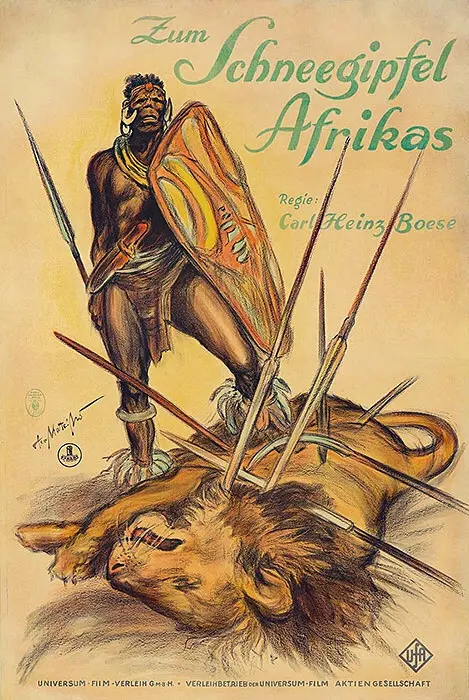
Is 'To Africa's Snow Peak' worth watching today? Short answer: only if you are a dedicated film historian or a mountain climbing obsessive who values archival grit over narrative flow.
This film is for the patient viewer who wants to see the literal birth of the expedition documentary. It is absolutely not for anyone seeking a fast-paced adventure or high-definition nature cinematography.
1) This film works because it captures a level of physical peril and authentic struggle that modern CGI-heavy films can never replicate.
2) This film fails because its pacing is glacial and it lacks the emotional character arcs required to sustain a modern audience's interest.
3) You should watch it if you are researching the 'Kulturfilm' movement or want to see how early cinema handled extreme environmental conditions.
Carl Heinz Boese was not a man of subtle gestures. In 'To Africa's Snow Peak,' his direction is characterized by a stubborn, almost obsessive focus on the mechanics of the climb. Unlike the fictionalized drama of Evangeline, which sought to tug at heartstrings, Boese is content to let the mountain do the talking. The film is a product of its time, reflecting a German fascination with 'the climb'—a precursor to the Bergfilm genre that would later dominate the national cinema.
The cinematography is where the film truly earns its keep. Imagine the sheer weight of 1920s camera equipment being lugged up the slopes of Kilimanjaro. There are moments where the frame shakes, not because of a stylistic choice, but because the cameraman is clearly gasping for air. This raw, unpolished aesthetic provides a sense of immersion that feels more honest than the sanitized nature films of the 1940s, such as My Dog, Pal.
However, the film is deeply flawed by its era's perspective. The colonial gaze is omnipresent. The porters, who do the majority of the heavy lifting, are often treated as part of the scenery rather than human participants in the journey. This makes for an uncomfortable viewing experience in the 21st century. It lacks the whimsical charm of Das Eskimobaby, which, despite its own issues, at least attempted a narrative structure around its 'exotic' subject matter.
The film’s greatest achievement is its transition of light and texture. As the expedition moves from the lush, overexposed grasslands into the stark, high-contrast world of the snow peak, the film stock itself seems to struggle. The blacks become deeper, and the whites of the snow become blinding. In one specific sequence—the final push toward the summit—the film captures a sense of desolation that is genuinely haunting. It feels like a transmission from another planet.
Compare this to the studio-bound aesthetics of The Dream Cheater. While that film relied on shadows and trickery to create atmosphere, Boese relies on the brutal reality of the sun and the ice. There is no artifice here. If a man looks exhausted, it is because he is dying for a sip of water and a lower altitude. It is a cinema of exhaustion.
The pacing, however, is a significant hurdle. There are long stretches where very little happens. We see tents being pitched. We see mules being led. We see the horizon. For a modern viewer accustomed to the rapid editing of contemporary documentaries, this can feel like a chore. It lacks the comedic timing of A Small Town Idol or the theatrical pacing of Sans famille. It is a slow burn that sometimes forgets to ignite.
Yes, but only as a historical artifact. If you are looking for entertainment, you will be disappointed. If you are looking for a window into the 1920s mindset and the physical limitations of early filmmaking, it is an essential watch. It represents a moment when the world was still 'large' and cinema was the only way to shrink it.
Pros:
- Authentic 1920s expedition footage.
- Incredible technical feat for the era.
- Fascinating look at early mountaineering gear.
- High-contrast visual style in the snow sequences.
Cons:
- Extremely slow pacing.
- Lack of character development.
- Problematic racial dynamics of the period.
- Minimal narrative tension.
To understand 'To Africa's Snow Peak,' one must understand the German obsession with the 'Kulturfilm.' These weren't just movies; they were tools of national identity. By conquering the mountain on film, Boese was reclaiming a sense of German power in a post-WWI world. This subtext is what makes the film more than just a travelogue. It is a statement of intent.
When compared to other international films of the time, like the French drama The Gilded Youth, the difference in priorities is staggering. While the French were exploring the nuances of social class and romance, the Germans were pointing their cameras at rocks and ice. It is a cold film. It is a hard film. But it is a film that demands respect for its sheer audacity.
The film’s legacy can be seen in every IMAX Everest documentary that followed. The DNA of the 'climbing movie' is right here. It’s flawed. It’s stubborn. It’s ancient. But it’s there, etched into the silver halide of the 1920s.
'To Africa's Snow Peak' is a grueling, fascinating, and ultimately rewarding piece of cinema history. It is not 'fun' in any traditional sense. It is a confrontation. It is a record of a time when the world was still being mapped, and the camera was a surveyor's tool. If you have the patience to endure its slow rhythms, you will be rewarded with some of the most haunting images of the silent era. It works. But it’s flawed. Watch it for the history, not the hype.

IMDb 7.7
1935
Community
Log in to comment.