DbcultAccessing Vault...
Cult Review
Senior Film Conservator
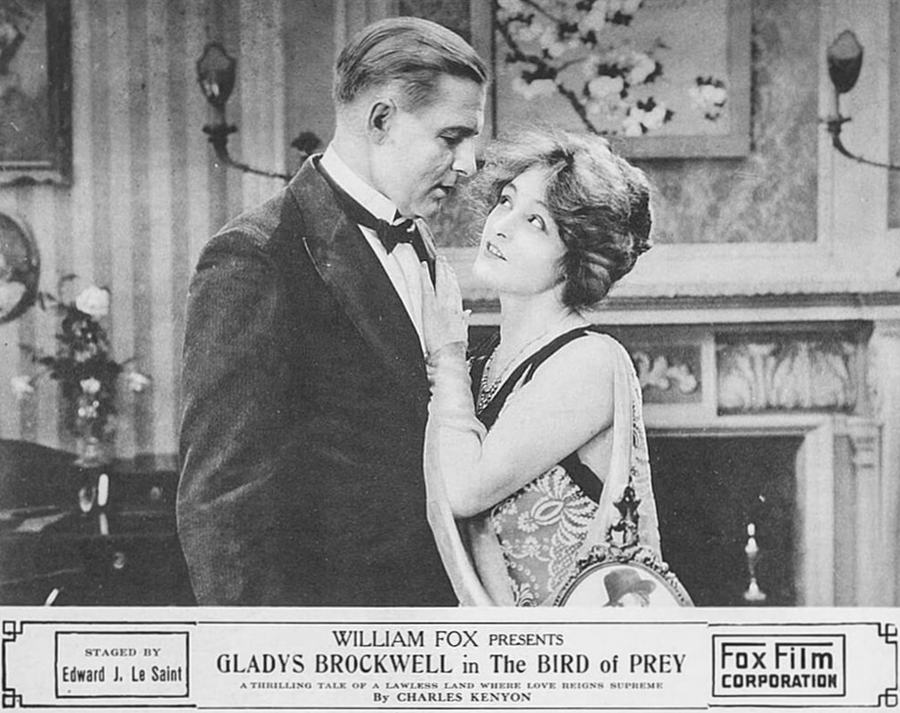
Spoilers fly like stray bullets—read at your own moral peril.
The Bird of Prey arrives like a tarnished daguerreotype slipped from the pages of a Guy de Maupassant fever dream, its edges singed by desert sun and male ego. Director-star Herbert Heyes understands that silent cinema is not about silence but about the roar that lives between title cards; he lets the negative space throb with threat. From the first frame—Dick Brown’s trembling revolver kissing his temple—this 1926 cheap-o thriller insists it has more on its mind than nickelodeon thrills. It wants to x-ray the moment when female dread hardens into flinty resolve.
Shot on leftover sets that once doubled for The Chattel and scavenged cactus from During the Plague, the film reeks of economic desperation—and that poverty becomes a stylistic coup. Walls sweat, shadows drape like cheap funeral crepe, and every tortilla on the cantina tables looks stiff enough to shingle a roof. Out of such privation, Heyes sculpts a world where morality is another commodity haggled over in broken Spanish and worse English.
Brockwell’s Adele is no virginal flapper; she’s a woman who has already traded dignity for survival at least once before the camera finds her. Watch the micro-tremor in her left eyelid when Bradley hisses his blackmail terms—a flutter so minute it feels like a Morse code SOS to every trapped wife in the audience. Her performance is built on refusals: refusal to scream when the pistol goes off, refusal to wilt when marooned among cutthroats, refusal to capitulate when Vasquale’s nicotine breath grazes her neck. By the time she slides that hair-pin dagger between the bandit’s ribs, every spectator understands the act is not murder but signature—she is authoring herself into existence.
Heyes has the rubbery arrogance of a man who once played romantic leads and discovered, mid-career, that cruelty ages better than charm. His Bradley lounges in a silver-mine office papered with torn bullfight posters, boots on the desk, letting the dust motes swirl like bankrupt angels. The genius of the characterization lies in how gradually Heyes allows self-disgust to seep through the masculine bravado; by the final reel, when he kneels in the dirt and offers Adele his revolver butt-first, the gesture feels less like redemption than a plea for apprenticeship in her newfound ferocity.
Shumway plays the bandit chief with a silver tooth that catches every sliver of moonlight, a winking punctuation mark on his threats. He quotes Quevedo while fondling his ammunition belt, convincing you that colonialism’s real curse is the poetry it leaves behind in the mouths of its plundered. His death—stagger, disbelief, slow collapse onto a pile of mining ledgers—ranks among the most aesthetically satisfying demises of the decade, a capitalist ledger literally cushioning his fall.
Cinematographer Allen Siegler lights night scenes with a single kerosene lamp placed so low that faces rise from darkness like half-remembered statues. The camera lingers on Adele’s bare shoulder blades when she changes shirts behind a moth-eaten curtain, not to titillate but to map the topography of vulnerability. Daytime exteriors bleach the frame to the color of old bones, suggesting a land so saturated with light it turns morally translucent; every serration on the distant mountains looks like a tooth ready to bite resolve in half.
The Kenyon brothers pepper the narrative with cards that snap like whipcracks: “A woman’s ‘no’ is merely the overture to a man’s symphony of possession.” Or: “In Mexico the sun writes guilt on pale skin in letters that never fade.” Each card arrives unadorned, white on black, with no swashbuckling fonts—just the starkness of a police report. The brevity forces the viewer to supply the emotional orchestration, making the silence swell until it howls.
Try pitching this plot to a modern studio and watch the execs evacuate faster than a speakeasy during a raid. Yet the film’s cynicism about heterosexual contract feels almost radical. Bradley’s initial threat—“Your life in my hands or your neck in a noose”—parodies the wedding vow of obedience. Adele’s eventual acceptance of his ring is less sentimental payoff than strategic occupation of enemy territory. The final shot shows her staring past the camera, hand on belly, as if calculating how many generations it will take to weaponize the bloodline. It’s a feminist victory wrapped in patriarchal bunting, a paradox the movie neither resolves nor apologizes for.
Though originally accompanied by a wheezing theater organ, modern revival houses have paired the print with nuevo tango ensembles whose bandoneóns exhale like spent lovers. The juxtaposition works: every staccato step of the dance hall sequence syncs with the musicians’ off-beat accents, turning the cantina into a percussion box of clacking heels and predatory intent.
If you hunger for similar cocktails of lust and exploitation, sample A Girl Like That, where Gloria Hope navigates quid-pro-quo salvation, or The Reward of the Faithless, whose marital sadism makes Bradley look like a choirboy. For purer bandit mythmaking, Evangeline offers Acadian vistas minus the erotic switchblade. None, however, match the ferret-like intimacy of The Bird of Prey.
A 2019 4K scan from the sole surviving Dutch print (rescued from a Rotterdam basement beside a crate of censored After Dark reels) reveals cigarette burns that look like bullet holes. The grain structure resembles desert sandstorms frozen mid-gust; you can almost taste the mineral dust. Be warned: two intertitles remain untranslated, their Dutch text hovering like bilingual ghosts, but the images are eloquent enough to fill the gaps.
Seething, lean, and shockingly self-aware, The Bird of Prey is a gutter-born cousin to Gretchen the Greenhorn’s innocence and Life and Passion of Christ’s moral absolutism. It claws at the myth that silent heroines were all trembling damsels; Adele Durant is the dam who dynamites herself free and names the flood progress. Catch it before the last reel combusts—because nitrate, like Bradley’s ego, has a talent for spontaneous immolation.
—reviewed by someone who still flinches at the glint of silver teeth
IMDb 6.3
1935
Community
Log in to comment.