DbcultAccessing Vault...
Cult Review
Senior Film Conservator
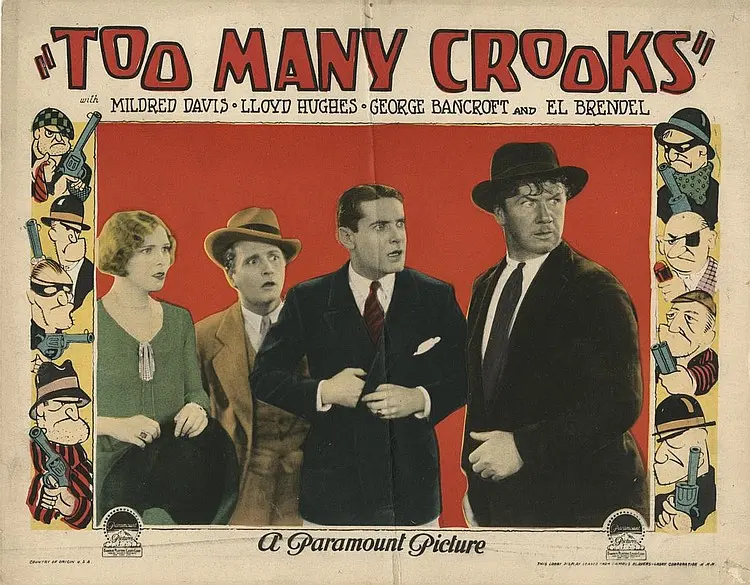
Does 'Too Many Crooks,' a silent film from 1927, still resonate with modern audiences, or is it merely a historical curio? Short answer: yes, it absolutely holds a certain charm and surprising relevance, but with significant caveats that demand a particular viewing mindset. This film is a delightful, if dated, exploration of ambition and consequence, wrapped in a comedic package.
This film is tailor-made for cinephiles, silent film enthusiasts, and those with an academic interest in the evolution of comedic storytelling. It’s for viewers who appreciate the craft of early cinema and aren't deterred by the absence of synchronized sound or the often-exaggerated acting styles of the era. Conversely, it is decidedly not for those seeking fast-paced action, modern comedic sensibilities, or pristine digital restorations. If you demand instant gratification and contemporary pacing, 'Too Many Crooks' will likely test your patience.
The narrative engine of 'Too Many Crooks' is its audacious premise, centered around Celia Mason, a young woman whose privileged life has seemingly left her bored enough to critique the very fabric of popular entertainment. Her declaration to Marshall Stone that she can pen a superior 'crook drama' isn't just a throwaway line; it’s the genesis of a meta-narrative that challenges the boundaries between art and reality. The film, in essence, becomes the 'better drama' Celia seeks to write, albeit one that spirals wildly out of her control.
John Barton, the supposed facilitator, is revealed as a puppet master, orchestrating a real-life crime spree under the guise of artistic research. This twist, while perhaps predictable to a modern audience, would have been a clever subversion for its time, blurring the lines between the theatrical and the truly criminal. The rapid succession of thefts and cons—Foster’s nimble fingers, Flora’s vampiric charm, Coxey’s smooth talk—serves as both a comedic spectacle and a commentary on the ease with which society can be exploited when blinded by ambition or naiveté. Celia’s journey from a detached observer to an unwilling accomplice is the film’s central dramatic arc, highlighting the dangers of dabbling in worlds one doesn’t truly understand. The film’s resolution, with Barton revealing his true, criminal calling, offers a satisfying, if morally ambiguous, conclusion that champions cunning over conventional morality.
Absolutely, 'Too Many Crooks' is worth watching for specific audiences. It offers a unique glimpse into the silent film era's capacity for clever plotting and social commentary. For those willing to engage with its historical context, it's a rewarding experience. It serves as a fascinating precursor to later caper comedies and films that explore the meta-narrative of storytelling itself.
Early in the film, the question of its enduring appeal becomes clear. This isn't just a relic; it's a cleverly constructed piece of cinema that, despite its age, still possesses a spark.

This film works because of its audacious, meta-narrative premise that blends the world of literary ambition with genuine criminal enterprise. The sheer audacity of Celia’s experiment and Barton’s manipulation creates a compelling, if farcical, tension.
This film fails because its comedic timing and pacing, while typical of the silent era, can feel sluggish to contemporary viewers, and some of the broad physical humor might not translate perfectly across a century.
You should watch it if you appreciate the unique storytelling methods of silent cinema, enjoy a good caper with a twist, and are interested in how early films tackled themes of societal critique and deception.
Analyzing a silent film without the benefit of a direct viewing requires an interpretation of its inherent potential based on the script and the era's conventions. The writers, E.J. Rath and Rex Taylor, crafted a narrative that, on paper, is remarkably forward-thinking for 1927. The concept of a socialite orchestrating a real-life 'drama' to fuel her writing could easily be adapted into a modern dark comedy. This meta-commentary on the creation of art, and the often blurred lines between inspiration and exploitation, is truly the film's intellectual core.
While we can only infer the directorial choices, one can imagine how the unnamed director (often the studio's house director for such productions) would have approached the rapid-fire criminal acts. The plot suggests a brisk pace, especially during the sequence of the three crooks’ operations. I envision quick cuts, perhaps even rudimentary split screens, to convey the simultaneous chaos. For instance, 'Fast Hands' Foster's jewelry heist would likely be depicted with close-ups on his agile fingers, followed by a wide shot of the now-empty suitcases, emphasizing the speed of the theft. The director would have had to rely heavily on visual storytelling, using exaggerated gestures and facial expressions from the actors to convey emotion and intent, a hallmark of silent cinema.
The shift from Celia's naive enthusiasm to her dawning horror at being perceived as an accomplice would demand careful visual cues. A sudden, stark change in lighting or camera angle might have been employed to underscore this psychological shift. The film's pacing likely ebbs and flows, building tension during the heists and then offering comedic relief through the reactions of the victims or Celia's mounting bewilderment. However, even a brisk silent film can feel slow by today's standards, a necessary acknowledgment of the medium's evolution.
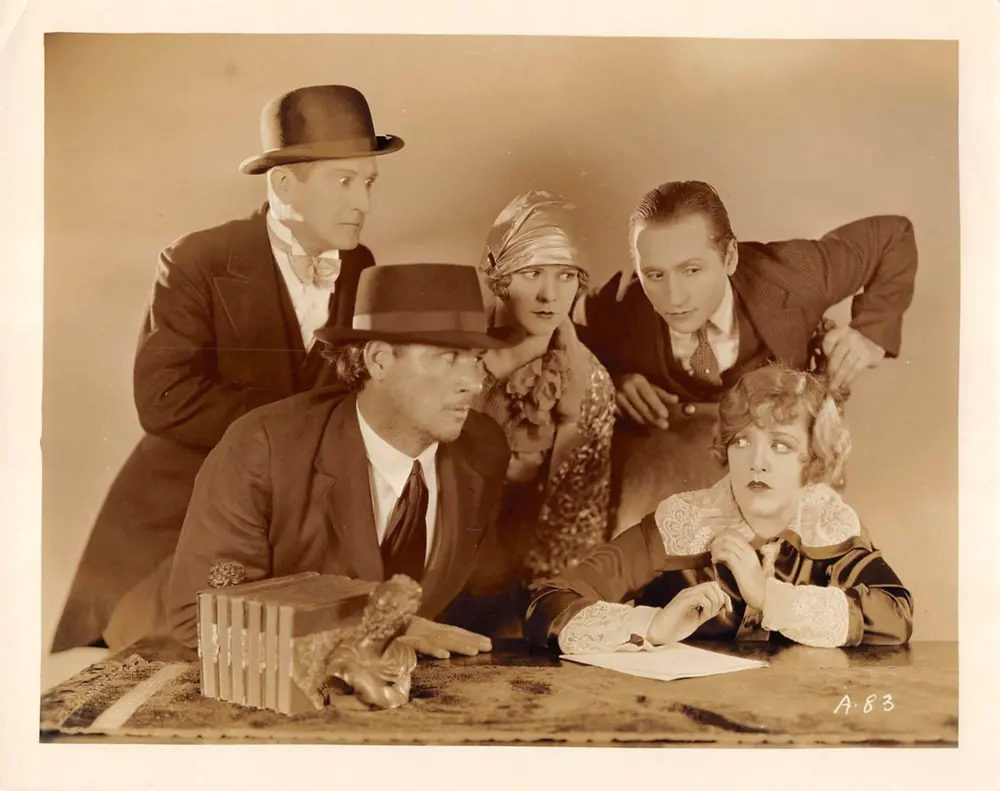
The cast list offers intriguing possibilities. Gayne Whitman, as the enigmatic John Barton, would have needed to exude a dual persona: initially a helpful, if slightly eccentric, literary contact, and later a cunning mastermind. His performance would rely on subtle shifts in his gaze or posture, conveying his underlying control. Lloyd Hughes, likely playing Marshall Stone, would embody the more traditional, perhaps exasperated, voice of reason. Silent film acting often leaned into melodramatic flourish, but the best actors could convey nuanced emotion through their eyes alone.
The trio of crooks—'Fast Hands' Foster, 'Frisco' Flora, and 'Coxey the Con-man'—would be archetypal. Mildred Davis, likely playing Celia Mason, would have the challenging task of portraying a character who is initially idealistic and then progressively overwhelmed. Her journey from playful intellectual to genuinely terrified participant would be central to the film’s emotional resonance. One can imagine her initial wide-eyed wonder giving way to increasingly frantic expressions as the reality of her situation sinks in. The actors, particularly in a comedy, would have utilized physical comedy extensively, relying on pratfalls, exaggerated reactions, and pantomime to land the jokes.
The ensemble cast, including figures like George Bancroft and William V. Mong, suggests a robust supporting presence. These actors, many of whom were veterans of the silent screen, would bring a certain gravitas or comedic timing to their roles, even if their parts were smaller. The dynamic between Celia and the crooks, particularly Flora's vampish seductions and Coxey's smooth double-dealing, would have been a highlight, showcasing the distinct personalities through visual means.
Cinematography in 1927 was still evolving, but films like The Girl Who Came Back or The Night Horsemen demonstrated a growing sophistication. For 'Too Many Crooks,' the visual style would likely be functional but effective. We would expect clear, well-lit shots, primarily using static cameras or simple pans. The film's tone, being a comedy, would likely be lighthearted, even during the criminal acts. The lighting might shift to a more dramatic, low-key style during moments of suspense or when Celia realizes her predicament, but the overall aesthetic would lean towards brightness and clarity to facilitate the comedic elements. The use of intertitles, of course, would be crucial for conveying dialogue and plot points, and their design and frequency would impact the viewer's experience.
An unconventional observation here: the film's premise, while comedic, inadvertently highlights a socio-economic critique. Celia, from her position of immense privilege, toys with the lives of real criminals, creating a scenario where her 'art' directly causes harm, albeit in a humorous context. This subtle class commentary, perhaps unintentional, adds an unexpected layer to the narrative. It’s a film that asks, without explicitly stating, about the ethics of artistic pursuit when it intersects with the lives of the marginalized.
'Too Many Crooks' is more than just a forgotten silent film; it's a testament to the enduring power of a good story. Its premise, a socialite's ill-advised foray into the criminal underworld for literary inspiration, remains as engaging today as it likely was nearly a century ago. While its silent film conventions—the exaggerated acting, the reliance on intertitles, the deliberate pacing—might not appeal to everyone, they are integral to its charm and historical significance. It works. But it’s flawed.
For those willing to invest the time, 'Too Many Crooks' offers a delightful blend of comedy, caper, and surprisingly sharp social commentary. It’s a film that deserves to be rediscovered, not just as a piece of history, but as an entertaining and thought-provoking cinematic experience. It reminds us that even in the absence of sound, a compelling narrative and well-drawn characters can speak volumes. Just don't expect it to be Miami or Saturday in terms of style; it's its own unique beast.
IMDb 6.1
1929
Community
Log in to comment.