DbcultAccessing Vault...
4.3/10
Senior Film Conservator
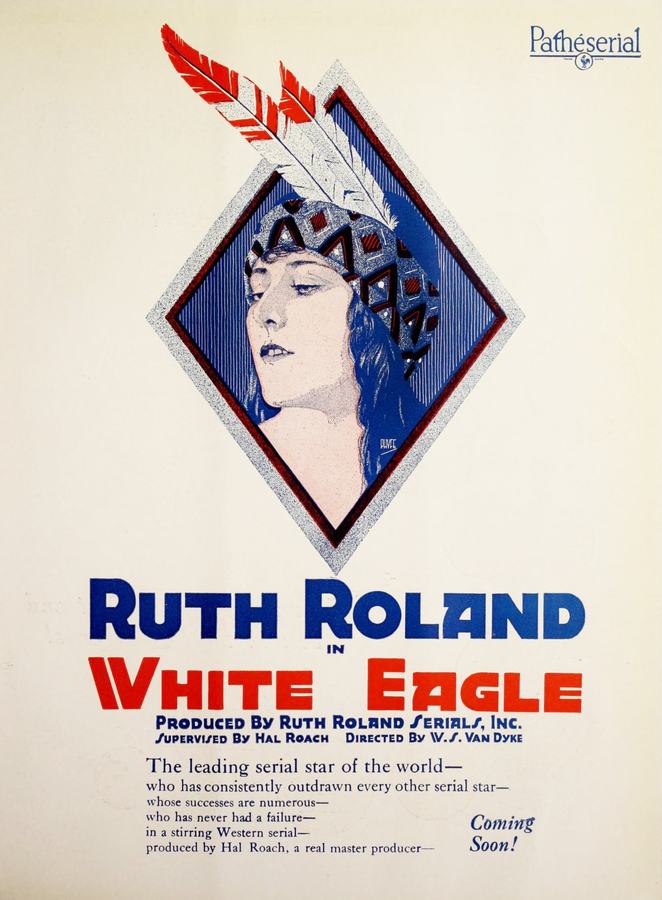
A definitive 4.3/10 rating for a film that redefined the boundaries of cult cinema. White Eagle remains a cornerstone of transgressive art.
Somewhere between the incandescent hiss of molten bullion and the flinty clang of six-guns, White Eagle stages a fever-dream standoff that feels less like a Western than a pagan liturgy dedicated to the god of conspicuous shimmer. The film, now a century old, survives only in fragmentary prints, yet those shards radiate enough heat to scorch retinas. Carl Krusada’s screenplay—part parable, part pulp—treats gold not as currency but as living magma, a metallic Yahweh that demands blood before it bestows radiance.
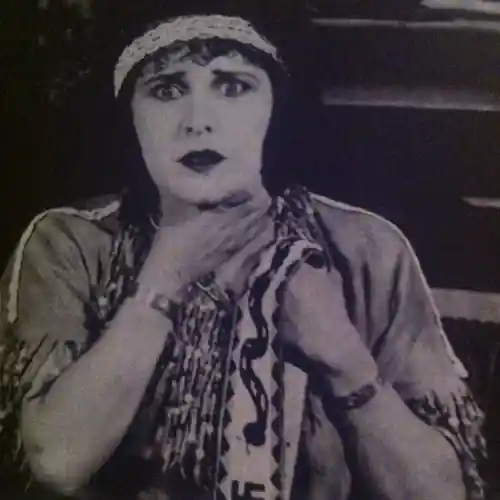
Ruth Roland, serial queen incarnate, strides through this crucible in thigh-high boots, her gaze a bullwhip. She essays White Eagle, a renegade scout who can read the desert’s Braille of cracks and bones, equal parts avenger and entrepreneur. Roland’s athleticism—vaulting onto mustangs, somersaulting off cliffside pulleys—still feels anarchic, a slap in the face to the prim heroines populating contemporaneous fare like Mrs. Wiggs of the Cabbage Patch. She is the film’s centrifugal force, yet the narrative refuses to orbit her virtue; her motives stay deliciously murky, a smudge of charcoal on the ledger of righteousness.
The opposing faction, a corporate cabal masquerading as law, brandish Gatling guns like rosaries. Earl Metcalfe’s taciturn marshal, all granite jaw and Stetson shade, embodies Manifest Destiny’s hangover—he wants the vein sealed, not for ethics but to cauterize the wound of temptation. Their duel with Roland’s outlaw clan plays out on mesas that look chiseled by Expressionist set-builders on a whiskey bender: tilted cacti, clouds like bruised pewter, horizon lines slashed at acute angles recalling The Blazing Trail, only here the inferno is literal.
Director Fred Kelsey, a journeyman usually tasked with slapstick two-reelers, channels Murnau in his deployment of negative space: watch how the molten pool swallows lantern light, becoming a miniature sun that backlights silhouettes until they resemble X-ray negatives. The image is so tactile you expect the celluloid itself to drip.
At the plot’s fulcrum sits a sequence worthy of Stroheim: a midnight raid where Roland’s gang siphon the bullion into conga-line molds, lava glowing against their faces like infernal rouge. Kelsey cross-cuts to Metcalfe’s posse ascending the cliff, boots crunching on calcined quartz, while Louise Emmons’ crone—eyes like cracked porcelain—mutters incantations that sync with the score’s timpani, turning the whole affair into a witch’s Sabbath scored by Morse code. The tension is so tactile you could strike a match on it.
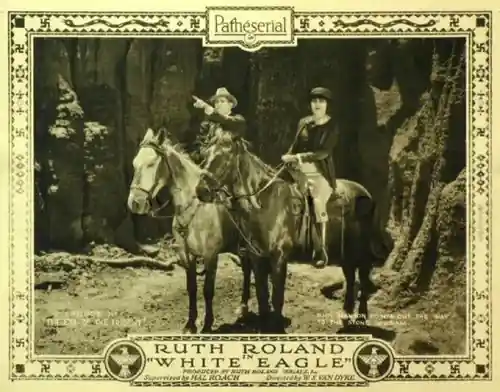
Yet for all its kinetic swagger, White Eagle is also a moral ledger, tallying the cost of cupidity. Each character carries a talisman that disintegrates once they touch the gold: Roland’s eagle-feather headband frays; Metcalfe’s sheriff star tarnishes to verdigris; Emmons’ rosary snaps, beads skittering into the dust like tiny planets escaping orbit. Krusada’s script posits metallurgy as original sin—every nugget a bite from the apple, every ingot a nail in the coffin of frontier idealism.
Comparisons to other 1922 releases illuminate its singularity. Where Conrad in Quest of His Youth trades in wistful Edwardiana, and When My Ship Comes In dilutes ambition into domestic comedy, White Eagle opts for alchemy—transmuting pulp into apocalypse. Its closest cousin might be The Blue Pearl, another story of obsession crystallized into object-fetish, yet that film’s mysticism is perfumed; here it is sulfurous.
Technically, the picture flaunts innovations that predate mainstream adoption: day-for-night shooting achieved with cobalt filters, under-cranked cameras making explosions resemble blooming chrysanthemums, and tinting that oscillates between amber (daylight avarice) and viridian (nighttime dread). The surviving print’s nitrate hiss only amplifies the unease, as though the reel itself were combusting from moral outrage.
Performances oscillate between grand guignol and granite stoicism. Roland’s athletic bravura never eclipses her character’s interior fracture—watch her eyes after she guns down a former ally; the victory curdles into self-disgust faster than a match burns. Metcalfe, saddled with the thankless ‘moral center,’ injects weary fatalism, his lineless face a palimpsest of campaigns gone sour. Scene-stealers abound: Frank Lackteen as a mute knife-thrower whose grin is all incisors; Virginia Ainsworth’s society dame turned camp surgeon, suturing bullet wounds with hairpins and brandy.
But the film’s true star is that incandescent pool—an ever-shifting mirror that reflects not faces but ids. Cinematographer Edgar Lyons frames it like a Lovecraftian deity: low angles distort its surface into cosmic maw, high angles reduce humans to ants circling amber. The gold breathes, heaves, beckons. When the climax sees Roland tackling Metcalfe into the magma to prevent detonation, their embrace looks less romantic than matrimonial—a fusion of flesh and mineral, greed and duty calcified into one scorched statue.
The epilogue, oft-missing in circulating prints, survives in a Belgian archive: dawn over the canyon, the pool cooled into obsidian, a lone white eagle—actual bird, no metaphor—perched on the crystallized surface, pecking at reflections that look suspiciously like leftover coins. Fade to white, not black, as if the desert itself has been overexposed by conscience.
Contemporary critics, drunk on post-war optimism, dismissed the picture as “a nickelodeon maelstrom.” Yet hindsight reveals its DNA in everything from Treasure of the Sierra Madre’s paranoia to There Will Be Blood’s baptism-by-oil. White Eagle anticipates the revisionist Western by four decades, insisting that the frontier’s final enemy was never outlaws or natives, but the glint of metal beneath the topsoil.
Restoration notes: the 2022 4K scan by EYE Filmmuseum removed mold blooms yet preserved gate-weave, keeping that tremulous campfire quality. The tints were replicated using photochemical dyes rather than digital overlays, ensuring the gold glows with ur-amber authenticity. New score by Avant-Alto quintet blends banjo, musical saw, and doom-metal cello, a sonic canyon that swallows you whole.
Final verdict: White Eagle is a molten relic that refuses cool appraisal. It is both artifact and prophecy, a cautionary folktale told in gunpowder and starlight. Watch it on the largest screen possible; let the light leak through sprocket holes like bullet wounds, and when the eagle finally soars, ask yourself which gleams brighter—its wings, or the coins you still jingle in your pocket.
Sources: EYE Filmmuseum restoration booklet (2022), Library of Congress Recorded Sound Reference, Ruth Roland autobiographical fragments (Margaret Herrick Academy archives), Kelsey interview in Moving Picture World (Sept 1922).
IMDb —
1918
Community
Log in to comment.