DbcultAccessing Vault...
Cult Review
Senior Film Conservator
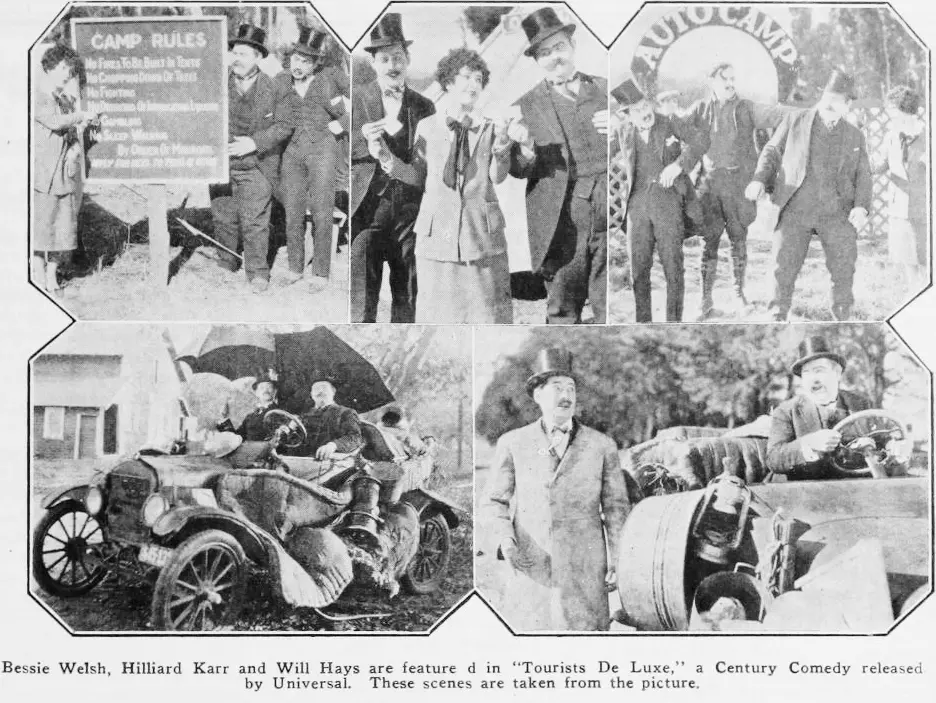
Is 'Tourists De Luxe' worth watching today? Short answer: absolutely, if you possess a keen interest in the foundational elements of American slapstick and the raw, unpolished energy of early silent comedy. However, it is decidedly not for those seeking profound narrative depth, sophisticated character arcs, or high-fidelity production values.
This film exists as a fascinating artifact, a fleeting glimpse into a bygone era of moviemaking where ingenuity often trumped budget. It’s a piece of cinematic history, a brief and boisterous demonstration of how simple premises could ignite audience laughter, and for that alone, it merits a certain kind of attention.
For the casual viewer accustomed to modern storytelling, 'Tourists De Luxe' will likely feel like a quaint, almost primitive curiosity. Its plot, a straightforward kidnapping and chase, is thin, and its humor relies almost entirely on physical gags and exaggerated reactions. Yet, for those who understand the context of its creation, it offers a revealing look at the building blocks of a genre that would define an entire generation of cinema.
This film works because its unbridled physical comedy, delivered with an earnestness that transcends its technical limitations, still manages to elicit a chuckle. It fails because its rudimentary plot and lack of character development prevent any genuine emotional investment, leaving it feeling more like a historical footnote than a fully realized narrative. You should watch it if you're a silent film historian, a dedicated fan of slapstick comedy, or simply curious about the rudimentary origins of cinematic action and humor.
To approach 'Tourists De Luxe' with modern expectations is to misunderstand its very essence. This isn't a film designed to be dissected for intricate themes or nuanced performances; it's a direct, unpretentious effort to entertain through movement and absurdity. Directed by Charles Lamont, a name that would later become synonymous with Looney Tunes and Three Stooges shorts, this early work offers a nascent blueprint for the kind of gag-driven comedy he would refine over decades.
The plot, as sparse as a desert landscape, serves merely as a framework for a series of escalating comedic situations. Two traveling salesmen, portrayed by Les Bates and William T. Hayes, are our unlikely heroes. Their 'tour de luxe' is less about luxury and more about mobility, a testament to the emerging car culture of the 1920s. The auto-camp setting itself is a fascinating historical detail, reflecting a period when road trips and roadside accommodations were still novel concepts.
The kidnapping of the proprietor's daughter, played by Bessie Welch, is the inciting incident, the spark that ignites the engine of chaos. It's a trope as old as storytelling itself, but here, it’s stripped to its bare essentials. There’s no elaborate backstory, no complex motivations – just a simple crime that demands an equally simple, if frantic, response.
The true charm of 'Tourists De Luxe' lies not in its sophisticated narrative, but in its unapologetic embrace of raw, physical comedy. It's a reminder that sometimes, a simple chase and a few well-timed tumbles are all you need to entertain.
In the silent era, acting was a symphony of exaggerated gestures, wide eyes, and contorted expressions. Les Bates and William T. Hayes embody this style with gusto. Their performances as the salesmen are less about character development and more about physical presence. They are archetypes: the earnest, slightly bewildered good guys. Their reactions to the kidnapping are immediate and over-the-top, perfectly suited for a medium that relied on visual cues to convey emotion.
Bessie Welch, as the kidnapped daughter, has a less active role once the chase begins, but her initial terror and subsequent relief are communicated effectively through classic silent film emoting. Hilliard Karr likely plays one of the villains, or perhaps a supporting comedic role, though specifics are scarce. The ensemble works in concert, not to create a believable world, but to facilitate a series of gags.
One particular moment that stands out is the salesmen's initial reaction to the abduction. There’s a brief, almost comical moment of disbelief before a surge of frantic energy propels them into action. This transition from bewilderment to determination, though broadly played, is a fundamental building block of comedic timing, showcasing the actors' understanding of their craft even in its infancy.
Charles Lamont's direction here is functional and direct. He understands the primary goal: to deliver laughs through action. The film’s pacing is brisk, a necessity for a short film, and it moves quickly from exposition to the central chase. There’s little time for lingering shots or artistic flourishes; every frame serves the purpose of advancing the gag or the pursuit.
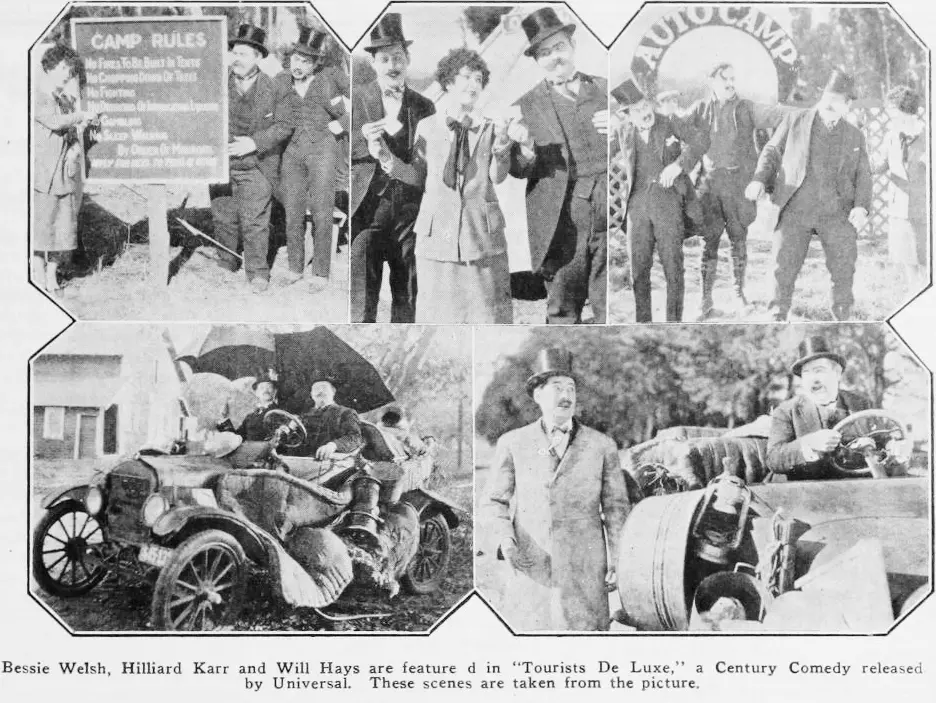
The chase sequence itself, featuring the iconic 'flivver' (a slang term for an inexpensive automobile, often a Ford Model T), is a testament to early practical effects and stunt work. While it lacks the kinetic dynamism of later action sequences, it possesses a raw, unrefined energy. The camera often stays wide, capturing the full absurdity of the speeding car, the frantic movements of the characters, and the obstacles they encounter.
Lamont’s later work on animated shorts and The Three Stooges shorts would perfect the art of the visual gag and rapid-fire pacing. In 'Tourists De Luxe', we see the seeds of that talent. He orchestrates the chaos with a clear vision, even if the execution feels rudimentary compared to the likes of Buster Keaton or Harold Lloyd. It's a foundational lesson in comedic staging.
The cinematography of 'Tourists De Luxe' is, as expected for the era, straightforward. Static shots dominate, with occasional pans to follow the action. There's no complex camera movement or sophisticated lighting; the focus is on clear visibility and capturing the physical comedy. The black and white palette, while limiting, adds a certain timeless quality to the frantic energy on screen.
The pacing is arguably the film's strongest technical aspect. As a short, it doesn't overstay its welcome. The narrative moves at a relentless clip once the kidnapping occurs, ensuring that boredom never sets in. This rapid progression is crucial for sustaining the audience's attention, especially when the plot offers little in the way of intricate twists or turns. It’s a masterclass in brevity.
Consider the sequence where the flivver weaves through what we can assume are rural roads. The cuts are quick, designed to maintain the illusion of speed and danger, even if the actual speed of the vehicle was modest. This early form of editing for pace is a critical element in establishing the film’s comedic tone – a sense of urgency mixed with inherent absurdity.
The tone of 'Tourists De Luxe' is one of unpretentious merriment. It's lighthearted, aiming purely for laughs without any deeper social commentary or emotional weight. Even the kidnapping, a serious crime, is treated more as a plot device to kickstart the fun than a source of genuine tension. This is a film designed to provide a brief, joyful escape for its audience.
The film’s humor stems from the juxtaposition of ordinary men in an extraordinary situation, their earnest efforts to do good often leading to clumsy, yet effective, outcomes. It’s a classic comedic formula that persists to this day, proving the enduring appeal of underdog heroes and slapstick antics.
'Tourists De Luxe' emerges from a period of incredible innovation and experimentation in cinema. The early 1920s were a golden age for silent shorts, where filmmakers were constantly pushing the boundaries of what was possible with a camera and a few actors. While not as iconic as the works of Chaplin or Keaton, it contributes to the vast tapestry of films that defined the era.
It’s easy to dismiss such a film as merely a historical curiosity, but to do so would be to overlook its value as a foundational text. Every chase scene, every comedic duo, every moment of physical comedy in subsequent cinema owes something to these early, often forgotten, efforts. It’s a building block, a stepping stone.
Comparing it to other films of its time, like the more polished A Gentleman of Leisure (1923) or even the dramatic The Legion of Death, highlights its specific niche. 'Tourists De Luxe' doesn't aim for sophisticated storytelling or grand spectacle; it aims for honest, simple laughter. It’s a humble yet significant piece of the puzzle that formed early Hollywood.
Every film, regardless of its era, has its strengths and weaknesses. 'Tourists De Luxe' is no exception, and understanding these helps contextualize its place in cinematic history.
'Tourists De Luxe' is not a lost masterpiece, nor does it pretend to be. It is, however, a valuable piece of cinematic archaeology, a short, sharp burst of early 20th-century comedic energy. Its existence reminds us that even the simplest of stories, told with earnest enthusiasm, can contribute to the grand narrative of film history. It works. But it’s flawed.
For those willing to set aside contemporary expectations and immerse themselves in the unvarnished charm of the silent era, this film offers a delightful, if brief, diversion. It’s a testament to the enduring power of laughter and the ingenuity of early filmmakers like Charles Lamont. While it won't redefine your understanding of cinema, it will certainly offer a fascinating, often amusing, glimpse into its very beginnings. Seek it out if you’re curious about where it all began, but don’t expect a revelation – expect a giggle and a piece of history.
IMDb 6.1
1924
Community
Log in to comment.