DbcultAccessing Vault...
5/10
Senior Film Conservator
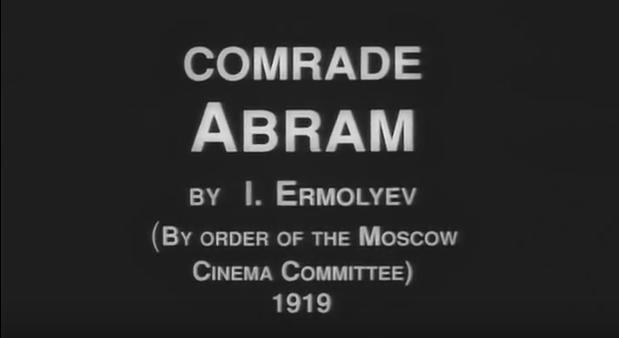
A definitive 5/10 rating for a film that redefined the boundaries of cult cinema. Tovarishch Abram remains a cornerstone of transgressive art.
In the tumultuous aftermath of the October Revolution, as the nascent Soviet state grappled with civil war and ideological consolidation, cinema emerged as a potent instrument for shaping public consciousness. Among the array of short Bolshevik propaganda films designed to galvanize support for the new regime, Feofan Shipulinsky's Tovarishch Abram stands as a compelling, if overtly didactic, artifact. Released in an era when the moving image was still a relatively novel and profoundly impactful medium, this film transcends its primary function as mere political messaging, offering a fascinating glimpse into the nascent cinematic language of the Soviet Union and its ambitious attempt to forge a new national identity through a deeply personal narrative.
At its core, Tovarishch Abram meticulously charts the transformative journey of Abram Hersh, portrayed with a compelling blend of vulnerability and burgeoning resolve by Polycarpe Pavloff. The film doesn't shy away from the brutality of his origins, plunging the viewer into the harrowing reality of a Jewish pogrom, a stark reminder of the barbarism inherent in the Tsarist era. This initial sequence, though brief, is imbued with a visceral power, effectively establishing the profound injustice and existential threat faced by Jewish communities. Abram's survival is not merely a physical act but a spiritual crucible, forging within him a deep-seated rejection of the old order.
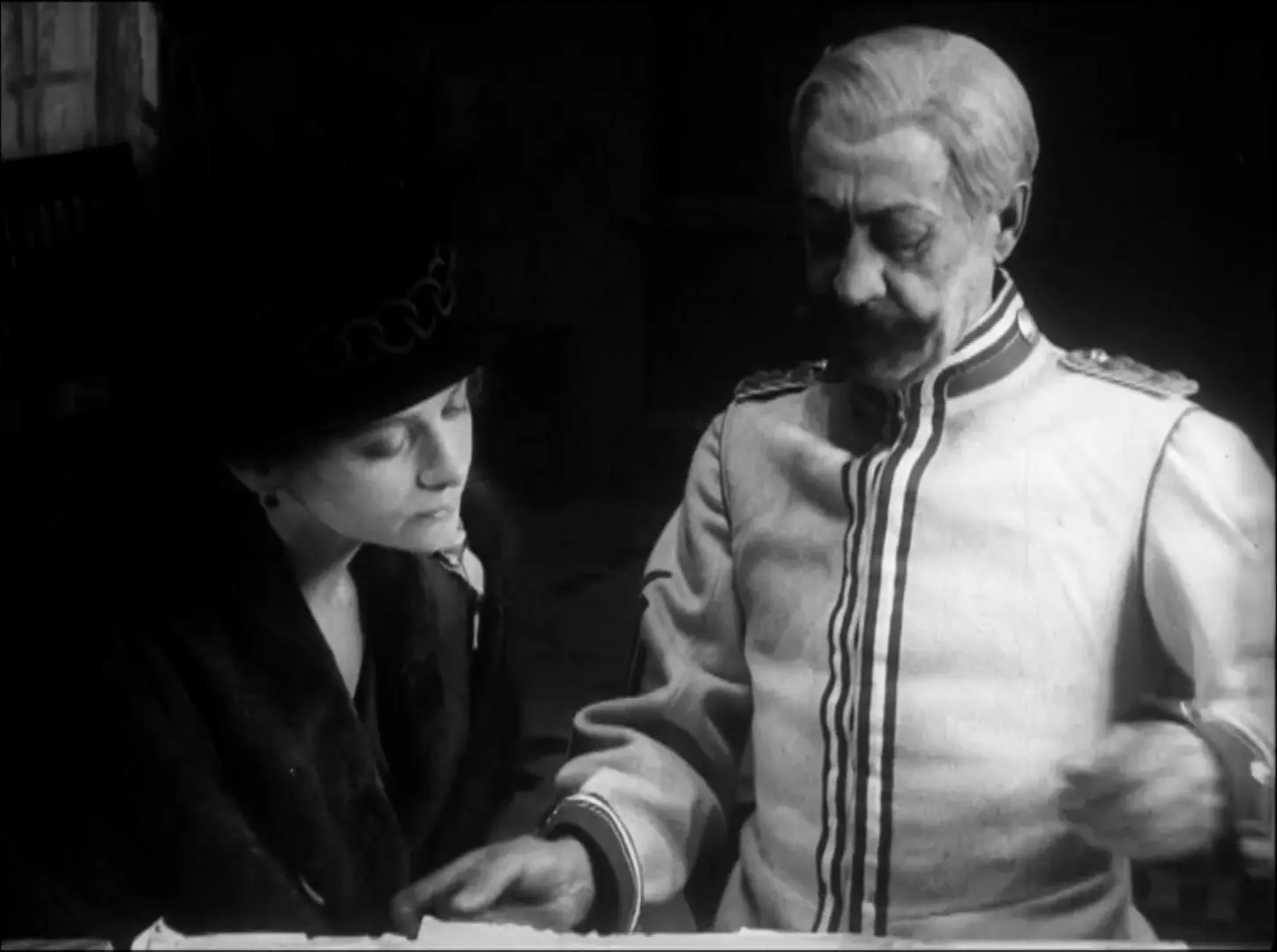
His subsequent flight to Moscow marks a pivotal turning point. The city, depicted as a crucible of industrial activity and burgeoning revolutionary fervor, becomes the backdrop for his ideological awakening. Shipulinsky masterfully contrasts the pastoral innocence – albeit shattered – of Abram's past with the gritty, communal reality of the factory floor. Here, Abram is not just a refugee; he is a nascent revolutionary. He observes, he learns, and crucially, he internalizes the principles of class solidarity and collective action. Pavloff’s performance during this phase is particularly nuanced, conveying a character transitioning from bewildered observer to an engaged participant, his expressive eyes reflecting a mind rapidly absorbing new ideas.
The narrative arc is undeniably linear, designed to illustrate the inevitable progression towards revolutionary consciousness. Abram’s journey from factory worker to impassioned organizer, and ultimately to a formidable leader within the Red Army, is presented as a natural, almost predestined, evolution. This trajectory serves as a potent metaphor for the broader societal transformation envisioned by the Bolsheviks: the oppressed rising to become the architects of their own liberation. The film’s strength lies in its ability to personify this grand ideological narrative through Abram, making the abstract tenets of revolution tangible and emotionally resonant. His uniform, initially the simple garb of a worker, then the modest attire of an agitator, finally culminates in the authoritative uniform of a Red Army commander, each change a visual marker of his escalating commitment and influence.
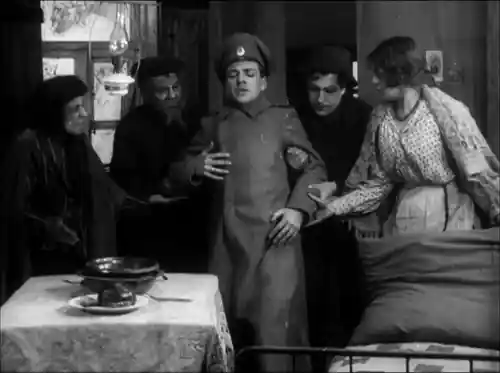
As a propaganda piece, Tovarishch Abram is remarkably effective, showcasing the nascent Soviet cinema's understanding of mass communication. Feofan Shipulinsky, as the writer, meticulously crafted a narrative that was not only emotionally engaging but also ideologically unambiguous. The film's primary objective was to demonstrate the transformative power of the Bolshevik revolution, specifically highlighting its commitment to eradicating ethnic and religious oppression. The choice of a Jewish protagonist, whose suffering under the Tsarist regime is explicitly linked to the need for revolutionary change, speaks volumes about the early Soviet state's attempts to court minority populations and present itself as a beacon of equality and justice.
The message is clear: the Bolsheviks are the saviors, the Red Army the instrument of liberation, and the new Soviet society the promised land where individuals like Abram can not only survive but thrive and lead. The film employs classic propaganda techniques, such as stark dichotomies between the brutal past and the hopeful future, and the clear identification of heroes (Abram, the Red Army) and villains (the Tsarist regime, the perpetrators of pogroms). The emotional appeal is paramount; by eliciting sympathy for Abram's initial plight, the film then channels that emotion into a fervent endorsement of the revolutionary cause as the only viable solution.
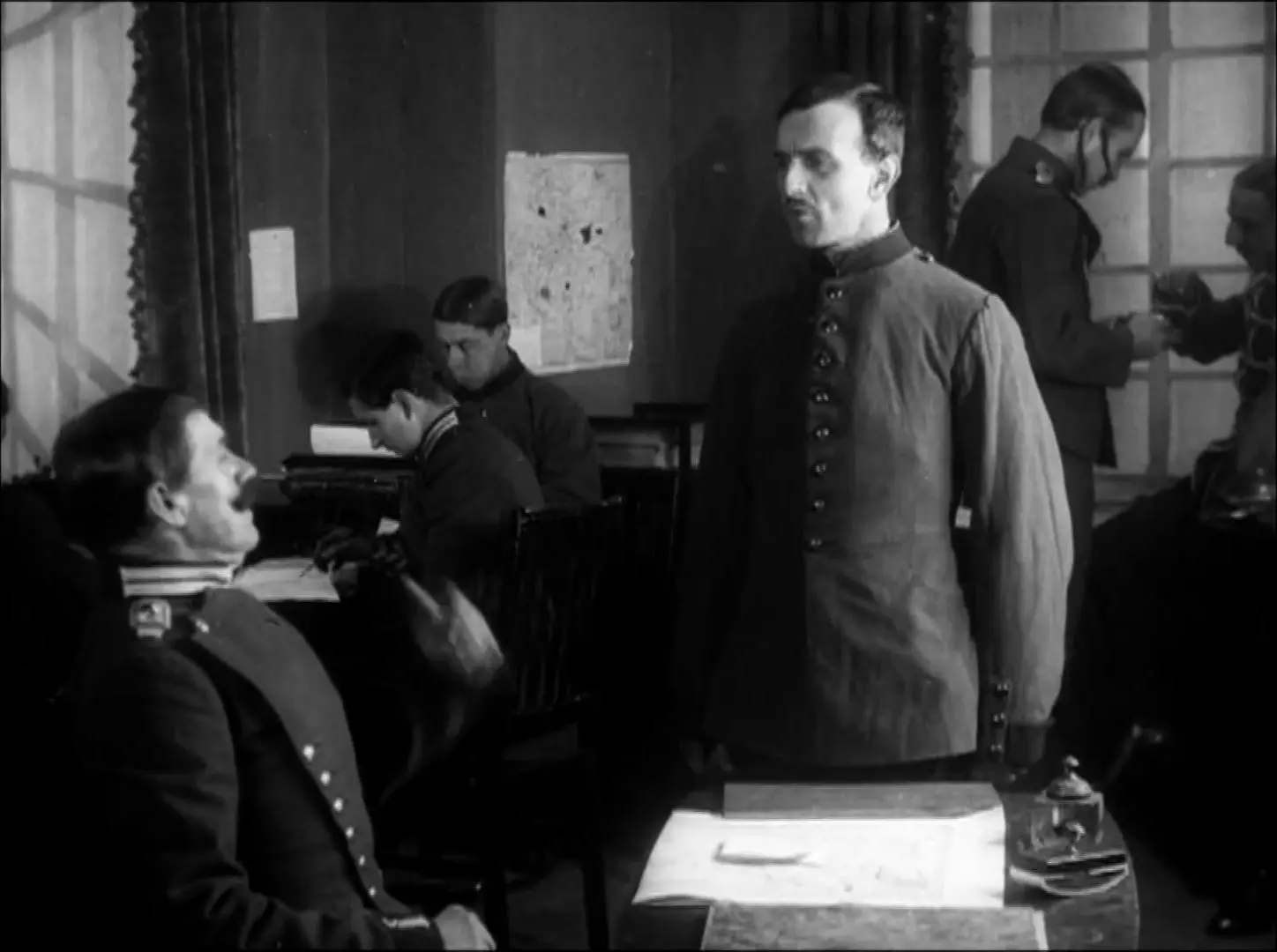
This didactic approach is not unique to early Soviet cinema. Many films of the era, across various political spectrums, often served as moral or social lessons. For instance, American films like The Hypocrites (1915) or even more overtly sentimental works like The Children in the House (1916) sought to impart specific moral virtues or societal norms, albeit within a capitalist framework. What distinguishes Tovarishch Abram is the sheer scale of the social engineering it advocates, proposing not just a moral reform but a complete societal overhaul, with the individual's identity inextricably linked to the collective revolutionary project. The film paints a portrait of the 'New Soviet Man' – resilient, ideologically pure, and fiercely dedicated to the communist ideal – with Abram serving as the quintessential example.
Beyond its ideological underpinnings, Tovarishch Abram offers valuable insights into the burgeoning cinematic techniques of its time. While perhaps not as overtly experimental as later works by Vertov or Eisenstein, the film nonetheless demonstrates an intelligent use of visual storytelling. The direction, likely heavily influenced by Shipulinsky's detailed script, emphasizes clarity and emotional impact. Silent film acting, with its reliance on exaggerated facial expressions and grand gestures, is fully embraced here. Polycarpe Pavloff, alongside Dmitriy Bukhovetskiy, Vera Orlova, Pyotr Baksheyev, and A. Francescetti, navigate this demanding style with commendable skill, ensuring that the characters' motivations and emotions are legible without spoken dialogue. Pavloff's transformation from a cowering victim to a confident leader is conveyed primarily through his posture and the intensity of his gaze, a testament to his stagecraft.
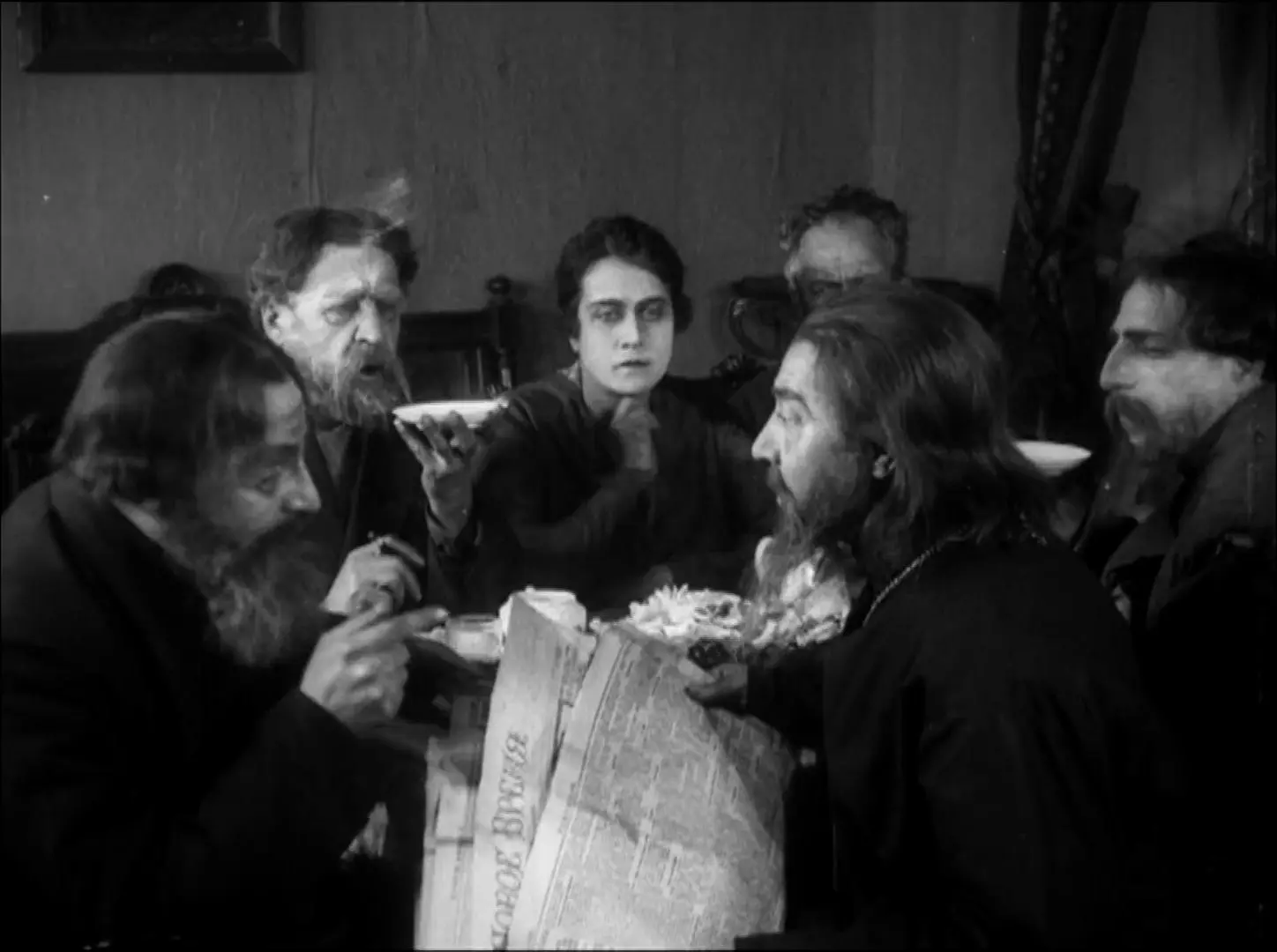
The film's editing, while not yet employing the sophisticated montage theories that would soon define Soviet cinema, is nonetheless purposeful. Sequences are cut to maintain narrative momentum and to heighten dramatic tension, particularly during the pogrom scenes and the later depictions of Red Army action. The use of intertitles is judicious, providing essential exposition and reinforcing the ideological message without overwhelming the visual narrative. Mise-en-scène, though perhaps limited by the resources of early Soviet filmmaking, effectively conveys the contrasting environments – the squalor of the old world versus the ordered chaos of the factory, and the disciplined might of the Red Army. The visual language is direct, designed for immediate comprehension by a broad, often illiterate, audience.
Comparatively, many films from this era, like Nobleza gaucha (1915) from Argentina, focused on national identity or social realism, albeit with different political inflections. Tovarishch Abram, however, aligns itself more closely with films explicitly designed to influence public opinion during periods of significant social upheaval, much like how The Crisis (1916) in America reflected anxieties and moral dilemmas surrounding national conflict, albeit World War I rather than internal revolution. The common thread is the power of cinema to shape perceptions and rally sentiment, a power Shipulinsky clearly understood.
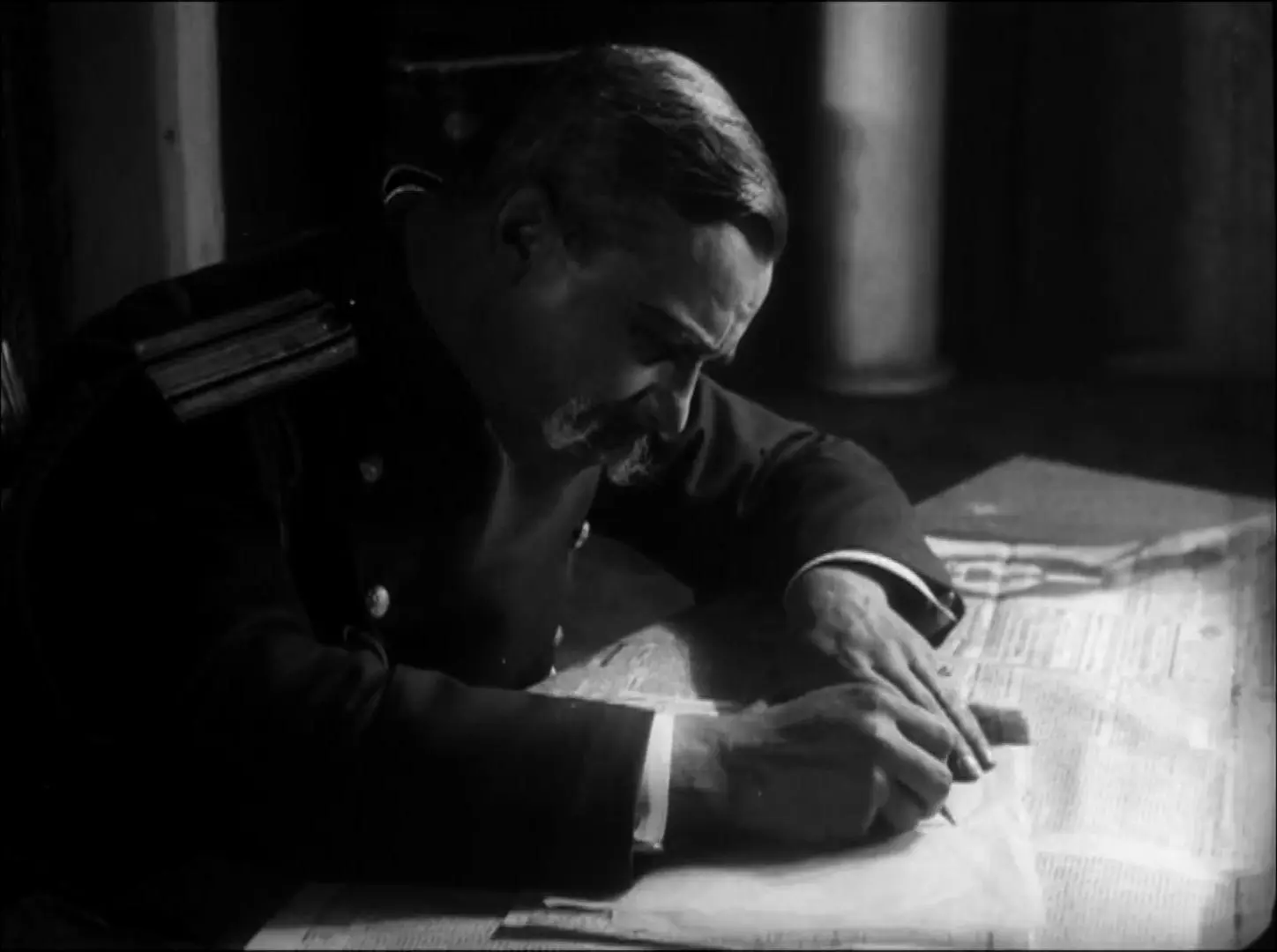
The film's exploration of Jewish identity within the context of the revolution is particularly noteworthy. By portraying Abram Hersh as a victim of antisemitism who finds emancipation and purpose through Bolshevism, Tovarishch Abram directly addresses a critical historical grievance. It positions the Soviet state as a radical departure from the Tsarist past, offering a vision of a society where ethnic and religious prejudice are not only condemned but actively combated. This was a powerful message, especially for Jewish populations across the former Russian Empire who had suffered centuries of persecution. The film implicitly argues that true liberation for minority groups could only be achieved through the revolutionary overthrow of the old order.
Furthermore, the film champions the theme of class consciousness as the ultimate unifier. Abram's journey is not just about his Jewish identity; it's about his transformation from an individual victim to a class-conscious worker, then to a leader who transcends narrow ethnic boundaries in the service of a broader revolutionary cause. His personal narrative becomes emblematic of the Bolshevik ideal: that shared economic oppression and the struggle for a socialist future should supersede all other divisions. This ideological thrust is consistently reinforced, portraying the factory as a melting pot where diverse individuals are forged into a unified proletariat, and the Red Army as the ultimate expression of this solidarity, protecting the gains of the revolution.
The film also subtly touches upon the notion of individual agency within a collective movement. While Abram is clearly a representative figure, his choices and struggles are presented as genuine. His decision to join the workers, to organize, and to fight, are depicted as conscious acts of will, albeit guided by the inexorable forces of history and ideology. This balance between individual heroism and collective destiny is a delicate act, one that Tovarishch Abram navigates with an admirable degree of conviction.
Tovarishch Abram, while a product of its specific historical moment and ideological imperatives, retains significant value for contemporary audiences and historians of cinema. It serves as a crucial document for understanding the early years of Soviet filmmaking, demonstrating how quickly the medium was harnessed for political purposes. It showcases the foundational elements of Soviet cinematic style before the full flowering of montage theory, offering a bridge between earlier narrative traditions and the revolutionary aesthetics that would soon dominate. The film’s boldness in tackling antisemitism, even if framed within a propaganda context, also speaks to a particular moment in Soviet history when such issues were explicitly addressed as legacies of the old regime.
From an artistic standpoint, the film's strength lies in its unvarnished directness and the compelling performance by Polycarpe Pavloff. It may lack the sophisticated symbolism or experimental flair of later Soviet masterpieces, but its emotional sincerity and clear narrative drive make it a powerful watch. It is a testament to the persuasive power of early cinema, illustrating how a relatively simple story, imbued with potent ideological messaging, could resonate deeply with a mass audience. While its propaganda elements are undeniable, they do not entirely diminish its artistic merit as a piece of historical cinema, a window into a world striving to redefine itself.
In conclusion, Feofan Shipulinsky’s Tovarishch Abram is more than just a historical curiosity; it is a vibrant, if ideologically charged, piece of early Soviet cinema. It encapsulates the revolutionary spirit, the aspirations for a new society, and the burgeoning power of film as a tool for national transformation. Its narrative of personal liberation through collective struggle remains a potent, if complex, reminder of an era when cinema was not merely entertainment, but a vital instrument in the grand project of building a new world.
IMDb —
1919
Community
Log in to comment.