DbcultAccessing Vault...
6.1/10
Senior Film Conservator
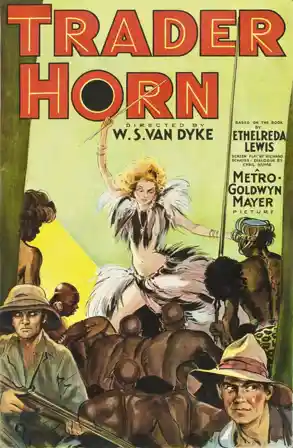
A definitive 6.1/10 rating for a film that redefined the boundaries of cult cinema. Trader Horn remains a cornerstone of transgressive art.
So, Trader Horn. Is it worth watching today? Honestly, probably not for most folks. If you’re a serious student of old Hollywood, or just morbidly curious about how films handled "darkest Africa" back in 1931, then maybe. Otherwise, it's a bit of a slog.
Anyone looking for a rollicking adventure or anything remotely nuanced will probably find themselves restless. But for a peek into early sound cinema and its *very* particular worldview? It's something.
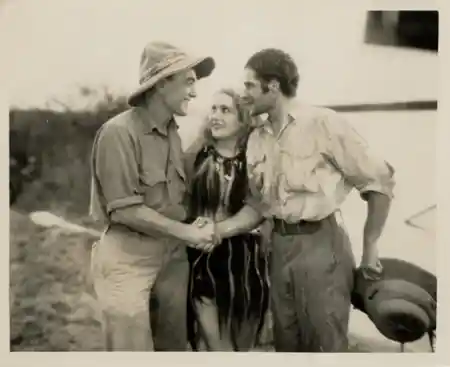
The film opens with Harry Carey as Horn, a grizzled old trader, and his younger partner, Peru, played by Duncan Renaldo. They’re deep in what the movie calls “unexplored East Africa,” which, you know, immediately sets the tone. It’s all about these two white guys navigating a continent presented as entirely wild and dangerous, full of wild animals and even wilder "natives." The sheer *audacity* of it is something to behold, even if it makes you wince a little now.
The sound quality itself is a trip. It’s early talkie stuff, so sometimes the dialogue feels a bit stilted, like they’re trying really hard not to bump the boom mic. Other times, the ambient jungle sounds are just… there. A bird squawks. A lion roars, maybe a little too close to the microphone. It gives it a weird, almost documentary-like raw feeling, even when the story is clearly not.
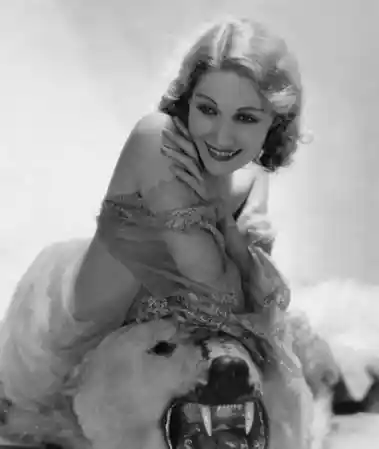
A big chunk of the movie is just these two guys, Horn and Peru, trekking. They talk about ivory, they talk about danger. There’s a lot of walking through dense jungles and open plains. You can really feel the heat and humidity, even through the old black-and-white print. The scenery, when they actually let you see it, is pretty stunning in parts. One long shot of them crossing a river really stuck with me, just the slow current and the tiny figures.
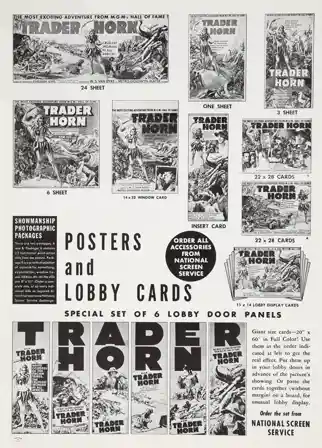
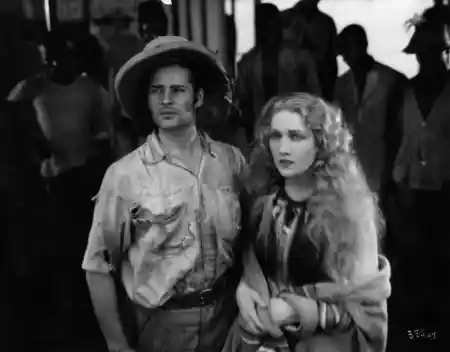
Then comes the whole "white goddess" bit. This is where Edwina Booth enters as Nina, the long-lost daughter of a missionary. She was captured as a child by the "savage Lumbali tribe" and now they worship her. 😲 It's quite the setup. Booth herself has this almost ethereal, wide-eyed look, dressed in this simple, flowing outfit that screams "pure and untamed."
The idea is that Horn and Peru have to "rescue" her. But Nina doesn't exactly *want* to be rescued at first. She's got this whole identity built around being a goddess. She even tries to stop them. There’s a moment where she just stares blankly, like, "Why are you here messing up my life?" It's surprisingly ambiguous for a film of this era. You almost feel for her, having her world turned upside down by these two strangers.
The "Lumbali tribe" scenes are… difficult to watch now. They’re portrayed as menacing, chanting, and very much "the other." There are moments with drums and spears that just feel so cliché, you almost expect Indiana Jones to pop out. It's a reminder of how deep these stereotypes ran. One shot of them dancing around a fire really lingers, trying to emphasize their "primitiveness." The extras in these scenes have this strangely detached look sometimes, like they're not quite sure what they're supposed to be doing.
The animal sequences are a mix. Some of the close-ups on lions and elephants feel pretty genuine, probably because they *were* genuine. Other times, it's clearly stock footage or animals in a staged environment. There’s a scene with a leopard that feels genuinely tense, if a little rough around the edges in its editing
IMDb —
1920
Community
Log in to comment.