DbcultAccessing Vault...
Cult Review
Senior Film Conservator
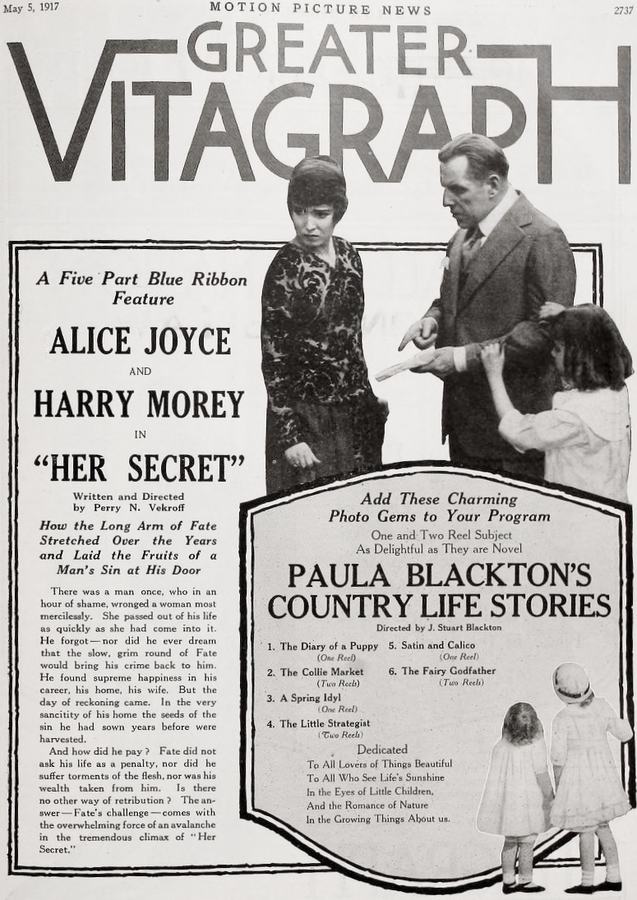
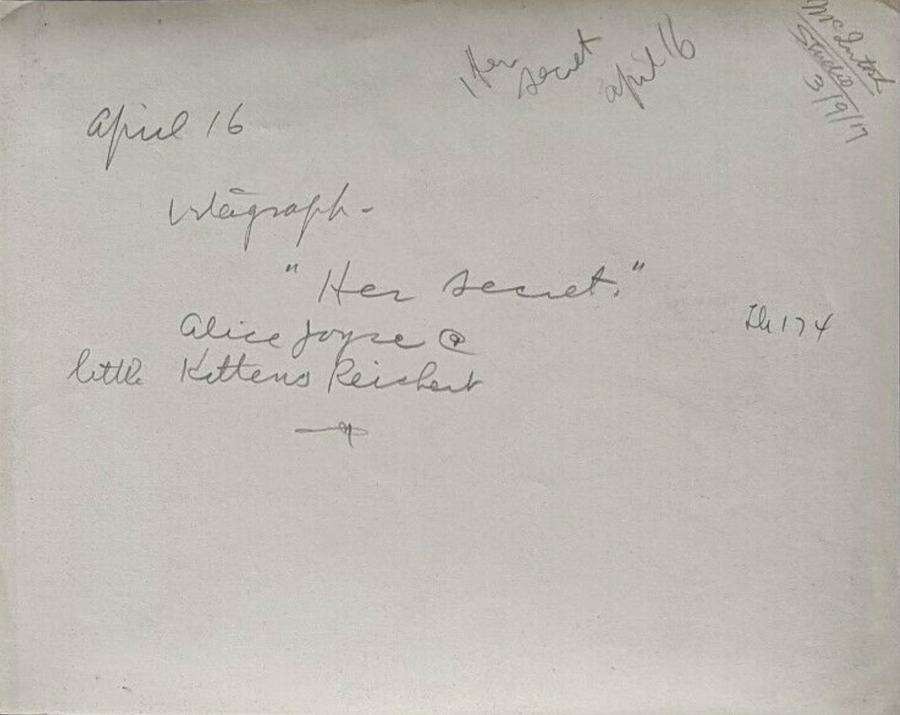
The year 1917 stood as a pivotal juncture for the Vitagraph Company of America, a period where the primitive aesthetics of early cinema began to coalesce into the sophisticated visual grammar of the silent era. Within this landscape, Her Secret emerges not merely as a melodrama, but as a searing, if occasionally contrived, exploration of patriarchal hypocrisy and the stochastic nature of fate. Directed by Perry N. Vekroff, the film serves as a vehicle for Alice Joyce, whose screen presence was often characterized by a luminous yet stoic vulnerability—a quality that this narrative exploits to its fullest emotional extent.
The film’s opening act is a masterclass in atmospheric tension. The frontier hotel, where Clara Weston finds herself stranded, is depicted as a nexus of lawlessness, a stark contrast to the 'civilized' East she aspires to reach. Vekroff utilizes the geography of the hotel—the separation between the rowdy, sea-blue tinted darkness of the saloon and the fragile sanctuary of the upstairs rooms—to establish a sense of impending dread. The fight downstairs isn’t just background noise; it is the sonic and visual manifestation of a world where masculine impulse overrides social contract.
When Rex Fenton, played with a brutish intensity by Harry T. Morey, stumbles into Clara’s room, the horror is predicated on a terrifyingly mundane mistake. This isn't the calculated villainy often seen in contemporary works like The Evil Women Do, but rather a chaotic byproduct of frontier intoxication and entitlement. The assault is handled with the era’s necessary restraint, yet the psychological fallout is articulated through Joyce’s shattered composure. Unlike the more moralistic leanings of An Innocent Magdalene, where the 'fallen' status is often treated as a character flaw, Her Secret positions Clara as a woman navigating a landscape that offers her no protection.
The transition to the city introduces one of the most fascinating tropes of early cinema: the transformative power of grooming. By shaving his beard, Rex Fenton undergoes a visual metamorphosis that renders him invisible to his victim. This narrative device serves a dual purpose. On a plot level, it facilitates the 'coincidence' required for the melodrama to function. On a symbolic level, it suggests that the 'beast' of the frontier can easily masquerade as the 'gentleman' of the city. Morey’s performance in the second act is a chilling study in unconscious arrogance; he is a man who has forgotten his sins because they were committed in a place he no longer inhabits.
Clara’s tenure as Fenton’s secretary is fraught with a tension that the audience feels more acutely than the characters. The irony of her falling in love with her tormentor is a bitter pill, yet Vekroff manages to make the romance feel grounded in Clara’s desperate need for stability. The film avoids the overt didacticism found in The Price of Silence, opting instead for a slow-burn realization of domestic bliss built upon a foundation of sand. The cinematography here shifts from the jagged, high-contrast shadows of the hotel to a softer, more affluent sea-blue and yellow palette, reflecting the deceptive comfort of Clara’s new life.
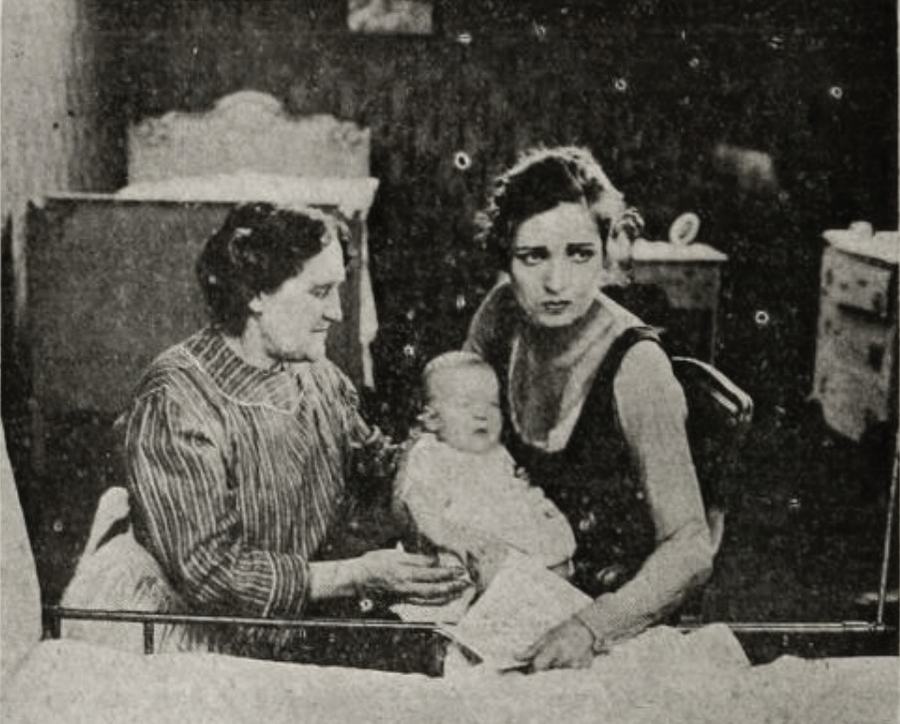
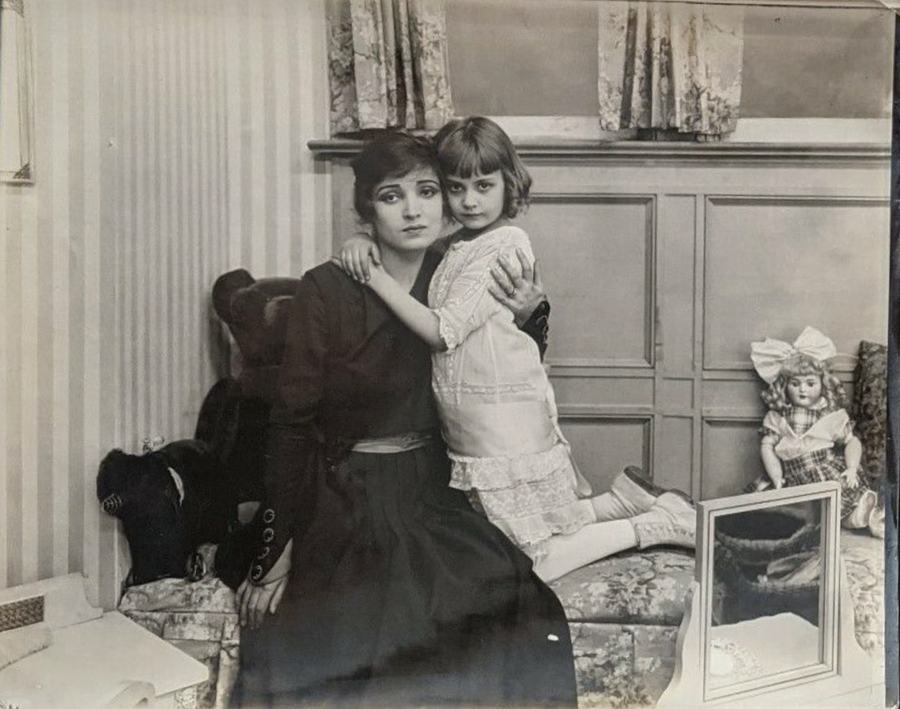
The subplot involving the child is where Her Secret touches upon themes of biological destiny. Fenton’s 'adoption' of his own child is a narrative maneuver that highlights the absurdity of the era’s social codes. He accepts the child as a benevolent gesture of love for Clara, yet he remains the primary architect of the child’s 'shameful' origin. This section of the film invites comparison to Il film rivelatore, where the revelation of truth is the ultimate destructive force. In Her Secret, the truth is not just a secret; it is a physical presence living within their home.
When Fenton eventually discovers Clara’s past—not yet realizing his own role in it—the film shifts into a searing critique of the double standard. His renunciation of her is swift and merciless. It is a moment of profound frustration for the viewer, as Fenton occupies a moral high ground that he has no right to claim. This sequence is perhaps the most modern aspect of the film; it exposes the way men utilize 'honor' as a weapon to punish women for the very violence men inflict upon them. The sea-blue lighting in these scenes feels cold, sterile, and unforgiving, mirroring Fenton’s rigid heart.
The acting by Harry T. Morey during this confrontation is particularly noteworthy. He manages to convey a sense of genuine betrayal, which makes the character all the more loathsome. He isn't a cartoon villain; he is a man who truly believes in his own righteousness. This makes the impending revelation all the more satisfying. The narrative structure here echoes the moral complexities explored in Wolf Lowry, though the resolution in Her Secret is far more intimate and personal.
The climax of the film centers on a scar on Fenton’s wrist—a mark left by Clara during her struggle in the hotel room. This is a brilliant narrative choice by Perry N. Vekroff. In a medium that relied on visual storytelling, the scar acts as a permanent, unerasable piece of evidence that bridges the gap between the bearded beast of the past and the clean-shaven husband of the present. It is the 'smoking gun' of the melodrama.
The moment of recognition is handled with a visceral intensity. As Fenton looks at the scar and then at Clara, the entire weight of his hypocrisy collapses. The sea-blue tint fades as the realization dawns on him. The power dynamic shifts instantly. Clara, who has spent the entire film as a victim of circumstance, suddenly holds the moral and emotional leverage. Her decision to forgive him 'for the sake of the child' is a resolution that may frustrate modern audiences, but within the context of 1917, it was a radical assertion of maternal agency. She isn't just forgiving him; she is choosing to preserve the family she built, despite the monster who helped create it.
Visually, Her Secret is a testament to the evolving craft of Vitagraph’s technical teams. The use of yellow lighting for the 'domestic' interiors provides a warmth that contrasts sharply with the cold sea-blue of the 'conflict' scenes. The editing is brisk for its time, particularly during the saloon fight, which uses cross-cutting to build a sense of chaos that mirrors Clara’s internal panic. While it may not have the experimental flair of Zhuangzi shi qi, it possesses a sturdy, professional elegance that keeps the viewer engaged across its runtime.
The supporting cast, including Mary Maurice and George Cooper, provide a solid foundation, though the film is undeniably a showcase for Joyce and Morey. Alice Joyce, in particular, demonstrates why she was one of the highest-paid actresses of her era. Her ability to convey complex internal monologues through subtle shifts in her gaze is what elevates Her Secret above the standard 'fallen woman' tropes found in contemporary Australian bush dramas like A Tale of the Australian Bush or Caloola.
In the broader context of silent cinema, Her Secret occupies a unique space. It is a film that grapples with the aftermath of sexual violence in a way that is both dated and surprisingly forward-thinking. It acknowledges the trauma and the social stigma, but it also dares to suggest that the perpetrator is the one in need of redemption, not the victim. The use of the scar as the catalyst for this redemption is a masterstroke of dramatic writing that ensures the film lingers in the mind long after the final iris-out.
While some might find the 'coincidence' of Clara becoming Fenton’s secretary to be a bridge too far, it is a necessary artifice for the film’s thematic exploration. It forces a confrontation between the past and the present that a more 'realistic' narrative might avoid. In this sense, it shares a kinship with The Last Dance, where fate acts as the ultimate arbiter of human relationships. Her Secret remains a compelling, if harrowing, look at the scars we carry—both seen and unseen—and the difficult path toward a forgiveness that is never truly earned, but sometimes necessary for survival.
Reviewer's Note: For those interested in the darker side of early 20th-century social dramas, comparing this to Drugged Waters or the political undertones of Guarding Old Glory provides an excellent cross-section of the era's thematic preoccupations.
IMDb 6.3
1920
Community
Log in to comment.