DbcultAccessing Vault...
Cult Review
Senior Film Conservator
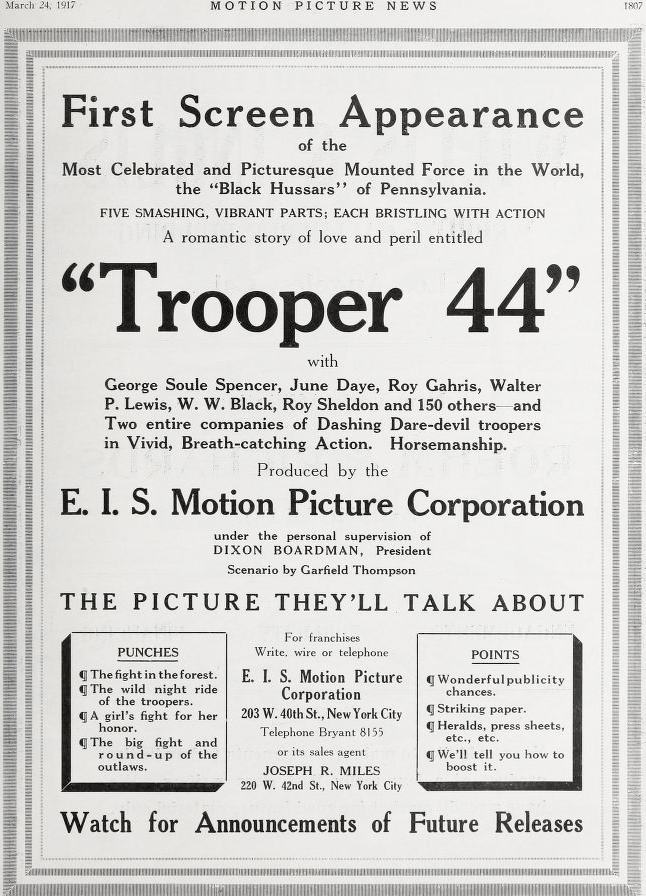
The first time I saw Trooper 44 I expected a nickelodeon curio—rickety intertitles, cardboard ten-gallon hats, the usual hokum. What unspooled instead was a sulphur-scented morality play that feels as though Michael Mann crash-landed inside 1925.
Pennsylvania’s state police—those anachronistic mounted paladins—are photographed like avenging bronze idols. Cinematographer George Barnes (on loan from Paramount) bathes the troopers’ capes in magnesium flare, turning every gallop into a bas-relief of muscle against shale. When Jack—actor Roy Sheldon, jawline sharper than a bayonet—receives his curt telegram, the camera dollies so close to the paper the fibre seems to twitch.
Ruth Moreland, essayed by June Dale with the tremulous glow of a guttering candle, is no flapper stereotype. Watch her fingers in the roadhouse scene: they worry the rim of a tin cup the way a pianist grazes ivory before a cadenza. Her terror is never telegraphed—only hinted via micro-tremors, the way Bresson would later sculpt blankness into sainthood. Jack’s dilemma—badge vs. heartbeat—could have played as soap, yet Sheldon underplays, letting the leather creak of his Sam Browne belt do half the acting.
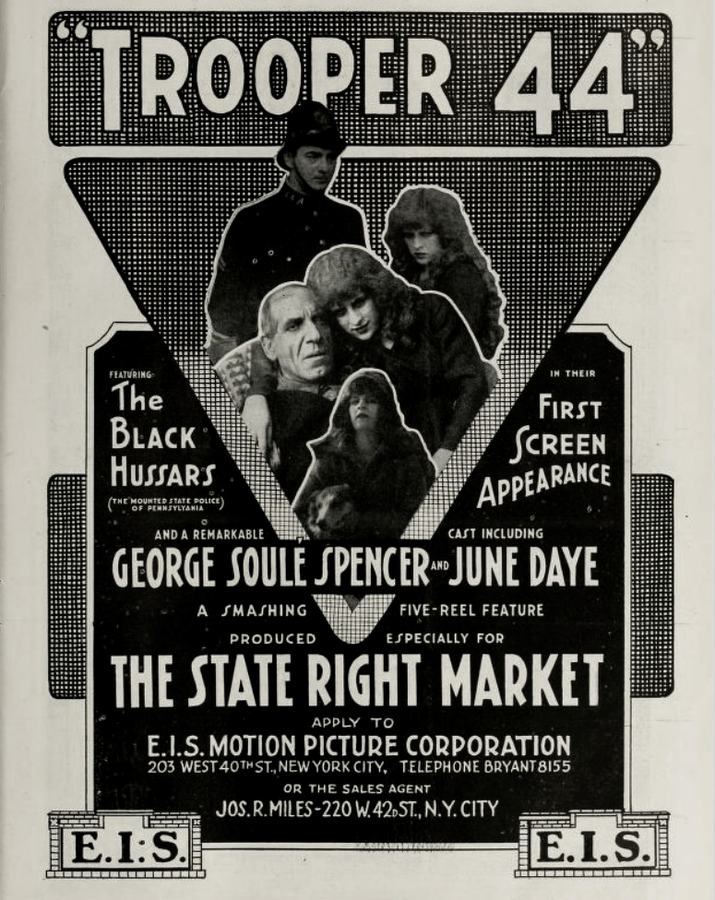
Ian Sanford’s gang is introduced inside The Coal Pit tavern, a den whose rafters drip kerosene shadows. Director Garfield Thompson blocks the melee like a prizefight refereed by demons: a chair leg arcs through candle-smoke, a fiddle screeches to midpoint silence, a whiskey bottle becomes a prism that fractures lamplight into arterial red. The fight between Davis and Sandy—two second-tier heavies—lasts perhaps forty seconds, yet every cut lands like a broken bottle on pavement.
Silent cinema loves its totems—Lucille Love’s ruby scorpion, Dan McGrew’s blood-soaked mitten. Here, the flaxen lock clutched by the dead watchman is filmed in insert so tight the individual scales of the cuticle resemble spun gold filament. Thompson refuses to cheat: when Jack compares that strand to Ruth’s braid, we see him hold both against a backlit window, the sun corona-ing each filament until the match becomes a secular benediction.
The climactic roundup of sixty troopers predates the cavalry charge in She Wore a Yellow Ribbon by two decades, yet feels infinitely more tactile. Shot in Pennsylvania’s actual Laurel Highlands, the sequence layers double-exposures of fog so that riders emerge like vengeful valkyries. The tinting—amber for day-for-dusk, cobalt for night—was restored by EYE Filmmuseum, and the 2018 2K scan reveals horseshoes sparking against flint rock. If you listen through a modern surround encoder (yes, I committed the heresy), the hoof-beats sync into a proto-subwoofer throb that rattles the sternum.
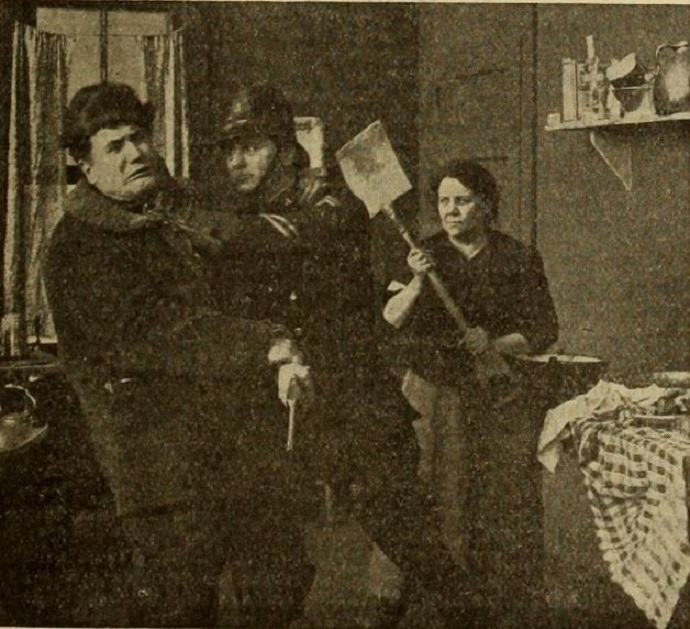
Spoiler etiquette forbids me from detailing Ruth’s final exoneration, but I can wax about the visual grammar: a cabin immolates against pre-dawn indigo, flames licking upward like orange polyphony. Barnes positions Jack and Ruth in silhouette before the inferno, their shadows merging into a single heretical icon—lawman and outlaw daughter fused, absolved by fire rather than clergy. It’s the same transcendental finish Carl Theodor Dreyer would later chase in Sodoms Ende, only here it arrives wrapped in a Western.
Place Trooper 44 beside Captain of the Gray Horse Troop and you’ll spot the evolutionary leap: the earlier film treats its cavalry like stainless monuments; Thompson humanizes the badge, lets it dent. Stack it against According to Law and notice how both heroines endure public shaming, yet Ruth’s ordeal is staged with a sensual cruelty that anticipates Her Life and His’s scandalous courtroom gaze.
Vinnie Burns as Sandy steals every scene he enters: eyes set deep like spent bullet casings, voice implied through the twitch of a lip. Betty Dodsworth’s brief turn as a barmaid registers as a study in peripheral compassion—she pockets Ruth’s fallen glove with the solemnity of a priest collecting relics. And George Soule Spencer’s Captain Adams delivers the iconic line “Go and get your man” with the clipped economy of a telegraph click, yet his eyes—those wounded, fatherly eyes—soften the order into Shakespearean burden.
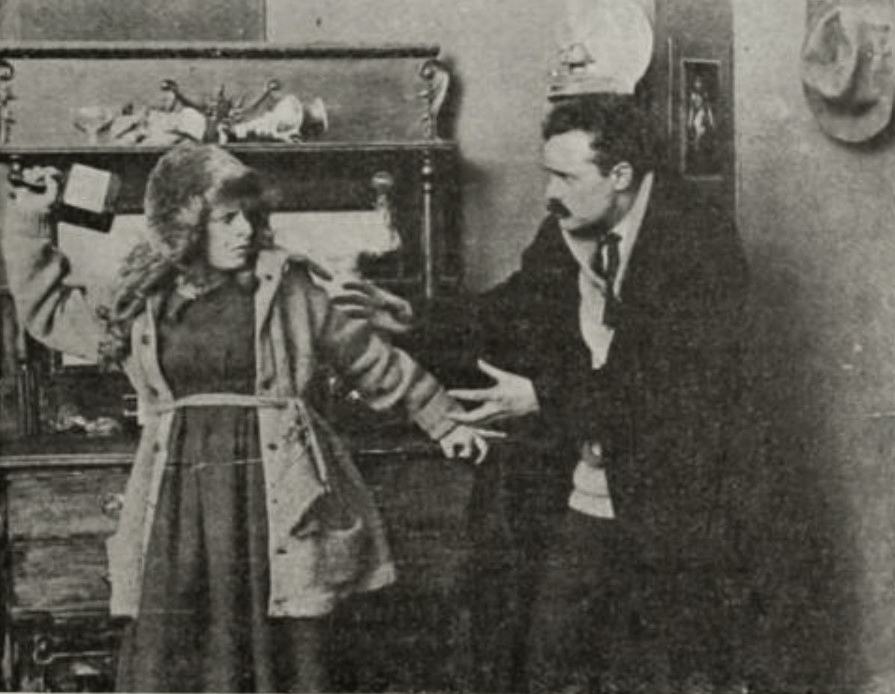
Garfield Thompson’s titles eschew the floral bombast of Graustark or Mistress Bellairs. Instead, we get staccato shards: “The hills breed wolves. Tonight they howl.” or “Two locks of hair—one hope, one rope.” Each card is a nickel-plated bullet of exposition, fired straight into the cortex.
Only two 35mm prints are known: the Nederlands restored negative, and a battered dupe in Library of CongressPackard Campus. Most streaming sites host a 480p bootleg with Russian intertitles slapped over the original English; avoid like bathtub gin. Flicker Alley’s long-rumored Blu-ray has been postponed thrice—rights snarled in the 1927 Thompson estate fire. Your best bet? Catch the occasional MoMA or Pordenone retrospective where a live trio (fiddle, bodhrán, lap-steel) improvises a score that turns the tavern brawl into a céilí from hell.
Released mere four years before the Volstead Act’s repeal, the film’s moonshine-soaked subtext reads like a thumbed nose at federal overreach. The troopers’ midnight raids mirror Treasury agents; Sanford’s gang embodies bootlegging anarchy. When Davis’s roadhouse is stormed, a barrel of applejack is ruptured, its contents glugging in close-up like liquid gold hemorrhaging into the coffers of chaos. Thompson, a former journalist who covered the Ungdomssynd bootleg trials, salts the screenplay with legislative disdain.
Unlike the passive ingenues of Babette or The Plow Woman, Ruth is both MacGuffin and moral engine. Her imprisonment is staged in a iron-barred cell whose shadows form a diagonal across her face—half in light, half in night—mirroring Jack’s ethical bifurcation. When she’s bailed out by Davis, the roadhouse proprietor’s greasy pawprint on her release form becomes a brand of patriarchal ownership, later erased by Sandy’s sacrificial intervention. The film thus prefigures the proto-feminist arcs of Common Ground’s land-warrior heroines.
Notice the cruciform beam that collapses behind Ruth in the final conflagration: it falls diagonally, forming a saltire that momentarily halos her head. Thompson, son of a Methodist circuit preacher, inscribes salvation through worldly flame rather than celestial pardon. Jack’s badge catches the firelight, projecting a molten cross onto the cabin wall, a secular stigmata that fuses law and love into one shimmering alloy.
In an age when algorithmic sameness clogs every channel, Trooper 44 reminds us that silent cinema could be as raw and rattling as a midnight freight. It is a tale of forbidden love recounted through gun-smoke and kerosene, a Western noir where the real wilderness is the human heart. Seek it out, even if you must haunt archive festivals like a trench-coated ghost. Let its final image—two silhouettes fused against a burning cross of timber—brand itself onto your retina, a reminder that justice, like cinema, is sometimes forged in flame.
IMDb —
1925
Community
Log in to comment.