DbcultAccessing Vault...
Cult Review
Senior Film Conservator
Cuttleback’s railway station coughs steam like an old dog in winter, and through that metallic breath steps Mrs. Lehr—veil askew, gloves the color of last night’s candle wax—carrying grief in one suitcase and defiance in the other.
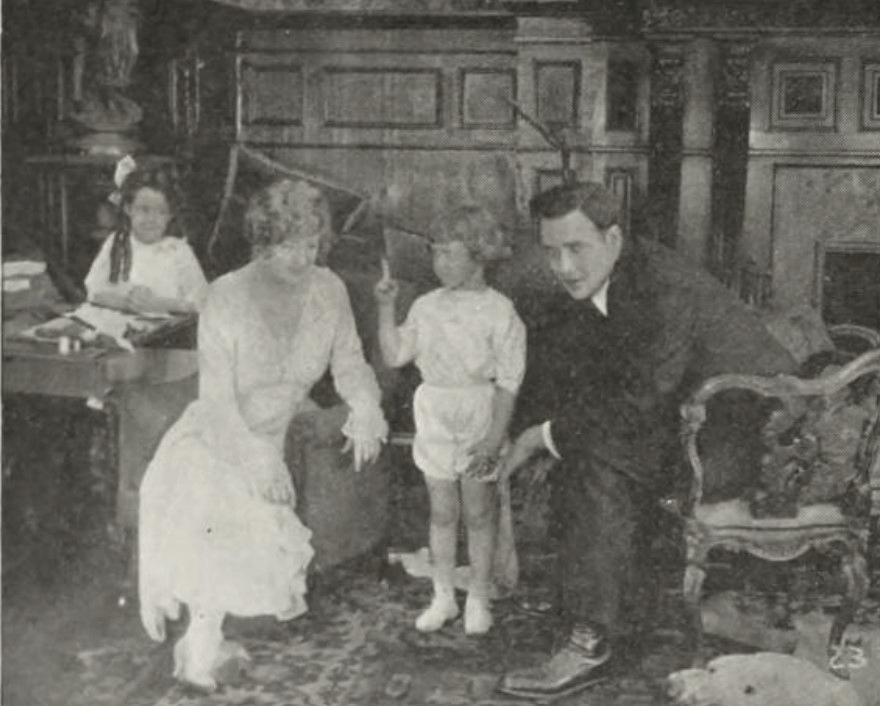
Director Kenean Buel, never one to waste a silhouette, lets her pause beneath a flickering arc lamp until the platform boards resemble a chess grid; she is both queen and pawn in the match she doesn’t yet know has started. The camera glides, silk-smooth, to the waiting Job Jenkins: spine curved like a question mark, eyes burning with the territorial fury of a farmer who’s tasted first ownership. One intertitle could summarize this clash—"Caretaker, meet inheritor"—but Buel prefers the language of bodies: Job’s knuckles whitening around a broom handle, Mrs. Lehr’s gloved fingers tightening on her daughters’ shoulders, the children already measuring every room they intend to conquer.
Jump-cut to Daniel Whitcomb’s law office: law books tower like defensive battlements, yet the man himself hunches over a newspaper clipping the way sailors study ominous clouds. Richard Turner plays Daniel with the hushed panic of someone who suspects the universe keeps receipts; every time he lifts his gaze, the camera inches closer until his pupils become twin mirrors reflecting roads not taken. The film’s genius lies in refusing to declare him protagonist or antagonist—he is simply the human condition stuck in a swivel chair.

The estate itself emerges as a character: clapboard skin freckled by weather, corridors exuding the yeasty smell of old promises. Buel’s lighting plot is a seminar in chiaroscuro—sunlight razors through fanlight windows striping the floorboards, while kerosene lamplater pools umber warmth in corners where secrets hatch. Watch how the director stages the first rekindling of the old flame: Mrs. Lehr removes her veil, Daniel offers a glass of water, and the glass trembles until the meniscus shivers like a lie detector. No kiss—only the suspense of a possible kiss—yet the scene vibrates harder than most modern love scenes that bare everything except subtext.
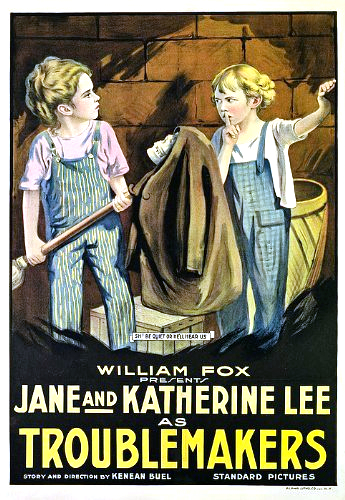
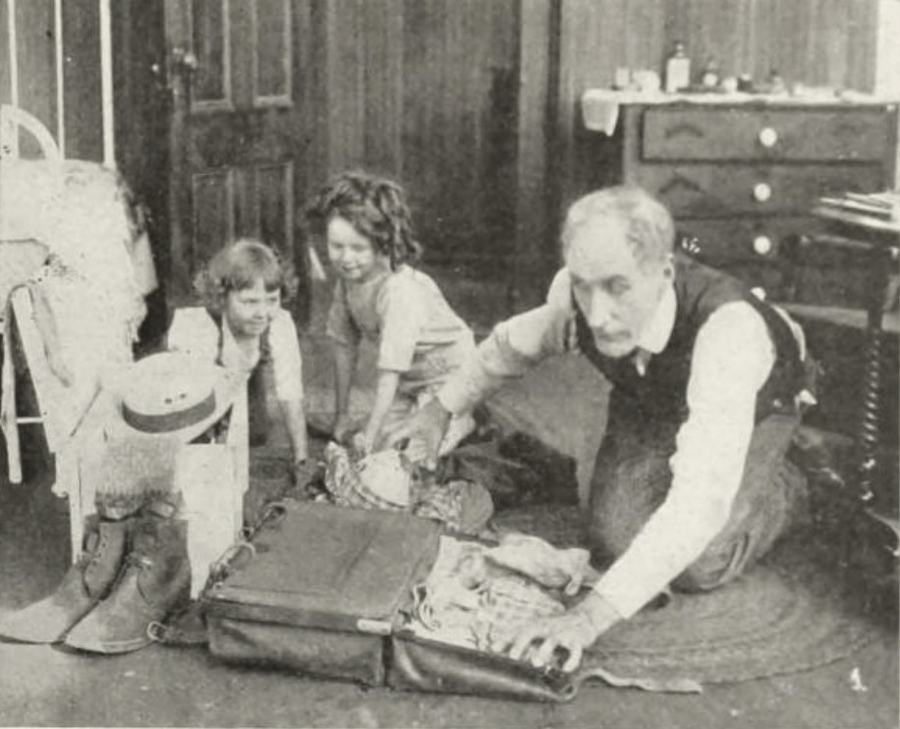
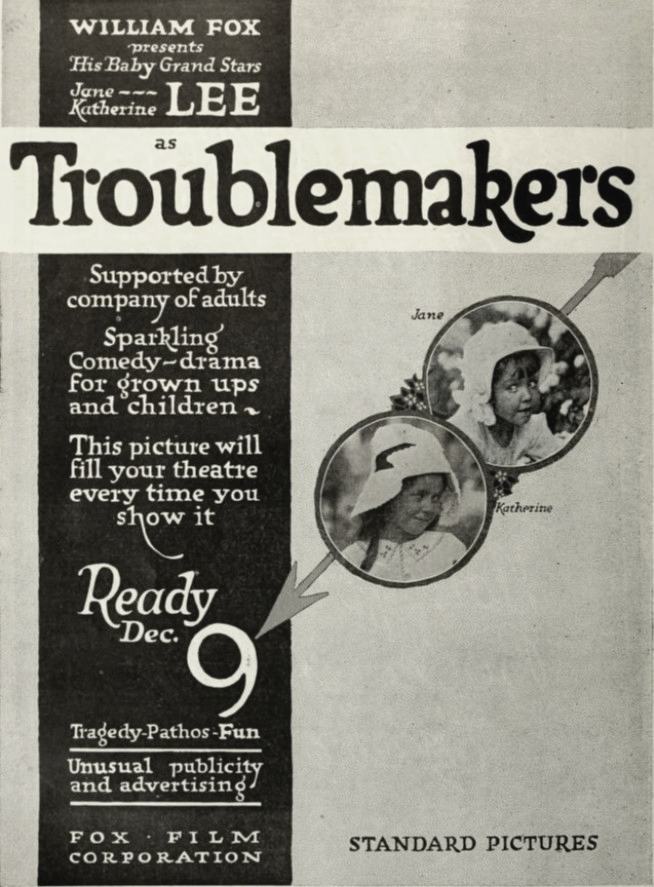
Enter Jane and Katherine Lee, real-life siblings whose cinematic rapport crackles like a string of Chinese firecrackers. They bound through hallways, turn heirlooms into missiles, interrogate Job with the brutal omnivorous curiosity of children who know adults are fallible. Job’s exasperation is comic relief at first—he chases them with a rake straight out of a Keystone playbook—but underlying the slapstick is a chilling sense of displacement: the girls symbolize the future, Job the calcified past, and the estate can’t house both without bloodletting.
When the barn burns, Buel switches to a grammar of nightmare: red gelled lights throb against black smoke, horses scream off-camera, and a single skull—ivory against cinder—becomes the film’s macabre exclamation point. The town’s descent on the crime scene recalls D.W. Griffith’s crowd dynamics yet feels eerily modern; smartphones may not exist, but the voracious rumor-mill certainly does. Stuart Sage’s Manny, all elbows and guileless stammer, wanders into this inferno of accusation like a calf into an abattoir. His arrest is staged in one unbroken take: constable’s hand clamping down, Manny’s confused backward glance at the girls, the camera retreating as if ashamed to witness the kidnapping of truth.
Here the screenplay detonates its cruelest irony: the very woman who could vouch for Manny’s gentle nature—Mrs. Lehr—lacks an alibi solid enough to outweigh the skull’s mute testimony. The trial sequence, shot in actual courthouse interiors supplied by the Virginia bar association, wields intertitles like poisoned arrows. Each prosecution witness advances a half-truth; each defense rebuttal lands as a whisper. Lillian Concord, as the widow, performs a twelve-second close-up—eyes flooding, chin quivering, breath visible in frosty puffs—that became film-school canon for how to externalize moral paralysis without melodrama.
Daniel’s refusal to defend Manny is the narrative’s hinge. Turner modulates the betrayal with surgical restraint: a slight tightening of the collar, a voice that never raises yet somehow strips paint from the walls. When Mrs. Lehr pivots away from him, the camera stays on Daniel’s reflection in the courthouse window, superimposing the scaffold outside so that for a moment he appears to be hanging beside the condemned. Love, the film suggests, can commit murder as surely as hands; indifference is merely a slower strangulation.
The race-to-the-chair finale, clocking in at a breathless nine minutes, cross-cuts between three arenas: the execution chamber where Manny’s shoes scrape reluctant steps, the jail’s sally port where the girls pelt guards with questions, and a wooded ravine where Job, half-feral, gnaws on wild berries. Buel borrows the montage rhythm of Fate’s Boomerang yet injects a child’s-eye absurdity: the rescue hinges not on pistols but on Jane’s pet frog leaping from her pocket, startling Job’s mule, blocking the constable’s automobile, and buying the precious 120 seconds needed for exoneration. It’s as if Chaplin’s pathos shook hands with Griffith’s suspense inside a carnival house of mirrors.
When the reunited family shares a group hug on the courthouse steps, Buel denies us swelling violins; instead he overlays the town band playing a slightly off-key rendition of “Sweet Adeline,” the discord a reminder that justice miscarries as often as it sings in tune. Daniel, now extraneous, watches from the margin, hat in hand, a ghost even while alive. The final iris-in lands on the girls linking hands with Manny and their new step-father—Job, reinstated yet diminished, accepts a supporting role in his own life story. Trouble Makers closes not with triumph but with the uneasy truce humans call tomorrow.
Buel’s visual lexicon anticipates German Expressionism without succumbing to its angular nihilism. Staircases ascend toward off-screen voids; attic doors yawn like unspoken regrets. Yet pockets of pastoral light—golden fields where children chase butterflies—offset the gloom, affirming that American silent cinema could flirt with darkness without eloping to Caligari’s asylum. Compare the barn-burning reds to Satan’s Rhapsody; both films weaponize chromatic saturation, but Buel tempers the spectacle with moral aftermath rather than operatic abandon.
Camera movement, though limited by 1917 technology, achieves proto-dolly effects via flatbed railway: the lens perches on a wooden plank pushed by stagehands, gliding past corridors so that wallpaper patterns flicker like zoetropes. The result is a dream-sense of space, rooms elongating or compressing according to emotional temperature.
Richard Turner’s Daniel is a masterclass in negative space acting; the less he does, the more we project our own cowardices onto him. Note the moment he signs Manny’s death warrant—fingers reluctant, as if pen and paper generate opposing magnetic poles. Opposite him, Lillian Concord navigates the widow’s contradictions: steel-spined enough to homestead in the West, yet brittle enough to tremble at Cuttleback whispers. Their reunion scene—performed in a single take at dusk—generates heat without kiss or clinch, proving that sound-era intimacy owes a debt to the eloquent restraint of silent bodies.
Child performers often date poorly, but Jane and Katherine Lee inhabit their roles with feral authenticity; their giggles feel eavesdropped rather than rehearsed. When Katherine hauls a kitten to the witness stand to demonstrate Manny’s gentleness, the courtroom erupts in laughter—yet her solemn eyes anchor the stunt in heartfelt advocacy. Modern directors could learn from Buel’s handling: he lets the camera linger on their footwork—the scuffed boots, mismatched socks—tiny biographies scrawled in fabric.
At its core, Trouble Makers dramatizes property as the battleground upon which women claim autonomy. Mrs. Lehr’s return destabilizes the unspoken compact that caretakers become owners through sheer duration. Job’s resentment is not merely personal but archetypal: the male retainer who confuses stewardship with sovereignty. The film critiques patriarchal possession twice over—first by giving the widow legal title, second by letting her daughters’ moral authority outrank the male judicial apparatus. In 1917, such a thesis skirt the razor’s edge of radical, yet Buel packages it in family-friendly adventure, smuggling feminism past censors the way rum runners hid bottles in flour barrels.
While the film never names Manny’s ethnicity, casting protocols and makeup choices hint at an outsider status—high cheekbones darkened with sepia powder, dialect intertitles rendered in folksy malapropism. His persecution exposes the town’s need for a sacrificial outsider, a narrative as old as medieval passion plays. The skull in the ashes is less evidence than totem, a prop to validate communal bloodlust. Buel’s critique remains implicit—he lacks the audacity of later social issue films—but the indictment simmers beneath every false witness and every genteel lady who clutches pearls while whispering condemnation.
Stack it beside The Morals of Marcus and you’ll notice both pivot on a woman’s return destabilizing masculine fiefdoms; however, Marcus plays the situation for libertine farce while Trouble Makers opts for gothic suspense. Pair it with A Gentleman from Mississippi and you’ll see mirrored concerns about land ownership and political patronage, though the latter foregrounds senate chambers rather than courthouse steps. Finally, consider Borrowed Plumage: both films end with makeshift family units, but Plumage treats adoption as comic confection whereas Trouble Makers treats guardianship as moral resurrection.
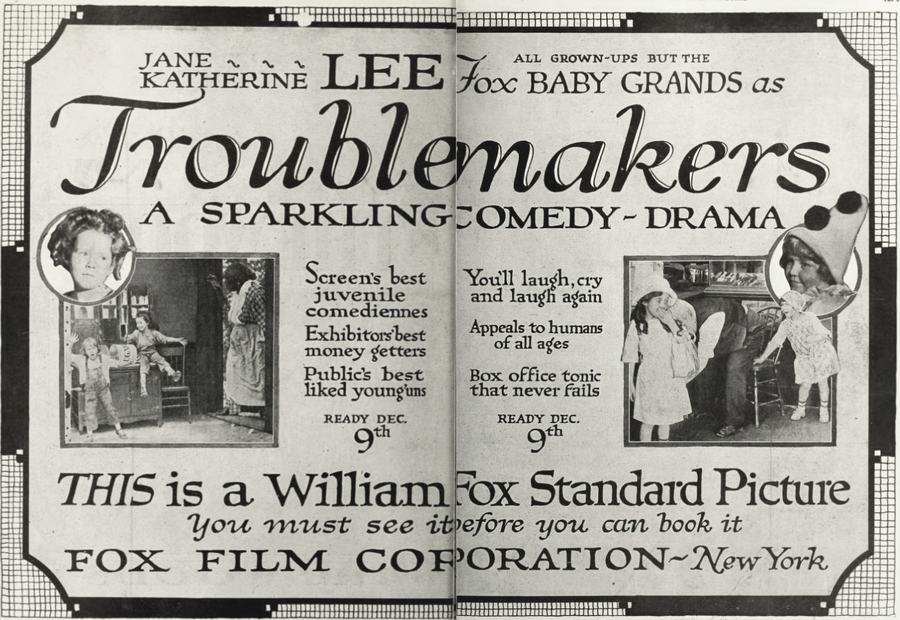
For decades, Trouble Makers survived only in fragmentary 28mm show-at-home reels distributed by Kodak, their emulsion checked like alligator skin. A 2018 restoration by the Library of Congress—funded through a Kickstarter that hit its goal in 48 hours—reunited scattered reels from the Netherlands Filmmuseum and a private collector in Buenos Aires. The photochemical resurrection yields a 4K scan whose grain structure resembles windblown sand; the tints, based on an original distribution list, cycle from amber interiors to viridian nightscapes to the crimson conflagration. Composer Judith Sherman contributed a chamber score (piano, clarinet, cello) that interpolates Appalachian folk motifs with Ligeti-style clusters, mirroring the film’s seesaw between hearth and abyss. Available on Blu-ray from Kino Classics, the edition includes an audio essay detailing Buel’s transition from early one-reelers to feature-length psychodramas.
Trouble Makers is less a museum piece than a living bruise—its concerns about scapegoating, gendered power, and the fragility of due process throb with disquieting contemporaneity. Watch it once for suspense, twice for sociology, a third time for the sheer kinetic poetry of bodies that needed no voices to be thunderously heard. In the flicker of nitrate, we glimpse the DNA of American narrative cinema: the tension between property and personhood, between love as redemption and love as another real estate transaction. Step into its glow, let the barn burn in your retina, and emerge blinking into modern daylight newly suspicious of every headline that offers a convenient monster.

IMDb 5.6
1933
Community
Log in to comment.