DbcultAccessing Vault...
Cult Review
Senior Film Conservator
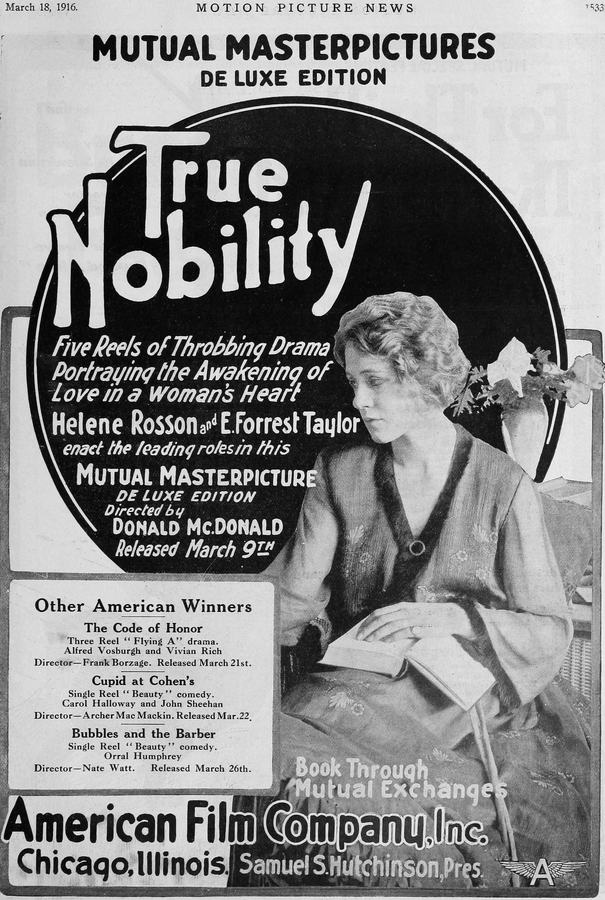
In the nascent years of cinematic storytelling, when the silver screen was still finding its voice, films often served as moral compasses, reflecting and critiquing the societal mores of their time. True Nobility, a compelling drama from 1916, stands as a poignant testament to this era, unfurling a narrative rich with themes of class distinction, inherent virtue, and the insidious nature of superficiality. It's a grand melodrama, yes, but one imbued with an earnestness that transcends its period trappings, inviting contemporary audiences to ponder the true meaning of character amidst a backdrop of social climbing and moral decay. The film, starring Charles Newton and Marie Van Tassell, weaves a complex tapestry of lives intertwined by fate, ambition, and the relentless pursuit of either love or status.
At the heart of this intricate drama lies Phil Burton, portrayed with a quiet strength that resonates even through the silent medium. A Harvard alumnus, Phil's education has merely polished, not corrupted, his intrinsically decent nature. He returns to his humble Western roots, a beacon of integrity, his affection for his old-fashioned parents undimmed by his exposure to Eastern sophistication. This immediate establishment of his character is crucial; Phil is not a man seeking to escape his origins but rather to enrich them through his chosen profession as a mining engineer. His initial act of selfless compassion – tending to a dying miner afflicted with smallpox, heedless of the personal danger – immediately sets him apart. This isn't a calculated move for gain, but an instinctual human response, a pure manifestation of his inner nobility. The subsequent inheritance of a valuable mining claim, while providing him with material wealth, merely serves as a catalyst, propelling him into a world where his intrinsic values are put to the ultimate test. His quest to locate the miner's lost granddaughter, even after securing the claim, underscores his unwavering moral compass, demonstrating that his pursuit of fortune is tempered by a profound sense of justice and responsibility. Phil is the antithesis of the avarice and social posturing he is soon to encounter, making his journey a compelling exploration of virtue's resilience.
Counterbalancing Phil's grounded integrity is Jean Bradford, a character navigating the treacherous waters of high society with a discernible, if sometimes wavering, moral compass. She exists within the opulent, yet suffocating, sphere of her sister, Countess Claudia Nicasio, a woman utterly consumed by the pursuit of social standing. Jean, however, possesses an innate sensitivity and a capacity for genuine emotion that sets her apart from her sister's superficiality. Her initial entanglement with Lord Devlin, a man of title but no discernible character, is a consequence of societal expectation rather than personal desire. The film subtly portrays her growing discomfort with Devlin's profligacy and the empty rituals of her social circle. It is in her interactions with Phil that Jean's true character begins to shine through. She is drawn not to his newfound wealth, but to his unpretentious honesty and his unwavering kindness. Her distress at her sister's contemptuous treatment of Phil's parents, and her subsequent pledge of love, signify a profound rejection of the false values she has been raised with. Jean represents the potential for redemption within a corrupt system, a soul yearning for authenticity amidst a sea of artifice. Her journey from societal pawn to an independent woman capable of discerning true worth is one of the film's most satisfying arcs, echoing sentiments found in other dramas exploring female agency in restrictive environments, such as Should a Woman Tell? or Youth's Endearing Charm.
The film masterfully crafts its antagonists, Lord Devlin and Countess Claudia Nicasio, as perfect foils to Phil and Jean's genuine warmth. Lord Devlin is not merely a cad; he is a calculating opportunist, a man whose title masks a profound moral bankruptcy. His pursuit of Effie, initially charming, quickly devolves into cruel manipulation once he discovers her potential inheritance. His willingness to discard her, and later to blackmail Jean with Claudia's secret, paints a portrait of a man utterly devoid of scruples. He embodies the corrupting influence of unchecked privilege, a character whose villainy is all the more potent for its insidious nature. Eugenie Forde's portrayal of Countess Claudia Nicasio, on the other hand, captures the tragic emptiness of a life lived solely for social validation. Her worship of rank, her disdain for those of lesser status, and her desperate attempts to maintain appearances, even through a secret affair, reveal a profound insecurity. She is a woman trapped by her own rigid adherence to social codes, a prisoner of her own making. Her eventual confession, born of desperation rather than remorse, highlights the hollow core of her existence. These characters are not simply evil; they are products of a social system that prizes surface over substance, title over integrity, offering a stark commentary on the dangers of societal pressure, a theme not uncommon in films of this era, for instance, The Chattel, which also delves into the commodification of individuals within certain social strata.
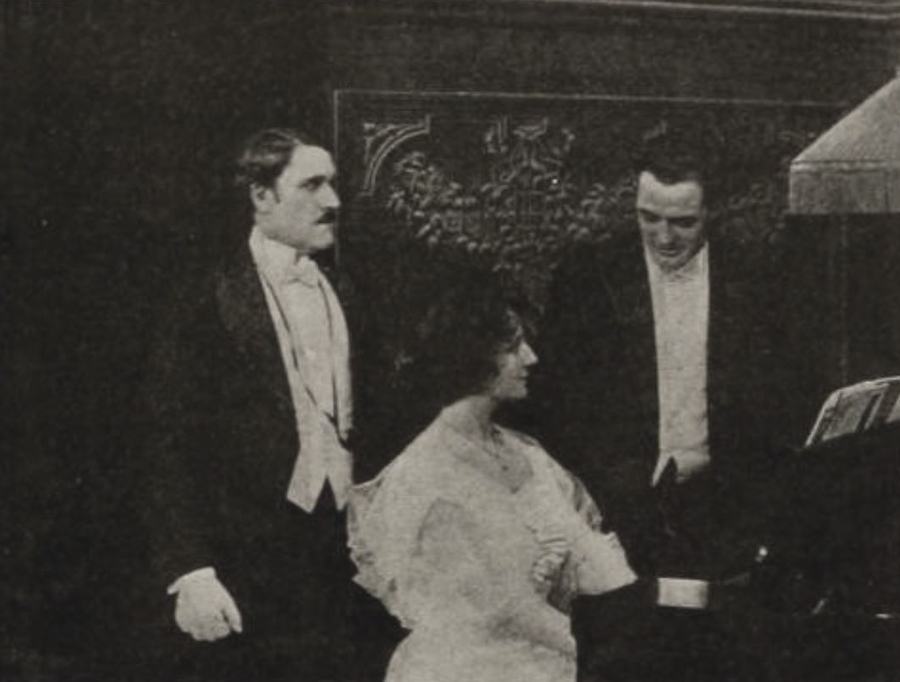
One of True Nobility's most potent critiques lies in its unflinching portrayal of the class divide. The film meticulously illustrates how social stratification dictates not only opportunity but also perceived worth. Phil's common parentage, despite his Harvard education and inherent decency, renders him an outsider in the Nicasio's world. The infamous dinner scene, orchestrated by Devlin's malicious design, is a searing indictment of aristocratic snobbery. Phil's parents, simple and honest, are tricked into attending a formal dinner in their unassuming attire, only to be met with the Countess's withering contempt and the guests' thinly veiled ridicule. This moment is the narrative's emotional fulcrum, a stark visual representation of the chasm between true nobility of spirit and the superficiality of inherited rank. Phil's indignant departure, shielding his parents from further humiliation, is a powerful act of defiance, solidifying his moral superiority in the eyes of Jean and the audience. It underscores the film's central thesis: true worth resides not in titles or wealth, but in character, compassion, and courage. This theme resonates deeply, drawing parallels with other silent films that explored social injustice and the struggles of the working class, such as A Child of the Paris Streets, albeit in a different social context, both highlighting the plight of those marginalized by societal structures.
Effie Marsh's storyline, though secondary to the central romance, provides a crucial commentary on the harsh realities of artistic ambition and the vulnerability of women in a patriarchal society. Her departure for New York, fueled by the romantic ideal of an art career, quickly gives way to disillusionment. The dream, once vibrant, curdles into the stark necessity of working as a model, a profession often fraught with peril and exploitation in that era. It is in this vulnerable state that she encounters Lord Devlin, his charm a deceptive veneer over a predatory nature. Her affection for him, born perhaps of loneliness and a desire for stability, is cruelly exploited. Devlin's abandonment of her upon discovering her unexpected claim to the mining fortune is a brutal demonstration of his transactional view of relationships. Effie's subsequent despair, culminating in a suicide attempt, serves as a stark reminder of the film's gritty realism beneath its melodramatic surface. Phil's intervention, comforting and saving her, reinforces his compassionate nature and highlights the protective role he assumes, not just for his loved ones, but for anyone in distress. Her character arc, though tragic, is essential in exposing Devlin's true villainy and in providing a catalyst for some of the narrative's most pivotal misunderstandings and eventual revelations. The quiet suffering of characters like Effie is a recurring motif in early cinema, often used to underline societal inequities, much like the thematic undercurrents in The Unwelcome Wife, where female characters grapple with difficult circumstances.
For modern viewers accustomed to dialogue-driven narratives, the artistry of silent film often requires a shift in perception. True Nobility excels in conveying complex emotions and intricate plot developments through visual storytelling. The performances, though grander in gesture than contemporary acting, are remarkably nuanced. Charles Newton's Phil communicates sincerity through his steadfast gaze and protective stance. Marie Van Tassell's Jean conveys her internal struggles and burgeoning affection through subtle facial expressions and restrained gestures, a compelling contrast to Eugenie Forde's more overtly haughty Countess. The use of intertitles is judicious, providing essential plot points and dialogue snippets without overwhelming the visual narrative. The camera work, while perhaps less dynamic than later periods, effectively frames the drama, emphasizing key interactions and emotional reactions. The juxtaposition of opulent sets (the Nicasio home) with simpler, more rustic environments (Phil's parents' home, the mining camp) visually reinforces the film's central theme of class disparity. The very lack of spoken words forces the audience to engage more deeply with the visual language, interpreting expressions, body language, and symbolic actions. This reliance on visual cues is a hallmark of the era, where films like The Quest or The Silent Battle similarly relied on strong visual narratives to drive their stories forward, demonstrating the power of unspoken drama.
The narrative of True Nobility is skillfully propelled forward by a series of dramatic ironies and crucial misunderstandings, typical of the melodramatic structure but executed here with a keen sense of purpose. Devlin's accidental receipt of Claudia's incriminating love letter is a prime example of such irony, transforming a private indiscretion into a potent weapon for blackmail. This single misstep by Claudia unleashes a torrent of complications, forcing Jean into a seemingly untenable position. Similarly, Jean's misinterpretation of Phil comforting Effie after her suicide attempt is a classic dramatic device, momentarily severing the bond between the lovers. This scene is particularly effective because it plays on Jean's vulnerability and her sister's insidious persuasion, making her temporary capitulation to Devlin's suit understandable, if heartbreaking. These narrative twists are not mere contrivances; they serve to heighten the stakes, deepen character motivations, and ultimately, to underscore the film's message about the importance of truth and communication. The eventual explanations and reconciliations are earned, not simply given, making the resolution all the more satisfying. The way secrets and misunderstandings drive the plot is reminiscent of other period dramas, where hidden truths are often the engine of the story, a trope explored in films like Fedora, where hidden identities and past secrets fuel the drama.
The film builds to a thrilling climax within the confines of Devlin's apartment, a space that becomes the stage for the convergence of all major plotlines. Claudia, driven to desperate measures, confronts Devlin with a revolver, a dramatic manifestation of her crumbling world and her desperate attempt to reclaim the letter that holds her reputation hostage. Jean, fearing for her sister, follows, only to find herself in a compromising situation with Devlin. It is into this volatile scene that Phil, now fully informed of Effie's rightful inheritance and Devlin's villainous schemes, arrives. His presence is not merely coincidental; it is the inevitable arrival of justice. The swift, decisive action he takes – securing the incriminating documents and delivering a well-deserved thrashing to Devlin – is immensely gratifying. This physical confrontation, while a staple of silent film melodrama, serves as a symbolic cleansing, purging the narrative of its accumulated deceit and malice. The resolution is clear: virtue triumphs, villainy is punished, and true love finds its rightful conclusion. The ending, while conventional for its time, is deeply satisfying, affirming the film's core belief in the ultimate victory of good over evil, a narrative structure often seen in moral tales such as Redeeming Love.
More than a century after its release, True Nobility continues to resonate, not merely as a historical artifact, but as a compelling piece of dramatic cinema. Its themes of social hierarchy, the corrupting influence of wealth, the enduring power of genuine character, and the triumph of love over adversity are timeless. While the acting styles and narrative pacing may feel distinctly of their era, the underlying human emotions and moral dilemmas remain universally relatable. The film serves as a valuable window into the social anxieties and entertainment sensibilities of the early 20th century, a period grappling with rapidly changing social structures and the burgeoning influence of industrial wealth. It reminds us that true nobility isn't an inherited title or a measure of one's bank account, but an intrinsic quality, forged in acts of kindness, integrity, and self-sacrifice. For those interested in the evolution of cinematic storytelling and the enduring power of a well-crafted melodrama with a moral core, True Nobility offers a rich and rewarding viewing experience. It's a reminder that even in an age without spoken words, the most profound truths can be eloquently articulated, leaving an indelible mark on the viewer's consciousness, much like the compelling narratives found in other historical dramas of the period, such as The Ne'er Do Well, which similarly explores themes of personal growth and societal expectations.
IMDb 5.9
1919
Community
Log in to comment.