DbcultAccessing Vault...
Cult Review
Senior Film Conservator
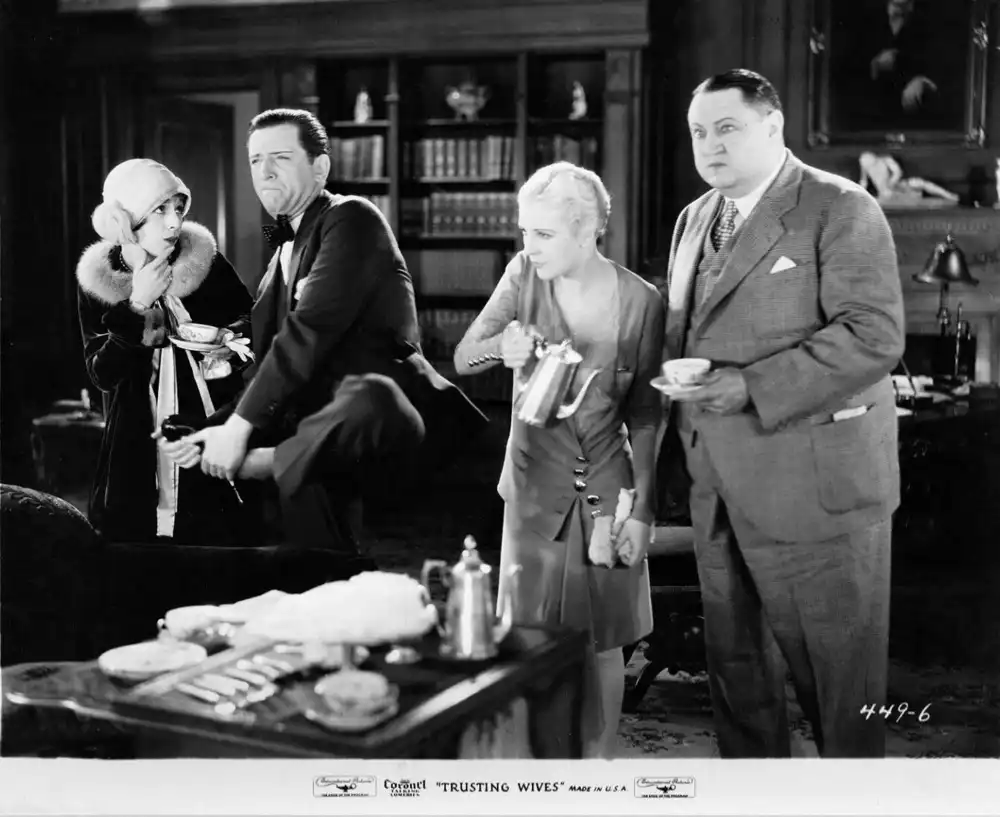
So, Trusting Wives. If you're into old movies that feel like a genuine peek into a different era, with just a touch of melodrama and some *really* specific fashion choices, this one might actually hit the spot. Folks who like their films neat and tidy, or expect lightning-fast pacing, probably won't get it. But for those who enjoy a slower burn, and don’t mind a little stagey acting, give it a shot. It's a bit of a forgotten gem, truly.
It’s about, well, wives and if they trust their husbands. Or maybe if they *should*. The whole thing feels like a carefully constructed play that just happened to be filmed.
Edward Everett Horton, he's always got that worried, slightly flustered look, doesn't he? Here, he plays a character who’s constantly digging himself deeper into a hole of his own making. You can almost see the gears turning in his head as he tries to concoct another flimsy excuse.
There's this one scene, quite early on, where his character is trying to hide a rather conspicuous bouquet of flowers. He just shoves them behind his back, like no one will notice. The camera lingers on his face, all wide-eyed innocence, while his wife just stares. It goes on a good 15 seconds too long, and it becomes genuinely funny, *awkward* funny, not slapstick funny.
Helen Ferguson as one of the wives, she's got this amazing way of conveying exasperation with just a raised eyebrow. No big speeches needed. Just a look, and you know exactly what she’s thinking. It’s pretty subtle stuff for a film from this period, I thought.
The dialogue is often very snappy. A bit stylized, sure, but it moves. You can almost feel the movie trying to convince you these domestic squabbles matter, and for the most part, they do feel like they have some stakes, even if the stakes are mostly social embarrassment.
One detail that sticks with me is the wallpaper in the main living room set. It's this incredibly busy floral pattern. Every time they cut to a wide shot, it almost distracts you from the characters. You find yourself wondering who picked that out, and if they regretted it after a week. It’s a small thing, but it makes the world feel lived-in, somehow.
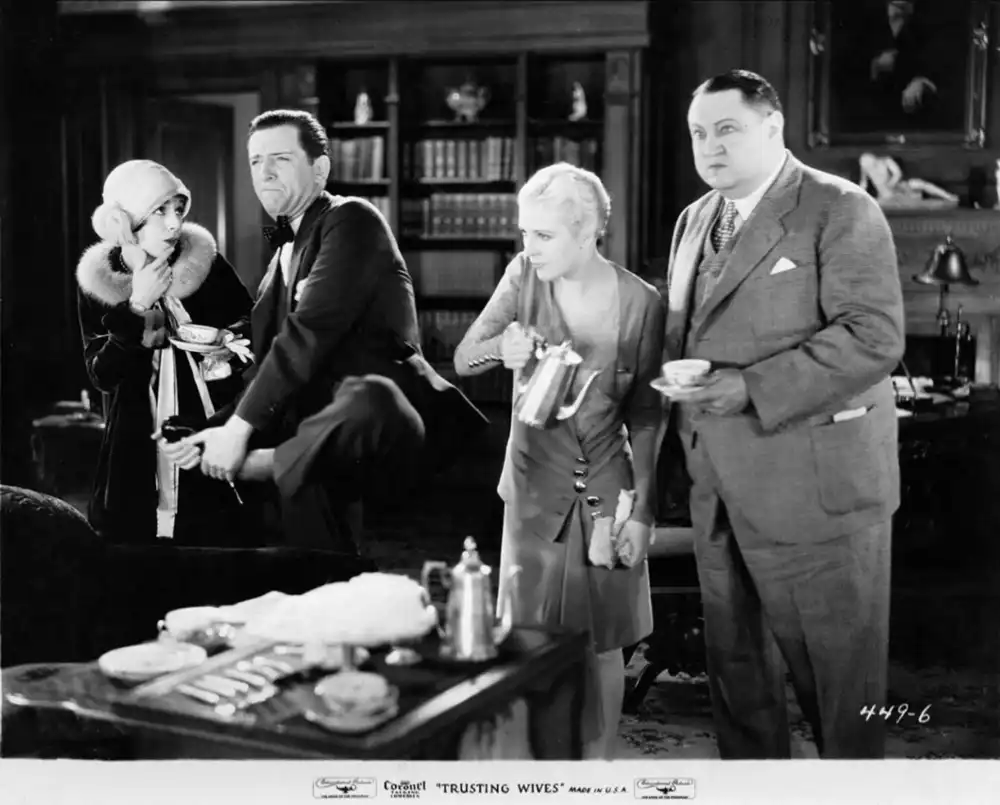
Natalie Moorhead, her character has a slightly sharper edge. She’s not just the trusting wife; she’s got her own ideas, her own plans. It adds a nice bit of spice to the dynamic, preventing it from becoming too one-sided. You see her contemplating things, not just reacting.
The pacing, it's very much of its time. Things unfold slowly. But there’s a charm to that, a chance to really soak in the expressions and the subtle reactions. It's not like a modern rom-com where everything rushes by. More like watching a play, as I said.
There’s a moment where a letter goes missing. It's a classic plot device, but the way Shep Camp’s character fumbles through the cushions, then pretends he was just 'tidying up,' it’s a tiny bit clunky, but still makes you smile. He clears his throat before almost every line in that scene, too. A bit much sometimes.
It’s not a film that reinvents the wheel. But what it does, it does with a certain quiet competence. It reminds you that even back then, people were navigating the same silly human problems. The costumes are also something else. Those hats! They are practically characters themselves. 👒
If you're familiar with Edward Everett Horton from other roles, say in A Connecticut Yankee in King Arthur's Court, you’ll recognize his particular brand of bewildered charm. Here, it’s dialed up for domestic drama, and it works pretty well.
The film gets noticeably better once it stops taking itself so seriously and leans into the absurdity of the situations. There’s a scene near the end involving a misinterpreted phone call that’s just delightful chaos. It feels like everyone finally lets loose a little.
It’s an interesting snapshot. Not a masterpiece, perhaps, but certainly not a throwaway either. It’s the kind of movie you stumble upon and find yourself oddly charmed by. Definitely worth a lazy afternoon watch, especially if you appreciate the specific kind of humor that comes with early sound films. It might even make you think about your own 'trusting' moments, or lack thereof. 😉
IMDb 7
1935
Community
Log in to comment.