DbcultAccessing Vault...
Cult Review
Senior Film Conservator
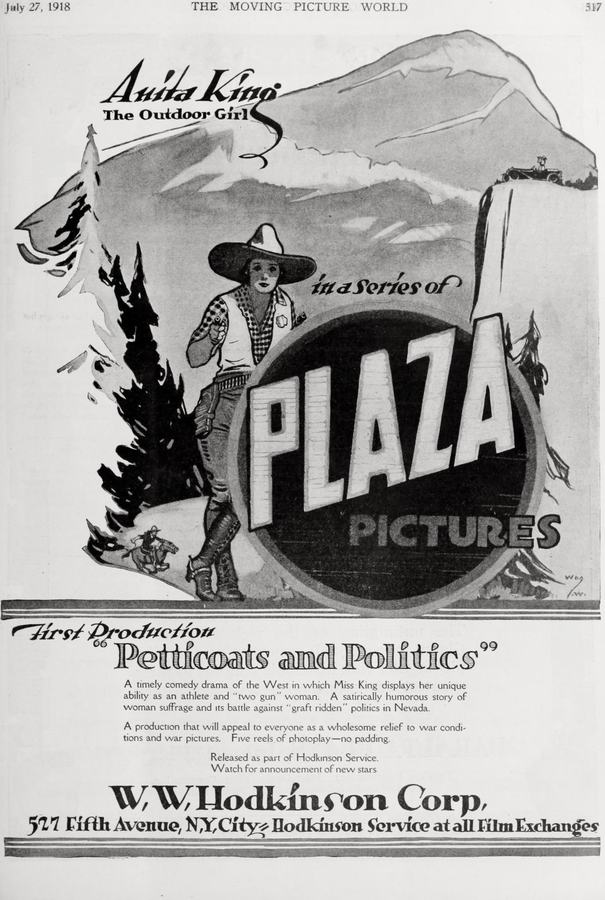
Ah, the silent film era! A time often dismissed as quaint, yet frequently a crucible for surprisingly radical ideas, challenging societal norms with a boldness that sometimes feels more potent than many contemporary cinematic offerings. Among these forgotten gems, L.V. Jefferson's 'Petticoats and Politics' emerges as a particularly fascinating artifact, a vibrant, if sometimes broad, commentary on gender roles, political corruption, and the burgeoning suffragist movement. Released at a pivotal moment in history, this film doesn't just entertain; it provokes, offering a spirited, albeit fantastical, vision of female empowerment in the most unlikely of settings: the lawless, dust-choked frontier town of Red Dog, Nevada.
From its very inception, 'Petticoats and Politics' throws down a gauntlet. Red Dog isn't just a town; it's a microcosm of unchecked masculine power and pervasive venality. Its political landscape is a cesspool of corruption, lorded over by a cabal of morally bankrupt men. Enter Ann Murdock, portrayed with spirited conviction by Anita King. Murdock isn't merely disgruntled; she’s a force of nature, an architect of change determined to dismantle the rotten edifice of local governance. Her strategy? Not to appeal to the existing power structure, but to subvert it entirely by mobilising the town's women to run for office. This concept, revolutionary for its time, especially given the historical context of women still fighting for the vote in many parts of the world, positions the film as a remarkably forward-thinking piece of social commentary.
The brilliance, and indeed the central comedic thrust, lies in the women's inability to vote for themselves. Undeterred by this systemic disenfranchisement, they employ a domestic diplomacy, persuading their husbands – the very men who benefit from the existing order – to cast ballots for their wives. This ingenious manoeuvre leads to a complete overhaul of Red Dog's political apparatus, with every elective office now occupied by women. The visual of these newly empowered matriarchs taking the reins of municipal power, while their bewildered male counterparts are relegated to the domestic sphere, tending to houses and babies, is nothing short of iconic. It’s a delightful, if exaggerated, inversion of traditional gender roles, sparking both laughter and, one imagines, a degree of uncomfortable introspection among contemporary audiences.
Anita King's portrayal of Ann Murdock is the beating heart of 'Petticoats and Politics.' She isn't just a protagonist; she's an embodiment of nascent feminist ideals, a woman of formidable will and strategic acumen. In a cinematic landscape often populated by damsels in distress or stoic frontier women, Murdock stands apart as an active agent of political and social reform. Her conviction is palpable, even without dialogue, conveyed through King's expressive performance. She navigates the rough-and-tumble world of Red Dog with a combination of grace and grit, demonstrating that leadership isn't confined by gender or traditional expectations. Her character's journey from political agitator to a woman finding love amidst the chaos adds another layer of depth, humanizing her revolutionary zeal without diminishing it.
Murdock's methods, while perhaps idealistic, underscore a profound truth about power dynamics: sometimes, the most effective way to challenge an entrenched system is to create an entirely new one. Her ability to galvanize the women of Red Dog speaks volumes about the collective frustration simmering beneath the surface of seemingly compliant domesticity. It’s a testament to the idea that even without direct political power, women held immense influence, a theme also subtly explored in films like Young Mother Hubbard, albeit in a more domestic, less overtly political context. Murdock’s leadership is not about brute force, but about persuasion, organization, and a clear vision for a better community, setting a precedent for female agency that resonates even today.
The film truly shines in its depiction of the men's reaction to this unprecedented shift. The former town boss, played with suitable bluster by R. Henry Grey, embodies the patriarchal resistance to change. His loss of power is not just political; it’s a profound blow to his very identity, rooted in a system where men held unquestioned dominion. The subsequent scenes of men struggling with household chores and childcare, while perhaps played for comedic effect, offer a poignant commentary on the often-unseen labor of women. It forces a momentary, albeit fictional, empathy for the burdens typically shouldered by the opposite sex. Charles Dudley and Gordon Sackville, among others, contribute to this ensemble of bewildered husbands and dethroned officials, their exaggerated reactions adding to the film's satirical edge.
This role reversal is more than mere slapstick; it’s a deliberate deconstruction of gendered expectations. The film playfully suggests that the skills required for running a household – organization, negotiation, patience – are not entirely dissimilar to those needed for effective governance. It challenges the notion that certain roles are inherently masculine or feminine, proposing instead that competence and commitment are paramount, regardless of gender. This thematic exploration sets 'Petticoats and Politics' apart from more straightforward melodramas of the era, such as Eternal Love, which often reinforced traditional gender dynamics, positioning it as a surprisingly progressive piece of cinema for its time.
Naturally, such a radical upheaval cannot go unchallenged. The deposed town boss, unable to tolerate his diminished status, resorts to desperate measures, having the newly elected women officials summarily locked in jail. This act of blatant authoritarianism underscores the film's critique of unchecked power, highlighting how easily democratic processes can be undermined by those unwilling to relinquish control. It’s a dramatic turn that escalates the stakes, moving beyond social comedy into a more serious exploration of political oppression.
Into this volatile mix steps Leonard Blair, a 'tenderfoot' whose initial naiveté belies a budding sense of justice. His attempt to assist the imprisoned women, however, lands him in hot water, framed on a trumped-up robbery charge. This narrative twist introduces a romantic subplot that, while perhaps conventional, serves to humanize Ann Murdock further. Her burgeoning affection for Leonard transforms her political mission into a more personal crusade. The film skillfully balances its broader social commentary with this intimate human connection, ensuring that the audience remains invested in the characters' individual fates as much as the larger political struggle. The intertwining of personal stakes with grander societal issues is a narrative technique that can be seen in other films of the era that tackled social dilemmas, such as The Great Mistake, where individual choices have broader societal repercussions.
The climax of 'Petticoats and Politics' sees Ann Murdock rise to the occasion once more, orchestrating Leonard's rescue with ingenuity and bravery. This sequence not only resolves the romantic tension but also solidifies Ann's role as the undisputed leader and heroine. Her actions demonstrate that true leadership isn't just about winning elections; it's about courage, resilience, and a steadfast commitment to justice. With Leonard freed, the path is cleared for the women's release from jail, allowing them to resume their groundbreaking 'petticoat politics.' The film concludes with a sense of triumph, not just for the characters, but for the underlying message of female capability and the potential for a more equitable society.
The resolution, while somewhat idealistic, perfectly encapsulates the film's optimistic outlook. It suggests that even in the face of entrenched corruption and patriarchal resistance, collective female action, guided by strong leadership, can prevail. This echoes the spirit of other films featuring strong, determined female characters carving their own path, like Nanette of the Wilds, where the protagonist defies expectations and takes control of her destiny. The film doesn't just advocate for women's rights; it dramatizes their victory, offering a hopeful vision for a future where political power is more broadly distributed and more ethically exercised.
As a silent film, 'Petticoats and Politics' relies heavily on visual storytelling, expressive acting, and intertitles to convey its narrative and themes. The direction, though uncredited in many historical records, effectively captures the chaotic energy of a frontier town and the escalating drama of the political struggle. The cinematography, while perhaps not groundbreaking for its era, serves the story well, using clear framing and dynamic blocking to communicate character emotions and plot developments. The performances, particularly Anita King's, carry the emotional weight and comedic timing, a crucial element in the absence of spoken dialogue. This reliance on physical performance and visual cues is a hallmark of the silent era, perfected in films like Hoffmanns Erzählungen, which used elaborate visual spectacles to convey complex narratives.
L.V. Jefferson's writing is particularly noteworthy for crafting a narrative that, despite its comedic elements, tackles serious social issues with a clear point of view. The pacing of the film, from the initial political agitation to the dramatic arrests and eventual rescues, maintains audience engagement throughout. For an early 20th-century production, it demonstrates a sophisticated understanding of how to build tension, develop characters, and deliver a satisfying resolution within the constraints of the medium. The film's ability to weave together a compelling plot with a strong social message is a testament to the narrative craftsmanship of the period, comparable to the intricate storytelling found in The Ticket of Leave Man, which also explored societal injustices through a gripping plot.
'Petticoats and Politics' was released during a period of intense social change, particularly regarding women's rights. The suffrage movement was gaining significant momentum, and discussions about women's roles in society were prevalent. In this context, the film serves as both a reflection of these contemporary debates and a fantastical projection of an imagined future. It taps into the widespread desire for political reform and the growing demand for female participation in public life. While the film presents a caricatured version of gender dynamics, its core message – that women are capable, intelligent, and deserving of political power – remains powerfully resonant.
Even today, the themes explored in 'Petticoats and Politics' continue to be relevant. Issues of political corruption, gender inequality in leadership, and the challenges faced by women in power are still very much a part of global discourse. The film’s playful yet pointed critique of patriarchal structures offers a historical lens through which to view ongoing struggles for equality. It reminds us that the fight for fair representation is not new, and that cinema has long been a platform for challenging the status quo. In a way, it shares a spirit with films like The Girl Who Wouldn't Quit, where female protagonists demonstrate resilience and determination against societal odds, proving their mettle in a world that often underestimated them.
The film's exploration of what happens when traditional power structures are upended provides a timeless parable. The discomfort of the men, the ingenuity of the women, and the eventual re-establishment of a new, more equitable (albeit still evolving) order speak to the universal human experience of adapting to change. It's a testament to L.V. Jefferson's foresight that a story conceived over a century ago can still spark discussions about leadership, gender, and governance with such clarity and charm. The film’s audacity in portraying such a dramatic societal inversion might have been seen as radical, much like the challenging themes in The Life Story of John Lee, or The Man They Could Not Hang pushed boundaries in its own way.
'Petticoats and Politics' is more than just a historical curiosity; it's a spirited, engaging, and remarkably prescient piece of early cinema. It combines social satire with genuine dramatic tension and a touch of romance, all wrapped in a package that, even without sound, communicates its message with clarity and vigor. Anita King delivers a memorable performance, anchoring the film with her portrayal of a woman ahead of her time, while the ensemble cast brings the colorful characters of Red Dog to life.
For film historians, students of gender studies, or simply those curious about the diverse narratives of the silent era, 'Petticoats and Politics' offers a rich viewing experience. It reminds us that the struggle for equality is a long and winding road, but one that has been paved by countless courageous individuals, both real and fictional. This film stands as a testament to the power of cinema not only to reflect its times but also to imagine and inspire a better future. It's a delightful, thought-provoking journey into a past that, in many ways, still resonates with our present.
IMDb —
1931
Community
Log in to comment.