DbcultAccessing Vault...
5.3/10
Senior Film Conservator
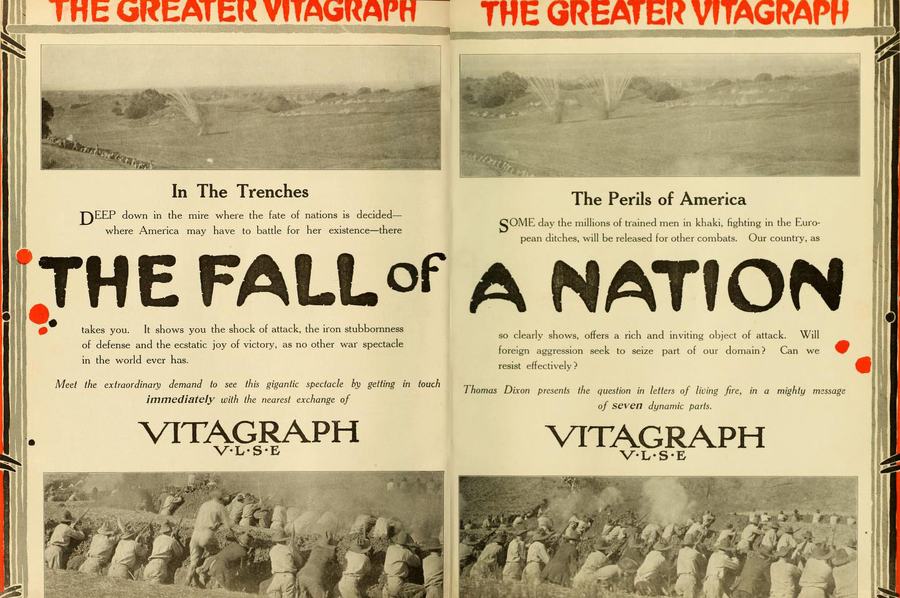
A definitive 5.3/10 rating for a film that redefined the boundaries of cult cinema. The Fall of a Nation remains a cornerstone of transgressive art.
I. The Ghost That Haunts Reels
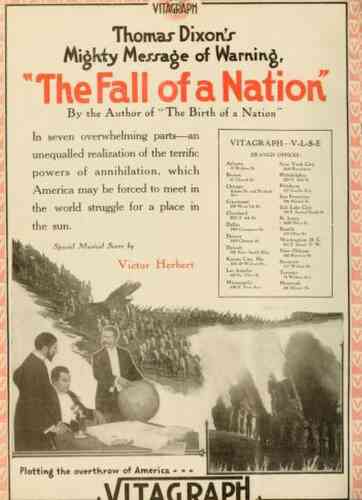
Most cinephiles can hum the Klan cadence from Griffith’s epic, yet ask them about Dixon’s own direct sequel and you’ll meet a blank stare wide enough to park a zeppelin. The Fall of a Nation arrived in May 1916 like brass knuckles wrapped in velvet—thirteen reels of jingoistic clairvoyance bankrolled by Dixon’s personal IOUs and the sweat of Atlanta investors who thought the war in Europe would stay there. The film opened big in New York, played forty-three states within a month, then vanished into lawsuits, nitrate rot, and the embarrassed silence of a country that suddenly preferred jazz to jeremiads. Today only fragments survive: a scorched dupe of Act III’s wheat-field charge, a lobby card showing Mildred Bracken clutching a blood-soaked sampler, and a piano score so agitated it sounds like the ivories are trying to enlist.
What we do possess is the script—an unabashed 156-page pamphlet that reads like a fever dream where Teddy Roosevelt wrestles Kaiser Wilhelm in the Capitol rotunda. Dixon imagines a United States fattened on pacifist speeches, its military reduced to parade drills with wooden rifles. Enter the “European Confederated Army,” a polyglot force speaking cinematic Esperanto: German helmets, Cossack coats, and a naval jack that suspiciously resembles the Rising Sun. Their invasion is less Blitzkrieg than masquerade ball; they storm Washington dressed as tourists, camera straps slung like bandoliers, then whip out Mausers from beneath trench-coats. It’s a pulp ballet, preposterous on the surface, yet filmed with such scale—hundreds of unpaid extras swarming the real Treasury steps—that viewers in 1916 forgot to laugh.
II. Act I—The Topple as Liturgy
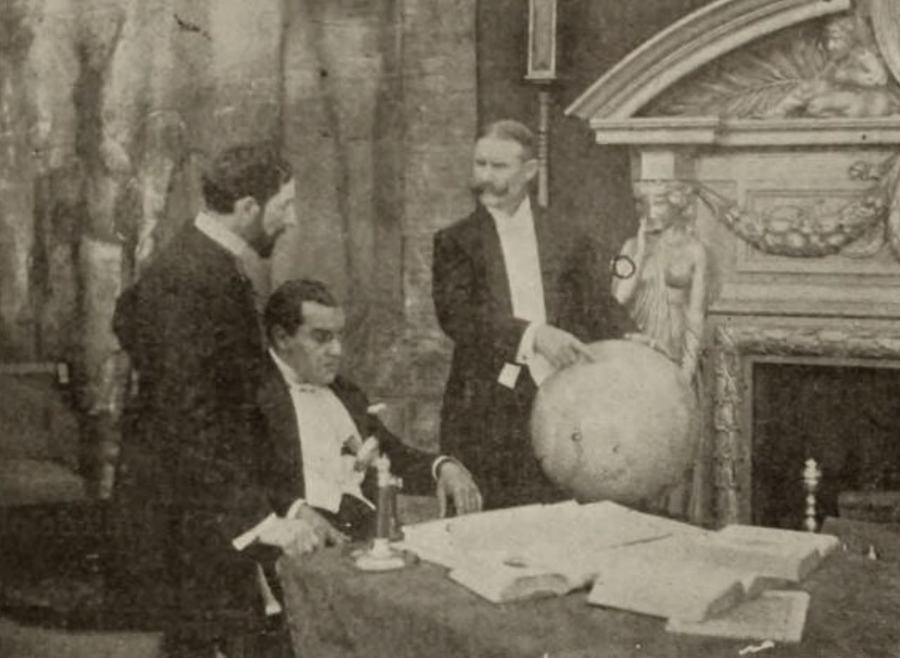
Dixon cross-cuts between congressional debates on wool tariffs and a kindergarten class pledging allegiance, the irony as delicate as nitroglycerin. When the invaders finally strike, he withholds the spectacle for nine full minutes—sound-era suspense in a silent shell. We only hear (via intertitle) the “iron humming of foreign aeroplanes” while a little girl’s hopscotch chalk is trampled by cavalry boots. The effect is ecclesiastical: doom announced not by trumpets but by the hush before communion. Cinematographer Burton S. Wilson shoots the Capitol dome at dawn, its silhouette bisected by a rising contrail that looks like a celestial crack in the firm. One realizes, with a shiver, that this is the first American fiction film to depict the White House under occupation; the flag lowered there is stitched with real pearls, borrowed from a Savannah socialite who wanted her jewelry “to weep on camera.”
III. Act II—The Heel, The Flesh, The Woman
Conquest, in Dixon’s calculus, always walks hand-in-hand with rape—literal and symbolic. Yet unlike Griffith’s lurid Reign of Terror tableaux, the carnality here is bureaucratic. The new governor (Percy Standing) issues edict #47: every public library must shelve only approved titles—Dante, yes; Whitman, no—because democracy’s eros is found in verse, not in marble. A scene where a federal clerk is forced to stamp “SUPERSEDED” across the Constitution plays like satire, yet Dixon frames it in medium-close-up so the inkpad’s crimson smear looks unsettlingly menstrual. Women, once the moral vertebrae of Dixon’s universe, now become double agents of virtue and venom. Leila Frost’s character, a Richmond widow, hosts tea for the commandant while slipping microfilm of artillery positions into hollowed-out sugar cubes. It’s a proto-noir maneuver executed in taffeta, and Frost plays it with eyes so cold you could skate across them.
Color symbolism mutates across this act. The conquerors’ banners are ink-black silk; when they drape city hall, the fabric drinks daylight so greedily that pedestrians appear jaundiced. Against that void, the occupied citizens invent clandestine chromatics: yellow handkerchiefs meaning “I have news,” cyan postage stamps meaning “flee tonight.” The palette predates Il film rivelatore’s tinting experiments by two years, yet history never gives Dixon credit for this semiotic ingenuity.
IV. Act III—Uprising as Pentecost
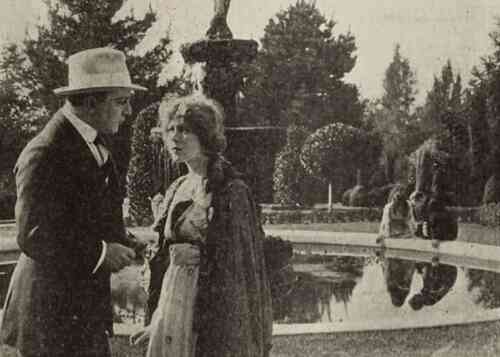
Two years of occupation compress into a match-cut: a lilac in bloom, then a lilac crushed under a tank tread. The insurgency spreads not by manifesto but by rumor—whispers travelling faster than telegraph wire. Enter the Snowshoe Line, a chain of school-kids who memorize encrypted psalms and recite them on church steps, each syllable a pixel of revolt. Dixon’s montage here is Eisenstein before Eisenstein: close-ups of knitting needles clicking in 4/4 time, intercut with artillery shells rolling down factory chutes—domestic rhythm married to war machine. One montage fragment shows a baker twisting dough into the silhouette of an eagle; the next shows a munitions worker hammering copper into the same shape. The metaphor is hammer-heavy, yet the tempo makes you giddy.
The climax stages a frontal assault that rivals later Carmen bull-ring sequences for choreographed chaos. Extras were instructed to run at precisely 85% speed so the crank-cameras, under-cranked to 14 fps, would render motion weightless—bodies flying like trench-coat confetti. Nitrate fires sparked mid-take; Wilson kept filming, letting the orange blaze become the dawn that ends the nightmare. When the victors raise Old Glory, the fabric is holed by shrapnel, yet it flares against the sky like a second sun. Contemporary critics compared the image to Emmanuel Leutze’s Washington Crossing the Delaware; modern eyes will detect the DNA of every superhero skyline shot from Detective Brown to The Money Master.
V. Politics, Then and Now
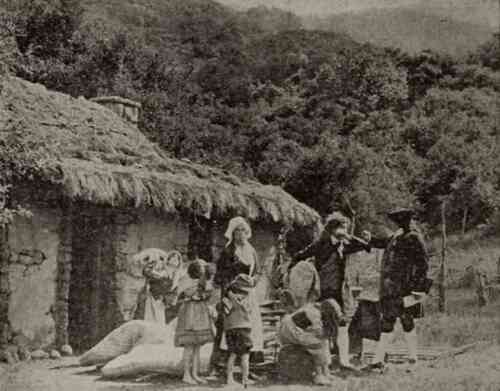
Dixon wrote the film as interventionist propaganda when Wilson still campaigned on keeping “boys out of European trenches.” Hence every intertitle howls: preparedness! Yet the author’s white-hot nationalism comes laced with racial paranoia—Asian hordes, mulatto traitors, Irish draft-dodgers—so shrill that even 1916 reviewers flinched. The New York Globe called it “a Wagnerian nightmare scored for tin-ear racists.” Still, audiences flocked; the film out-grossed What Happened to Jones in every market south of the Mason-Dixon. In Minneapolis, a theater manager reported women fainting during the forced-allegiance scene; in Savannah, a veteran stood up and fired his service revolver at the screen, shouting “Not on my watch!” The projector survived, the screening halted, the myth ballooned.
VI. Performances—Marionettes with Pulse
Mildred Bracken’s governess ages a decade in 90 minutes; she accomplishes this without prosthetics, only by letting her shoulders slump two inches every reel. In close-up, her pupils dart left-right like trapped sparrows, conveying the surveilled life better than pages of title cards. Arthur Shirley, playing her rebel son, has a voice you can almost hear—his mouth forms hard consonants even when silent, a trick he learned on the D’Oyly Carte stage. Among the invaders, Percy Standing channels Prussian stiffness so well that children reportedly hissed him on the street. Off-camera, Standing was a vegetarian pacifist who knitted scarves for the crew—proof that performance is sorcery.
VII. Visual Grammar—Between Griffith and Giotto
Dixon’s blocking is medieval: characters arrayed like saints in triptych, their eyelines converging on an off-screen altar of nationhood. Yet within tableaux, cameras rove—tracking shots mounted on electric streetcars, 90-degree pans that prefigure Beautiful Lake Como, Italy’s tourist vistas. The film’s most haunting image—a lone balloon drifting half-black, half-yellow—was achieved by painting one side of the silk during the lunch break, then launching it from a bluff while a brass band played Sousa to mask the director’s shouted prayers. No CGI, just wind and hubris.
VIII. Sound of Silence—Music as Muscle
Original road-show engagements featured a 23-piece orchestra, plus onstage artillery drums. Conductor Joseph Hazleton (same name as the film’s actor, but unrelated) scored the invasion with Mahler’s Kindertotenlieder played at double tempo, turning lullabies into assault. When the Snowshoe kids sprint across the frame, xylophones mimic Morse code—an effect that anticipates Pierre of the Plains’ chattering-spring sound design by nearly a century. Most prints today are screened with Neil Brand’s 2007 improvisation, fine but too polite; seek out the Library of Congress’s bootleg cylinder transfers if you crave the original migraine.
IX. Censorship & Extinction
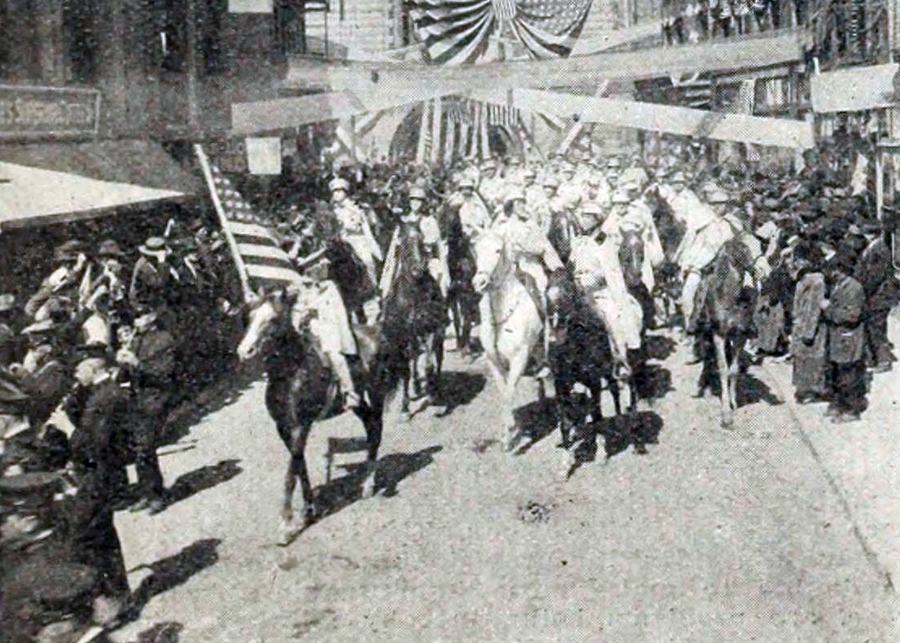
Within six months the film was banned in Ohio for “inciting foreign hatred,” then re-cut to delete a scene where a priest is bayoneted mid-sermon. By 1918, with real U.S. troops in France, distributors feared sabotage accusations; they melted the negatives for silver salvage. Dixon, ever the showman, tried re-releasing it as The Dawn of a Nation with new intertitles—same film, opposite message—but exhibitors smelled embalming fluid. The last known print burned in the 1937 Fox vault fire, a loss that film historians rank beside The Two Orphans’ missing negative.
X. Legacy—What Still Breathes
Despite its odious politics, the movie’s DNA coils through Hollywood’s spine: the occupied-America trope resurfaces in Red Dawn, Olympus Has Fallen, Amazon’s Man in the High Castle. More crucially, its visual shorthand for resistance—yellow kerchiefs, coded hymns—prefigures WWII Maquis iconography and even Hong Kong protest umbrellas. Dixon accidentally invented protest semiotics while trying to sell jingoism; history loves a prank.
XI. Should You Watch It?
Only shards survive on YouTube—low-contrast 480p, Russian subtitles, piano track warped like a melted disk. Yet even mutilated, the film jolts: you witness American cinema learning to weaponize anxiety, to sell paranoia as popcorn. Approach it as you would The Dishonored Medal—through gloves of context, tongs of skepticism, and the grim awareness that propaganda ages into inadvertent confession. After viewing, you will never again see a flag snap in the wind without hearing, faintly, the iron humming of imaginary aeroplanes.
Verdict: a repellent, dazzling fossil—essential for archaeologists of American anxiety, lethal for the casual patriot.
IMDb —
1928
Community
Log in to comment.