DbcultAccessing Vault...
Cult Review
Senior Film Conservator
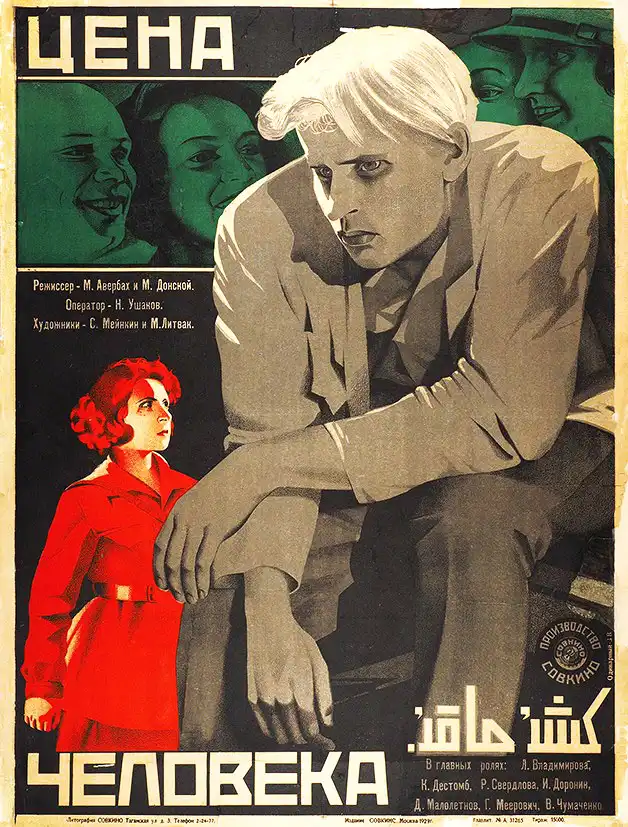
“Tsena cheloveka,” or “The Price of a Man,” is one of those films that pops up, and you wonder if it’s worth the deep dive. For a certain kind of film enthusiast, absolutely. If you're into character studies where folks make tough choices, then yes, give it a shot. But if you need big action or a super clear, fast-paced plot, you'll probably bounce right off it. It's not that kind of ride.
The movie circles around this heavy idea of what someone is willing to pay. Not just money, but what they actually give up. It feels very grounded in its setting, you know? Like, the stakes feel real, even if the world isn't spelled out perfectly for us.
Leonid Kmit, he plays the central figure, and there's this quiet intensity about him. You see him wrestle with things. One scene, he's just sitting, staring at a wall for what feels like ages. But it’s not boring. You can almost feel the weight of his thoughts during that long pause.
Roza Sverdlova, she has this really interesting presence. Her character, she’s not just a bystander. There's a moment she looks at Kmit, and it's a mix of frustration and, like, deep understanding. It really stuck with me. It’s a complex glance.
Igor Doronin's character adds a bit of a wrinkle. He's not quite a villain, not quite a friend. More like a force that pushes things along. His smirk, it's just... too much sometimes. But it serves a purpose, unsettling you a little bit.
There's a scene near a dusty road, very simple. Two characters are just walking. The camera holds on them for a long time. You almost expect dialogue, but it never comes. Just the sound of their footsteps and the wind. It makes you lean in, wondering.
Another bit, the way someone pours a cup of tea. It's so mundane, but the deliberate way they do it, it tells you something about their state of mind. Like they're trying to regain control of something small, something they can manage. That small detail really landed for me.
The lighting in this film is often really stark. Shadows are deep. It gives everything a heavy, almost somber mood. Not flashy, just effective. It just adds to the atmosphere.
You can almost feel the movie trying to convince you this moment matters, especially when Kmit’s character makes his big choice. It works, mostly. You buy into the personal stakes.
One reaction shot, I think it's Sverdlova’s, lingers so long it becomes funny, then sad again. Like, what is she even thinking? 🤔 It's a whole journey in one face.
The crowd scenes have this oddly empty feeling, like half the extras wandered off. Or maybe that was on purpose, to emphasize isolation? Hard to say for sure. It felt a little off, either way.
There's this odd detail about a broken clock in the background of one important conversation. Nobody acknowledges it. But it's there, ticking... or not ticking. Just existing. It adds a layer of quiet decay.
The music, when it comes in, it's never overwhelming. Often just a few notes. It’s effective, not pushy. It knows when to speak and when to be silent.
It's a slow burn, for sure. This isn't a film you put on while scrolling your phone. It demands your attention. You have to commit to it.
The ending, it doesn't give you all the answers. It leaves you hanging a bit. Which, honestly, I appreciate. No neat bows, no tidy conclusions. Just… life.
It feels very much like a film from its time, whatever that time exactly was. A certain kind of pacing, a certain kind of focus on internal struggle over external action. Different from today's stuff.
The movie gets noticeably better once it stops trying to build up a grand mystery and just focuses on the people. That’s where its real strength lies. Just watching them *be*.
The sound mixing, it’s a bit rough in a few spots. Sometimes the dialogue gets swallowed by ambient noise. Or maybe that's just the print I watched. 🤷♀️ Could be an old transfer.
There's a scene with a dog that seems to wander into frame and then just... leaves. It doesn't contribute to anything. Just a dog. I guess that happens in real life too. A little moment of nothing.
I did wonder, briefly, about the costuming. It seemed very... functional. Not a complaint, just an observation. Like, no one was trying to make a statement with their clothes.
If you enjoy films that make you think about human nature, even if they aren't always perfect, then “Tsena cheloveka” might be for you. It’s a quiet one, but it sticks with you. Like The Open Road, it’s about the journey and the small moments. Or maybe Taras Tryasylo in its sense of a deeper, historical weight, but more personal.
IMDb —
1923
Community
Log in to comment.