DbcultAccessing Vault...
6.1/10
Senior Film Conservator
A definitive 6.1/10 rating for a film that redefined the boundaries of cult cinema. Turn Back the Hours remains a cornerstone of transgressive art.
If you are looking for a lost masterpiece of the silent era, Turn Back the Hours probably isn't the one. But it is worth watching if you have a soft spot for that specific 1920s brand of high-stakes melodrama where a man’s entire soul is tied to his naval uniform. It’s also for the completionists who want to see Myrna Loy before she became the perfect screen wife, back when she was still being cast in 'exotic' roles that involved a lot of heavy eyeliner and mysterious staring.
People who hate slow, static shots of people looking intensely at pieces of paper will probably want to skip this. It’s a movie that takes its time with things that don't always deserve the minutes they get.
The movie kicks off with Sam Hardy as Jim Gascoyne, a naval officer who gets dishonorably discharged. The scene where they strip him of his rank is actually one of the better moments. It’s filmed with this heavy, oppressive feeling. You see the buttons being literally cut off his coat. It’s incredibly dramatic—maybe too dramatic—but Hardy sells the shame of it well. His face has this weary, sagging quality that makes him look much older than your typical 'young hero,' which actually adds a layer of sadness to the whole thing. He doesn't look like a guy who made a mistake; he looks like a guy who’s just tired of existing.
Then we get to the shipwreck. This is where the movie actually wakes up. For a film from 1928, the disaster sequence is surprisingly tactile. You can tell they were throwing actual buckets of water at the actors. There’s a shot of the deck tilting where you can see the extras scrambling, and it doesn't look choreographed—it looks like people genuinely trying not to slip on wet wood. It lacks the polish of something like The Great Impersonation, but the raw chaos of it works.
Lila LaPon plays the woman who rescues him, and honestly, the chemistry is pretty thin. They have that silent-movie habit of falling in love because they are the two most attractive people in the immediate vicinity who aren't currently drowning. There’s a moment after the rescue where they’re sitting together, and the pacing just dies. They stare at each other. Then they stare at the horizon. Then a title card tells us what they’re thinking, even though we could have guessed it five minutes ago.
Walter Pidgeon shows up here too. He’s so young he’s almost unrecognizable if you’re used to his later stuff. He’s playing Philip, and he spends a lot of time standing with his hands on his hips, looking like he’s posing for a statue. It’s a very stiff performance. He hasn't quite figured out what to do with his arms yet. It’s funny to watch him here compared to the more natural presence he developed later in his career.
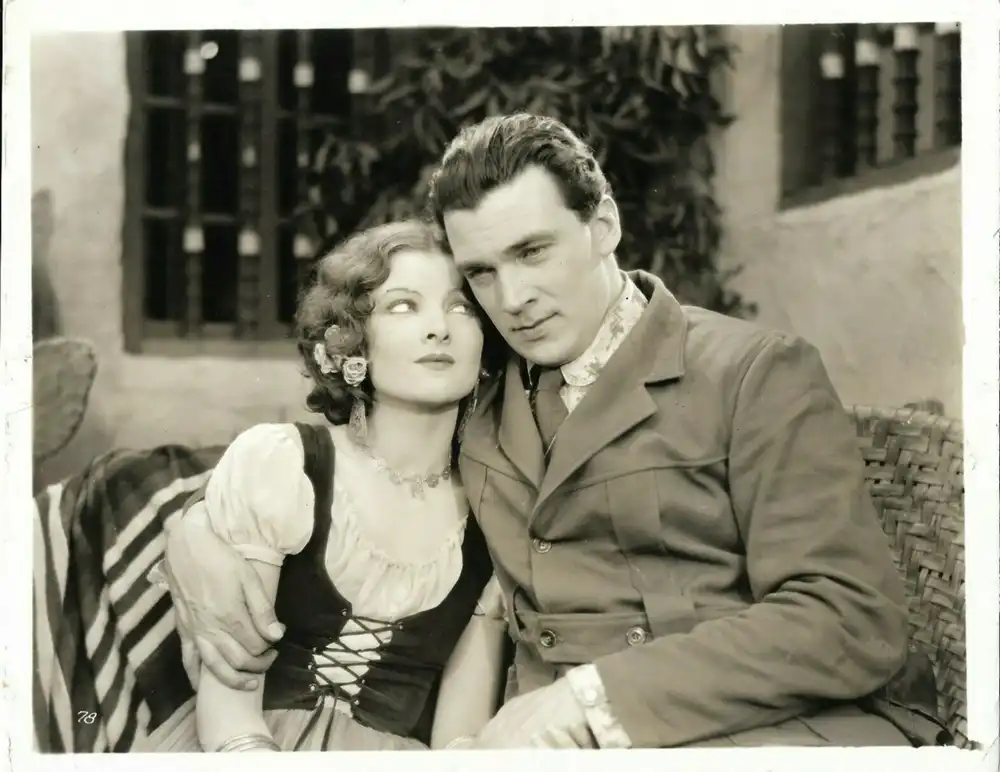
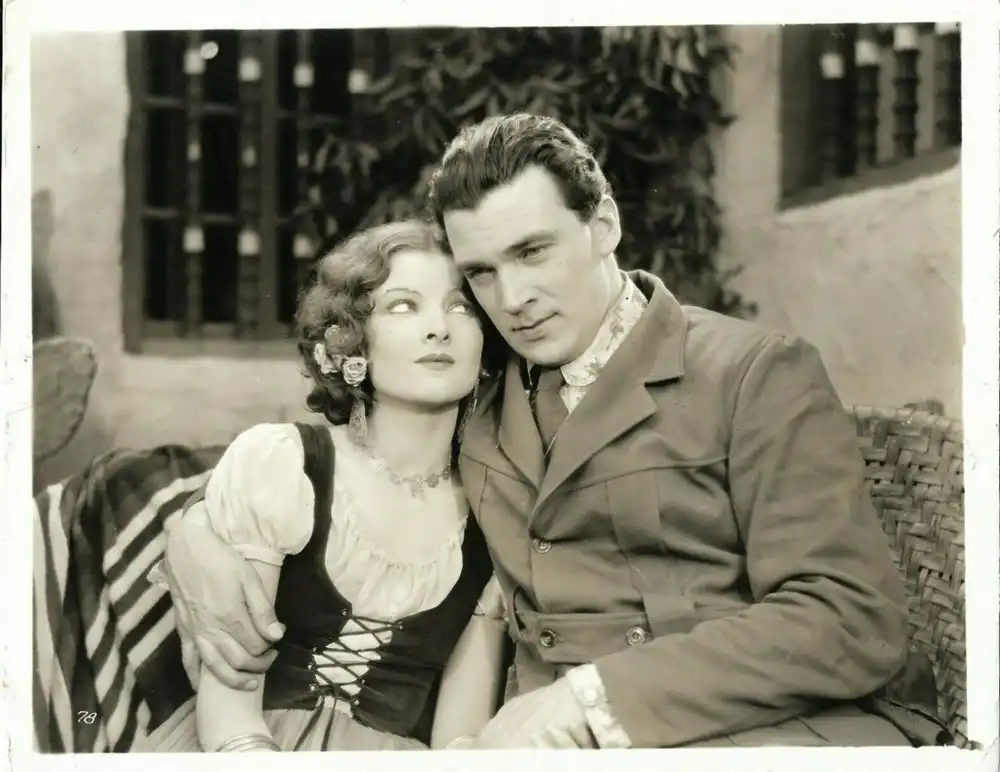
And then there’s Myrna Loy. She plays Tiza. This was during her 'vamp' phase, and the costume department clearly had a field day with her. She’s draped in these heavy fabrics and jewelry that look like they weigh more than she does. She doesn't have a huge amount to do, but she commands the screen every time she’s in the frame. There’s a specific bit where she’s watching the main couple from a distance, and the way she narrows her eyes—it’s pure silent film villainy, but she makes it feel grounded somehow. She’s much more interesting to watch than the actual leads.
The middle of the film drags. There’s a lot of walking around in tropical-looking sets that are clearly just a backlot with some palm fronds pinned to the walls. You can almost see the dust on the floor. It reminds me a bit of the staginess in Prohibition, where the sets feel more like a theater stage than a real location. The lighting is also a bit inconsistent; one minute it’s high-contrast and moody, and the next, everything is flat and grey, like the sun went behind a cloud and they just decided to keep filming anyway.
One weird detail I noticed: there’s a scene in a bar or a tavern where the background extras are clearly having a much better time than the main actors. There’s a guy in the corner who is absolutely committed to his role as 'Man Drinking Ale.' He’s doing these elaborate gestures and laughing at nothing. I found myself watching him more than the dialogue cards.
The ending feels rushed, which is typical for these kinds of B-pictures. The resolution to the 'cowardice' plot involves a lot of people suddenly realizing they were wrong, and it happens so fast it makes your head spin. One minute everyone hates him, the next, he’s a hero. It’s not exactly a nuanced exploration of redemption. It’s just... over.
Still, there’s something about the way the camera lingers on the water during the shipwreck that sticks with me. It’s a reminder that before everything was digital, you actually had to put people on a boat and get them wet. It’s not a great movie, but it’s a very human one. It’s clumsy and the makeup is too thick and the acting is sometimes like a pantomime, but it’s got a pulse. If you’ve got an hour and you want to see a very young Walter Pidgeon and an 'exotic' Myrna Loy, you could do a lot worse.
The film ends on a shot of the horizon that stays on screen for about ten seconds too long. It’s like the editor went to get a coffee and forgot to cut the film. You just sit there looking at the grainy water, waiting for the 'The End' card to finally pop up. It’s an awkward bit of timing that perfectly encapsulates the whole experience: slightly too long, a bit messy, but oddly sincere.
IMDb 5.6
1936
Community
Log in to comment.