DbcultAccessing Vault...
Cult Review
Senior Film Conservator
In the grand, often experimental, canvas of early cinema, few works dared to traverse the sheer chronological breadth and thematic ambition of Elsie Janis's 1915 epic, 'Twas Ever Thus' (twas-ever-thus). This isn't merely a film; it's a profound meditation on the enduring patterns of human experience, a cinematic triptych that, with remarkable foresight, posits that the fundamental struggles of love, ambition, and paternal opposition are not bound by the fleeting constructs of time or civilization. Janis, a formidable talent not only in front of the camera but also as the film's writer, orchestrates a narrative that, despite its silent medium, speaks volumes about the universality of the human condition. It’s a bold artistic statement, especially for its era, challenging audiences to perceive the echoes of ancient conflicts in contemporary romance and aspiration.
The film commences in an era so remote it feels mythical: the Stone Age. Here, we encounter Long Biceps, portrayed with a raw, almost visceral intensity by Art Acord, whose approach to courtship is, shall we say, unencumbered by societal niceties. His desire for Lithesome, brought to life with an intriguing blend of vulnerability and nascent strength by Helen Wolcott, is direct, forceful, and utterly primal. This initial segment is a fascinating anthropological study in miniature, depicting the foundational struggle for dominance and affection. Lithesome’s father, Hard Muscle (Harry Ham), embodies the earliest form of patriarchal resistance, his opposition to Long Biceps’s brutish suit a testament to the timeless protective instinct. The resolution of this prehistoric drama, with Long Biceps overcoming Hard Muscle to claim Lithesome, is less about romantic victory in the modern sense and more about the establishment of a primal order, a testament to the raw, untamed forces that shaped early human relationships. It's a stark, almost archaeological opening that immediately sets a tone of timelessness, suggesting that the dynamics to follow are merely sophisticated iterations of these fundamental drives. The visual storytelling here, reliant on broad gestures and expressive physicality, is a masterclass in silent era communication, conveying complex emotional and power dynamics without a single spoken word.
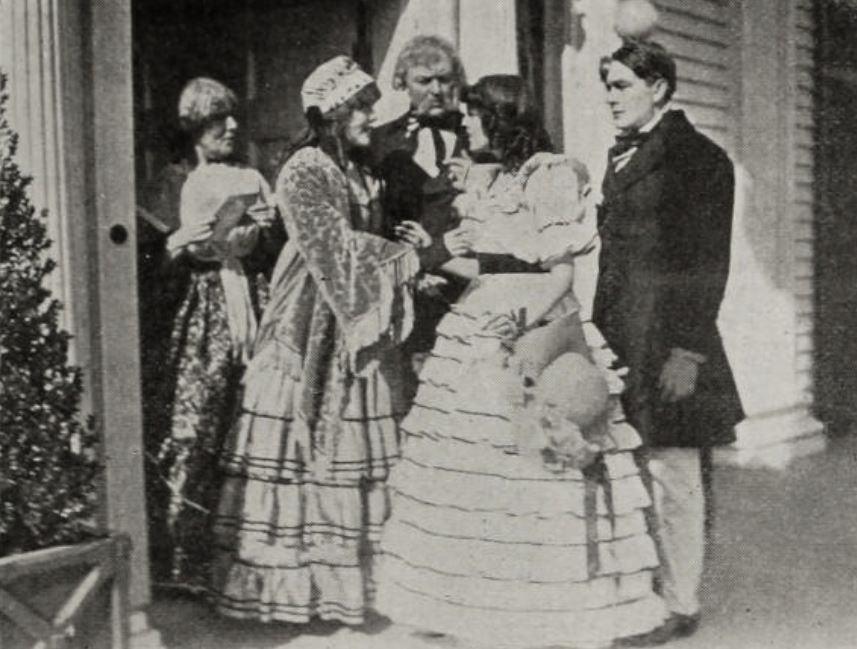
Transitioning abruptly from the rugged wilderness of prehistory, 'Twas Ever Thus' thrusts us into the heart of a nation divided: the American Civil War. This shift is not merely a change of scenery but a profound leap in societal complexity, though the underlying human drama remains remarkably consistent. Here, Elsie Janis, one of the era's most captivating performers, embodies Prudence Alden, a young woman of Bostonian refinement who ventures into the war-torn South to attend to her wounded brother. Her journey is one of both compassion and discovery, leading her into the path of Frank Warren, a Confederate Rebel brought to screen by the charismatic Owen Moore. Their love story unfolds against a backdrop of national trauma, where allegiances are tested and personal desires often clash with broader ideological divides. This segment resonates with the poignant romances depicted in other historical dramas of the period, though its unique placement within a broader, multi-era narrative grants it an additional layer of thematic weight. Much like the caveman saga, their union faces a formidable paternal obstacle in the form of Colonel Warren, Frank’s father, portrayed with stern authority by Hobart Bosworth. The Colonel’s resistance is not born of brute force but of societal expectation, class distinction, and perhaps the very political chasm that has ripped the nation asunder. Frank's eventual triumph over his father's objections, securing Prudence's hand, serves as a powerful echo of Long Biceps's earlier victory, reinforcing the film's central thesis: love, in its purest form, is a force that transcends even the most entrenched societal and familial barriers. The performances here are nuanced, reflecting the more sophisticated emotional palette of a later era, yet they retain the dramatic clarity essential for silent film. Janis, in particular, imbues Prudence with a quiet strength and conviction that makes her a compelling heroine, navigating both personal peril and romantic entanglement with grace.
The final act of 'Twas Ever Thus' brings us to the comparatively bustling and modern world of 1915, a period of burgeoning female independence and artistic aspiration. Elsie Janis returns, this time as Marian Gordon, a young woman with a fervent desire to become a novelist. This portrayal is particularly resonant, given Janis's own role as the film's writer, creating a meta-narrative layer that enriches Marian's journey. Her ambition immediately brings her into conflict with John Rogers, a hard-nosed publisher, played with a delightful blend of gravitas and eventual warmth by Ludloe Goodman. Rogers's blunt advice – to 'get out and learn about life' – is a common trope in stories of artistic development, seen in countless narratives about struggling artists. This echoes themes found in films like Inspiration, where a woman's creative journey is often intertwined with her lived experiences and romantic entanglements. Marian, taking Rogers at his word, embarks on a rather unconventional path: she takes a job as a maid in his very own household. This ingenious plot device allows her intimate access to the 'life' she is meant to study, providing a rich tapestry of human interaction and observation. It is within this domestic sphere that she encounters John's reckless son, Jack (Joe Ray), with whom she develops a passionate romance. The dynamic between Marian and Jack is a microcosm of the film's broader themes: the collision of ambition and affection, the overcoming of social barriers (maid and master's son), and the eventual melding of disparate worlds. Marian's journey is not just about winning Jack's heart, but also about earning the respect and affection of his father, the formidable publisher, whose initial skepticism gives way to admiration for her tenacity and talent. The ultimate triumph, her bestselling novel, is not merely a personal victory but a symbolic capstone to the film's overarching message: that the pursuit of one's deepest desires, be they romantic or professional, often necessitates navigating complex interpersonal landscapes and challenging established norms. This segment, more than any other, showcases Janis's versatility as an actress, portraying Marian with intelligence, wit, and an undeniable charm that makes her struggles and triumphs profoundly engaging.
What truly elevates 'Twas Ever Thus' beyond a mere collection of romantic vignettes is its audacious narrative structure. Elsie Janis's decision to present these three distinct stories as a unified whole, rather than separate tales, is nothing short of visionary for 1915. It speaks to an intellectual curiosity about human history and psychology that was remarkably progressive. The film isn't just telling stories; it's making an argument about the timelessness of certain human experiences. The recurring motif of a dominant male figure (Hard Muscle, Colonel Warren, John Rogers) initially opposing a union or ambition, only to be eventually overcome or won over, forms a powerful thematic spine. This pattern is presented not as repetition, but as an evolutionary echo, demonstrating how the fundamental dynamics of power, love, and self-determination persist across radically different cultural and technological landscapes. The very title, 'Twas Ever Thus,' serves as both a summation and a philosophical declaration, inviting the audience to reflect on these enduring patterns in their own lives and societies. This structural innovation alone places the film in a unique position within early cinema, distinguishing it from more straightforward narratives of the time, such as even acclaimed works like Jane Eyre, which, while deeply romantic, adheres to a singular historical setting.
The success of such an ambitious project hinges heavily on its cast, and 'Twas Ever Thus' benefits immensely from the talents assembled. Elsie Janis, in her dual roles, is a revelation. Her ability to convey distinct personalities across different eras, from the refined Prudence to the ambitious Marian, showcases a range that was exceptional for the period. She commands the screen with a naturalism that belies the theatricality often associated with silent film acting. Owen Moore, as Frank Warren, brings a compelling blend of heroism and romantic ardour to his Civil War-era character, creating a believable and sympathetic figure. Art Acord and Helen Wolcott, in their prehistoric roles, are tasked with embodying more archetypal figures, and they do so with a physicality and expressiveness that is both convincing and engaging. The supporting cast, including Ludloe Goodman, Charles Wainwright, and Hobart Bosworth, provides solid anchors in their respective segments, each contributing to the rich tapestry of opposition and support that the protagonists navigate. The direction, while uncredited in the plot summary, likely benefited from Janis's strong authorial vision. The visual storytelling, particularly in the transitions between eras and the use of intertitles, is handled with a clarity and purpose that ensures the audience never loses the thematic thread, despite the drastic chronological leaps. The camera work, though perhaps less overtly flashy than later cinematic efforts, is effective in conveying emotion and advancing the plot, relying on close-ups and dramatic staging to draw the viewer into each successive narrative. The film's pacing, especially for an early feature, is remarkably consistent, maintaining engagement across its disparate segments.
Beyond its structural novelty, 'Twas Ever Thus' offers a rich vein of thematic inquiry. It's a film about perseverance, about the inherent human drive to connect, to create, and to overcome obstacles. The recurring theme of paternal opposition, whether it's Hard Muscle's primal protectiveness, Colonel Warren's societal strictures, or John Rogers's intellectual challenge, serves as a powerful symbol for the broader societal forces that often stand in the way of individual happiness and ambition. Yet, in each instance, these forces are ultimately either surmounted or transmuted into acceptance, suggesting an optimistic view of human agency and the transformative power of love and determination. This optimistic outlook, even amidst conflict, provides a comforting universality that speaks to audiences across generations. The film subtly argues that while the external trappings of civilization change dramatically, the core emotional landscape of humanity remains remarkably constant. We are, in essence, still grappling with the same desires, fears, and aspirations that animated our earliest ancestors. This makes 'Twas Ever Thus' not just a historical curiosity but a work of enduring philosophical weight, inviting contemplation on the very nature of human progress and continuity. Its exploration of a woman's ambition in the 1915 segment, particularly, aligns it with other progressive narratives of the time, highlighting the evolving role of women in society and their burgeoning pursuit of careers and independence, a theme that would resonate deeply through the coming decades of cinema.
In conclusion, 'Twas Ever Thus' stands as a testament to the boundless creativity and intellectual daring of early cinema. Elsie Janis, both as writer and star, crafted a work that is simultaneously an entertaining romance and a profound historical meditation. Its innovative structure, compelling performances, and timeless themes ensure its place as a significant, albeit perhaps underappreciated, gem in the silent film canon. It's a film that asks us to look beyond the superficial differences of era and costume, to recognize the shared pulse of humanity that beats through every epoch. For those seeking a silent film that transcends mere period piece status and offers a deeper, more philosophical engagement with the human story, 'Twas Ever Thus' is an absolute must-see. It's a cinematic journey that reminds us that, indeed, some things were, are, and perhaps ever shall be, thus.

IMDb 6.9
1936
Community
Log in to comment.