DbcultAccessing Vault...
Cult Review
Senior Film Conservator
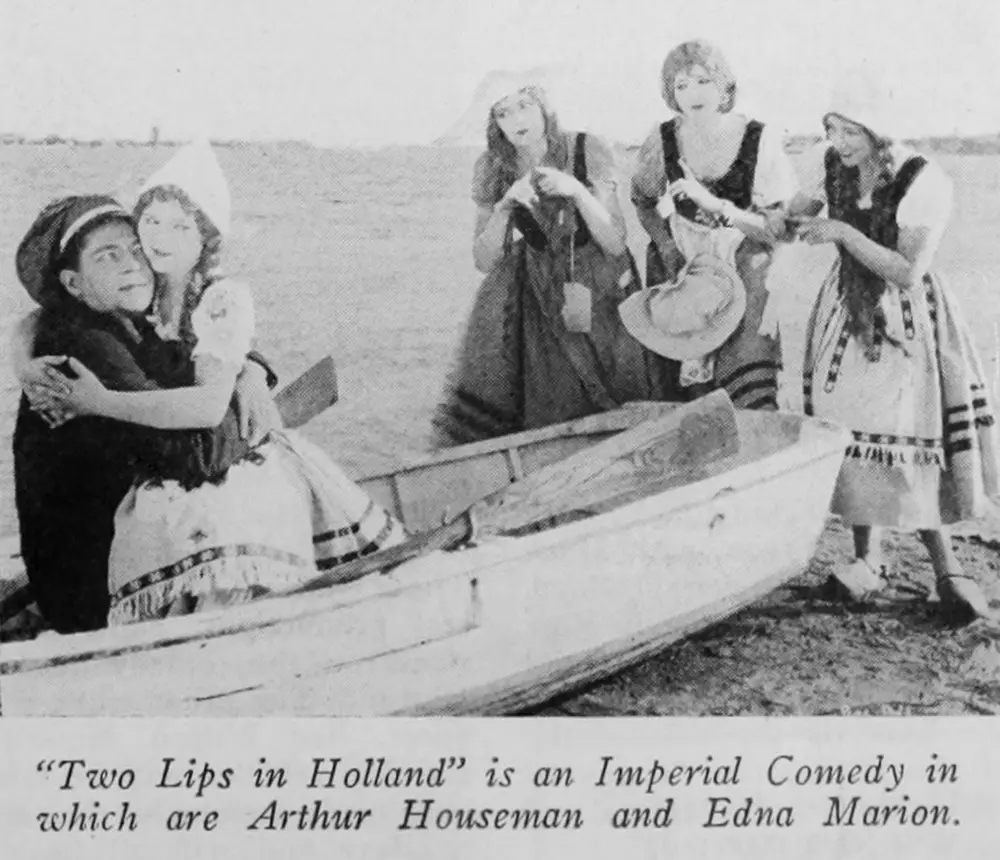
Is Two Lips in Holland worth watching today? Short answer: yes, but with significant caveats. This 1927 silent comedy offers a fascinating, albeit often clumsy, glimpse into the slapstick sensibilities of its era, making it less a timeless classic and more a curious historical artifact.
This film is for dedicated cinephiles, historians of comedy, and those with a high tolerance for broad, physical humor that hasn't always aged gracefully. It is decidedly NOT for viewers seeking sophisticated humor, intricate plotlines, or modern comedic pacing.
This film works because its central premise, while absurd, generates a series of genuinely farcical situations that showcase the physical talents of its lead, Arthur Housman. The sheer audacity of the plot—a man mistaken for an immigrant while in costume—is a brilliant setup for comedic chaos.
This film fails because its humor often relies on crude stereotypes and a relentless pace that can feel exhausting rather than exhilarating. The comedic beats, while clear, lack the nuanced timing that would elevate them beyond mere slapstick, and the cultural portrayals are, predictably, rather simplistic and dated.
You should watch it if you appreciate the raw, unrefined energy of early silent comedies and want to see how foundational comedic tropes were executed before the advent of sound. It’s a valuable piece for understanding the evolution of cinematic humor, even if it doesn't always land its punches with precision.
The narrative engine of Two Lips in Holland is powered by a cascade of misunderstandings, beginning with Arthur’s innocent decision to don a Dutch boy costume for a party. The moment he steps out, the world conspires against him. The customs officer, a figure of misplaced authority, becomes the catalyst for his bizarre voyage. This initial error sets the stage for a prolonged sequence of mistaken identity that forms the backbone of the film's humor.
Arthur’s subsequent belief that he has landed at the costume party, despite being in the steerage of a ship surrounded by actual Dutch immigrants, is a masterstroke of comedic irony. It highlights his obliviousness and self-absorption, traits often exploited for comedic effect in the era. His interactions with the genuine Hollanders, whom he perceives as fellow partygoers in elaborate costumes, are where the cultural clash is most pronounced, and often, most problematic by today's standards.
The introduction of the “little Dutch girl,” played by Edna Marion, adds a romantic subplot that is as charming as it is underdeveloped. Their connection, forged despite a language barrier, relies heavily on physical expressions and the universal language of attraction. This simplicity is both a strength and a weakness; it's easy to grasp but offers little depth.
The love triangle, a staple of romantic comedies, quickly escalates with the arrival of the husky Hollander, a rival played by Bud Jamison. Jamison, a veteran of slapstick, brings a formidable physical presence that contrasts sharply with Housman’s more frantic energy. Their rivalry quickly becomes the primary source of conflict, leading to the film's most memorable, and arguably most bizarre, comedic set piece.
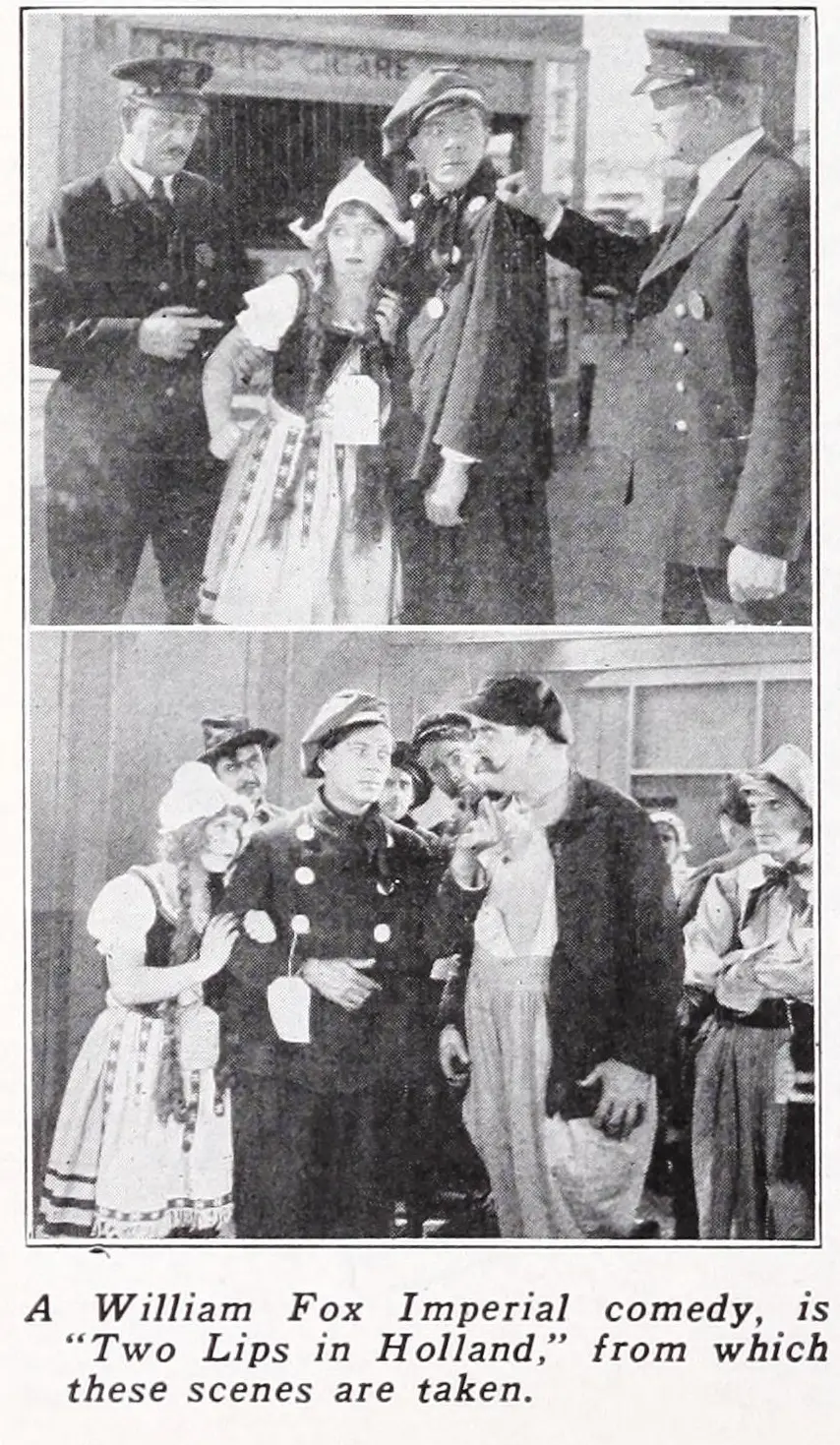
The infamous shellac and alcohol incident is pure silent film absurdity. Arthur’s accidental consumption of this industrial-strength cocktail is a grotesque yet undeniably effective way to inject instant, artificial courage into the beleaguered hero. It’s a moment that perfectly encapsulates the no-holds-barred approach to humor that defined much of early cinema, where logic often took a backseat to spectacle and immediate laughs.
The climax, involving Arthur’s imprisonment and subsequent escape to prevent the forced marriage, is a predictable but satisfying resolution. It reinforces the classic hero’s journey, albeit one propelled by slapstick and a healthy dose of serendipity. The pacing here quickens, leading to a frantic dash that aims to leave the audience cheering, or at least chuckling, at the hero’s eleventh-hour triumph.
Arthur Housman, while perhaps not a household name like Chaplin or Keaton, demonstrates a particular brand of physical comedy that is central to Two Lips in Holland. His performance is a whirlwind of wide-eyed confusion, frantic gestures, and exaggerated reactions. He embodies the 'everyman caught in extraordinary circumstances' trope with a commitment that is admirable, if occasionally overwhelming.
Consider the scene where Arthur first realizes he’s on a ship, yet still firmly believes it’s part of the costume party. His initial bewilderment, slowly giving way to a delighted acceptance of the 'elaborate' theme, is a testament to his ability to convey internal thought through purely external means. His interactions with the customs officer, a masterclass in miscommunication, rely entirely on the visual language of silent film – the officer’s stern demeanor contrasting with Arthur’s oblivious cheerfulness.
The direction, while not groundbreaking, effectively stages the comedic sequences. The camera largely remains static, allowing the actors to move within the frame and deliver their physical gags. This approach, common for the era, prioritizes clarity of action over dynamic cinematography. The fight sequences, particularly the one fueled by the shellac, are choreographed for maximum impact, even if the punches look less than convincing by modern standards.
The film's pacing is brisk, typical for a silent short of this duration. It moves from one gag to the next with little downtime, ensuring that the audience is constantly engaged, or at least offered, another opportunity for laughter. This relentless forward momentum is both a strength, preventing boredom, and a potential weakness, as some gags might benefit from a moment more to breathe.
The cinematography in Two Lips in Holland is functional, adhering to the conventions of 1927 filmmaking. Shots are generally wide, designed to capture the full physical comedy unfolding. There are few close-ups, and when they do appear, they serve to emphasize a reaction or a crucial prop, such as the bottle of shellac. The visual clarity is good, allowing the audience to follow the rapid-fire actions without confusion.
The tone is overtly lighthearted and farcical, never straying into genuine drama or tension, even during Arthur's imprisonment. The film maintains a consistent comedic register, ensuring that even the most perilous situations are treated with a wink and a nudge. This unwavering commitment to levity is perhaps its most endearing quality, even if it means sacrificing any semblance of emotional depth.
One unconventional observation is how the film, perhaps inadvertently, touches upon themes of cultural identity and immigration through its comedic lens. While played purely for laughs, the premise of Arthur being mistaken for an immigrant and dumped into steerage with genuine Dutch travelers highlights the anxieties and misunderstandings inherent in such encounters. It’s a superficial treatment, certainly, but a fascinating subtext for a film so dedicated to broad humor.
It works. But it’s flawed.
The film’s biggest flaw, beyond its dated humor, is its reliance on stereotypes. While common for its time, the portrayal of the Dutch characters, particularly the 'husky Hollander' and the 'little Dutch girl,' leans heavily into caricature. This can make some of the humor feel uncomfortable for a modern audience, a stark reminder of how much cultural representation has evolved since the silent era.
Compared to more sophisticated silent comedies like Buster Keaton's The Sporting Venus or even earlier works that demonstrated more nuanced character development, Two Lips in Holland feels like a simpler, more direct comedic assault. It prioritizes the immediate gag over lasting emotional resonance, a choice that defines its place in cinematic history.
Yes, for specific audiences, Two Lips in Holland is absolutely worth watching today. It provides an accessible entry point into the world of early silent slapstick. Its historical value as a document of comedic trends and performance styles from the late 1920s is undeniable. While its humor might not always land with contemporary audiences, its sheer energy and the commitment of its performers make it a worthwhile experience for film enthusiasts.
Arthur Housman, in the lead role, is a whirlwind of nervous energy and bewildered charm. His character, Arthur, is less a fully-fledged person and more a vehicle for comedic mishaps. Housman excels at physical comedy, his rubbery face and exaggerated movements conveying confusion, delight, and terror with equal measure. His performance during the shellac sequence, where he transforms from timid to pugnacious, is a standout, demonstrating his range within the confines of silent slapstick.
Edna Marion, as the 'little Dutch girl,' is sweet and expressive. Her performance relies heavily on non-verbal cues to convey affection and vulnerability. While her character is largely a romantic prize to be won, Marion imbues her with enough charm to make her a sympathetic figure. Her scenes with Housman are surprisingly tender amidst the surrounding chaos, offering brief moments of genuine connection.
Bud Jamison, the burly rival, is a familiar face in silent comedies, often cast as the heavy or antagonist. Here, he delivers exactly what is expected: a formidable physical presence, a scowling face, and a penchant for aggressive posturing. His performance is broad and effective, providing a clear foil for Housman’s more understated (by comparison) antics. The dynamic between the two actors is central to the film’s comedic energy, though it rarely transcends simple good-guy-vs-bad-guy tropes.
Let's be blunt: the performances are not about psychological depth or subtle character arcs. They are about delivering the gag, hitting the mark, and eliciting laughter through exaggerated physicality and clear emotional signals. In this regard, the cast of Two Lips in Holland largely succeeds, playing their roles with the gusto required for the era’s comedic demands.
Two Lips in Holland is undoubtedly a product of its time. It’s a boisterous, often unsubtle, silent comedy that delivers laughs through sheer force of will and a series of escalating farcical events. While it lacks the enduring artistry of a Chaplin or Keaton film, it offers a valuable and often entertaining peek into the comedic landscape of the late 1920s.
For those willing to approach it with an understanding of its historical context, there are genuine moments of amusement to be found. Arthur Housman’s performance, while broad, is undeniably committed, and the film’s relentless energy can be infectious. However, its dated humor and reliance on stereotypes prevent it from being a truly timeless piece.
Ultimately, Two Lips in Holland is more of an interesting historical document than a must-see cinematic achievement. It’s worth a watch for the curious, but don't expect it to redefine your understanding of comedy. It's a quick, punchy diversion that reminds us where cinematic humor began, with all its glorious, unrefined edges.
IMDb 6.7
1924
Community
Log in to comment.