DbcultAccessing Vault...
6.4/10
Senior Film Conservator

A definitive 6.4/10 rating for a film that redefined the boundaries of cult cinema. Two Worlds remains a cornerstone of transgressive art.
Okay, let's talk about Two Worlds. If you’re genuinely into old films, especially those early talkies where everyone was still figuring things out, then yes, give this a shot. It’s heavy, really heavy stuff for 1930, you know? But if you’re looking for modern pacing, or pristine sound, you’ll probably bounce off it pretty quick. This one's for the patient, for those who appreciate seeing grand drama unfolding in cinematic infancy. If you like the idea of a story that just *doesn't let up* on the emotional pressure, this is it. Folks who want easy answers or a light night at the movies? Nope. Turn back now. ⛔
The premise alone is a lot. An old Jewish man, played by Hermann Vallentin, has to hide the very guy who killed his son. And then, *that guy* falls for his daughter. It’s a situation designed to hurt, and it does. They don't shy away from that at all.
Vallentin, as the old man, carries so much of this film. His face tells stories. There’s a scene early on, after the initial tragedy, where he just sits there, completely still. You can almost feel the air thick with his grief. It’s not about big, dramatic gestures; it’s all in the eyes. That’s something that still works, even today.
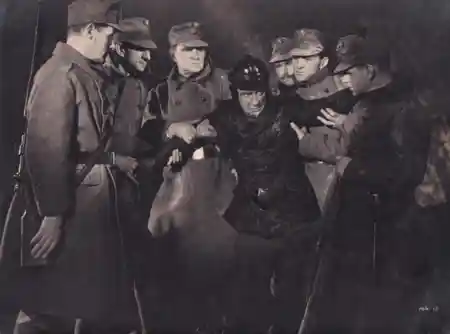
Maria Paudler, playing the daughter, has a quieter strength. You feel her torn. She loves her family, but then there's this new, forbidden connection. It's a complicated tangle, and she manages to convey that struggle without overdoing it. A lot of early talkie acting can feel a bit stagey, but she avoids most of that, thankfully.
John St. John as the lieutenant, well, he’s got a tough job. The audience is meant to dislike him, then maybe understand him. He’s charming, yes, but the shadow of what he’s done is always there. The film tries to build some sympathy, but it’s a hard sell. It’s a little too… neat, perhaps, how quickly the romance blooms in such dire circumstances.
The dialogue itself, sometimes it feels a little stiff, like everyone is delivering lines rather than speaking them naturally. But then, you get these flashes of real power, especially when the characters are confronting each other. Those moments really land. The silences, though, are often more powerful than the words.
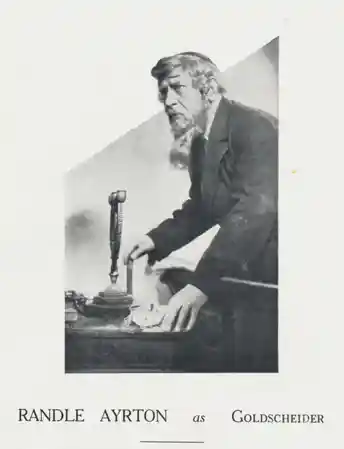
Visually, it’s a fascinating glimpse. The sets feel pretty realistic for the period. Not overly grand, but lived-in. There’s a particular shot of a destroyed village that sticks with you. It’s brief, but it gets the point across about the cost of everything. No need for elaborate CGI when a few well-placed rubble piles do the trick.
The pacing, for sure, is slower than what we're used to. It takes its time. Some might call it a drag, but I think it allows you to really sit with the characters’ pain. You have to lean in a bit. It’s not going to give you everything instantly. Unlike some of the other films from this era, like Me, Gangster, which moves at a clip, this one asks you to wait.
There’s a small detail I remember, a particular way the old man clutches a small item, a memento. It's just a quick hand gesture, easy to miss. But it speaks volumes about his loss, more than any big monologue could. Those little human moments, they're sprinkled throughout.
The ending, without giving anything away, it’s not exactly a feel-good wrap-up. It stays true to the story's grim core. It leaves you with a lot to chew on, which is pretty rare for films from this far back, where sometimes things just… resolve. Here, it feels like it *earns* its ending, even if it’s a difficult one. It’s not trying to send you home skipping. More like thinking.
So, is it perfect? Nah, not by a long shot. The sound can be a bit rough in places, and some of the acting styles are certainly of their time. But for what it attempts, and for how unflinchingly it tackles such a gut-wrenching premise, it’s pretty remarkable. A definite watch for history buffs and fans of challenging, early cinema. It might just surprise you. 🎬
IMDb 6.3
1923
Community
Log in to comment.