DbcultAccessing Vault...
5.7/10
Senior Film Conservator
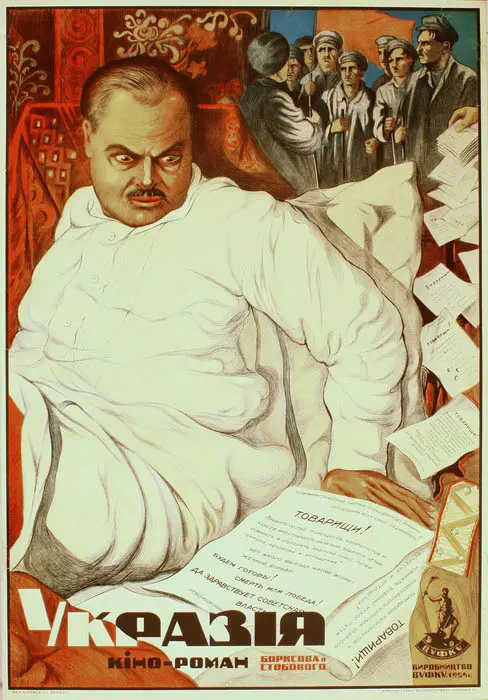
A definitive 5.7/10 rating for a film that redefined the boundaries of cult cinema. Ukraziya remains a cornerstone of transgressive art.
Is Georgiy Stabovoy’s 1929 historical drama, Ukraziya, worth your precious viewing time today? Short answer: yes, but with significant caveats. This isn't a film designed for casual consumption; it's a visceral, often unforgiving, look at a specific, brutal moment in history.
It’s a powerful, if at times ponderous, piece of cinematic history that speaks volumes about the political and economic machinations of its era, resonating with surprising echoes even a century later. This film is unequivocally for history buffs, students of early Soviet cinema, and those with a high tolerance for period-specific storytelling that prioritizes ideological messaging over modern narrative conventions. If you prefer your historical dramas sanitized, briskly paced, or with clear-cut heroes, Ukraziya is emphatically not for you.
Early Soviet cinema often married artistic ambition with overt political messaging, and Ukraziya stands as a stark example. It’s a film that doesn't just depict history; it interprets it through a specific lens, one that highlights the struggles against external and internal oppressors.
This film works because of its unflinching commitment to its historical backdrop, offering a raw, almost documentary-like glimpse into the chaos of 1919 Odessa under Denikin's occupation. Its strength lies in its ability to convey the oppressive atmosphere and the sheer desperation of a city caught in the crosshairs of geopolitical power plays.
This film fails because its narrative can feel didactic and overtly propagandistic at times, sacrificing nuanced character development for broader ideological strokes. The pacing, typical of its era, can also be a significant barrier for contemporary audiences accustomed to faster storytelling.
You should watch it if you are genuinely interested in the historical context of the Russian Civil War, the origins of Soviet cinema, or if you appreciate films that challenge rather than entertain in a conventional sense. It's a demanding watch, but one that rewards patience with a profound historical perspective.
Georgiy Stabovoy, alongside co-writer Nikolay Borisov, crafts a narrative that is less about individual heroism and more about the collective suffering and resilience of a city. Odessa, in their hands, is not merely a setting but a character itself, a vibrant port city suffocated by the presence of Denikin's White Guard troops.
Stabovoy’s direction emphasizes the stark contrast between the ‘wild revelry’ of the occupying forces and the grim reality faced by the populace. We see this in the opulent, almost grotesque, banquets held by the White Guard officers, juxtaposed with the breadlines and the desperate faces of the city’s inhabitants. This visual rhetoric is powerful, even in its simplicity, making a clear statement about the class divisions exacerbated by the occupation.
The film’s portrayal of foreign intervention is particularly pointed. European capitalists are not abstract figures but active participants in the economic subjugation of Russia’s south. Stabovoy illustrates this through scenes of foreign dignitaries negotiating with White Guard generals, their agreements thinly veiled attempts to plunder the region’s resources. It’s a brutal, simple message, but effective in its historical context.
One surprising observation is how Stabovoy manages to imbue certain sequences with a palpable sense of tension, even without the aid of spoken dialogue. A particular scene involving a clandestine meeting of resistance fighters, shot with stark, low-key lighting, builds suspense through carefully orchestrated glances and gestures, proving that early cinema could be incredibly sophisticated in its visual storytelling.
The director’s approach often feels less like a traditional drama and more like a historical tableau, an animated fresco depicting a pivotal moment. This isn't a flaw; it's a stylistic choice that grounds the film in its historical reality, making it a valuable primary source for understanding the Soviet perspective on these events.
The ensemble cast of Ukraziya, featuring talents like Darya Zerkalova, Yuriy Chernyshev, and the revered Amvrosi Buchma, delivers performances that are deeply rooted in the expressive traditions of silent cinema. Their acting relies heavily on exaggerated gestures, poignant facial expressions, and a theatricality that might feel alien to modern viewers but was essential for conveying emotion without dialogue.
Amvrosi Buchma, in particular, known for his later work in sound films, brings a gravitas to his role that elevates the material. While specific character names aren't highlighted in the plot synopsis, Buchma's presence typically signifies a character of moral weight or profound internal conflict. His ability to convey complex emotions through subtle shifts in posture or the intensity of a gaze is a masterclass in silent film acting.
Darya Zerkalova and Yuriy Chernyshev, representing perhaps the common people or figures caught in the struggle, carry much of the film’s emotional burden. Their performances often serve as a mirror to the audience, reflecting the fear, anger, and nascent hope of the occupied populace. There's a raw authenticity to their portrayal of suffering that transcends the limitations of the silent medium, making their plight genuinely felt.
It’s a difficult task for actors to embody archetypes rather than fully fleshed-out individuals, yet this cast succeeds in creating memorable impressions. The officers of the White Guard, played by actors like Nikolai Saltykov and Ivan Gorskiy, often lean into caricature, portraying them as arrogant, cruel, and hedonistic. This deliberate choice serves the film's political agenda, painting a clear picture of the enemy.
The film’s strength in this regard isn’t individual brilliance as much as it is the collective’s commitment to a shared vision, a unified portrayal of a society in turmoil. Every actor, from the named leads to the countless extras, contributes to the overwhelming sense of historical authenticity and ideological purpose.
The cinematography of Ukraziya is a testament to the visual storytelling prowess of early Soviet cinema. Shot in stark black and white, the film utilizes high contrast and dramatic lighting to create a palpable sense of dread and urgency. Shadows are not merely an absence of light; they are characters themselves, lurking in the corners of occupied streets and enhancing the clandestine nature of resistance.
Consider the wide shots of Odessa’s bustling port, suddenly rendered desolate by military presence, or the claustrophobic interiors where desperate plans are hatched. The camera, often static but occasionally employing dynamic tracking shots, serves as an observant eye, documenting the unfolding tragedy. There’s a particular sequence featuring the arrival of Denikin’s troops, where the sheer number of soldiers and their imposing machinery is captured with an almost overwhelming sense of scale, underscoring the might of the occupying force.
The tone of Ukraziya is relentlessly grim, yet punctuated by moments of defiant spirit. It’s a heavy film, imbued with a sense of historical inevitability and revolutionary fervor. There’s little room for levity, as the focus remains squarely on the hardships of occupation and the ideological struggle. This unwavering commitment to a serious tone can be challenging, but it’s also what gives the film its profound impact. It refuses to sugarcoat the realities of war and economic exploitation, presenting them with a raw honesty that still resonates.
Pacing, as expected for a film from 1929, is deliberate. It builds slowly, allowing the oppressive atmosphere to seep in, rather than rushing from plot point to plot point. This methodical rhythm might test the patience
IMDb —
1924
Community
Log in to comment.