DbcultAccessing Vault...
Cult Review
Senior Film Conservator
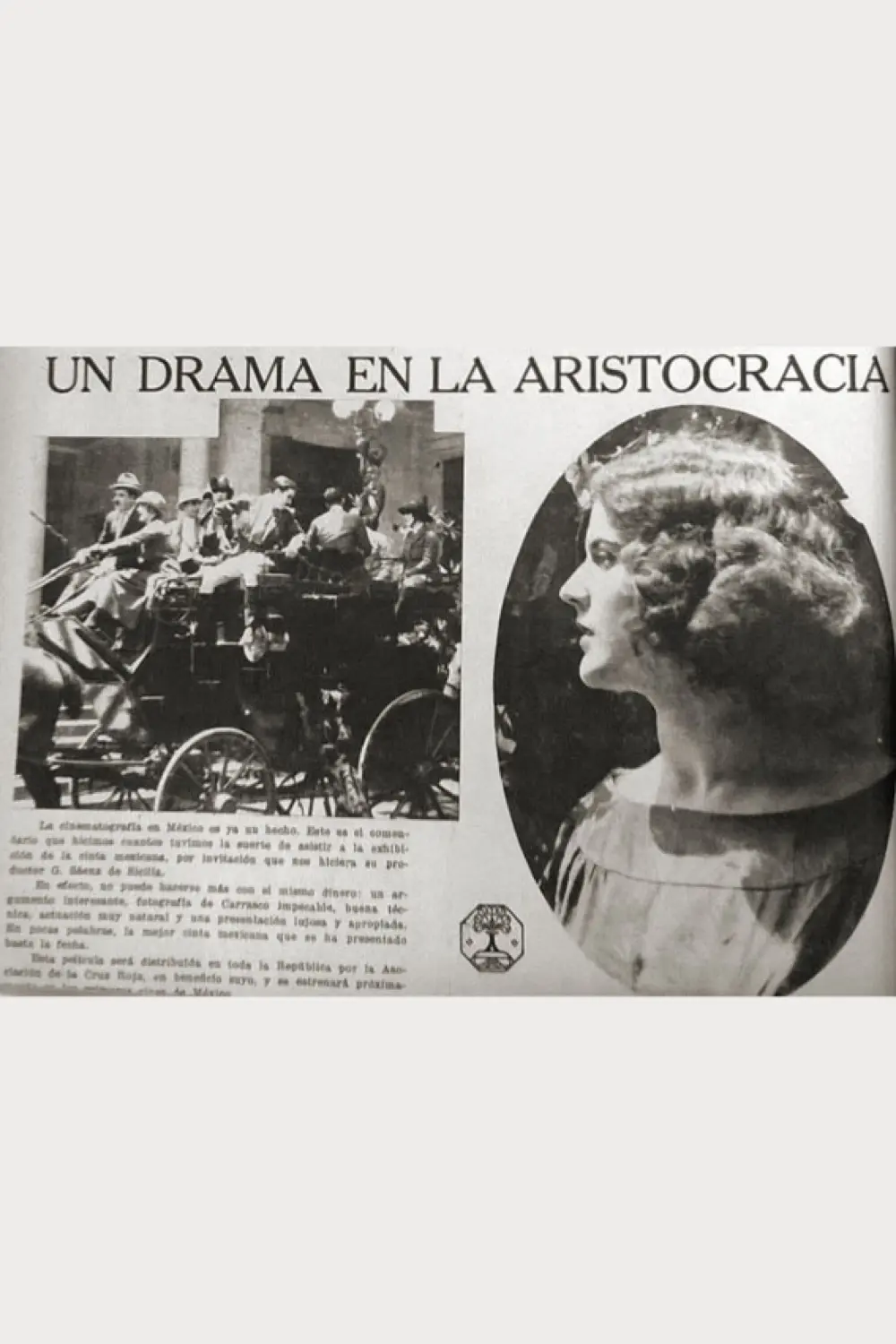
Is 'Un drama en la aristocracia' worth watching in today's cinematic landscape? Short answer: yes, but with significant caveats. This silent Mexican film from 1927 is a fascinating historical artifact that offers a window into the narrative sensibilities and social concerns of its time, making it a valuable experience for those with an appreciation for film history and the silent era.
This film is unequivocally for the dedicated cinephile, the academic, and anyone curious about the foundational elements of Mexican cinema. It is emphatically NOT for the casual viewer expecting modern pacing, dialogue, or special effects; those seeking a passive, low-effort viewing experience will likely find its silent, melodramatic conventions challenging.
Gustavo Sáenz de Sicilia's "Un drama en la aristocracia" emerges from an intriguing period of Mexican cinema, a time when the industry was finding its voice amidst global influences. The very title, ‘A Drama in the Aristocracy,’ signals a clear intent: to explore the often-turbulent undercurrents beneath the polished surface of high society. This subgenre, popular in the 1910s and 20s, thrived on the tension between outward appearances and internal turmoil, making it fertile ground for silent film's expressive acting styles.
The film, though details of its plot are now scarce for many, can be inferred to follow the classic silent melodrama formula. We are likely presented with characters bound by societal expectations, perhaps a young woman forced into a marriage of convenience, or a man burdened by a family secret. The power of silent film in such narratives lies in its reliance on visual storytelling – exaggerated gestures, emotive facial expressions, and symbolic mise-en-scène – to convey the depth of human emotion without a single spoken word.
The cast, featuring names like Luis G. Barreiro and Adela Sequeyro, were prominent figures in early Mexican cinema. Barreiro, known for his intense, often brooding presence, would have brought a gravitas to any role demanding internal conflict. One can easily imagine him as a tormented nobleman, his eyes conveying volumes of unspoken pain during a lavish, yet emotionally sterile, ballroom scene. Similarly, Sequeyro, a trailblazing actress and later director, would have imbued her character with a blend of vulnerability and nascent strength, perhaps as the target of societal pressures or the catalyst for change within the aristocratic household.
Directing a silent film, especially one focused on the intricate dynamics of a social class, requires a nuanced understanding of visual narrative. Sáenz de Sicilia, as the writer, would have laid the groundwork for a story that could be told primarily through action and reaction. The director, whose name isn't explicitly provided in the context but would have been crucial, would have had to translate this into a compelling visual experience.
Cinematography in 1927, while lacking the fluidity and complexity of later eras, still possessed its own unique artistry. We can envision scenes shot with a deliberate elegance, perhaps wide shots establishing the grandeur of aristocratic estates, contrasting with tighter close-ups that magnify the characters' internal struggles. The use of lighting would have been fundamental, creating dramatic shadows to emphasize villainy or soft glows to highlight innocence and romance. A scene depicting a clandestine meeting in a dimly lit garden, for instance, would rely entirely on the play of light and shadow to build tension and convey secrecy.
The pacing of silent films often feels distinct to modern audiences. Without spoken dialogue, intertitles become crucial, breaking up the visual flow. However, a skilled director could use long takes to build atmosphere or quick cuts to heighten suspense, particularly during moments of crisis or revelation. For instance, a sequence revealing a scandalous letter might employ a rapid succession of close-ups: the letter itself, the reader's horrified face, and the observing antagonist's smirk, all cut together to maximize dramatic impact.
Silent film acting is an art form entirely unto itself. Luis G. Barreiro and Adela Sequeyro, alongside Flor de María and Ernesto García Cabral, would have relied on a highly expressive, almost theatrical style. Every emotion, from joy to despair, had to be externalized, often with grand gestures and exaggerated facial contortions, to ensure the audience understood the character's internal state without auditory cues.
The ensemble cast, including Celia Padilla, Matilde Cires Sánchez, and Margarita Beer, would have contributed to the rich tapestry of aristocratic life. Each character, from the stern matriarch to the conniving rival, would have been instantly recognizable through their distinct mannerisms and visual cues. Gema Violeta and Luis Gómez Rubín would have rounded out the supporting roles, adding depth and texture to the film's social landscape. It's a fascinating study in non-verbal communication.
This film works because it offers a rare glimpse into the early narrative conventions of Mexican cinema and the universal themes of social class and hidden desires, presented through the unique, expressive language of silent film. The performances, while melodramatic by today's standards, are powerful and emotionally direct, showcasing the talent of an era.
This film fails because its pacing and acting style can be jarring for modern viewers accustomed to fast-paced, dialogue-driven narratives. The lack of sound, while integral to its artistic form, requires a different kind of engagement, which not all audiences are prepared for. Its historical context, while enriching, also demands some prior knowledge or a willingness to learn.
You should watch it if you are a film student, a historian, or simply a curious individual eager to explore the roots of cinematic storytelling and appreciate the artistry of silent film. It's an educational experience as much as it is an entertainment one. It works. But it’s flawed.
There's a surprising, almost meditative quality to watching a silent film. Stripped of dialogue and intricate soundscapes, the viewer is forced to engage more deeply with the visuals, the music (which would have been live or recorded for projection), and the raw emotion conveyed by the actors. It's a form of active viewing that contemporary cinema rarely demands.
"Un drama en la aristocracia" likely served as a powerful social mirror for its contemporary audience. Films about the upper crust, exposing their hypocrisies or celebrating their triumphs, were immensely popular. For a Mexican audience in the 1920s, such a film might have resonated with evolving national identities and class structures post-revolution, even if it depicted a more traditional, European-influenced aristocracy.
One unconventional observation is how much more *physical* acting becomes in this medium. Every thought, every internal conflict, must be externalized, not just through facial expressions, but through the entire body. A character's posture, the way they hold a teacup, or the sweep of their hand can communicate as much as a soliloquy in a sound film. This intensity is often lost in more naturalistic acting styles today.
While it's unfair to compare a 1927 silent film directly to modern blockbusters, it's useful to consider its place within the broader history of melodrama. Films like More to Be Pitied Than Scorned or A Woman's Fight from slightly earlier periods share this dramatic DNA, focusing on moral dilemmas and heightened emotional stakes. These films were the soap operas of their day, captivating audiences with stories of love, betrayal, and redemption.
The visual storytelling here might find echoes in contemporary art-house cinema that prioritizes imagery over dialogue, or even in certain segments of animation. However, the direct, unadorned emotionality of silent film, particularly in a melodrama, is a unique beast. It demands a surrender to its conventions, a willingness to be moved by raw, unmediated expression.
My strong opinion is that silent films, far from being mere historical curiosities, offer a profound lesson in cinematic fundamentals. They teach us the power of composition, the rhythm of editing, and the sheer communicative force of the human face and body. Ignoring them is to ignore a significant part of what makes cinema, as an art form, so compelling.
Many films from this era, especially those from non-Hollywood industries, are lost to time or exist only in fragmented forms. The very existence of "Un drama en la aristocracia" is a testament to the efforts of film archivists and historians. Its value isn't just in its narrative, but in its survival as a cultural document.
To watch it is to participate in an act of historical appreciation. It's a reminder that cinema has always been a global language, with diverse voices contributing to its evolution. Films like Rosen aus dem Süden or Lasse Månsson fra Skaane from different European traditions highlight the shared yet distinct approaches to early filmmaking across continents.
We must acknowledge the limitations of its era. Technical constraints meant fewer elaborate camera movements, simpler editing, and often, less nuanced performances than we'd expect today. Yet, within these constraints, a profound artistry often bloomed. The ingenuity of early filmmakers in conveying complex stories with rudimentary tools is truly astonishing.
"Un drama en la aristocracia is a testament to a bygone era of storytelling, rich in visual emotion and historical significance. It’s a challenge, but a rewarding one."
"Un drama en la aristocracia" is not a film for everyone, nor does it pretend to be. It is a time capsule, a vibrant echo of a cinematic past that deserves our attention and respect. For those willing to step back in time and embrace the unique language of silent film, it offers a rich, if challenging, experience.
It’s a vital piece of Mexican film heritage, demonstrating that even in its nascent stages, cinema was a powerful medium for exploring the human condition, particularly within the rigid structures of society. Its melodrama, far from being a weakness, is its strength, allowing for grand emotional statements that transcend the spoken word.
Ultimately, its value lies not just in its entertainment, but in its educational and historical significance. It’s a film that asks you to meet it halfway, to understand its context, and to appreciate the foundational artistry upon which all modern cinema is built. For the right audience, it is an essential viewing, a profound journey into the heart of early 20th-century drama. It’s worth the effort, if you’re prepared for the journey.
IMDb —
1930
Community
Log in to comment.