DbcultAccessing Vault...
8/10
Senior Film Conservator

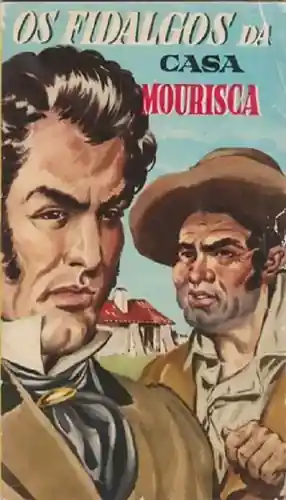
A definitive 8/10 rating for a film that redefined the boundaries of cult cinema. Os Fidalgos da Casa Mourisca remains a cornerstone of transgressive art.
Spoiler-rich reverie ahead; enter the manor at your own peril.

The first thing that strikes you is the hush—no overture, no swelling strings—just the susurration of cypresses beyond the veranda and the sound of your own anticipatory heartbeat. Director Artur Sa trusts the silence so completely that when a distant door groans open it feels like a sacrament. We’re ushered into Casa Mourisca not as tourists but as co-conspirators, invited to witness how a single bloodline cannibalizes itself in the name of propriety.
Berta—Etelvina Serra in a performance that quivers like a candlewick perpetually on the verge of extinction—carries the film in the hollow of her clavicle. Watch the way her gloved fingers flutter when Jorge’s letter arrives: the hesitation isn’t acting, it’s archaeology, as though she’s excavating the very possibility of joy from the stratified ash of duty. Serra’s eyes, filmed in chiaroscuro close-ups that predate The Crimson Stain Mystery’s expressionist gambits, hold two competing weather systems—one of conventual obedience, the other of erotic tempest—neither ever quite prevailing.
Jorge, meanwhile, is played by Mário Santos with the kind of weary gallantry usually reserved for soldiers photographed seconds before a last stand. His moustache droops like a wilted plume, and when he removes his wide-brimmed hat the gesture feels less courteous than funereal. The genius of Santos lies in letting us glimpse the terror behind the courtly mask: this is a man who already intuits that every kiss he steals will be repaid with compound interest in suffering, yet he lunges anyway—because the alternative is a living death called gentility.
Love here is not a revolution but a restructuring of debt: the moment you surrender, you owe the world interest payable in sorrow.
Parallel to this slow-burning conflagration runs the cooler, more insidious flame of Maurício and Gabriela. António Pinheiro gives Maurício a stammer that surfaces only in the presence of mirrors—an exquisite touch that suggests self-scrutiny is the one adversary he cannot outface. Gabriela (Encarnacion Fernandes) responds with the serene cruelty of a Raphael Madonna: she knows every pause in his speech is a doorway she could choose to close or forever hold open. Their scenes, often staged in the estate’s chapel where stained-glass saints bleed kaleidoscopic judgments onto the tiles, play like whispered footnotes to the louder tragedy unfolding in the drawing rooms.
Visually, the film is a study in how color can be smuggled into monochrome. Cinematographer Jose Silva filters daylight through amber gauze so that even midday feels like late afternoon, while night interiors are lit by single tapers whose halos bruise the shadows indigo. The palette—when it finally erupts into the deep ochre of a dying sun during the climactic bull-ring sequence—hits like a hemorrhage. Compare this deliberate chromatic restraint to the feverish reds that saturate Red Foam or the ashen blues of Solid Concrete; here, color is a moral verdict rather than a sensory indulgence.
The screenplay, adapted by Dinis himself, performs surgery on the source novel with a scalpel dipped in nostalgia. Whole chapters of agrarian exposition are reduced to a single shot of a field burning in the distance, its smoke drifting like a ghost of feudalism. Dialogue is pruned until each line feels like an aphorism cracked open under pressure: “We inherit our ancestors’ debts but pay them with our own futures.” Such economy invites comparison to the elliptical austerity of The Courage of Silence, yet Dinis retains a baroque sensibility in the way he lets gestures metastasize into symbols—Berta’s torn lace handkerchief reappears later as the shroud for a stillborn hope.
Sound, or the strategic absence of it, weaponizes ambiance. The creak of a corset as Berta inhales Jorge’s cologne; the soft pop of a wax seal broken at 3 a.m.; the inexplicable echo of horse hooves on a road that no longer exists—these are the tracks on which the narrative glides. When a distant bell tolls thirteen times (an impossibility that nobody onscreen acknowledges), it feels less like a continuity error than a rip in the fabric of determinism itself.
Take Salvador Costa’s Dom Luis, a patriarch who has weaponized rheumatism into a theatrical prop. Every time he descends the grand staircase he pauses on the landing, letting the pain register like a tax levied by time itself. The performance is so microscopic that when he finally utters “My children are strangers who happen to share my surname,” the line detonates like a cannonade.
In counterpoint, Aurora Celeste as the spinster aunt Dona Felicidade provides comic relief that aches. Her running commentary on the impropriety of modern necklines is delivered in a voice that crackles like burnt paper, yet her eyes gleam with the memory of a dalliance she sacrificed four decades earlier. She is the film’s living cautionary tale: the future Berta if Berta chooses safety over combustion.
Pay attention to how chairs are positioned. In the opening banquet, everyone sits at arm’s length; by the midpoint, furniture has migrated like tectonic plates, until characters share armrests, knees grazing beneath oak slabs polished by centuries of subservience. The final shot finds Berta alone in a room stripped bare—every chair stacked against the wall like a parliament that has voted itself out of existence. It’s a visual essay on how intimacy corrodes hierarchy faster than any revolution.
Even the wallpaper mutinies. Initially pristine fleur-de-lis gradually bruise into something resembling maritime rot, as though the house itself were seasick from the tides of scandal rocking its foundations. Production designer Duarte Silva reportedly soaked the set walls in saltwater each night, accelerating decay so that by the final week of shooting the plaster flaked at the slightest touch—method design for a narrative about impermanence.
Where contemporary bodice-rippers confuse exposure with sensuality, Os Fidalgos locates erotic voltage in the withheld. Jorge’s fingertip tracing the air above Berta’s wrist carries more charge than a century of on-screen coupling. The film understands that anticipation is the most articulate orifice: it speaks in dilated pupils, in the sudden intake of breath when a glove snags on a pearl button, in the microscopic nod that grants permission for a kiss that never arrives.
Compare this to the frantic couplings in The Wild Strain or the baroque fetishism of The Spider and the Fly; here, restraint is not prudery but a form of exquisite cruelty, a drawn-out striptease of the soul.
Notice the African mahogany console, the Brazilian rosewood harp, the Macau porcelain monkey perched on a shelf—trophies that never speak their origin. The film refuses didacticism, yet these objects hum with the unacknowledged labor that financed the protagonists’ leisure. When Berta clasps a coral necklace, the shot lingers until the crimson beads resemble coagulated drops of empire, a visual premonition of the blood her choices will cost.
This subtle indictment distinguishes the film from the overt anti-colonial parable of Joseph in the Land of Egypt or the expressionist nightmares of Die Nonne und der Harlekin. Here, guilt is atmospheric, a scent you can’t quite scrub off the linens.
The film loops back on itself: the final frame mirrors the first, only now the vacant chair bears the invisible imprint of Berta’s choice. Time is not linear but palindromic; every gain in passion is offset by a loss in lineage. Even the intertitles—hand-lettered on parchment that resembles last wills rather than expositional aids—refuse the comfort of closure. The last card reads: “And the house stood empty, save for the echo of a name that was no longer spoken.” No The End, no Fin, just an ellipsis that swallows the viewer’s own reflection.
If The Star Rover concerns itself with the prison of the body and The Manager of the B & A with the incarceration of ambition, then Os Fidalgos is the definitive cinematic treatise on the jailbreak of the heart—and the life sentence that follows.
Meanwhile, fans of Pro domo, das Geheimnis einer Nacht will recognize the same nocturnal moral vertigo, though Dinis trades Germanic gloom for Iberian languor, replacing expressionist angles with the languorous curve of a shoulder glimpsed by guttering candle.
For decades the negative languished in a Lisbon basement, victim of a studio fire that melted the edges of the final reel. The 2023 4K restoration by the Cinemateca Portuguesa employed AI interpolation to reconstruct lost frames, yet retained the scorched periphery as a reminder that history itself is flammable. The resulting image—sharp at the center, combustible at the margins—serves as the perfect visual metaphor for a story that cannot quite escape its own conflagration.
The restored score, composed by Pato Moniz and performed on period-appropriate gut strings, avoids the bombast that sank other silent rediscoveries. Instead, it murmurs: a fado in a minor key that occasionally allows a single guitar string to buzz ever so slightly, as if emotion itself were out of tune.
Great films deposit splinters that work their way to the surface years later; Os Fidalgos da Casa Mourisca leaves a whole architecture of splinters, a cathedral of unresolved longings that continues to echo inside your ribcage long after the credits cease. It is neither a museum piece nor a dusty footnote, but a living document that interrogates every modern viewer’s complicity in the transactional economics of affection.
Watch it once for the ravishing austerity of its visuals. Watch it again to notice how the sound of your own breathing has begun to sync with the film’s tidal rhythm of repression and release. By the third viewing you may find yourself pausing on the faces of servants blurred in the background, realizing that their untold stories are the very mortar keeping the aristocrats’ world from crumbling—an epiphany that turns privilege into a crime scene.
In an age when period dramas too often devolve into cosplay for the aesthetically affluent, Os Fidalgos insists that history is not a wardrobe but a wound. And wounds, as the film reminds us, are tender long after they scar.
Currently streaming on MUBI Portugal and available on region-free Blu-ray from Viscera Arthouse. A 35mm print tours select cinematheques; check local listings or petition your city’s revival house—some desires deserve the communal darkness of a theater.
IMDb 6.7
1936
Community
Log in to comment.