DbcultAccessing Vault...
6.7/10
Senior Film Conservator
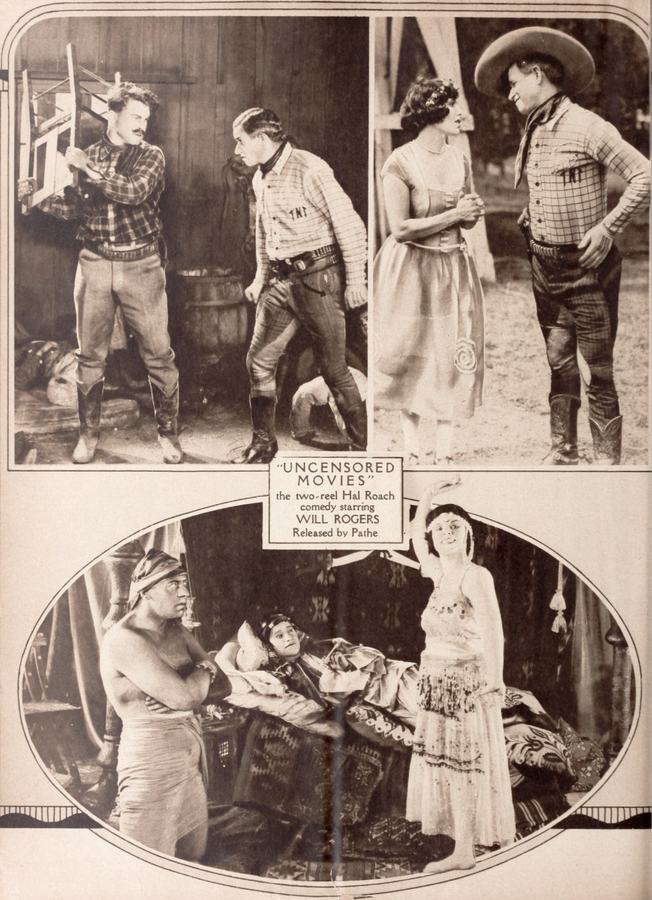
A definitive 6.7/10 rating for a film that redefined the boundaries of cult cinema. Uncensored Movies remains a cornerstone of transgressive art.
In the annals of early cinema, few works capture the zeitgeist of a rapidly changing America quite like Hal Roach and H.M. Walker's Uncensored Movies. Released at a time when the nascent film industry was grappling with its own identity and the burgeoning anxieties of a morally conservative public, this film offers a fascinating, often humorous, and surprisingly prescient commentary on censorship, hypocrisy, and the power of perception. It's a journey from the supposed moral purity of small-town America to the perceived decadence of Hollywood, all seen through the eyes of a self-appointed moral crusader, played with characteristic charm and understated wit by the inimitable Will Rogers.
The premise is deceptively simple: a reformer, deeply concerned by the moral erosion he believes Hollywood films are inflicting upon the nation, ventures forth to the epicenter of this supposed vice. His goal is not merely to observe, but to gather evidence, to document the 'unvarnished' truth of what passes for entertainment in Tinseltown. Upon his return, he doesn't just deliver a sermon; he stages a grand reveal, presenting his findings to his unsuspecting, and perhaps somewhat repressed, fellow townsfolk. This act of public display transforms a personal crusade into a communal reckoning, forcing an entire community to confront the 'results' of his investigation. The genius of the film lies in its ability to poke fun at both the perceived depravity of Hollywood and the often-sanctimonious judgment of those who would condemn it.
Will Rogers, a figure who transcended mere acting to become a national icon of folksy wisdom and sharp observational humor, is perfectly cast in this role. His character embodies a certain earnestness, a genuine concern, yet his delivery is imbued with that characteristic twinkle in the eye that suggests he's acutely aware of the absurdities he's encountering and, indeed, creating. Rogers wasn't just a comedian; he was a social commentator, a man whose homespun philosophy resonated deeply with audiences across America. Here, he uses that persona to navigate the treacherous waters of moral judgment, exposing the often-thin line between genuine concern and outright priggishness. His performance anchors the film, providing a relatable human element amidst the broader societal satire.
The supporting cast, though perhaps less celebrated than Rogers, contributes significantly to the film's texture. Marie Mosquini, a talented actress of the era, likely provides a counterpoint to Rogers' reformer, perhaps embodying the more liberal or modern sensibilities that were emerging. Earl Mohan, Ena Gregory, Guinn 'Big Boy' Williams, George Rowe, and Noah Young, all stalwarts of silent comedy and character acting, would have populated the small town with a rich tapestry of reactions – from wide-eyed shock to feigned outrage, and perhaps even a hint of secret delight. Their collective performances would have painted a vivid picture of a community grappling with external influences, much like the way communities in films such as The Virgin of Stamboul or The Woman in Black contend with strict societal codes or encroaching dangers. The silent film era, after all, relied heavily on exaggerated expressions and body language to convey emotion and narrative, and this ensemble would have mastered that art.
Hal Roach, a name synonymous with silent comedy, particularly through his work with Laurel and Hardy, brings his characteristic knack for visual gags and brisk pacing to Uncensored Movies. His direction, combined with H.M. Walker's screenplay, ensures that the film never descends into mere preachy sermonizing. Instead, it maintains a light touch, utilizing humor to deliver its sharper points. Roach understood the mechanics of laughter and how to use it as a tool for social commentary. The film's humor likely stems from the exaggerated reactions of the townsfolk, the reformer's own earnest but perhaps misguided zeal, and the inherent absurdity of trying to 'censor' an entire industry by simply exposing its output. This approach is reminiscent of the way some early social commentaries, like those found in elements of Graft, used dramatic narrative to highlight societal ills.
The film's title, Uncensored Movies, is itself a provocative statement. In an age before the Hays Code, when the industry was still finding its footing and public outcry over perceived immorality was frequent, the very idea of 'uncensored' content was both thrilling and terrifying. The film cleverly plays on this tension. What exactly constitutes 'uncensored'? Is it graphic content, or simply content that challenges prevailing norms? The reformer's 'results' are not merely scenes but rather the *effect* of those scenes on an audience, a powerful meta-commentary on the medium itself. It prompts us to consider whether the true danger lies in the content itself or in the interpretation and reaction of the viewer. This exploration of perception versus reality, and the power of suggestion, is a theme that echoes through cinematic history, often seen in films that challenge established norms or reveal hidden truths, much like the dramatic revelations in The Mainspring.
The societal context of Uncensored Movies is crucial to understanding its impact. The early 1920s were a period of immense social change in America. The Roaring Twenties saw a loosening of traditional moral strictures, the rise of jazz, flappers, and a general questioning of Victorian values. Cinema, a relatively new and immensely popular medium, became a convenient scapegoat for anxieties about these changes. Moral reformers saw films as corrupting influences, particularly on impressionable youth. This film, therefore, taps directly into that cultural anxiety, but with a satirical edge. It doesn't necessarily take sides, but rather holds a mirror up to both the 'sinners' and the 'saints,' revealing the human foibles on all fronts. This nuanced approach to social commentary, using entertainment as a vehicle, can be seen in other films that explore the complexities of human nature and societal pressures, such as Far from the Madding Crowd, albeit in a different genre.
The film's legacy extends beyond its immediate entertainment value. It serves as a valuable historical document, offering insight into the early debates surrounding media regulation and the nascent concept of 'moral panic.' It reminds us that discussions about what is appropriate for public consumption are not new, and that the tension between artistic freedom and societal standards is a perennial one. The reformer's journey from his small town to Hollywood and back symbolizes the clash between rural conservatism and urban liberalism, a dichotomy that continues to shape American discourse. The very act of bringing Hollywood's 'secrets' back to the small town is a powerful metaphor for the increasing interconnectedness of American society, where regional isolation was rapidly eroding under the influence of mass media. One might draw a parallel to how external forces challenge established orders in films like The Bravest Way, where individuals confront overwhelming societal expectations.
Moreover, Uncensored Movies is a testament to the power of silent film to convey complex ideas without dialogue. The effectiveness relies entirely on visual storytelling, the performances of the actors, and the audience's ability to interpret meaning from gestures, expressions, and intertitles. Hal Roach, as a master of this craft, would have orchestrated these elements with precision, ensuring that the satire landed effectively. The comedic timing, crucial in any silent film, would have been impeccable, allowing the audience to fully grasp both the humor and the underlying social commentary. The film's ability to engage audiences on these multiple levels speaks volumes about the sophistication of early cinema as an art form, a sophistication sometimes overlooked in favor of its more dramatic counterparts like Sangre y arena.
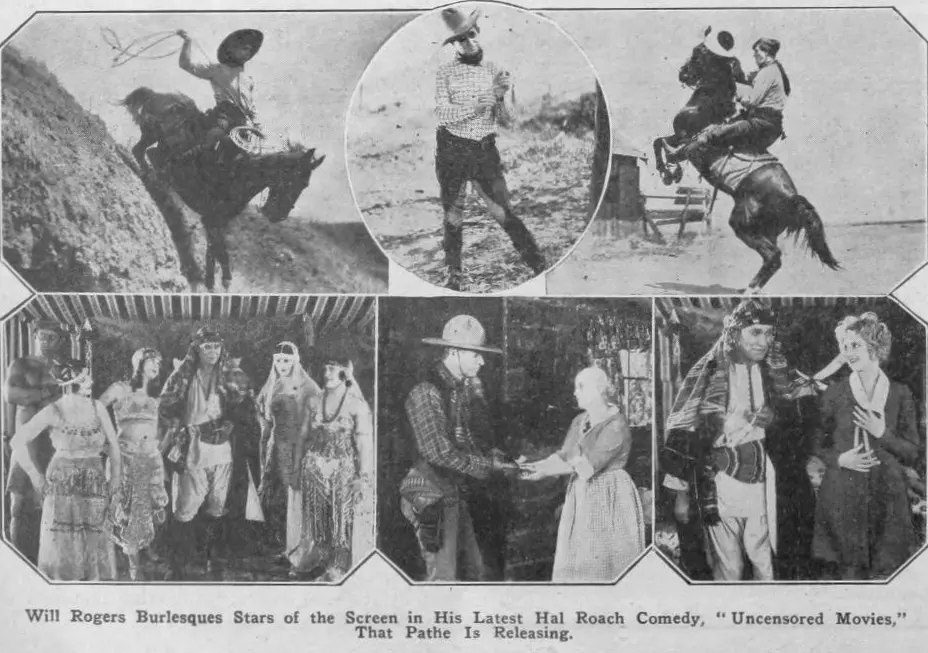
The film's exploration of hypocrisy is particularly poignant. It's easy to imagine the townsfolk, initially aghast at the 'uncensored' content, slowly revealing their own hidden desires or double standards. The reformer himself might not be entirely immune to the allure of what he condemns. This human element, the idea that no one is entirely pure or entirely corrupt, adds a layer of depth to what could otherwise be a simplistic morality tale. It forces the audience to question not just the content being displayed, but the motivations and reactions of those who are viewing it. This introspection is a hallmark of truly insightful social satire, compelling viewers to look inward as much as outward. The film might even subtly hint at the idea that the very act of censoring or condemning something often serves to make it more appealing, a forbidden fruit phenomenon.
In a modern context, Uncensored Movies resonates powerfully in an era dominated by social media and constant digital exposure. The debates over content regulation, 'fake news,' and the impact of media on public morals continue unabated. The film reminds us that the fundamental questions about what we consume, who dictates what is 'appropriate,' and how we react to challenging content are timeless. Will Rogers' reformer, armed with his 'results,' is a precursor to today's influencers and commentators, albeit operating on a different technological platform. The small town's reaction mirrors the polarized responses we often see online when controversial content is shared. The film, therefore, acts as a historical mirror, reflecting our own ongoing struggles with media literacy and societal judgment.
The film also subtly critiques the very notion of 'reform' itself. Is the reformer truly seeking to improve society, or is he inadvertently creating a spectacle, sensationalizing the very things he claims to despise? The public display of 'uncensored' material, even with the best intentions, can have unintended consequences, stirring curiosity rather than condemnation. This ambiguity adds another layer of complexity to the narrative, preventing it from being a straightforward moralizing tale. It’s a film that asks more questions than it answers, which is often the mark of enduring art. This questioning of authority and intent can also be observed in narratives like The Man Tamer, where control and influence are central themes.
Ultimately, Uncensored Movies is more than just a historical curiosity; it is a vibrant, intelligent piece of filmmaking that uses humor and satire to dissect complex societal issues. It's a testament to the collaborative genius of Hal Roach and H.M. Walker, and the enduring appeal of Will Rogers. It invites us to laugh, but also to reflect on our own moral compasses, our reactions to the 'uncensored' world around us, and the ever-present tension between individual expression and communal standards. The film's daring premise and its thoughtful execution ensure its place as a significant, albeit often overlooked, work in the silent film canon. It's a reminder that even in the earliest days of cinema, filmmakers were engaging with profound questions about the nature of art, morality, and society, often with a wit and sophistication that rivals anything produced today. Its enduring relevance is a testament to the timeless nature of its themes, making it a film ripe for rediscovery and re-evaluation in our own 'uncensored' age. Just as films like The Dancing Girl explored societal roles and expectations, Uncensored Movies delves into the very fabric of public perception and moral judgment.
The creative team, under the guidance of Hal Roach, managed to craft a narrative that, while rooted in a specific historical moment, speaks to universal human tendencies. The desire to expose, to condemn, and simultaneously to be titillated by forbidden sights, is a cycle that has repeated itself throughout history. The film’s brilliance lies in its ability to capture this cyclical nature with such clarity and comedic grace. The choice of a small town as the setting for the grand reveal amplifies the drama, contrasting the perceived innocence of rural life with the 'corrupting' influences from the metropolitan centers. This dynamic tension is a classic narrative device, effectively deployed here to maximize both humor and social commentary. It’s a masterful piece of cinematic craftsmanship that leverages the strengths of the silent medium to deliver a message that remains remarkably resonant.
In many ways, Uncensored Movies prefigures later discussions about the impact of media on culture. It asks whether exposing perceived evils truly eradicates them, or merely brings them into sharper focus, sometimes even glamorizing them in the process. The film doesn't offer easy answers, but rather presents the scenario and allows the audience to draw their own conclusions, a sophisticated approach for its time. It encourages critical thinking about the nature of 'truth' as presented through a lens, and the often-subjective interpretation of morality. This introspective quality elevates it beyond simple entertainment, positioning it as a significant cultural artifact. It stands alongside other films that challenged contemporary thought, much like the audacious ambition seen in The Triumph of an Emperor, albeit through a different lens of societal critique. The enduring power of such narratives lies in their capacity to provoke thought long after their initial release.
The performances, particularly Will Rogers', are a masterclass in silent film acting. Rogers, with his iconic rope tricks and understated delivery, brought a grounded realism to his characters that often contrasted sharply with the more theatrical styles prevalent in early cinema. In Uncensored Movies, his portrayal of the reformer is imbued with a certain everyman quality, making his journey and his 'discoveries' all the more relatable. He is not a caricature, but a complex individual grappling with genuine concerns, even if his methods are somewhat flamboyant. This nuanced characterization prevents the film from becoming a one-note satire, instead allowing for a richer exploration of its themes. The other actors too, contribute to this authenticity, creating a believable community that reacts with a range of human emotions, from curiosity to indignation, illustrating the collective human experience when confronted with the unknown or the perceived taboo. This communal reaction is a powerful element, demonstrating how shared experiences, even those of shock or scandal, can unite or divide a community, much like the dramatic events depicted in Destiny's Toy or The Trail to Yesterday.
The humor in the film is not merely for laughs; it serves a crucial purpose in disarming the audience and making them more receptive to the underlying critique. By presenting potentially controversial material through a comedic lens, Roach and Walker managed to sidestep outright condemnation and instead invite reflection. This is the hallmark of effective satire: to entertain while simultaneously challenging preconceptions. The film doesn't preach; it nudges. It doesn't dictate; it provokes thought. This sophisticated approach ensures its continued relevance, proving that a well-crafted comedic narrative can be just as, if not more, impactful than a purely dramatic one. The balance between levity and gravitas is meticulously maintained, allowing the film to explore its serious themes without becoming overly didactic. It’s a delicate dance, and one that Uncensored Movies executes with remarkable dexterity, offering a unique blend of amusement and social critique that endures to this day, much like the enduring comedic appeal of Gas or the dramatic tension of Peril of the Plains.
In conclusion, Uncensored Movies is a compelling cinematic artifact that offers a window into the moral and cultural anxieties of early 20th-century America. Its satirical take on censorship, hypocrisy, and the burgeoning power of media remains remarkably pertinent. Through the folksy charm of Will Rogers and the astute direction of Hal Roach, the film navigates complex themes with wit and intelligence, challenging its audience to look beyond surface-level judgments. It's a reminder that the debates surrounding content and morality are as old as the media itself, and that sometimes, the most 'uncensored' revelations are not found on screen, but in the reactions of those who watch. This film is a must-see for anyone interested in the history of cinema, social commentary, or the timeless dance between art and societal expectations.
IMDb 6.6
1933
Community
Log in to comment.