DbcultAccessing Vault...
5.6/10
Senior Film Conservator
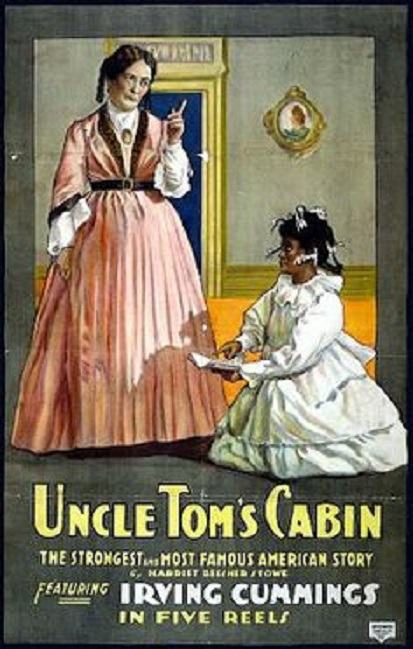
A definitive 5.6/10 rating for a film that redefined the boundaries of cult cinema. Uncle Tom's Cabin remains a cornerstone of transgressive art.
The cinematography of Uncle Tom's Cabin betrays its modest budget with a daring use of contrast. Shadows are not merely absence of light; they become narrative agents, swallowing the faces of Legree’s overseers while illuminating Tom’s serene countenance. The camera lingers on the rhythmic motion of cotton fields, a visual metaphor for the inexorable march of oppression. When Tom is chained to the furnace, the frame tightens, the grain of the film accentuating the harshness of the iron, a tactile reminder of the physicality absent from the novel’s prose.
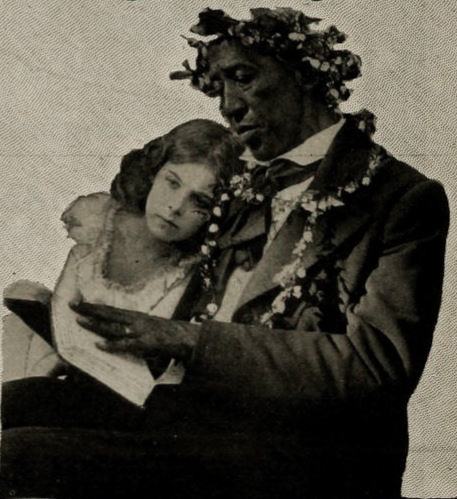
Sam Lucas, a veteran of stage minstrelsy, delivers a performance that transcends the era’s stereotypical caricature. His gestures are measured, each hand movement a sermon on humility and endurance. Irvin Willat’s portrayal of St. Clare oscillates between paternal benevolence and the paternalistic condescension that the source material critiques. Walter Hitchcock, as Legree, embodies a monstrous charisma; his eyes, narrowed in perpetual fury, convey a cruelty that words could never fully articulate.
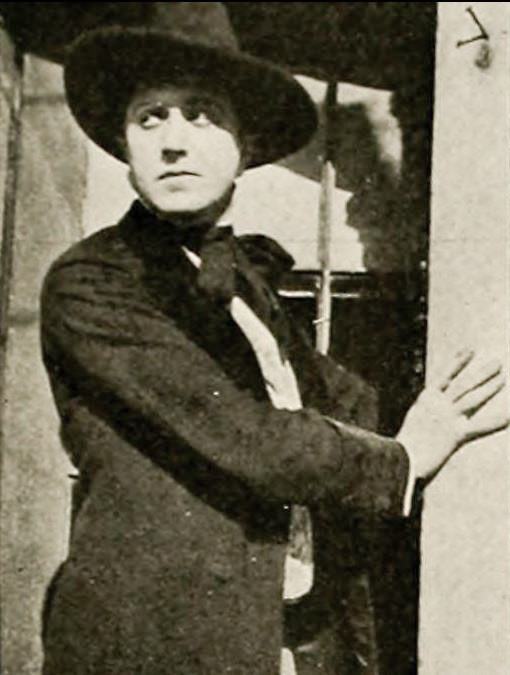
The screenplay, distilled by George L. Aiken and Edward McWade, condenses Stowe’s sprawling narrative into a six‑reel structure without sacrificing emotional resonance. Notably, the film omits the novel’s overt religious didacticism, opting instead for visual allegory. The intertitles, sparse yet potent, echo the novel’s moral urgency while allowing the images to speak. The decision to foreground Eliza’s escape—a sequence reminiscent of the daring chase in From the Manger to the Cross—injects kinetic energy, balancing the static oppression of plantation life.
Comparisons to contemporary epics such as Les Misérables are inevitable. Both films grapple with systemic injustice through a singular, morally upright protagonist. Yet where Les Misérables employs melodramatic music (albeit absent in the silent format) to amplify Jean Valjean’s redemption, Uncle Tom's Cabin leans on visual symbolism: the recurring motif of a cracked crucifix, the flickering lantern that follows Tom, and the ever‑present river that serves as both barrier and conduit to freedom.
Released in the shadow of World War I, the film resonated with audiences confronting the dissonance between American ideals and racial realities. Its portrayal of Tom as a Christ‑like martyr dovetailed with the era’s fascination with religious iconography, evident in contemporaneous productions like The Life and Passion of Christ. However, modern scholars critique the film’s reliance on paternalistic tropes, arguing that it inadvertently reinforces the very hierarchies it purports to condemn.
Contemporary reviews praised the film’s emotional potency, yet some noted its “simplified” treatment of complex racial dynamics. Over the ensuing decades, the film has been re‑evaluated as a cultural artifact, illuminating early 20th‑century attitudes toward slavery and Black representation on screen. Its influence can be traced to later adaptations, including the 1927 version starring James B. Smith, which expanded upon the silent film’s visual lexicon.
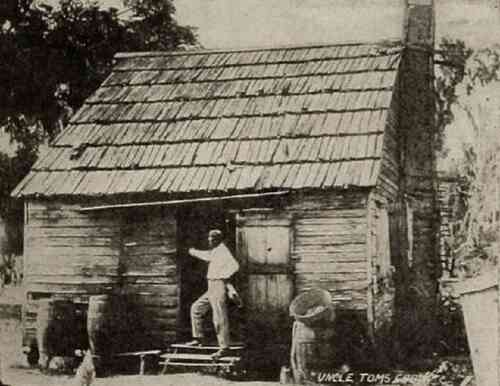
The editing, though rudimentary by modern standards, demonstrates an intuitive grasp of pacing. Cross‑cutting between Tom’s suffering and the burgeoning abolitionist movement in the North creates a narrative tension that anticipates later montage techniques. The film’s set design, particularly the opulent yet decaying Legree mansion, reflects the moral decay of the slave‑holding aristocracy.
While the original prints were silent, theaters often employed live piano accompaniment. Surviving cue sheets suggest a score interlaced with spirituals and somber hymns, echoing the film’s thematic dichotomy. Modern restorations sometimes pair the footage with reconstructed scores, allowing contemporary audiences to experience the intended emotional cadence.

When juxtaposed with Oliver Twist, another literary adaptation of the era, Uncle Tom's Cabin shares a focus on societal outcasts but diverges in its treatment of agency. Oliver’s journey is marked by personal cunning, whereas Tom’s agency is expressed through spiritual surrender. This contrast highlights differing narrative philosophies: one champions individual ingenuity, the other elevates collective moral responsibility.
The film also shares a visual austerity with the documentary‑style epic Glacier National Park, where the landscape itself becomes a character. In Uncle Tom's Cabin, the Mississippi River assumes a similar role, a fluid boundary between bondage and liberty, its surface shimmering with the promise of emancipation.
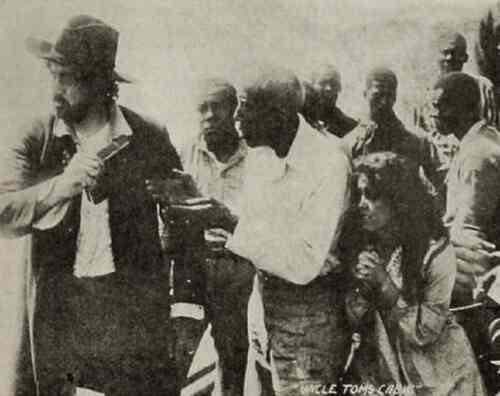
Female characters such as Eva (Marie Eline) and Cassy (Teresa Michelena) embody divergent archetypes: the innocent angel and the hardened survivor. Their interactions with Tom illuminate the film’s nuanced approach to gender within the slave narrative, a subtlety absent in many contemporaneous productions like The Corbett-Fitzsimmons Fight, which prioritize masculine spectacle over relational depth.
In an era of renewed discourse on racial representation, Uncle Tom's Cabin serves as a pedagogical tool. Its visual rhetoric invites analysis of early cinematic strategies for portraying oppression, while its shortcomings prompt critical dialogue about the evolution of Black agency in film. Film scholars often reference the work in discussions of “race films” and the transition from minstrel stereotypes to more authentic portrayals.
Only fragmented reels survive in the Library of Congress, prompting ongoing restoration initiatives. Digital archivists employ frame‑by‑frame interpolation to reconstruct missing sequences, a process that underscores the film’s enduring scholarly value.
“A silent hymn to suffering and hope, rendered in stark chiaroscuro.” The 1914 adaptation of Uncle Tom's Cabin remains a cornerstone of silent cinema, marrying narrative fidelity with visual innovation. Its legacy endures not merely as a historical curiosity but as a testament to the power of film to distill complex social commentary into a universal language of image and gesture.
IMDb 5.5
1915
Community
Log in to comment.