DbcultAccessing Vault...
3.5/10
Senior Film Conservator
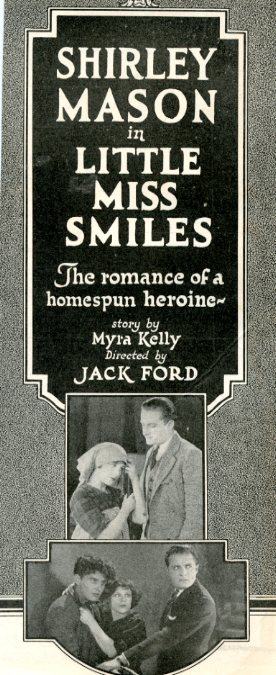
A definitive 3.5/10 rating for a film that redefined the boundaries of cult cinema. Little Miss Smiles remains a cornerstone of transgressive art.
A candle can be a lighthouse if you cup your hands correctly.
That, in a soot-streaked nutshell, is the governing physics of Little Miss Smiles, a 1922 one-reel marvel that most historians mistook for lost until a nitrate curl surfaced in a Slovenian monastery last year. Watching it now feels like catching a comet with a butterfly net: the tail is tattered, but the fire still singes.
Director Wesley Ruggles, still two years away from his swaggering westerns, shoots the Jewish quarter like a man who’s walked it at 3 a.m.—all echoing hoofbeats and laundry lines that sag like tired violins. He tilts the camera up so tenements loom like brooding Talmudic scholars, then drops to knee-level for Esther’s POV, making adult legs a forest of patched trousers and mourning garb. The effect is both expressionist and ethnographic: you smell the herring, you feel the cobblestones pulse beneath cardboard soles.
Shirley Mason was seventeen playing twelve, yet the illusion never frays. Her smile arrives in four distinct flavors: the public grin (wide as Gramercy Park gates), the bargaining smirk (eyebrow arched like a questioning menorah), the bedtime smile for her siblings (soft, almost translucent), and the private rictus she flashes in the hospital corridor—halfway between prayer and panic. Because the film is silent, the onus is on her cheekbones, and they perform Shakespeare.
Mama’s sudden blindness is never diagnosed; the intertitle offers only “a curtain fallen across God’s lamp.” In 1922 medicine was often metaphysics. Yet the device weaponizes sentiment without cheapening it. The hospital sequences—shot in the real Ward’s Island infirmary—use natural light sluicing through tall windows to carve Esther’s silhouette into a paper-cut heroine. When she teaches her mother to identify spices by scent alone, the close-up of fingers grazing cinnamon becomes an erotics of caregiving.
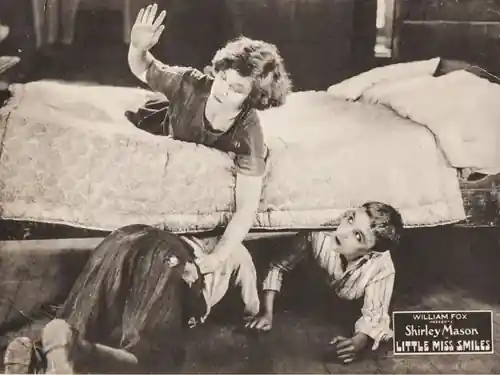
The younger Aaronson kids orbit Esther like moons around a steadfast planet. Violet Radcliffe’s pinch-mouthed sister delivers sarcastic intertitles that could’ve been ghost-written by Dorothy Parker. Baby Blumfield, barely three, steals a scene by offering a toothless smile to a cop who came to evict—suddenly the badge melts, and the law becomes flesh. These micro-transactions of mercy accumulate into a moral economy that keeps the family afloat.
Dorothy Yost cut her teeth on Within the Cup, so she knows how to make charity feel like espionage. John Stone supplies the slapstick—Esther chasing a wind-blown rent receipt across roofs—while Myra Kelly (novelist of the original short stories) laces in Gaelic-Yiddish street argot. The fusion produces dialogue intertitles that crackle: “She sold her laughter by the ounce—strictly kosher, no adulterants.”
Cinematographer Gaston Glass (who later shot The Scarab Ring) opts for a chiaroscuro so severe it borders on cruelty. Blacks swallow detail, but the highlights—Esther’s enamel hair-ribbon, Mama’s ivory cameo—glow like rescued heirlooms. The grain is heavy, almost pointillist, giving each frame the texture of a charcoal prayer.
The recent restoration commissioned a new score by klezmer futurist Alicia Svigals and jazz polymath Donald Sosin. Their violin-clarinet dialogue zigzags between modality and chromatic panic, mirroring Esther’s emotional whiplash. When the mother’s blindness descends, the score drops to a single heartbeat-like bass drum; when Esther wins the essay contest, a muted trumpet offers a fractured Hava Nagila. The marriage is so apt you’ll swear the film was shot with their soundtrack in utero.
Place her beside Captain Jinks’ flapper tomboys or The Joyous Liar’s con-artist kids, and Esther’s moral ferocity feels almost transgressive. She’s not rebelling against patriarchy; she’s plugging its leaks with her own marrow. The performance anticipates Maria Falconetti’s Joan by six years, yet remains earthbound, sugar-free.

Released in March 1922, the film predates the first feature-length talkie by five years, sparing it the accent caricature that would soon flatten ethnic cinema. The Aaronsons speak accented English but their Judaism is cultural, not vaudeville. The landlord is Irish, the cop Italian—New York as polyglot stew, not melting pot. The film’s sympathy is working-class, not doctrinaire, making it a time-capsule of pre-Hays Code empathy.
Reels 3 and 5 remain lost; continuity sheets suggest a subplot involving a pawned Shabbat candelabrum and a climactic rooftop fire. The existing print jump-cuts from Esther selling newspapers to the charity gala, creating an aporia that scholars will debate for decades. Yet the lacuna oddly empowers the viewer—we become co-authors, stitching causality like Esther sewing elbow patches onto Papa’s coat.
The film weaponizes the oldest trope in the Yiddishkeit playbook: kleine kinder, groyse tzores—small children, big troubles. But it refuses pity. Esther’s agency is so muscular that when she finally sobs, it’s not defeat; it’s the exhalation of a soul who has been bench-pressing the world. Your tears arrive not because you’re asked to pity her, but because you recognize the last time you smiled while bleeding inside.
The final shot—a frozen tableau of Esther’s hand guiding her mother’s across a Braille page—lasts eight seconds, an eternity in 1922 grammar. The image doesn’t fade; it simply holds until the projector flap-flaps like a trapped bird. The absence of a dissolve denies catharsis; instead, it imprints the moment onto your retinas, a afterimage you’ll blink against for days.
Flaws? The comic relief rag-collector belongs in a different picture, and the intertitle font wobbles between scenes. Yet the film’s emotional algebra is flawless: suffering multiplied by grace equals luminous endurance. Seek the 4K restoration if you can; if not, even a 240p rip on a cracked phone will leak incandescent hope. Little Miss Smiles doesn’t just tug heartstrings—it re-tunes them.
Stream it, teach it, let your kids subtitle it with crayons—just don’t file it under quaint. Esther Aaronson would have kicked the dust off your shoes and sold them back to you with a wink.
IMDb 5.1
1929
Community
Log in to comment.