DbcultAccessing Vault...
4.8/10
Senior Film Conservator
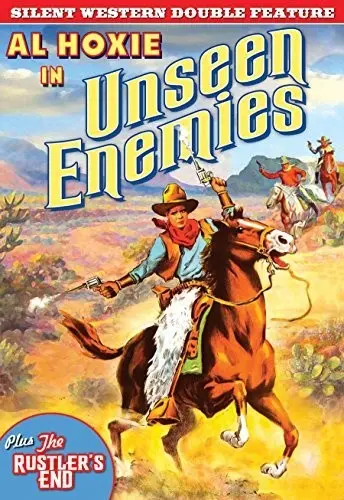
A definitive 4.8/10 rating for a film that redefined the boundaries of cult cinema. Unseen Enemies remains a cornerstone of transgressive art.
Is Unseen Enemies worth watching today? The short answer is yes, but with significant caveats that demand a specific type of viewer. This 1917 silent western is a fascinating historical artifact best suited for dedicated film historians, silent era enthusiasts, and those curious about the nascent stages of genre filmmaking. It is decidedly not for casual moviegoers seeking modern pacing, sophisticated character arcs, or high production values.
At its core, Unseen Enemies is a testament to early cinematic ambition, a film that attempts to weave a surprisingly intricate plot within the constraints of its time. It’s a relic, yes, but one that still sparks conversation about the evolution of storytelling on screen. You don't just watch it; you study it.
This film works because its central narrative twist, while perhaps telegraphed to modern sensibilities, was remarkably clever for its era, offering a satisfying payoff to the slow-burn setup. It subverts expectations in a way that feels surprisingly modern.
This film fails because its execution is often hampered by the limitations of early silent cinema, particularly in its uneven pacing, broad characterizations, and a reliance on melodramatic gestures over nuanced performance.
You should watch it if you possess a genuine curiosity for the origins of the Western genre and appreciate the historical context of a film that helped define early cinematic tropes, even with all its rough edges.
The plot of Unseen Enemies, penned by an uncredited writer, demonstrates a surprising degree of narrative sophistication for a film released in 1917. What begins as a seemingly straightforward tale of villainy and guardianship quickly evolves into something more layered. The premise — a valuable ranch and two orphaned boys falling into the clutches of a nefarious dope smuggler, Bingo Strook, aided by a duplicitous housekeeper, Laura — establishes a clear conflict.
The introduction of 'Happened-Along' Meredith and 'Doughnut' Casey feels initially like a typical Western trope: the wandering good Samaritans. Their casual, almost comedic dismissal from the ranch by Laura sets a tone that belies the darker machinations at play. It's a moment that, in retrospect, underscores the insidious nature of the 'unseen' threat, even though the audience is privy to the villains' identities from the outset. This raises an interesting point: the title 'Unseen Enemies' is almost a misnomer, as the antagonists are quite visible. Perhaps the true 'unseen enemy' is the audience's own modern expectation of cinematic subtlety, or the unseen corruption festering beneath a seemingly peaceful frontier facade.
The 'happen-along' aspect of Meredith and Casey’s journey is pushed to its extreme with the rescue of Doris Davenport. Her dramatic fall from a motor-stage is a classic silent film contrivance, a moment designed to thrust the hero into action. Meredith’s immediate, chivalrous response, securing horses and a buckboard, is the kind of swift, uncomplicated heroism that defined early Westerns. It’s effective, if a little too convenient, serving its purpose to bring Doris and Meredith into direct conflict with Strook.
Strook’s reaction to Doris’s arrival, and Meredith’s presence, is entirely predictable, yet it sets the stage for the film’s most compelling narrative maneuver. The decision to frame Meredith for dope smuggling, leveraging the arrival of the Texas Rangers, is a genuinely clever twist. It creates immediate tension and places the protagonist in dire peril. The film builds this sequence well, leading the audience to believe Meredith is truly caught in Strook's web.
The ultimate reveal, that Meredith is, in fact, Ranger Captain Halliday, the very man the Rangers were expecting, is the film’s undeniable highlight. It’s a moment of satisfying narrative reversal, a trope that would be refined and reused countless times in subsequent decades. For 1917, this level of plot intricacy, moving beyond simple chase scenes and clear-cut good-versus-evil, is commendable. It suggests a budding understanding of how to manipulate audience expectations and deliver a impactful resolution. This twist elevates Unseen Enemies beyond many of its contemporaries, like the more straightforward adventure of Garrison's Finish or the simpler comedic stylings of Bobby Bumps and the Hypnotic Eye.
The acting in Unseen Enemies is very much a product of its time. Silent film performances relied heavily on exaggerated gestures, facial expressions, and body language to convey emotion and intent, in the absence of spoken dialogue. This can often feel over-the-top or even comical to modern viewers accustomed to more naturalistic acting styles. However, within its historical context, these performances were vital for storytelling.
Bud Gildebrand, as 'Happened-Along' Meredith/Captain Halliday, embodies the archetypal Western hero. His portrayal is stoic when necessary, swift in action, and righteous in his ultimate reveal. There's a certain charm in his understated confidence, even if it's delivered through broad smiles and resolute stances. When he finally displays his badge, the shift in his demeanor, though subtle by today’s standards, is palpable. It’s a performance built on presence rather than psychological depth.
Clayton Gildebrand, presumably Bud’s brother, as 'Doughnut' Casey, provides the comic relief, a common foil for the more serious hero. His role is less about driving the plot and more about adding a lighter touch, a necessary balance in a melodrama. The dynamic between the two Gildebrands hints at a familiar buddy-system that would become a staple of the genre.
Claire Anderson as Doris Davenport is, tragically, quite underutilized. She functions primarily as a plot device, a damsel in distress whose arrival precipitates the heightened conflict. While she performs the required fainting and expressions of gratitude, the character lacks agency or any significant emotional arc. This is a common failing of early cinema, where female characters often served to advance the male hero's narrative rather than possessing their own. One could argue that even in films like Over the Hill, released later, female characters, while central, still operate within very defined, often restrictive, societal roles.
Mack V. Wright’s 'Bingo' Strook is the quintessential silent film villain. His scowls, furtive glances, and menacing posture leave no doubt as to his nefarious intentions. He is pure evil, uncomplicated and direct. While effective for the period, this lack of nuance means he never truly feels like a credible 'unseen enemy,' but rather a transparent, mustache-twirling antagonist. His accomplice, Laura, played by Catherine Craig, similarly relies on clear visual cues to convey her duplicity. Her expressions of feigned innocence and quick shifts to conniving glances are standard fare for the era.
Overall, the cast delivers performances that align with the dramatic conventions of 1917. They are not subtle, but they are clear. For those studying early acting techniques, there’s plenty to observe in the physicality and exaggerated emotional displays that were necessary to communicate without dialogue. It's a style that feels distant, almost theatrical, yet undeniably foundational to what would come next.
The cinematography in Unseen Enemies, while rudimentary by today’s standards, effectively captures the rugged appeal of the Western landscape. The use of natural light is prevalent, lending an authentic, if sometimes stark, quality to the outdoor scenes. Wide shots are employed to establish the vastness of the ranch and the open plains, a visual language that would become synonymous with the Western genre. These wide vistas are often beautiful in their simplicity, grounding the narrative in a tangible, expansive world.
However, the camera work often feels static. There's a noticeable lack of dynamic movement or complex shot composition. Most scenes are framed from a fixed perspective, with characters entering and exiting the frame. This can contribute to the feeling of a staged play rather than a fluid cinematic experience. Close-ups are sparse, if present at all, which further emphasizes the broad, gestural acting style and prevents deeper audience connection to individual characters’ emotional states.
The direction, likely overseen by the uncredited creative force behind the film, is functional. It prioritizes clarity of action and plot progression over artistic flourish. Scenes are blocked simply, ensuring that the audience understands who is doing what, and why. For instance, the scene where Laura drives Meredith and Casey away from the ranch is shot plainly, emphasizing her authority and their reluctant departure. There’s no ambiguity, which was crucial for silent film audiences.
The rescue sequence of Doris from the motor-stage, while melodramatic, is directed with a clear sense of urgency. The actions are straightforward, and the visual storytelling is easy to follow. Similarly, the setup of Strook’s trap, with the planting of the dope, is depicted with stark clarity, leaving no doubt about his villainy. It’s effective. But it’s flawed.
Compared to the more ambitious visual storytelling that would emerge even a few years later in films like D.W. Griffith's works, Unseen Enemies feels like a foundational text. It’s a film that understands the basics of visual narrative but hasn't yet begun to experiment with the full expressive potential of the camera. It’s a snapshot of a cinema finding its feet, content to tell its story competently rather than innovatively. This is a common trait for many films of the era, including others like The Doom of Darkness, which also focused on straightforward narrative delivery.
The pacing of Unseen Enemies is perhaps its most challenging aspect for contemporary viewers. It moves at a deliberate, often slow, rhythm that demands patience. The early exposition, establishing Strook’s control and the initial encounters, takes its time. There are long stretches, such as Meredith and Doris’s journey to the ranch, that, while visually appealing in their depiction of the landscape, contribute to a sense of narrative languor.
This slower pace was common in early silent films, which often mimicked the theatrical pacing of stage plays. The film relies on intertitles to convey dialogue and exposition, which inherently breaks the flow of action. While the plot itself is quite busy, the way it unfolds on screen can feel stretched. Modern audiences, accustomed to rapid-fire editing and constant visual stimulation, will find this a significant hurdle. There are bursts of action, such as the motor-stage accident, but these are punctuated by longer, more static scenes.
The tone of Unseen Enemies is firmly rooted in melodrama and adventure. There’s a clear moral compass guiding the narrative: good triumphs over evil, and justice is served. The villains are unequivocally bad, and the heroes are unequivocally good. This stark dichotomy is characteristic of early genre filmmaking, where moral ambiguity was rarely explored. The film aims to entertain and provide a clear, satisfying resolution, rather than delve into complex psychological landscapes.
Moments of lightheartedness, primarily through the character of 'Doughnut' Casey, provide some relief from the dramatic tension. However, the overarching tone remains earnest and serious in its depiction of the stakes. The tension surrounding Meredith’s impending arrest, for instance, is played straight, creating genuine suspense for the audience of its time. It’s a film that takes its narrative seriously, even if the methods of conveying that narrative now seem quaint.
Ultimately, the pacing and tone are deeply intertwined with the film’s historical context. To appreciate Unseen Enemies, one must adopt a different viewing sensibility, one that allows for a slower absorption of the story and an appreciation for the dramatic conventions of a bygone era. It’s not just a film; it’s a time capsule. This is especially true when comparing it to other works of the period, like The Valiants of Virginia, which also prioritizes clear, if slow, storytelling.
For the average moviegoer, Unseen Enemies is probably not worth watching today. Its slow pace, dated acting, and simplistic production values will likely prove challenging. It lacks the immediate engagement of modern cinema.
However, for specific audiences, it holds significant value. Film students, historians, and silent film enthusiasts will find it an intriguing piece. It showcases early Western tropes and a surprisingly clever plot twist.
It's a valuable historical document, offering insight into early cinematic storytelling. It helps us understand how the Western genre began to take shape. It’s a foundational film, not a groundbreaking one. Its worth is more academic than purely entertaining.
If you are willing to approach it with an open mind and an appreciation for historical context, then yes, it offers a unique viewing experience. It's a window into the past, with all its charm and limitations. Don't expect a thrilling ride, but rather a reflective journey.
Unseen Enemies is not a film for everyone, nor does it pretend to be. It is a product of its time, a fascinating artifact from the nascent years of Hollywood, showcasing the raw, foundational elements that would eventually define an entire genre. Its narrative, particularly the clever reveal of the protagonist's true identity, demonstrates a budding sophistication in storytelling that belies its early production date. This twist alone makes it a worthwhile study for anyone interested in the evolution of cinematic narrative.
However, its adherence to silent film conventions — the deliberate pacing, the theatrical acting, and the straightforward direction — will undoubtedly challenge audiences accustomed to the relentless pace and psychological depth of modern cinema. It demands a different kind of viewership, one rooted in historical appreciation rather than pure entertainment. It’s less a thrill ride and more a guided tour through cinema’s past.
For film historians, students of the Western, or dedicated silent film enthusiasts, Unseen Enemies offers genuine value. It’s a key piece in understanding the trajectory of the genre and the craft of early filmmaking. For the casual viewer, however, it might feel like a dusty relic, more curio than captivating experience. Approach it with patience and a scholarly eye, and you’ll find its quiet virtues. Ignore its age, and you’ll likely find it wanting. My stance is clear: its historical significance and a surprisingly sharp plot twist make it a film worth experiencing, provided you adjust your expectations accordingly. It's a foundational text, not a forgotten masterpiece. It’s a good example of early Westerns, a stepping stone rather than a peak like Why Worry? would become in comedy years later, or the dramatic intensity found in Christus.
IMDb —
1922
Community
Log in to comment.