DbcultAccessing Vault...
Cult Review
Senior Film Conservator
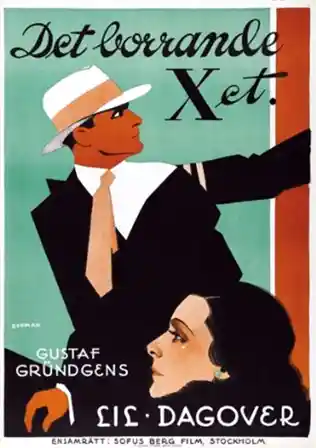
Alright, so we’re talking Va Banque from 1930. This one's definitely for the movie buffs, the folks who really dig into early sound cinema, especially German talkies. If you’re usually all about modern blockbusters or even just perfectly paced dramas from the 50s, this might feel a bit like wading through treacle. But for those of us who appreciate a film for what it *is* rather than what it *could* be by today's standards, there’s some real charm here. Think of it as a time capsule, a fascinating little peek into how movies found their voice. Others? You might find it a bit slow, a bit… *much* sometimes. And that’s okay too. 🤷♀️
The whole thing centers around a casino, a real den of high rollers and hushed whispers. You get the feeling everyone there is just one bad hand away from ruin. It's that kind of atmosphere, you know?
Lil Dagover, she plays this character caught in the middle of it all. There’s a scene where she’s at the roulette table, just watching the wheel spin, and her face… it tells a whole story without a single word. You can see the desperation, the hope, all in those quick glances. It really *lands*.
Then you have Gustaf Gründgens. He’s just magnetic, even with the slightly stiff delivery that was common in early talkies. His character feels like he owns the room, always a step ahead. There's a moment when he smiles, but it doesn't quite reach his eyes, and it makes you instantly distrust him. A really nice touch there.
The sound quality, well, it’s 1930. So, don't expect crystal clear audio. Sometimes the dialogue sounds a bit echo-y, like they’re shouting in a cave. But it’s part of the experience, isn’t it? You learn to lean in a little, to forgive the imperfections.
And those musical numbers! The Admirals Harmonists show up. It’s a barbershop quartet kind of vibe, very much of its time. They just pop up, sing a song, and then the plot continues. It feels a little jarring, like someone suddenly hit the musical interlude button, but also kind of sweet. It's like the film is saying, 'Hey, we can do sound now, so let's use it for EVERYTHING!'
There's a scene near the end, a confrontation between Dagover and Gründgens, and the camera just *holds* on their faces for what feels like an eternity. It’s maybe 10 seconds too long, and you start to wonder if someone forgot to yell 'cut!' But then, you realize it lets the tension really build, letting you see every flicker of emotion. It’s actually quite effective, even if it feels a little *awkward* at first.
The pacing is… interesting. It can drag in parts, especially during some of the exposition dumps where characters explain things that probably could've been shown. But then it suddenly zips along, almost too fast, skipping over what feel like important emotional beats. It’s not always smooth, but it keeps you on your toes, I guess. You’re never quite sure what to expect next.
One small thing I noticed: the background extras in the casino scenes. Half of them look genuinely engaged in their fake gambling, and the other half look like they just wandered onto set from the street and aren't quite sure what to do. It gives the whole thing this oddly *real* but also *staged* feeling, all at once. Like, you can tell they're figuring things out as they go along.
Is it a perfect film? Absolutely not. It’s a product of its time, full of the quirks and charms of early sound experiments. But it’s got heart, and some truly **powerful** performances from its leads. If you're into the history of film, or just curious about what movies were like when sound was still a brand new toy, give Va Banque a watch. It's a gamble, but one that might just pay off for you. 🎲
IMDb 5.5
1921
Community
Log in to comment.