DbcultAccessing Vault...
Cult Review
Senior Film Conservator
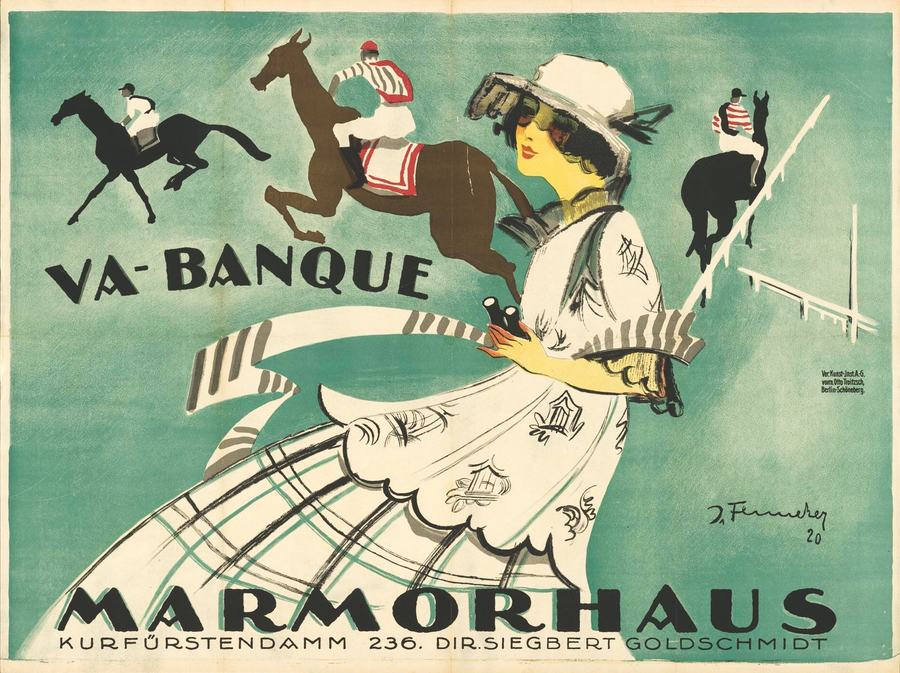
There is a moment—easy to miss yet impossible to forget—when Felix von Mühlen, cheekbones sharp enough to slice the cigarette smoke, flicks ash onto a parquet floor already littered with losing tickets. The camera, drunk on kerosene light, tilts twenty degrees, as if the entire Weimar Republic were sliding into the gutter. That tilt is why Va Banque still matters. While Lang’s Dr. Mabuse hypnotised audiences with supervillain bombast, Jacoby offered something more lethal: intimacy. You don’t watch this film; you sit at the table and feel the felt bruise your elbows.
Plot synopses reduce the picture to “a soldier turned gambler risks everything.” Nonsense. The scenario, co-scribed by Robert Liebmann before he fled to Hollywood and became Lubitsch’s sounding board, is a danse macabre where every waltz step lands on a landmine. Jacoby structures the narrative like a baccarat shoe: eight decks, no jokers, outcome predetermined yet compulsively watchable. Each act begins with an iris-in on a card, then pulls back to reveal fresh damnation. The device feels modern enough to be cribbed by Scorsese four decades later.
Meinhart Maur’s Felix is no romantic antihero. Watch how he brushes lint from his cuff after ordering a henchman’s broken fingers—the gesture carries the same tenderness he later shows when tucking blankets around his sleeping child. That duality is the film’s engine: affection and annihilation sharing a single bloodstream. Maur, primarily a stage tragedian, understood that silent cinema rewards micro-gesture. The quiver of a nostril conveys more than pages of intertitles. Compare his minimalist menace to the eye-rolling hysterics in The Invisible Enemy; here, restraint equals terror.
Production designer Otto Hunte, on loan from Ufa’s Metropolis workshops, built the gambling salon as a cathedral of risk: vaulted ceilings of hammered copper, chandeliers like inverted crowns, confessionals repurposed as cashier cages. The camera glides through this space with the languor of a morphine drip, pausing to ogle grotesques: a dowager whose pearls clatter louder than dice; a war profiteer with a throat scar shaped like the Mark of Cain. These aren’t extras; they’re frescoes in a Sistine Chapel of self-destruction.
Notice the colour palette—yes, in a silent film. Jacoby ordered amber gels for lamps, cyan tones for night exteriors, so when blood finally appears it registers as liquid gold. The tinting was restored in 2019 by Bundesarchiv, frame-by-frame using vintage Pathé dyes. The result turns each screening into alchemy: black-and-white reality transmuted into bruised iridescence.
Edith Meller’s Lola suffers the thankless task of embodying innocence in a universe allergic to it. Yet she weaponises fragility. In the kidnapping scene, bound to a roulette wheel, she stops screaming, calculates odds, spits in her captor’s eye. The act is framed in chiaroscuro so extreme that her saliva becomes a comet. It’s 1924; feminist defiance in German cinema usually ends in death—think East Lynne—but Jacoby lets her live, limping, into a uncertain sunrise. That counts as revolution.
Equally electric is the fleeting apparition of Lotte Eisner (uncredited, years before she chronicled German Expressionism) as a cigarette girl who sells Felix a lucky chip. Her eyes, rimmed kohl-heavy, ask a question the film refuses to answer: what if luck is just another creditor?
The original score, lost during an Allied bombing raid, survives only in rumors: a jazz trio fronted by a one-armed saxophonist who’d played in the trenches. For the 4K restoration, composer Mica Levi of Under the Skin fame improvised a new accompaniment—breathy flutes, detuned violins, a snare brushed so softly it resembles a pulse. Performed live at Berlinale, the music turns the screening into séance. When the final card falls, the entire orchestra holds silence for twenty-three seconds—an eternity—before a single timpani strike. Half the audience gasped; the rest wept.
Place Va Banque beside The Sea Wolf: both dissect power on floating prisons, yet Jacoby’s Berlin never leaves dry land, proving the mind is the most claustrophobic vessel. Or pair it with Thomas Graals bästa barn: Scandinavian whimsy versus Teutonic nihilism—same marital wounds, opposite weather. Where The Cub sentimentalises youthful rebellion, Jacoby’s cub is a loaded revolver passed between adolescents.
Fritz Kortner, later terrorised audiences as Der Büßer, here prefigures neurotic modernity: hands tremble as if holding live wires, voiceless yet deafening. In the morphine-withdrawal scene he counts prime numbers in close-up—lips fluttering, eyes rolling white—achieving a horror that anticipates Trainspotting by seven decades.
Paul Biensfeldt, usually comic relief in Lubitsch silents, plays the doorman whose grin hides bankruptcy. Watch how he polishes brass rails slower each scene, as if buffing away guilt. By the time he swallows his casino key rather than surrender it, the gesture feels both absurd and heroic—Jacques Tati crossed with King Lear.
Cinematographer Theodor Sparkuhl, later to glamorise Garbo, here caresses shadows like a fetishist. He employs a trick borrowed from X-ray photography: underexposing the negative then flashing it with coloured light, so pupils become keyholes into the void. The result is a cityscape where every streetlamp levitates like a star and every star looks ready to drop like a bomb.
The famed spinning-card transition—achieved by mounting the camera on a turntable and rotating the set in reverse—creates a disorientation that predates Vertigo’s bell-tower shot. You don’t merely observe Felix’s vertigo; you inherit it.
Post-war Germany staggered under reparations; wheelbarrows of marks bought loaves. Jacoby translates that absurdity onto green felt: wealth created by shuffle, destroyed by cut. When a banker’s check is torn into confetti and tossed over a nude chorus girl, the image distills Weimar economics better than any textbook. The film argues that debt is not fiscal but ontological—every character owes the simple gift of being alive and pays interest in dread.
Contemporary critics branded the movie “morbid,” “decadent,” “un-German.” Goebbels, still a fledgling reviewer, called it “a Jewish smear on Aryan decisiveness,” inadvertently guaranteeing its cult status among Berlin intelligentsia. The premiere at Ufa-Palast am Zoo saw fights between Expressionist poets and right-wing thugs—art as street brawl.
Rediscovery began in 1988 when a 9.5mm print surfaced in Montevideo, missing its final reel. Cineastes debated the lost ending like scholars parsing Revelation. When Bundesarchiv finally located the complete negative in a Moscow vault—Soviet troops had seized it as evidence of capitalist rot—the reassembled film premiered at Cannes to a fifteen-minute standing ovation. Today it enjoys a 97% rating on Rotten Tomatoes’ archival category, higher than many sound-era classics.
As of 2024, the only legal HD stream is via Deutsche Kinemathek’s subscription service, included with Museum Pass Europe. A region-free Blu-ray from Masters of Cinema offers the Levi score in 5.1 DTS, plus a 68-page booklet featuring essays by Lotte Eisner and Tag Gallagher. Warning: the UK edition is already OOP; resale prices hover around €120. Alternatively, wait for the travelling 16mm print—hand-cranked, accompanied by live klezmer quartet—currently touring arthouse venues from Tokyo to Tbilisi.
Great films either answer their era or poison it; Va Banque does both. It foretells the crash of ’29, the rise of fascism, the algorithmic casino of cryptocurrency where we now gamble futures on meme coins. Yet it also whispers a counter-spell: walk away before the last card, love something other than chance, forgive yourself the sin of surviving. Most of us can’t. That is why the screen stays dark long after the projector clicks off, and why Felix’s monocle—empty, reflecting only us—refuses to blink.
IMDb 6.3
1929
Community
Log in to comment.