DbcultAccessing Vault...
3.7/10
Senior Film Conservator
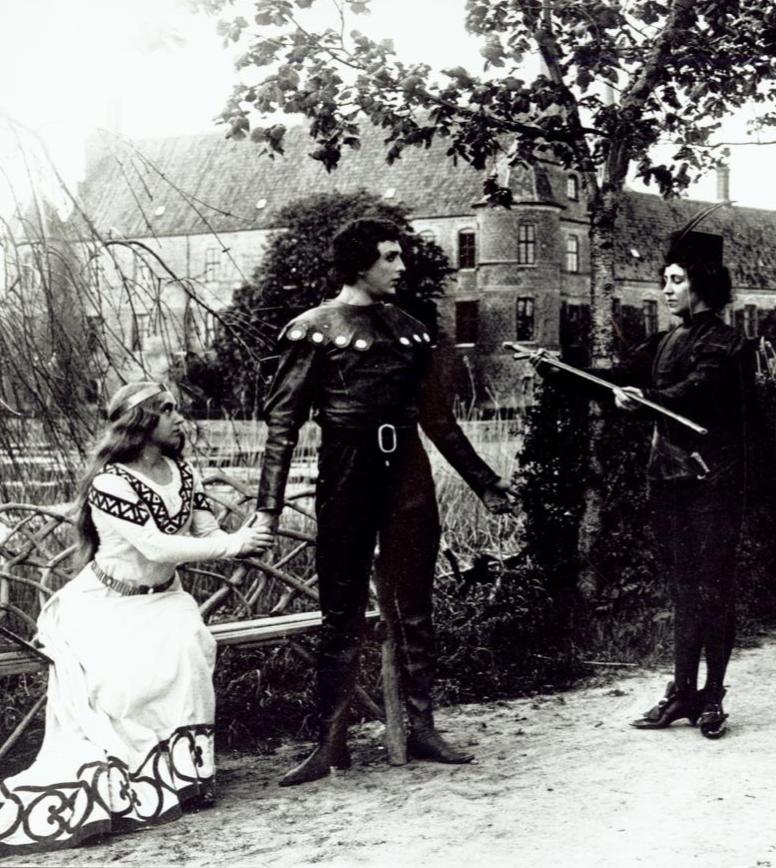
A definitive 3.7/10 rating for a film that redefined the boundaries of cult cinema. Valdemar Sejr remains a cornerstone of transgressive art.
Copenhagen, winter 1910.
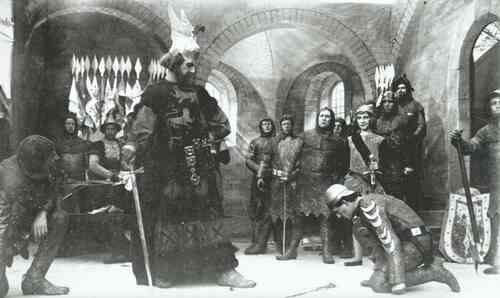
A nation barely thirty years into its own celluloid dreams watches knights ride again across flickering silver. Valdemar Sejr is not merely a costume pageant; it is a civic séance, summoning the thirteenth-century monarch who forged a realm from scattered fjords and stubborn chieftains. Director Gunnar Helsengreen, armed with a shoestring budget and a cathedral’s worth of national longing, compresses decades of skirmish and sacrifice into a breathless twenty-minute reel.
The film’s tinting strategy is its secret heartbeat: Baltic seascapes soaked in arsenic-green suggest rot beneath the waves, while Estonia’s pagan encampments blaze in sulfur-yellow that makes every torch look like a cauterised wound. Intertitles, sparse yet calligraphic, appear as though carved into rune stones. Cinematographer Alfred Cohn (also playing the luckless Karl) favours low horizons, so riders silhouette against a sky that seems to bruise in real time. Depth is conjured not by lavish sets but by staggered horse columns, mist from hidden kettles, and a restless handheld camera that jitters like a war-drum.
Philip Bech’s Valdemar is less a king than a thundercloud in mail; he strides into frame with shoulders that seem to carry the weight of every saga ever sung. Watch his eyes when news of Karl’s capture arrives: the iris-flicker is microcosmic, yet it heralds the storm. Ragnhild Christensen’s Rigmor, confined to the opening reels, communicates ardour through the tremor of a veil rather than grand gestures—her absence later becomes a phantom limb in the narrative. Aage Bjørnbak, as the Estonian chieftain, chews scenery with pagan relish, face painted in woad whorls that echo the spiral clouds overhead.
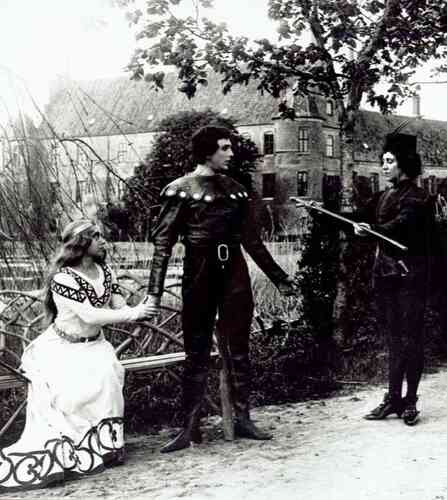
Any historian will carp: the Livonian campaign spanned years, not a single moonlit sortie. Yet Helsengreen’s compression yields mythic torque. Karl’s capture occurs off-screen, relayed by a breathless scout—a Brechtian rupture that forces the audience to imagine atrocity, thereby amplifying dread. The rescue itself escalates from skulking archery to full cavalry chaos in a jump-cut that feels almost Soviet though Eisenstein is still a teenager doodling in Riga notebooks. One moment shields lock, the next Valdemar’s axe arcs overhead, and we are hurled into a montage of flailing limbs, churned mud, and a crucifix bobbing amid heathen shields like a plea adrift.
Modern festival screenings often pair the film with minimalist percussion—frame drums, bones rattling in a wooden bowl, the occasional guttural chant. The result uncages a temporal vertigo: you sense the celluloid itself might ignite, so fierce is the illusion of medieval clamour. Without such accompaniment, the silence is spectral; horses rear in mute pantomime, mouths issue war-cries swallowed by the void, and the crackle of nitrate becomes the crackle of campfires long extinguished.
Released only five years after Denmark’s sale of the Virgin Islands, Valdemar Sejr betrays a wistful imperial nostalgia. Estonia stands in for any periphery where flags might yet be planted. The pagan antagonists, adorned with antlers and bear-pelts, are filmed with ethnographic curiosity—half-savage, half-fetish—echoing contemporary postcards from Congo or Greenland. The film thus doubles as a palliative fable: remember when we won abroad? When crosses, not coffin-ships, crossed the sea?
Rigmor’s farewell is staged in a doorway whose lintel casts a diagonal shadow, bisecting her face into domestic glow and outside darkness. She never rides east; the narrative contract of 1910 forbids it. Yet her final intertitle—“May the Virgin watch over thee, for I cannot”—thrums with unspoken agency. One wonders what Helsengreen might have birthed had he allowed Rigmor to don hauberk and follow, anticipating later, more insurgent Janes.
Place Valdemar Sejr beside the pugilistic actualities popular the same decade—Corbett-Fitzsimmons, Jeffries-Johnson—and you confront two divergent philosophies of cinema: the ring’s empirical stare versus history’s fever dream. The boxing films seek to document; Helsengreen seeks to resurrect. Similarly, ecclesiastical pageants like Life and Passion of Christ trade in parable, whereas Valdemar insists on the secular righteousness of crown and soil.
For decades the film slumbered in mis-labelled canisters—“Nordic Procession” scrawled in fading ink—until a 1998 inventory at the Danish Film Institute uncovered the first and last reels, water-stuck but salvageable. Digital 4K scanning in 2016 revealed previously invisible textures: individual stitches on Valdemar’s surcoat, the glint of a stolen cross in a pagan’s pouch. The surviving print lacks the middle act, a gap as jagged as a battle-axe notch. Archivists have opted against interpolation; the lacuna forces viewers to confront absence as both historical reality and narrative wound.
In an era when medievalism is traded as crypto-fascist kitsch, Valdemar Sejr offers a more ambiguous ledger. Yes, it exalts a Christian king, yet its brutality is unflinching: villages torched, children displaced, sacred groves toppled. The film becomes a mirror—reflecting whichever ideology you bring. Eco-conscious audiences wince at the forest carnage; populists cheer the sovereign who acts. Cinephiles discern the embryonic grammar of montage, the jump-cut as moral rupture.
Watch it for the flicker of candlelight on chainmail, for the horses that seem to exhale ghosts, for the way intertitles arrive like arrow-slits of language. Forgive its colonial sighs and gendered shackles; they are fossils of its age, instructive as scars. Valdemar Sejr is neither pristine relic nor chauvinistic pamphlet—it is a living ember, crackling across a century, daring us to feel the heat of old fires and wonder which banners we still march behind.
— Expertly reviewed by N.L. Rønning, archivist & contrarian cineaste.

IMDb —
1936
Community
Log in to comment.