DbcultAccessing Vault...
5.6/10
Senior Film Conservator
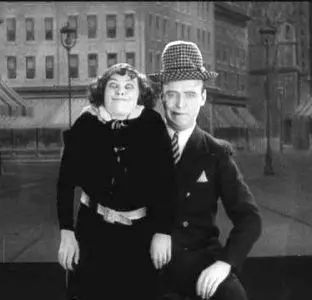
A definitive 5.6/10 rating for a film that redefined the boundaries of cult cinema. Ventriloquist remains a cornerstone of transgressive art.
Is the silent short 'Ventriloquist' worth your time today? The short answer is an emphatic 'yes,' but with significant caveats regarding its unsettling nature and historical context. This film is a peculiar artifact best suited for silent film enthusiasts, horror aficionados with a taste for the bizarre, and anyone seeking a truly unique, albeit disturbing, cinematic experience. It is decidedly not for those who prefer modern narrative conventions, a clear resolution, or anything that might be considered 'comfort viewing.'
If you're looking for a neatly packaged story with character arcs and a satisfying conclusion, 'Ventriloquist' will likely leave you frustrated. However, if you approach it as a fascinating, almost accidental piece of experimental horror from an era when cinema was still finding its voice, you'll find it immensely rewarding. It’s a film that lingers, not because of its plot, but because of its sheer, unadulterated strangeness.
This film works because... its sheer audacity and unsettling premise create a lasting impression. The transformation is genuinely shocking, a moment of visceral body horror that feels ahead of its time.
This film fails because... its brevity and lack of narrative depth leave many questions unanswered, leaning heavily on shock value rather than character development or thematic exploration.
You should watch it if... you're fascinated by the early days of cinema, enjoy experimental horror that leans into the absurd, or appreciate films that challenge conventional storytelling, even if unintentionally.
'Ventriloquist' plunges us into a world where the mundane meets the utterly bizarre. We open on a bustling street corner, a quintessential tableau of early 20th-century urban life. Here, a fast-talking salesman, portrayed by the inimitable William Frawley, hocks his wares: "Hoak," a supposed miracle cure-all. Frawley, already demonstrating the robust, slightly aggressive charm that would define his later career, embodies the archetype of the snake-oil merchant with compelling energy.
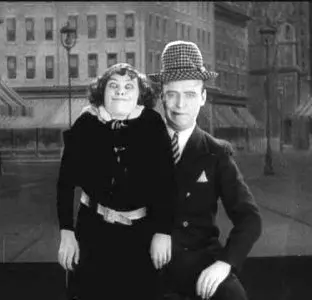
His target, a young woman played by Edna Frawley, initially embodies skepticism. Her body language, subtle yet clear even in the silent medium, conveys a reluctance to engage. This dynamic, the pushy salesman and the wary potential customer, is instantly relatable, setting up a seemingly innocuous scenario that is about to take a hard left turn into the surreal. It's a setup that feels almost like a Vaudeville skit, right before the bottom drops out.
The crux of the film, and its most memorable sequence, arrives with the accidental ingestion of the "wrong" pill. The plot description is stark, but the on-screen execution, even in its crudeness, is profoundly unsettling. Edna Frawley’s transformation into a limp-jointed, wide-eyed human puppet is a moment of pure, unadulterated body horror. Her facial expression, frozen in a grotesque, vacant stare, is genuinely disturbing, far more effective than many overtly gory effects from later eras.
This isn't merely a physical change; it's a complete dehumanization. The girl, once an autonomous individual capable of skepticism, is reduced to an object, a prop for the salesman's twisted entertainment. The immediate pivot to a ventriloquism act, with the "dummy" voice obviously coming from off-screen, amplifies the macabre humor and the underlying horror. It’s a brutal, almost cruel joke, played out for an unseen audience, and by extension, for us.
For a silent film of such brevity and unusual subject matter, the performances are surprisingly impactful. William Frawley, years before his iconic role as Fred Mertz in 'I Love Lucy,' showcases a raw, almost predatory charisma. His salesman isn't just a pitchman; he's a showman, a manipulator. His gestures are broad, his facial expressions expertly convey avarice and a certain theatrical glee, especially once his "act" begins.
One particular moment stands out: Frawley’s initial approach to Edna. He uses his entire body to command attention, his arms sweeping, his head cocked, a master of the silent sales pitch. This physicality is crucial, as it builds the character of a man who takes what he wants, whether it's attention or, disturbingly, control over another human being.
Edna Frawley's role is arguably more challenging, requiring a transition from a relatable human to an inanimate object. Her initial skepticism is conveyed through subtle eye rolls and a slight turning away of her body. But her transformation is where she truly shines, or rather, horrifies. The sudden slackness of her posture, the unnatural bend of her joints, and that wide-eyed, vacant stare are chilling. It's a performance that requires immense control over one's physicality, transforming a living person into something utterly lifeless and uncanny.
The effectiveness of the "dummy" is entirely reliant on Edna's ability to convincingly portray a lack of agency. She sells the illusion, making the audience
IMDb —
1935
Community
Log in to comment.