DbcultAccessing Vault...
4.3/10
Senior Film Conservator
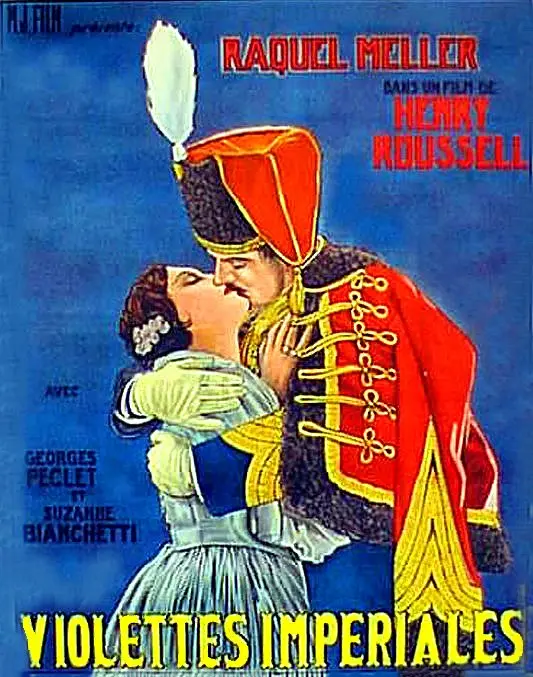
A definitive 4.3/10 rating for a film that redefined the boundaries of cult cinema. Violettes impériales remains a cornerstone of transgressive art.
Step back in time to 1924, an era when the silver screen pulsed with unspoken emotions, grand gestures, and the captivating artistry of silent film. Among the glittering constellation of cinematic offerings from this period, Henry Roussel's Violettes Impériales stands as a magnificent, if sometimes overlooked, testament to the genre's enduring power. This isn't merely a film; it's a meticulously crafted tapestry woven with threads of romance, social stratification, political intrigue, and the perennial human quest for authenticity amidst artifice. To approach Violettes Impériales today is to embark on an archaeological dig into the emotional landscape of a bygone epoch, unearthing universal themes that echo with surprising resonance even in our hyper-connected, cacophonous present.
At its core, the film is a poignant exploration of class divides and the transformative, often tumultuous, power of love. The narrative hinges on the improbable encounter between two women from diametrically opposed worlds. Suzanne Bianchetti, a veritable titan of silent cinema, embodies the regal, almost mythical Empress Eugénie-like figure with an exquisite blend of imperial gravitas and a subtle, underlying melancholy. Bianchetti, renowned for her portrayals of historical queens and empresses in films like Abel Gance's Napoléon, brings an unparalleled dignity and a profound sense of world-weariness to her role. Her Empress is not merely a figurehead but a woman of refined sensibilities, perhaps even a touch of loneliness, whose eye is serendipitously caught by Violetta, the spirited flower seller of Seville.
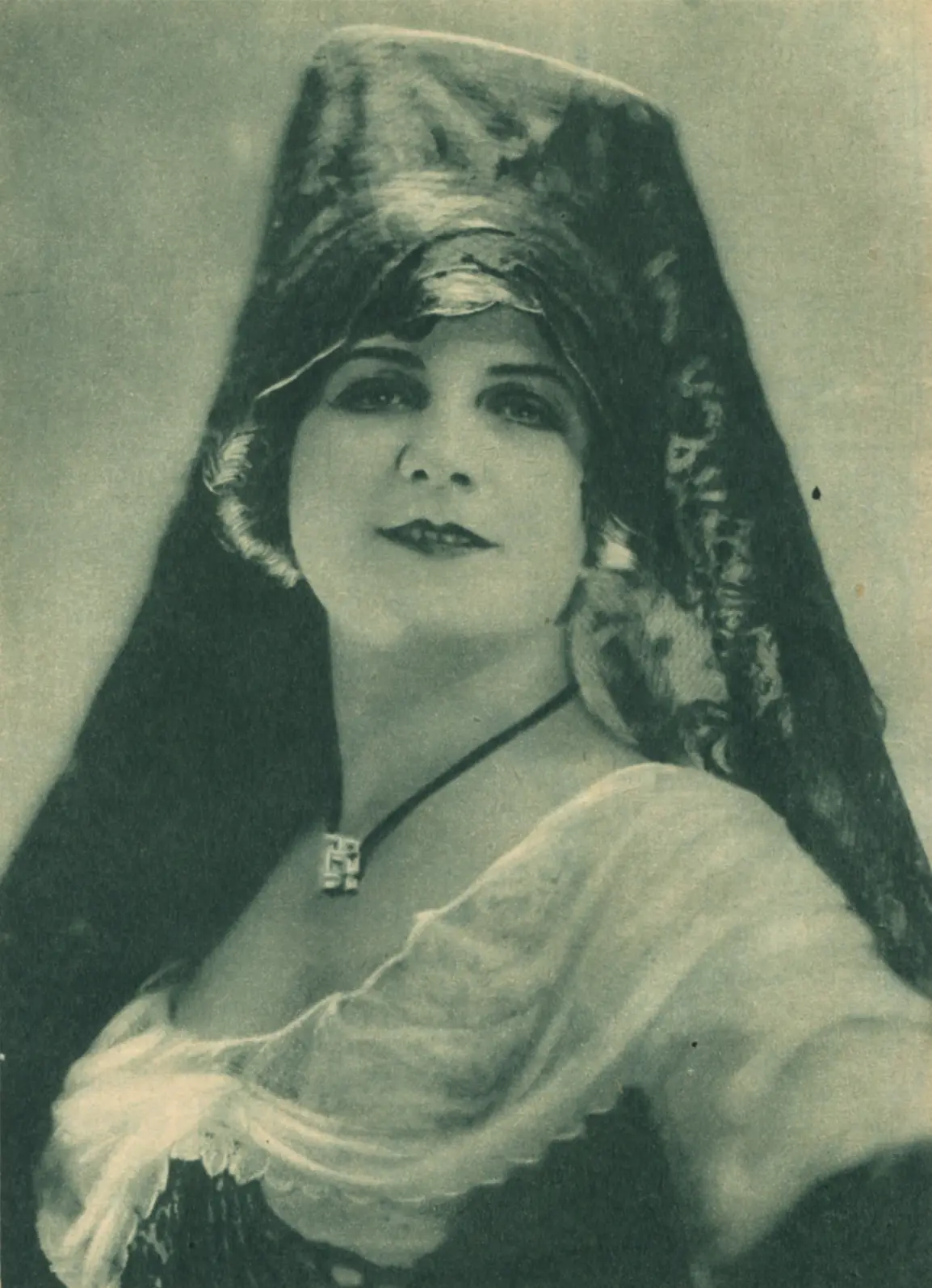
Raquel Meller, in the role of Violetta, offers a captivating counterpoint. Her performance is a masterclass in conveying raw, unadulterated emotion through gesture and expression, a hallmark of the silent era. Meller imbues Violetta with a vibrant earthiness, a captivating blend of innocence and resilience that makes her an utterly compelling protagonist. Her transition from the bustling, sun-drenched streets, where she sells her namesake 'violettes impériales'—a potent symbol of humble beauty and quiet dignity—to the opulent, yet often suffocating, confines of the imperial palace is depicted with a delicate touch, highlighting both the allure and the inherent dangers of such an ascent. The contrast between Bianchetti's stately, almost sculptural presence and Meller's vivacious, kinetic energy creates a dynamic tension that propels the narrative forward, making their unlikely bond the emotional anchor of the film.
As Violetta is drawn into the Empress's orbit, the film meticulously constructs a world of courtly intrigue that feels both historically specific and timelessly human. The palace, far from being a sanctuary, transforms into a gilded cage, teeming with veiled hostilities and social machinations. Hietta Stella, as the calculating Duchess de Croy, and Madame Courtois, in her imperious portrayal, exemplify the aristocratic elite who view Violetta's presence as an affront to their established order. Their performances, characterized by subtle sneers and disdainful glances, effectively convey the suffocating snobbery and inherent cruelty of a society rigidly defined by birthright rather than merit. One might draw a faint parallel here with the social commentary found in some of the more dramatic silent films, like The Rack, which also delved into societal pressures, albeit in a different context.
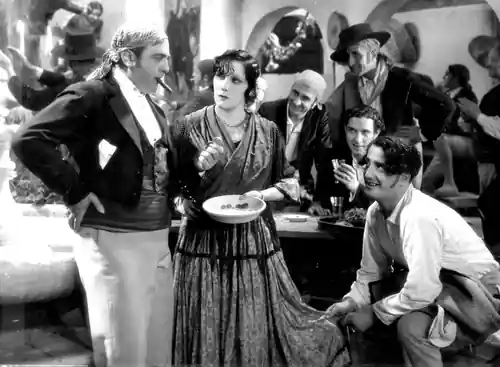
Amidst this treacherous landscape, Violetta's heart finds a fragile solace in Don Juan de Vivero, portrayed with charismatic intensity by Robert Guilbert. Don Juan is not merely a romantic lead; he embodies the internal conflict of a nobleman caught between the vestiges of an old world and the nascent stirrings of a new one. His love for Violetta is genuine, a beacon of authenticity in a realm of artifice, but it is also fraught with peril. Their clandestine romance, a series of stolen glances and hushed encounters, becomes a powerful symbol of individual desire battling against the monolithic force of societal expectation. The film expertly uses close-ups and dramatic lighting to heighten the emotional stakes of their forbidden affair, allowing the audience to feel the burgeoning passion and the ever-present threat of discovery.
Beyond the personal dramas, Violettes Impériales skillfully weaves in a layer of political intrigue that elevates it beyond a mere romance. Whispers of a coup d'état, spearheaded by disgruntled factions within the military and nobility (characters like Girardo and Jimmy O'Kelly likely embodying these elements), permeate the opulent halls of the palace. This undercurrent of rebellion provides a gripping sense of urgency and danger, reminding us that even the most glittering empires can be built on shaky foundations. Violetta, initially an innocent bystander, finds herself inadvertently privy to these treacherous machinations, transforming her from a romantic heroine into a pivotal figure in a looming political crisis. Her quiet observations, her unassuming presence, become a dangerous asset, capable of either averting disaster or inadvertently condemning those she has come to care for.
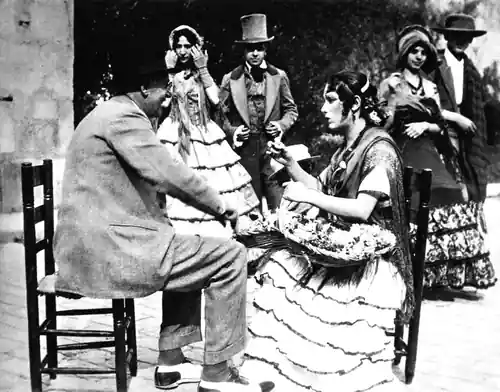
The film's exploration of loyalty, betrayal, and the moral ambiguities inherent in political maneuvering is remarkably sophisticated for its time. It doesn't present a simplistic good-versus-evil dichotomy but rather a complex web of motivations, where personal ambitions intertwine with broader societal discontent. The performances of the supporting cast – including Daurelly, Sylviane de Castillo, Luc Dartagnan, Jacques Cabelli, Pierre Delmonde, and Paulette Marchal – contribute significantly to the rich tapestry of courtly figures, each adding a brushstroke to the portrait of a society on the precipice. Their nuanced portrayals, even in the absence of dialogue, speak volumes about the intricate power dynamics at play.
The film builds inexorably towards its dramatic climax: a lavish state ball, a visual spectacle of imperial grandeur that simultaneously serves as a crucible for all the simmering tensions. Here, the personal and political collide with devastating force. The ball, a vibrant tableau of power and privilege, teeters on the brink of chaos, a metaphor for the fragile peace within the empire itself. Violetta finds herself at the heart of this maelstrom, faced with an agonizing choice. Her loyalty to the Empress, who has elevated her from obscurity, clashes with her profound love for Don Juan, whose own allegiances might be tested. The truth she possesses, a silent burden, could shatter the fragile façade of courtly decorum and plunge the empire into turmoil.
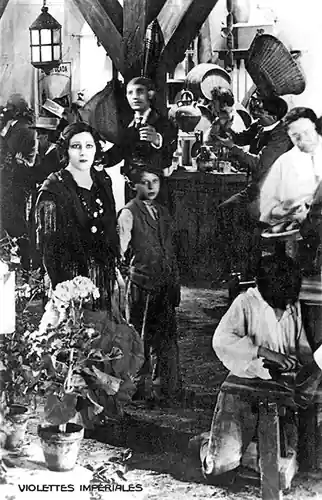
The direction by Henry Roussel during this sequence is particularly masterful. He orchestrates a symphony of visual storytelling, using elaborate set pieces, sweeping camera movements (for its era), and the expressive power of his actors to convey the escalating tension. The intricate choreography of the ball, juxtaposed with the clandestine movements of conspirators and the silent anguish of Violetta, creates a truly compelling cinematic experience. The resolution, without revealing too much, is a testament to Roussel's understanding of human nature and the sacrifices often demanded by duty and destiny. It's a poignant conclusion that lingers long after the final frame, reminding us that true nobility often resides not in birth, but in character.
Violettes Impériales is a film that rewards careful observation. Its visual language is rich, employing ornate costumes, lavish sets, and striking cinematography to transport the viewer to a world of unparalleled splendor. The attention to detail in the mise-en-scène is remarkable, creating an immersive experience that speaks volumes about the production values of French silent cinema. The use of light and shadow, characteristic of the era, is particularly effective in conveying mood and highlighting the internal states of the characters. For instance, the stark contrast between the bright, open spaces of Seville and the often dimly lit, secretive corridors of the palace visually reinforces Violetta's journey and the inherent duality of her new existence.
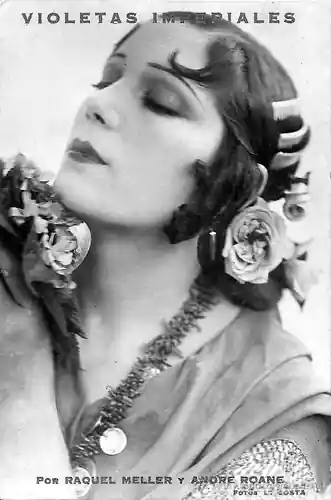
The performances, as noted, are uniformly strong, a testament to the highly specialized craft of silent acting. Every gesture, every facial expression, every movement of the body had to convey a wealth of information, and the ensemble cast, including Robby Guichard, Albert Brouett, Jean-Paul Le Tarare, Marie-Louise Vois, Roger San Juana, Claude France, Mademoiselle Farnèse, Marais, Danielle Vigneau, Jeanne Even, Laurent Morléas, Georges Tourez, André Roanne, and Suzy Béryl, rises to this challenge with remarkable skill. They create a vibrant, believable world populated by individuals who, despite the passage of a century, feel remarkably human in their desires, fears, and aspirations.
Henry Roussel's direction is both elegant and robust. He understands the rhythm of silent storytelling, allowing scenes to breathe, building suspense incrementally, and punctuating dramatic moments with impactful visual flourishes. His ability to manage such a large cast and an intricate plot without ever losing sight of the central emotional core is commendable. The film's pacing, while perhaps slower than contemporary audiences are accustomed to, is deliberate and immersive, inviting viewers to truly inhabit the world he has created. In an era where films like Das Rätsel von Bangalor (The Riddle of Bangalore) explored exotic adventure, Roussel chose to delve into the intricate dance of social and political drama, demonstrating the breadth of silent cinema's storytelling capabilities.
Ultimately, Violettes Impériales transcends its historical setting to deliver a timeless narrative about the human spirit's resilience, the complexities of love across social boundaries, and the enduring allure and peril of power. It's a film that speaks to the yearning for acceptance, the pain of sacrifice, and the quiet triumph of virtue in a world often dominated by artifice. The 'imperial violets' themselves evolve from a simple floral motif into a potent symbol of Violetta's journey—her humble origins, her enduring purity, and her ultimate, profound impact on the grand tapestry of imperial life. This film is not just a relic of a bygone cinematic age; it is a vibrant, emotionally resonant work that continues to captivate and provoke thought, reminding us of the silent era's profound capacity for storytelling.
IMDb 7.2
1929
Community
Log in to comment.