DbcultAccessing Vault...
Cult Review
Senior Film Conservator
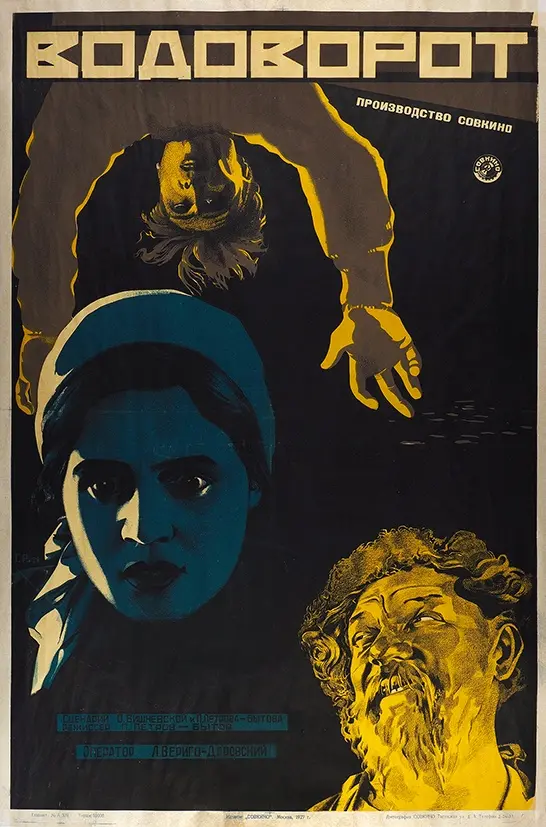
Is Vodovorot worth your time in the 21st century? Short answer: Yes, but only if you approach it as a historical excavation rather than a Saturday night entertainment. This film is for the patient viewer who finds beauty in the grain of old celluloid and the weight of silent-era tragedy; it is certainly not for anyone looking for a fast-paced narrative or a feel-good resolution.
This film works because of Tatyana Guretskaya’s hauntingly expressive performance which anchors the melodrama in something painfully human. This film fails because its second half leans too heavily into the didactic political messaging typical of its era, sacrificing character nuance for ideological clarity. You should watch it if you have already explored the lighter side of the 1920s in films like How Could You, Jean? and now want to see the darker, colder reality of the Soviet experimental period.
Vodovorot, or 'The Whirlpool', is a film that feels heavy. From the opening shots of the village, there is a sense of stagnation that director Pavel Petrov-Bytov captures with an almost documentary-like precision. Unlike the stylized urbanism of Vertov, Petrov-Bytov is interested in the dirt. The way the mud clings to the boots of the peasants isn't just a detail; it's a metaphor for the social conditions Lubov (Guretskaya) is trying to escape.
The cinematography doesn't rely on the flashy montage techniques of Eisenstein. Instead, it uses long, static takes that force the viewer to sit with the discomfort of the characters. One specific scene involving a confrontation in a dimly lit hut stands out. The shadows are deep, almost devouring the actors, highlighting the isolation of the female lead in a world that refuses to hear her voice. It is a stark contrast to the more polished Hollywood productions of the same year, like The Show Down.
Tatyana Guretskaya is the heartbeat of this film. In an era where silent acting often veered into the theatrical or the absurd, she remains remarkably grounded. Her face is a map of the internal conflict between duty and desire. When she realizes the trap her life has become, she doesn't resort to grand gestures. She simply stares into the middle distance, her eyes conveying a depth of weariness that most modern actors struggle to replicate.
Compare her performance to the more whimsical roles found in Cinderella's Twin. While both deal with the plight of young women, Guretskaya’s Lubov feels like a person who has actually lived through a famine. There is no Hollywood gloss here. Her chemistry with F. Mikhajlov is strained and uncomfortable, which is exactly what the script requires. They don't look like movie stars; they look like survivors.
Direct Answer: Vodovorot is worth watching for its historical significance and its raw emotional core. It provides a rare, unvarnished look at the transition from Tsarist traditions to Soviet collectivism through a personal lens. If you appreciate cinema as a window into a lost world, this is a vital watch. If you find silent films tedious, this will not be the one to change your mind.
The film’s biggest hurdle for a modern audience is its inevitable pivot toward Soviet messaging. About two-thirds of the way through, the personal tragedy begins to morph into a social lesson. The pacing suffers. The 'whirlpool' of the title, which initially represents the protagonist's emotional state, starts to feel like a literal warning against the 'old ways'.
However, even within this framework, Petrov-Bytov manages to sneak in moments of genuine subversion. The ending is not as triumphant as one might expect from a state-sanctioned project. There is a lingering sense of loss that the propaganda can't quite cover up. It’s clunky. It works. But it’s flawed. This tension makes it far more interesting than a straightforward drama like The Legacy of Happiness.
Technically, Vodovorot is a mixed bag. The lighting in the interior scenes is masterful, using natural light sources to create a chiaroscuro effect that rivals the best of German Expressionism. Yet, the editing can feel disjointed. There are jumps in the narrative that suggest either missing footage or a lack of resources during production. Unlike the fluid transitions in Dangerous Waters (1923), Vodovorot feels like it was assembled under duress.
The use of intertitles is sparse, which I appreciate. Petrov-Bytov trusts his visuals to tell the story. A recurring motif of flowing water—sometimes a stream, sometimes a torrent—beautifully illustrates the passing of time and the erosion of Lubov’s spirit. It is a visual poem buried inside a political tract.
Pros:
- Stunningly grim cinematography that captures 1920s rural Russia.
- A powerful, non-theatrical lead performance.
- An honest exploration of the failures of patriarchal village life.
- Effective use of visual metaphors (the whirlpool imagery).
Cons:
- Pacing slows significantly in the middle act.
- The political messaging feels forced and dated.
- Some narrative gaps make the plot difficult to follow without context.
Vodovorot is a difficult, demanding piece of cinema that rewards the patient viewer with a visceral sense of time and place. It lacks the polish of Punches and Perfume, but it possesses a raw honesty that is rare for its era. While the ideological weight threatens to sink the ship in the final twenty minutes, Guretskaya’s performance keeps it afloat. It is a haunting reminder that while systems change, the individual often remains caught in the same old current. It is a grim, essential artifact of the silent age.
IMDb 4.8
1934
Community
Log in to comment.