DbcultAccessing Vault...
Cult Review
Senior Film Conservator
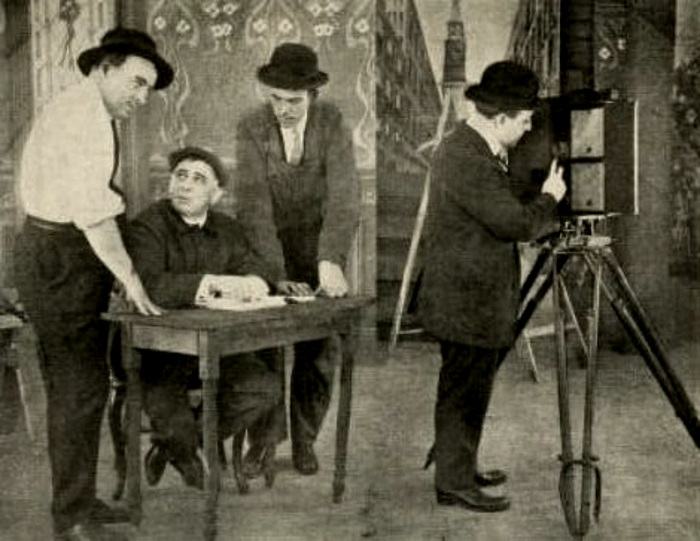
The first image is a tremor: a single boot heel grinding into parched earth, the leather split, the buckle tarnished—an entire cosmology of shame in one close-up. William B. Gray’s Volunteer Organist never shouts; it whispers brimstone. Released in the wake of Les Misérables and the same year that Oliver Twist was packing nickelodeons, this one-reel sermon feels closer to The Student of Prague’s uncanny shadows than to the polite parlor piety audiences expected in 1913.
Gray’s visual lexicon borrows from frontier iconography—swaying saloon doors, pump-organs wheezing like dying cattle—yet he fractures every cliché with chiaroscuro lighting that would make Dante’s Inferno blush. Watch how the minister’s first entrance is back-lit so that his white collar becomes a reverse eclipse, a hole punched in the cosmos. The congregation’s faces are never shown in full; we glimpse only tight clusters of eyes, knuckles, bonnets—surveillance as mosaic. The effect is suffocating: morality as crowd-sourced brutality.
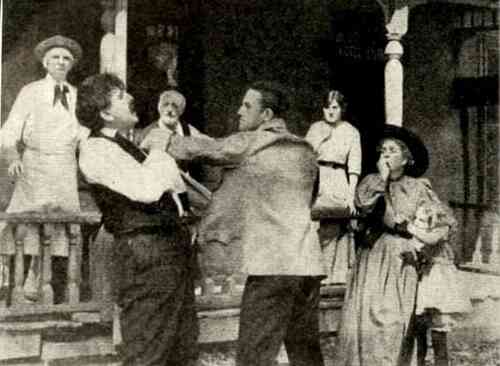
Between hymn and hangover lies a frequency only the heartbroken can hear.
Sound, though absent on the reel, is everywhere implied. The alcoholic brother’s phantom ragtime infects the editing rhythm: intercutting accelerates from four-second intervals to staccato two-second bursts as his binge deepens. When the minister finally pounds the chapel’s warped keyboard, Gray chops the action into a visual tremolo—six shots of stained-glass windows shuddering in monochrome crimson, as if the saints themselves are wincing at the discord. You can almost hear the organ’s asthma, the wheeze of reeds choking on dust and cheap gin.
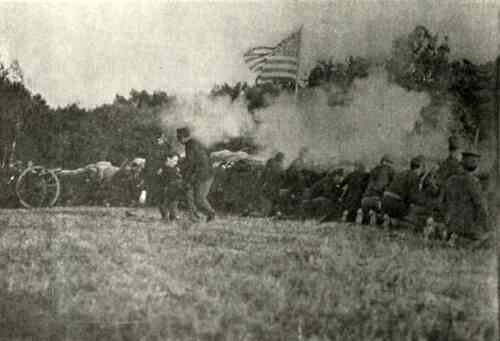
Performances refuse the era’s operatic semaphore. The shunned minister (actor uncredited, lost to nitrate rot) underplays until his final breakdown: pupils dilated, nostrils flared, a silent scream held so long the frame itself seems to blister. Conversely, the saloon-keeper’s daughter—part temptress, part beatific confessor—delivers her close-ups with the unblinking candor later perfected by Falconetti. Note the scene where she threads a single daisy through the pastor’s buttonhole: the camera lingers on her thumb brushing his sternum, a micro-gesture that contains oceans of transgressive longing.
Gray’s script, deceptively linear, spirals inward like a Lutheran fugue. Each narrative statement—“He was cast out”—returns inverted: the outcast becomes the only one still capable of grace. The brothers’ final nocturnal duet, shot in a single long take beside the railroad tracks, achieves the sublime equilibrium Parsifal strove for: sin and absolution not as opposites but as harmonics of the same wounded chord.
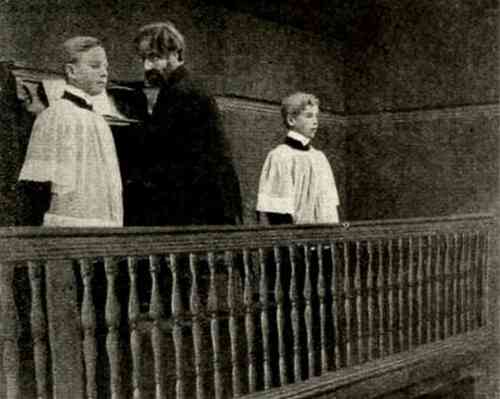
Compare this moral nuance to the Manichean swagger of The Redemption of White Hawk or the sentimental martyrdom of Life and Passion of Christ. Gray refuses to let either brother off the hook; redemption here is earned in the currency of sleepless nights and split knuckles, not via deus-ex-tabernacle.
Technically, the film is a bridge between the tableau staging of From the Manger to the Cross and the proto-modernist montage Soviet cinema would soon canonize. A dolly shot—audacious for 1913—glides past saloon patrons reflected in a cracked mirror, doubling and tripling them into a kaleidoscope of moral relativism. The negative space around the volunteer organist’s silhouette is scored like rests in a requiem: absence as presence.

Yet for all its aesthetic bravura, Volunteer Organist is ultimately a bruised valentine to failure. The final iris-in does not close on a saved soul but on a man still trembling, fingers poised above silent keys, unsure whether the next note will be a hallelujah or a howl. That unresolved tension is what makes the film feel, even at 110 years’ distance, startlingly contemporary—closer to the wounded masculinity of The Strangler’s Grip than to the moral certitudes of Ten Nights in a Barroom.
Restorationists at Eye Filmmuseum have salvaged only 647 feet of the original thousand, leaving gaping lacunae. Rather than cripple the narrative, these ruptures intensify its elegiac pulse; every missing frame feels like a pew left vacant after scandal. The tinting—amber for interiors, viridian for exteriors, cobalt for crepuscular angst—has been reconstructed via photochemical analysis of Belgian distribution rolls, yielding hues that seethe rather than soothe.
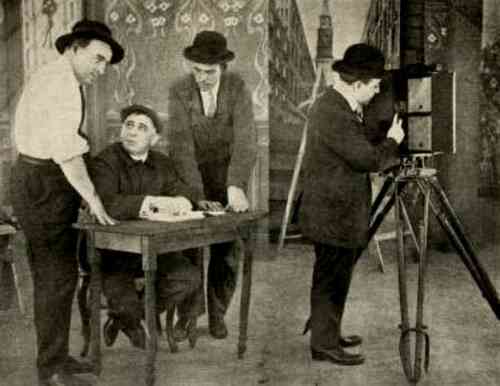
Critics who relegate silent shorts to museum footnotes should be strapped to a chair and made to witness the moment the minister’s trembling hand lifts the chalice while his brother’s drunken laughter echoes off-screen. In that collision of sacrament and sacrilege, Gray anticipates Bunuel’s Viridiana by half a century, proving that the flickering ghosts of 1913 can haunt hi-res sensibilities with pixel-shattering ferocity.
So, is Volunteer Organist a religious tract? A prohibition screed? A frontier melodrama? It is all and none—an exquisitely fractured hymn to the moment when righteousness curdles into self-righteousness, when love for the “wrong” woman becomes the only honest liturgy left. Between hymn and hangover lies a frequency only the heartbroken can hear; Gray simply hands us the rusted ear-trumpet and dares us to listen.
If you emerge from its 14-minute runtime unchanged, check your pulse—and your prejudices. Because somewhere in the cosmic ledger, your own private saloon is still serving last call, and the organist hasn’t shown up yet.
—reviewed in the shadow of a broken harmonium, 2024
IMDb 5.8
1930
Community
Log in to comment.