DbcultAccessing Vault...
5.9/10
Senior Film Conservator
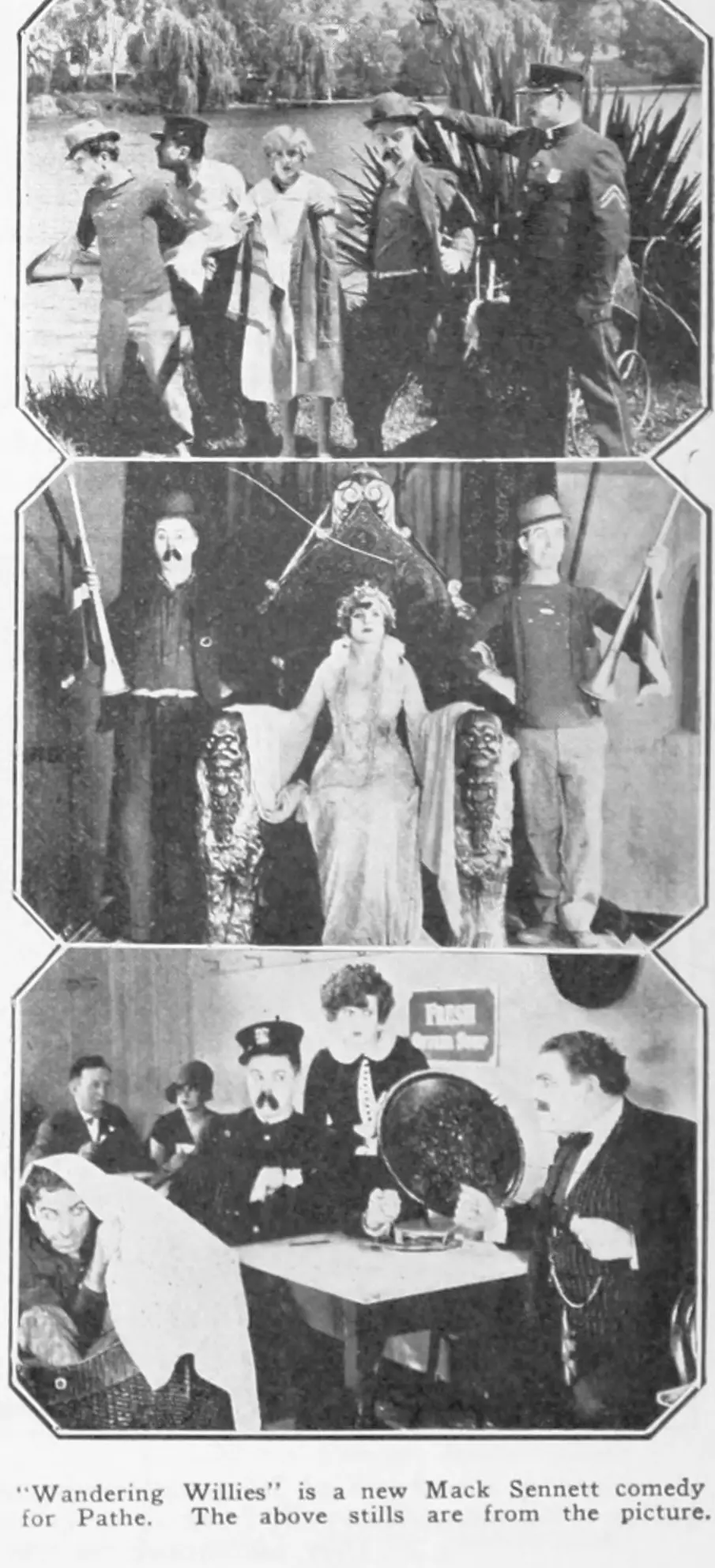
A definitive 5.9/10 rating for a film that redefined the boundaries of cult cinema. Wandering Willies remains a cornerstone of transgressive art.
Short answer: yes, but with significant caveats that speak to its age and specific comedic stylings. This film is primarily for aficionados of early silent cinema, slapstick enthusiasts, and those curious about the foundational elements of screen comedy. It is decidedly not for viewers seeking modern pacing, sophisticated humor, or high production values. If you appreciate historical context and the raw energy of nascent filmmaking, 'Wandering Willies' offers a peculiar, charming window into a bygone era of cinematic entertainment.
This film works because of its pure, unadulterated physical comedy and the unexpected narrative twist that elevates it beyond mere chase sequences. This film fails because its episodic nature, primitive technical execution, and sometimes repetitive gags can test modern patience, making sustained engagement a challenge. You should watch it if you appreciate historical cinema, want to see early comedic talent, or simply enjoy a good, old-fashioned, absurd chase sequence.
'Wandering Willies' plunges us headfirst into a world where hunger dictates morality and slapstick is the universal language. Directed by Gus Meins, this short feature is a masterclass in the kind of physical comedy that defined early cinema, a relentless barrage of pratfalls, exaggerated expressions, and chaotic pursuits. Charles Force and Marvin Loback, as our titular 'Willies,' embody the quintessential vagabond archetype, their every move a testament to the desperate ingenuity of the broke and hungry.
The film's opening act, centered around the duo's elaborate scheme to secure a free meal, is where its comedic heart truly beats. We witness a meticulously (or perhaps, clumsily) choreographed sequence of events designed to deceive the unsuspecting restaurant owner. The joy here isn't in the brilliance of their plan, but in its inevitable, glorious unraveling. Think less 'Ocean's Eleven' and more 'Three Stooges' attempting a heist with a single spoon.
One particularly memorable moment involves Force's character attempting to feign an illness so severe it would warrant a free meal, only for Loback to botch the cues, leading to a hilarious back-and-forth of exaggerated suffering and bewildered exasperation. This brand of humor, rooted in misunderstanding and escalating absurdity, remains surprisingly effective, even if the pacing feels a touch slower than what contemporary audiences are accustomed to.
The subsequent chase, which forms the bulk of the film's runtime, is a testament to the raw energy of the era. Our heroes are pursued not only by the furious restaurant owner but also, inevitably, by the local constabulary. This multi-party pursuit is a staple of early comedy, yet 'Wandering Willies' injects a unique flavor through its relentless inventiveness in obstacles and near-misses. The physical prowess of Force and Loback is on full display, as they navigate rooftops, narrow alleys, and bustling streets with a compelling, if ungraceful, athleticism.
What truly sets this film apart in its comedic approach is its unapologetic embrace of the absurd. The gags aren't always logical, nor are they meant to be. They exist for the sheer joy of the spectacle, for the visceral reaction they elicit. In an era before sophisticated dialogue and intricate plots became standard, the visual punchline was king, and 'Wandering Willies' delivers a reign of comedic blows with enthusiastic abandon.
From a technical perspective, 'Wandering Willies' offers a fascinating, if sometimes rudimentary, look at early cinematic techniques. Gus Meins' direction is characterized by a functional directness, prioritizing clear sightlines for the physical comedy over elaborate shot compositions. The camera often remains static, serving as a proscenium arch for the unfolding chaos, allowing the performers to fill the frame with their animated antics.
The cinematography, while lacking the nuanced depth and expressive lighting found in more artistic works of the period like The Last Laugh, is perfectly adequate for its purpose. The black and white imagery, with its inherent contrasts, accentuates the broad physical gestures and the stark visual gags. There's a raw, almost documentary-like quality to some of the exterior shots, capturing the bustling energy of early 20th-century urban life as a backdrop to the protagonists' misadventures.
Pacing in 'Wandering Willies' is a peculiar beast. On one hand, the individual gags are often rapid-fire, designed to elicit quick laughs. On the other, the overall narrative progression can feel somewhat drawn out, a common characteristic of short films from this period that were perhaps stretched to feature length. The film struggles at times to maintain a consistent comedic rhythm, with moments of brilliant, frantic energy interspersed with sequences that feel a little too leisurely for modern tastes.

The tone, however, is consistently lighthearted and mischievous. Despite the characters' desperation and the escalating stakes, there's an underlying innocence to the humor. It never veers into mean-spirited territory, maintaining a playful spirit that makes the protagonists endearing, even in their roguishness. This genial tone is a hallmark of many silent comedies, creating a cinematic experience that, despite its age, feels remarkably approachable.
One particular example of the filmmaking's charm lies in the practical effects used during the chase sequences. The ingenuity of creating believable (for the time) stunts and obstacles without the aid of CGI or complex wirework is admirable. It's a reminder of a bygone era where creativity and sheer physical daring were paramount, lending an authentic, if sometimes shaky, realism to the on-screen action.
While 'Wandering Willies' is undoubtedly a vehicle for slapstick, the performances of its lead actors, Charles Force and Marvin Loback, provide the essential anchor for the comedy. Force, with his rubbery face and gangly physique, is a natural for the genre. His ability to convey a wide range of emotions—from desperate hunger to frantic fear and triumphant glee—through exaggerated facial expressions is a joy to behold. His physical comedy is precise, yet appears effortlessly chaotic, a testament to his stage experience.
Loback, as his bumbling accomplice, provides the perfect foil. His character often serves as the catalyst for further complications, his well-intentioned blunders exacerbating their predicaments. The chemistry between Force and Loback is palpable, a classic comedic duo dynamic that relies on a shared understanding of timing and reaction. They bounce off each other, both literally and figuratively, creating a synergy that elevates the individual gags into a cohesive comedic rhythm.
Ruth Taylor, though perhaps less prominent than the male leads, adds a touch of charm and often acts as a grounding force amidst the male-dominated chaos. Her reactions to the Willies' antics provide a relatable perspective for the audience, often mirroring our own amusement or exasperation. It’s easy for supporting roles in such physical comedies to fade into the background, but Taylor manages to imbue her character with a subtle presence.
However, the true wildcard in the cast, and perhaps the most memorable, is Numa the Lion. The inclusion of a live lion, seemingly at random, is an unconventional choice that speaks volumes about the audacious spirit of early cinema. Numa's presence isn't just a spectacle; it becomes an integral, if absurd, plot device, escalating the chase to ludicrous heights. The scenes featuring Numa are genuinely surprising, adding an unexpected layer of danger and surreal humor that few other films of the period dared to attempt. It’s a bold, almost reckless, stroke of genius that lingers in the memory long after the credits roll.
What truly elevates 'Wandering Willies' beyond a simple succession of chase scenes and gags is its surprisingly clever narrative pivot. Just when the audience settles into the rhythm of the cat-and-mouse game, the film delivers a revelation about the restaurant owner that completely recontextualizes the entire pursuit. This isn't just about two hungry men trying to escape; it becomes a story with deeper, albeit still comedic, implications.
The discovery of the restaurateur's own secret past is a stroke of screenwriting ingenuity for its time, credited to Al Giebler and Gus Meins. It transforms a one-dimensional antagonist into a more complex figure, albeit still a comedic one. This twist doesn't just turn the tables; it adds a layer of ironic justice to the proceedings, making the Willies' plight less about pure escape and more about leveraging an unexpected advantage. It’s a moment that demonstrates an early understanding of narrative subversion, a willingness to play with audience expectations.
This narrative development is, in my honest take, the film's most significant achievement, even more so than its impressive slapstick. It elevates 'Wandering Willies' from a mere collection of jokes to a story with a satisfying, if simple, arc. The audience's perception of who is truly 'right' or 'wrong' is playfully challenged, adding a layer of moral ambiguity that is quite sophisticated for a silent comedy short.
The effectiveness of this hook is amplified by how it completely shifts the power dynamic. Suddenly, the hunted become the hunters, or at least, the empowered. This reversal provides a fresh burst of energy to the final act, ensuring that the film doesn't simply peter out but concludes with a definitive, and humorous, resolution. It's a testament to the writers' ability to weave a compelling, if light, story within the framework of a physical comedy.
While 'Wandering Willies' possesses undeniable charm, it is not without its significant flaws, particularly when viewed through a modern lens. The most prominent issue for contemporary audiences is often the pacing. Silent films, by their nature, operated on a different rhythm, and what was once considered brisk can now feel languid. There are moments where the gags, though individually amusing, are strung together with insufficient narrative momentum, leading to a sense of repetition.
The technical simplicity, while historically interesting, also contributes to some of the film's limitations. The editing, for instance, is often straightforward, lacking the dynamic cuts and sophisticated transitions that would become standard in later decades. This can make some of the chase sequences feel less kinetic than they perhaps intended, relying heavily on the performers' energy rather than cinematic technique to convey speed and urgency.
Character development, beyond the basic archetypes, is minimal. Charles Force and Marvin Loback are effective comedic figures, but we learn little about their inner lives or motivations beyond their immediate hunger. This is typical for the genre and era, but it means the film relies almost entirely on external action for its engagement, rather than internal conflict or emotional depth. For viewers accustomed to richer character arcs, this can feel somewhat hollow.
Furthermore, some of the comedic tropes, while foundational, can feel dated. The reliance on exaggerated falls and cartoonish violence, while humorous, doesn't always land with the same impact as it might have a century ago. It’s a reminder that humor evolves, and what was once cutting-edge can become quaint. Comparing it to the more character-driven humor of a film like A Doll's House (though a different genre), one appreciates the vast spectrum of early cinematic ambition.
Ultimately, these flaws are less about the film being 'bad' and more about its inherent nature as a product of its time. To critique 'Wandering Willies' purely by modern standards would be anachronistic. However, acknowledging these aspects is crucial for setting expectations for a contemporary viewer.
'Wandering Willies' occupies a fascinating, if not canonical, space within the annals of silent comedy. It belongs to a vast output of short, often frantic, films designed to entertain audiences with immediate, visceral humor. While it may not possess the iconic status of a Chaplin or Keaton feature, it embodies the spirit of an era where filmmakers were still experimenting with the language of cinema, particularly in the realm of physical performance.
The film contributes to the rich tapestry of early slapstick, demonstrating the enduring appeal of the underdog, the mischievous rogue, and the chaotic pursuit. Its narrative twist, as discussed, suggests a budding sophistication in screenwriting that would eventually lead to more complex comedic narratives. It's a testament to the fact that even in seemingly simple shorts, there was a drive to innovate and surprise.
One might argue that 'Wandering Willies,' alongside countless other shorts of its kind, laid the groundwork for the more celebrated feature-length comedies that followed. The gags, the character dynamics, and the reliance on visual storytelling were all vital components that would be refined and expanded upon by future generations of comedic filmmakers. It’s a foundational piece, a brick in the wall of cinematic history, even if it’s not the most ornate.
For historians of film, or even just curious cinephiles, watching 'Wandering Willies' offers valuable insight into the commercial and artistic landscape of early Hollywood. It showcases the types of entertainment that resonated with audiences, the emerging talent, and the technical constraints that shaped the creative process. It's a snapshot of a moment when cinema was finding its voice, one pratfall and absurd chase at a time.
'Wandering Willies' is a curious artifact, a boisterous echo from the dawn of cinema. It's a film that demands a certain level of historical appreciation, a willingness to look past its technical primitiveness and embrace its raw, unadulterated energy. It works. But it’s flawed. The physical comedy, while occasionally repetitive, is delivered with an infectious enthusiasm by Charles Force and Marvin Loback, who truly commit to their roles as charming scoundrels. However, it's the surprising narrative pivot, the unexpected turn of the tables, that truly elevates this short feature beyond its contemporaries, hinting at a burgeoning sophistication in screenwriting.
While it won't appeal to every modern viewer, especially those unaccustomed to the rhythms of silent film, for the discerning cinephile or the dedicated student of comedic history, 'Wandering Willies' offers genuine rewards. It's a delightful, if uneven, journey into a bygone era of laughter and creative daring. It's a relic, yes. But a charming one, proving that even a simple chase can hold a few surprising secrets.
IMDb 6.7
1918
Community
Log in to comment.