DbcultAccessing Vault...
Cult Review
Senior Film Conservator
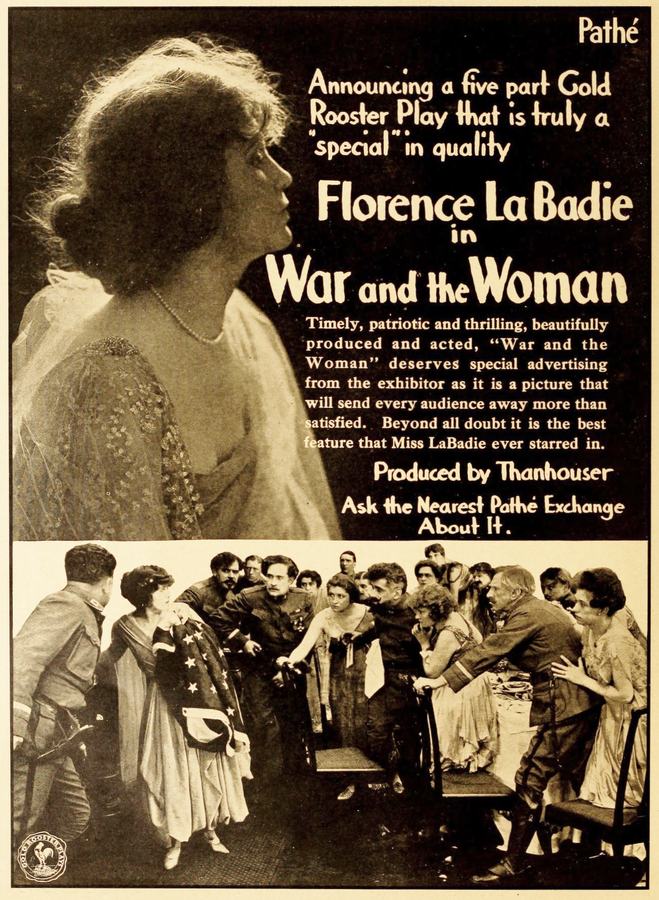
There's an undeniable allure to the silent era, a period when storytelling relied on the sheer power of visual narrative, expressive acting, and the evocative strains of a live orchestra. Among the myriad cinematic offerings from this formative epoch, War and the Woman stands as a testament to the enduring appeal of high-stakes drama, personal sacrifice, and the indomitable spirit of its protagonists. This isn't merely a film; it's a window into the anxieties and aspirations of a world teetering on the brink, reflected through the intensely personal journey of a woman caught in the maelstrom of global conflict. It's a narrative that, even without spoken dialogue, screams with the urgency of its themes.
At its core, War and the Woman is a story of metamorphosis, charting the remarkable evolution of Ruth, portrayed with compelling intensity by Florence La Badie. Her initial circumstances paint a picture of a young woman whose life is upended by a devastating revelation: her stepfather, John Braun, is a spy. This isn't a mere domestic squabble; it's a betrayal that shatters her world, forcing her to confront uncomfortable truths about allegiance and identity. The film doesn't linger on her initial shock but propels her into action, as she embarks on a cross-country odyssey. This journey isn't just geographical; it's a symbolic severance from her past, a deliberate act of self-exile that foreshadows the greater trials awaiting her. La Badie, a prominent star of her time, imbues Ruth with a nuanced blend of vulnerability and nascent strength, allowing the audience to witness her internal struggle through her expressive eyes and gestures.
The cinematic canvas then shifts dramatically with the introduction of John Barker, the dashing pilot whose plane crash-lands into Ruth's solitary pilgrimage. This pivotal moment, a classic deus ex machina, serves not only as a catalyst for romance but also as a stark reminder of the fragile peace preceding the global conflagration. The immediate, almost fated, connection between Ruth and John Barker (played by Tom Brooke) is rendered with a romantic fervor typical of the era, yet it feels earned through their shared vulnerability in that dramatic moment. Their swift marriage, a testament to love blooming in extraordinary circumstances, becomes the anchor against which the subsequent storm of war will rage. It’s a beautifully concise depiction of finding solace and partnership amidst the unexpected turns of fate, a fleeting idyll before the inevitable tempest.
The honeymoon phase, a symbol of nascent happiness and domestic tranquility, is violently interrupted by the declaration of war. John Barker, a man of duty, is called to his post, leaving Ruth behind in what quickly becomes a besieged home. This separation is more than a plot device; it’s a profound exploration of the gendered impact of war, where men are sent to the front lines while women are left to defend the home front, often with far fewer resources and facing different, yet equally terrifying, threats. The Barker house, once a sanctuary, transforms into a prison as enemy forces invade the countryside and commandeer the estate. Ruth's imprisonment in her own home, guarded by the very servants who were meant to protect her, highlights the profound helplessness and violation experienced by civilians during wartime. Florence La Badie's portrayal of Ruth during this period is particularly poignant, capturing the quiet desperation and simmering rage of a woman stripped of her autonomy.
The film's narrative then cleverly intertwines the parallel journeys of husband and wife. While Ruth endures her confinement, John Barker, driven by an almost primal instinct, defies military protocol to seek out his beloved. His perilous journey through enemy lines underscores the deep personal stakes involved, transcending the impersonal nature of warfare. This segment, though likely brief in its depiction, carries immense dramatic weight, showcasing the lengths to which love will drive individuals. It's a stark contrast to the earlier, almost idyllic romance, now tested by the harsh realities of conflict. The tension builds towards a climactic reunion, one that is anything but conventional.
The true revolutionary spirit of War and the Woman culminates in Ruth's extraordinary act of defiance. Enraged by the invaders' occupation and her own imprisonment, she plants dynamite in the cellar of her home. This isn't a passive act of resistance; it's a furious, self-destructive gesture that reclaims agency through ultimate destruction. It's a powerful statement about the human cost of war and the limits of endurance. The explosion of the Barker house is not just a dramatic spectacle; it's a symbolic cleansing, a fiery rejection of subjugation. John Barker's arrival precisely at this moment, a testament to perfectly timed cinematic tension, allows for their dramatic escape in his plane, soaring above the ruins of their former life. This final sequence is a thrilling crescendo, leaving the audience with a powerful image of resilience and liberation.
Philip Lonergan's screenplay, while adhering to the dramatic conventions of the era, manages to infuse the narrative with a palpable sense of urgency and emotional depth. The reliance on visual storytelling, so characteristic of silent films, would have demanded exceptional performances from the cast and astute direction (though no director is explicitly credited in the provided details, the coherence of the narrative suggests a strong guiding vision). Florence La Badie, in particular, would have carried the emotional weight of the film on her shoulders, her facial expressions and body language conveying the terror, love, and ultimately, the defiant spirit of Ruth.
The film's themes resonate far beyond its immediate historical context. It explores the devastating impact of war on individual lives, the resilience of the human spirit in the face of adversity, and the profound power of love as both a motivator and a solace. The idea of a woman taking such a destructive, yet ultimately liberating, action against her oppressors was likely quite progressive for its time, challenging traditional notions of female passivity during wartime. This aspect of Ruth's character makes her a proto-feminist figure, a woman who refuses to be merely a victim of circumstance, choosing instead to forge her own fiery path to freedom.
When considering War and the Woman within the broader tapestry of silent cinema, parallels naturally emerge. The sudden, devastating intrusion of global conflict into personal lives, as depicted here, resonates with the emotional turmoil explored in films like Ashes of Embers, which also delves into the personal costs exacted by larger societal forces, albeit through a different lens of drama. Both narratives skillfully navigate the fragility of peace and the unforeseen challenges that define human experience. The film also shares a thematic thread with narratives that feature strong, independent female protagonists navigating societal challenges, not unlike the spirited character dynamics that might be imagined in an adaptation of The Mill on the Floss, though the contexts are vastly different. While one battles societal expectations, the other confronts the brutal realities of war, yet both protagonists exhibit a compelling inner fortitude.
The dramatic scale of wartime espionage and the perilous journeys undertaken by characters in War and the Woman also bring to mind the tension and intrigue found in adventure-laden narratives of the period. One might draw a thematic comparison to the grand, often melodramatic, adventures that captivated audiences, even if the specific plot points diverge. The element of a high-stakes escape, particularly one involving an aircraft, speaks to the burgeoning fascination with technology and daring feats that also found expression in films aiming for spectacle. While not a direct comparison, the sheer ambition of the escape sequence might find a distant cousin in the audacious spirit of early cinematic works that pushed boundaries, much like the innovative spirit seen in productions that explored new visual horizons.
The period itself, encompassing the silent era, was a crucible of innovation. Films like The Essanay-Chaplin Revue of 1916 showcased the comedic genius of Charlie Chaplin, providing a stark contrast to the serious drama unfolding in films like War and the Woman. Yet, both represent the diverse range of storytelling that captivated audiences, each masterfully utilizing the unique expressive capabilities of the medium. The visceral impact of a silent film, relying heavily on the actors' physicality and emotional conveyance, is a shared attribute across genres. The intensity of Florence La Badie's performance, for instance, would have been crucial in conveying Ruth's escalating emotions, much as Chaplin's pantomime conveyed his character's plight.
Furthermore, the narrative's focus on a personal story set against a backdrop of global conflict bears a resemblance to other films that ground grand events in individual experiences. The way the war directly invades Ruth's personal space and transforms her home into a battleground speaks to a universal theme of how geopolitical forces reshape private lives. This intimate perspective on a massive conflict is a powerful storytelling technique, ensuring that the audience remains deeply invested in the fate of the characters rather than getting lost in the broader scope of the war itself. It allows for a more profound emotional connection, making the abstract concept of 'war' terrifyingly real through the eyes of one woman.
While Florence La Badie undoubtedly carries the narrative's emotional weight, the contributions of the supporting cast are integral to the film's success. Tom Brooke's portrayal of John Barker embodies the heroic ideal, a man whose duty is matched only by his devotion. His determination to rescue Ruth, cutting through enemy lines, is a classic trope elevated by the silent film's reliance on grand gestures and clear motivations. Ernest C. Warde as the treacherous John Braun provides the initial spark of conflict, his character’s betrayal setting Ruth’s entire journey into motion. Even smaller roles, such as Grace Henderson, Ralph Faulkner, Arthur Bauer, and Wayne Arey, would have contributed to the verisimilitude of the wartime setting, each face adding to the tapestry of a society in turmoil. In silent cinema, every actor, every extra, had to convey meaning through their presence, their posture, and their reactions, making the ensemble's collective effort a critical component of the storytelling.
The sheer physical demands placed upon these actors, particularly in action sequences like the plane crash or the house explosion, would have been considerable. The art of silent acting required a heightened sense of theatricality, translating complex emotions and rapid plot developments into a universally understandable visual language. It’s a testament to their craft that such narratives could captivate audiences without a single spoken word, relying instead on the power of visual metaphor, dramatic pacing, and the raw, unadulterated emotion conveyed through their performances. The film, therefore, is not just a story but an artifact of a unique performative art form that prioritized visual impact above all else.
War and the Woman, while perhaps not as widely known as some of its contemporaries, offers a compelling glimpse into the narratives that captivated audiences during a period of immense global change. It’s a story that champions resilience, challenges traditional gender roles, and celebrates the power of individual agency even amidst overwhelming circumstances. The climactic act of blowing up one's own home is a radical statement, one that transcends mere survival to become an act of profound self-liberation. It leaves an indelible impression, marking Ruth as a character of formidable spirit and unwavering resolve. This film, crafted by Philip Lonergan and brought to life by a dedicated cast, remains a fascinating piece of cinematic history, demonstrating how silent films could deliver powerful, resonant stories that continue to speak to modern audiences about courage, love, and the enduring fight for freedom.
In retrospect, the film's title itself is a concise encapsulation of its central conflict: the collision of personal identity and global strife. It posits the 'woman' not as a passive bystander but as an active participant, even a catalyst, in the face of 'war.' This framing elevates Ruth's journey from a mere subplot to the very heart of the narrative, making her struggle and triumph the lens through which the greater conflict is understood. It’s a powerful narrative choice that continues to resonate, reminding us that even in the largest of human conflicts, the individual story, particularly that of a woman defying the odds, can be the most explosive and memorable of all.
IMDb 7
1925
Community
Log in to comment.