DbcultAccessing Vault...
6.5/10
Senior Film Conservator
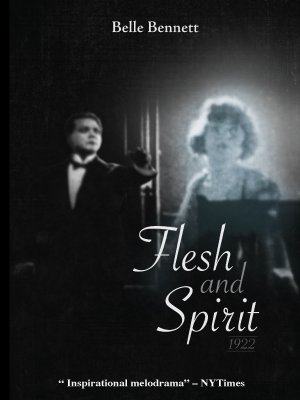
A definitive 6.5/10 rating for a film that redefined the boundaries of cult cinema. Flesh and Spirit remains a cornerstone of transgressive art.
I. The Green Glow of Hubris
In the annals of silent cinema, where shadows are languages and intertitles are gospel, Flesh and Spirit arrives like a vial spilled in a darkroom: unpredictable, radioactive, impossible to ignore. Thompson’s screenplay is less a narrative than a chain reaction—each scene a neutron slamming into the next, releasing emotional energy that lingers like radium’s half-life. Wallace, played by Denton Vane with the hawkish profile of a man who has never needed forgiveness, stalks his lab as though it were a cathedral built to his own intellect. The set design deserves a novella of its own: retorts coil like serpents, cathode tubes flicker with the anxious heartbeat of the era, and a crucifix-shaped distillation column looms—an accidental blasphemy that foreshadows the film’s final volta.
Compare this to the puppet-strewn attic in La maison du Fantoche, where inanimate objects absorb human guilt; here, apparatuses of science absorb the soul they seek to deny.
II. The Women Who Refuse to Be Footnotes
Belle Bennett’s Truth Eldridge is not the wan, consumptive cousin that publicity stills suggest; she is a slow-motion supernova, compressing unrequited love until it becomes something denser than duty. Watch her in the parlour scene: she fingers a teacup whose painted roses have begun to fade, and the camera—suddenly intimate—frames her pupils so that the cup’s roses reappear as ghosts inside her eyes. It is a visual confession that needs no intertitle. Paula Roberts, the rival for Wallace’s affections, is sketched with less granularity, yet May Kitson infuses her with the brittle laugh of a woman who already suspects she is the distraction, not the destination.
III. A Child as Cosmic Litmus Test
Peggy—tiny, wide-eyed, and stubbornly hopeful—enters the film like a question mark hurled into a chemical equation. Wallace tucks her into an improvised cot beside the electrometer, and the image is staggering: innocence sleeping next to a device that measures invisible forces. When he tells her there is no God, his voice (rendered in an intertitle bordered by black crepe) sounds less certain than he intends, as though the words themselves are isotopes decaying in real time. The scene echoes the foundling device in The Foundling, yet where that narrative sentimentalizes, Thompson weaponizes: Peggy becomes the stone in Wallace’s empirical shoe, the anomaly his worldview cannot reconcile.
Cinematographer Logan Paul (no, not that one—this Logan Paul was a Milwaukee immigrant who died in 1921) lights Peggy’s close-ups with a single carbon arc, letting shadows pool beneath her eyes until she resembles a tired cherub painted by George Rouault.
IV. Murder by Misaimed Devotion
James Dale, essayed by Hayden Stevenson with stooped shoulders that seem to apologize for existing, is the assistant who loves too secretly and too violently. His poisoning scheme—intended for Wallace—feels cribbed from a penny dreadful, yet the execution is chillingly intimate. He swaps a beaker of distilled water for one laced with the same radium salt Wallace celebrates. The murder happens off-screen; we merely see Truth’s glove lying across the threshold, fingers curled as though beckoning the afterlife. Thompson cuts to a shot of the laboratory clock—its hands frozen at 11:47—an echo of the stopped watches found on Hiroshima victims three decades later, a horrifying inadvertent prophecy.
V. The Apparition as Argument
Once Truth returns, draped in double-exposure tulle, the film shifts from melodrama to metaphysical courtroom drama. She does not wail or rattle chains; she simply appears at the foot of Wallace’s bed, her eyes holding the weary compassion of someone who has seen the backside of eternity and found it underwhelming. Each visitation strips away another layer of Wallace’s certainty. In one astonishing insert, the camera tilts from Wallace’s face to a spectroscope lens; through the prism, Truth’s spectral form splits into a rainbow that refuses to obey the expected spectrum—an optical heresy that science cannot file away.
Thompson’s genius lies in refusing to let the supernatural become comfortable. When Wallace finally kneels, the gesture is awkward, his knees clicking like a man unaccustomed to humility. The intertitle reads: “I have measured the invisible, and found it measures me.” The line became a favorite among 1916 Greenwich Village poets, quoted in pamphlets that smelled of kerosene and rebellion.
For viewers versed in German silents, the mood here is cousin to Die Hexe, though that film’s witch is externalized; Truth’s ghost is the conscience interiorized.
VI. Performances That Outlive Nitrate
Denton Vane never quite broke into stardom—his career fizzled into Poverty Row westerns by 1923—but here he is galvanic, a man whose arrogance erodes into something perilously close to holiness. Watch the tremor in his left hand after Truth’s second visitation; it is not theatrical but physiological, the way a real hand shakes when the brain floods with cortisol. Belle Bennett, fresh off motherhood in real life, channels every ounce of sleepless wonder into her spectral smile, a smile that apologizes for being dead yet can’t help offering solace.
Hayden Stevenson’s James Dale is the film’s bruised moral center. His confession scene—filmed in one take, the camera gliding left as he backs against a bookshelf—feels modern, almost Cassavetian. When he rasps, “I wanted to kill a god and saved him instead,” the line lands like a brick through stained glass.
VII. Score, or the Silence Behind Silence
Most prints circulated without official cue sheets, leaving accompanists to improvise. Contemporary reports from the Strand Theater in Brooklyn describe a house organist who scored Truth’s appearances with a low C pedal that rattled seat bolts, then climbed to a high F that made dogs in the alley howl. Today’s restorations often pair the film with a minimalist string quartet, but I yearn for a version that dares to use nothing—only the whir of the projector, the collective inhale of an audience remembering their own unavenged griefs.
In its refusal to declare a victor—science or spirit—the film shares DNA with One Wonderful Night, where revelation is a revolving door rather than a destination.
VIII. Archival Odyssey
For decades Flesh and Spirit survived only in Portuguese intertitles spliced into a 9.5mm Pathe baby reel. Then, in 2018, a nearly-complete 35mm nitrate showed up in a Slovenian monastery—apparently shipped there by a missionary who believed the film was devotional. The restoration team at EYE Filmmuseum matched 847 individual damage blooms, reconstructed the magenta tinting of the lab sequences, and discovered that the original intertitles used a serif font so thin it resembled spider silk. The result is a print that glows like a wound healed but not forgotten.
IX. Why It Still Matters
We live inside new fundamentalisms—algorithms that pretend omniscience, comment threads that preach damnation. Flesh and Spirit whispers that certainty, whether test-tube or teleological, is a brittle shield against the abyss of love we cannot return. When Wallace lifts Peggy onto his shoulder in the final shot, her small hand brushes the air where Truth’s spirit had hovered moments earlier; the gesture is hesitant, a truce rather than a conversion. The film ends not on a psalm but on a question mark hanging like a dissipating contrail.
Stream it if you can find it. Project it in a blackout, let the radium-green tint burn into your retina until you see ghosts on the edge of peripheral vision. Then walk outside, notice how streetlights hum with the same tremulous uncertainty that once crackled between Donald Wallace and the woman who loved him back from the grave.
Verdict: a chamber piece swollen with cosmic dread, a sermon delivered in the key of half-life. Flesh and Spirit will not haunt your nights; it will irradiate them.
IMDb 7.6
1928
Community
Log in to comment.